

Фотографии

-
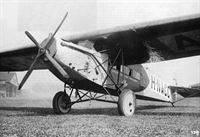
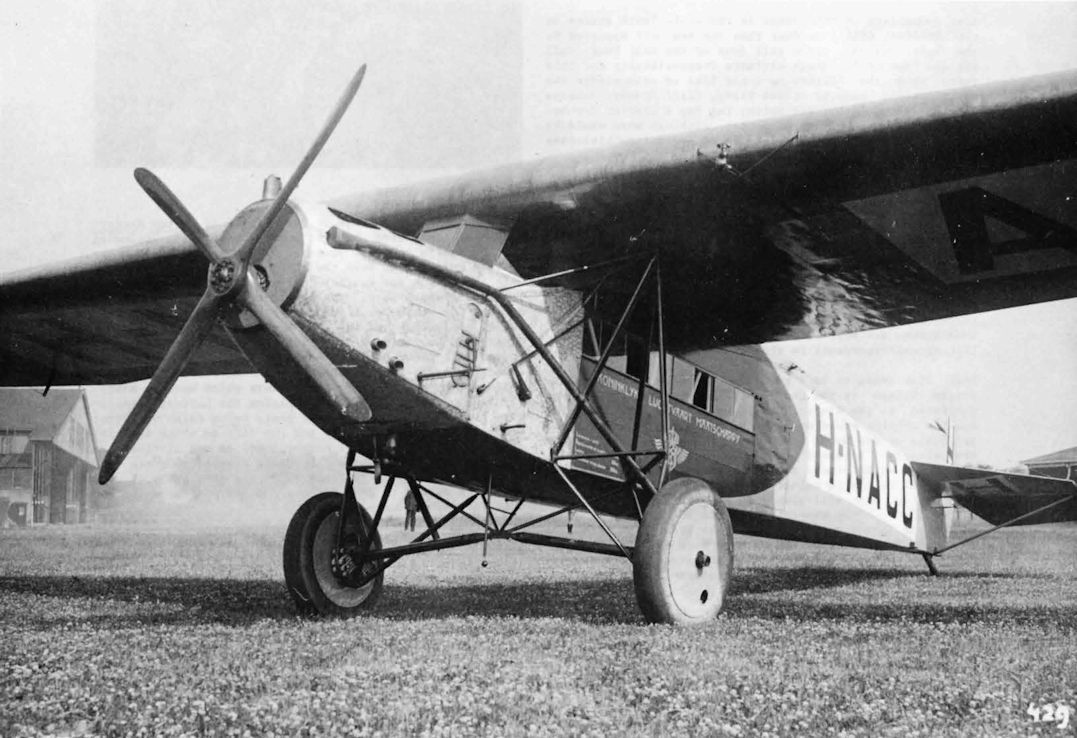
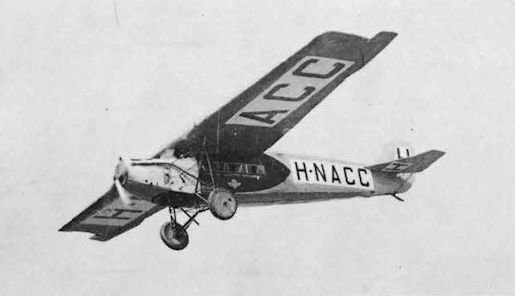
Регистрационный номер: H-NACC [2] H-NACC, the prototype Fokker F.VII in KLM livery showing the complicated wide-track undercarriage and a four-blade propeller formed by bolting two two-blade airscrews together.
Самолёты на фотографии: Fokker F.VII / C-2 / F.XIV - Нидерланды - 1924
-
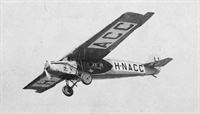
Регистрационный номер: H-NACC [2] The prototype F-VII c/n 4759 H-NACC with 360 hp 12 cylinder vee water-cooled Rolls Royce Eagle IX. Notable are the balanced "elephant ear" ailerons and the oval rudder, larger than the rudder fitted on early flights. Only five F-VII aircraft were built.
Самолёты на фотографии: Fokker F.VII / C-2 / F.XIV - Нидерланды - 1924
-
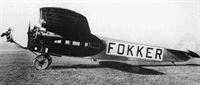
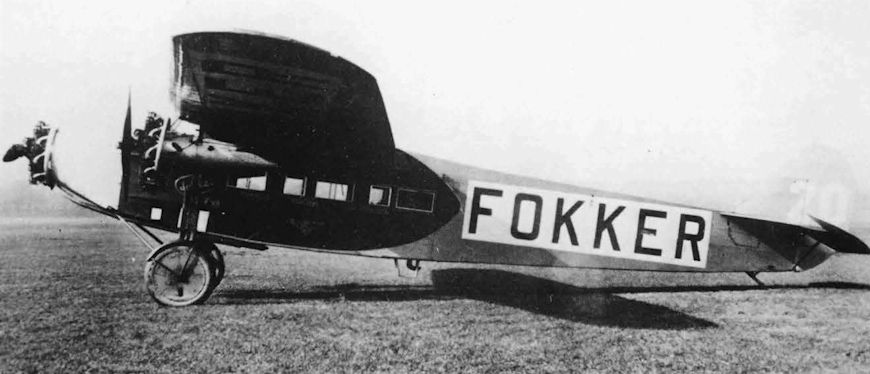
A further view of the prototype F-VIIa/3m c/n 4900, marked only as "FOKKER" and with the Ford Reliability Tour identity number "20" on the fin.
Самолёты на фотографии: Fokker F.VII / C-2 / F.XIV - Нидерланды - 1924
-
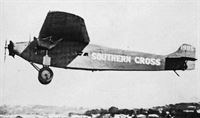
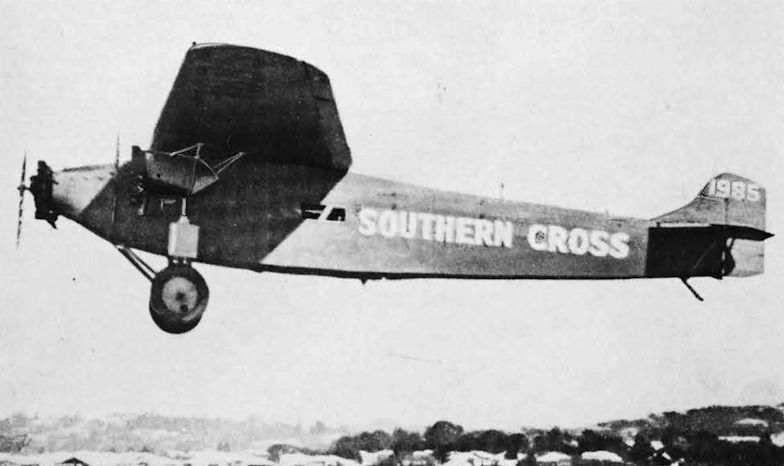
Регистрационный номер: G-AUSU [2], VH-USU [2] Originally F-VIIa/3m "Detroiter" with 200 hp Wright J4B engines, c/n 4954 was fitted with the long span wing and 220 hp Wright J5C engines to become 1985 "Southern Cross" in which Charles Kingsford Smith was the first to fly the Pacific Ocean, from Oakland to Brisbane between 31.5.28 and 9.6.28. Showing the larger squared-off rudder fitted earlier, 1985 is seen here taking off from Brisbane for Sydney after completing the Trans-Pacific flight.
Самолёты на фотографии: Fokker F.VII / C-2 / F.XIV - Нидерланды - 1924
-
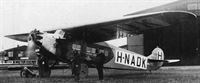
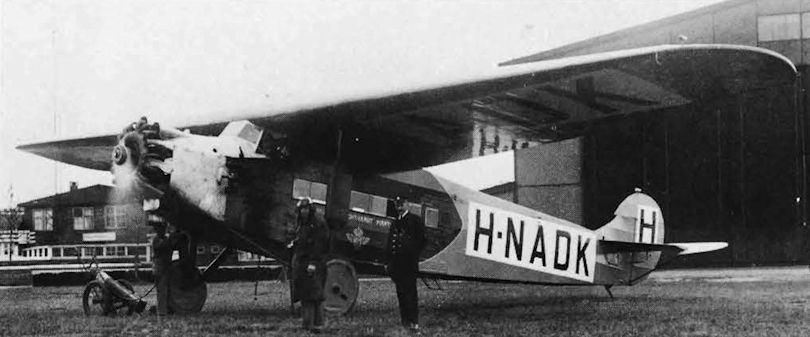
Регистрационный номер: H-NADK [2], G-EBTS [2] View of F-VIIa c/n 4953. The photo shows it in KLM titles as H-NADK, fitted with an ungeared Jupiter VI engine of which only the cylinder heads protrude from the cowling. The pilot standing at the wheel is Duimelaar.
Самолёты на фотографии: Fokker F.VII / C-2 / F.XIV - Нидерланды - 1924
-
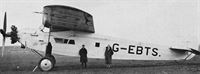
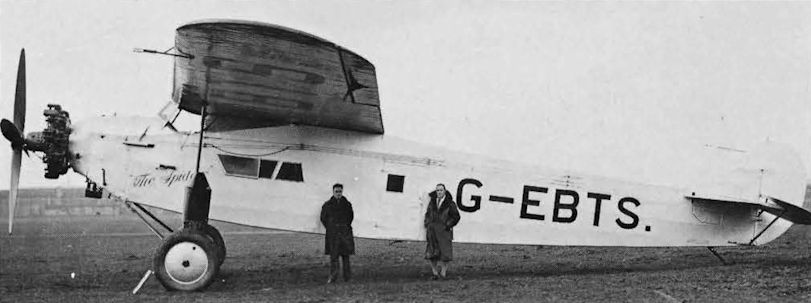
Регистрационный номер: G-EBTS [2], H-NADK [2] The photo shows c/n 4953 as the Duchess of Bedford's G-ABTS which had been fitted with a 480 hp geared Jupiter VIII and 4-blade propeller in 8.29 and named "The Spider" for its record return flight to India. The pilot Capt C.D.Barnard (right) and engineer R.F.(Bob) Little are seen here before the Capetown return flight in 1930. The front collector ring and exhausts had been removed from the uncowled engine but were replaced in 1.31. In all the F-VII variants the elevator and rudder control wires ran along outside the fuselage near the top as can just be seen here,
Самолёты на фотографии: Fokker F.VII / C-2 / F.XIV - Нидерланды - 1924
-
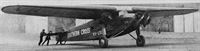
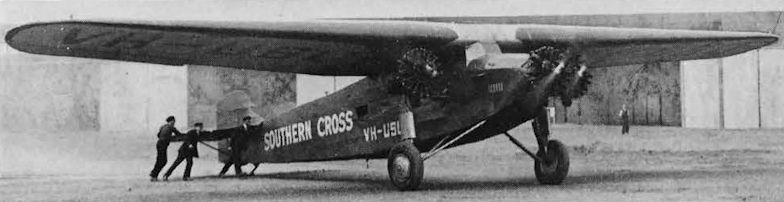
Регистрационный номер: VH-USU [2], G-AUSU [2] "Southern Cross" shown taxying out at Croydon on 10.7.29 as VH-USU, although we believed that the marks were not changed from G-AUSU officially until 9.29. With the propeller slipstream blowing up dust, the pilot is applying right rudder to turn right aided by three helpers pushing the tail across.
Самолёты на фотографии: Fokker F.VII / C-2 / F.XIV - Нидерланды - 1924
-
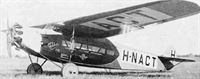
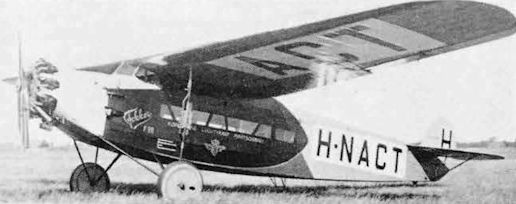
Регистрационный номер: H-NACT The second production F-VIIa, and the first for KLM, was c/n 4901 H-NACT with 480 hp 9 cyl Gnome Rhone built Bristol Jupiter VI.FM air-cooled radial engine. The fabric covered steel tube fuselage was lengthened from 44ft 3in in the F-VII to 47ft 6in in the F-VIIa and it carried two pilots and eight passengers. The all-wood cantilever wing was reduced in size from the 772.5 sq.ft of the F-VII to 629.7 sq.ft and it tapered to rounded tips with inset ailerons.
Самолёты на фотографии: Fokker F.VII / C-2 / F.XIV - Нидерланды - 1924
-
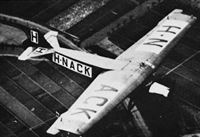
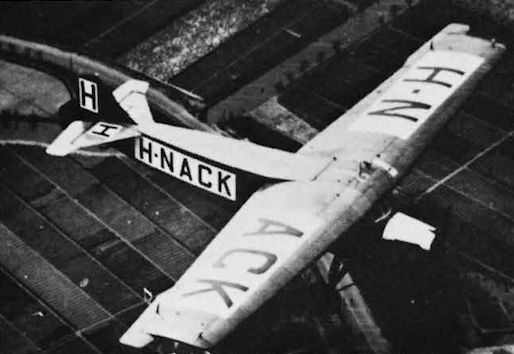
Регистрационный номер: H-NACK A view of the third F.VII c/n 4840 H-NACK in flight with the distinctive shape of the ailerons again clearly visible.
Самолёты на фотографии: Fokker F.VII / C-2 / F.XIV - Нидерланды - 1924
-
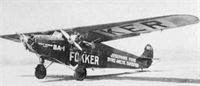
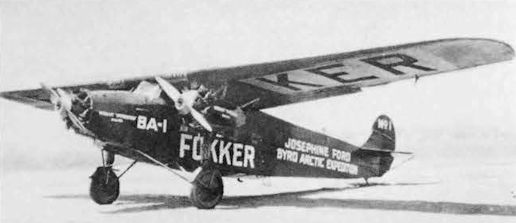
The first aircraft to fly over the North Pole was the first F.VIIa/3m trimotor "Josephine Ford" flown by Cdr Richard Byrd. Originally designed for the 1925 Ford Reliability Tour which it won, c/n 4900 was an F.VIIa conversion fitted with three 200 hp 9 cylinder Wright J4B radial engines.
Самолёты на фотографии: Fokker F.VII / C-2 / F.XIV - Нидерланды - 1924
-
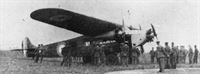
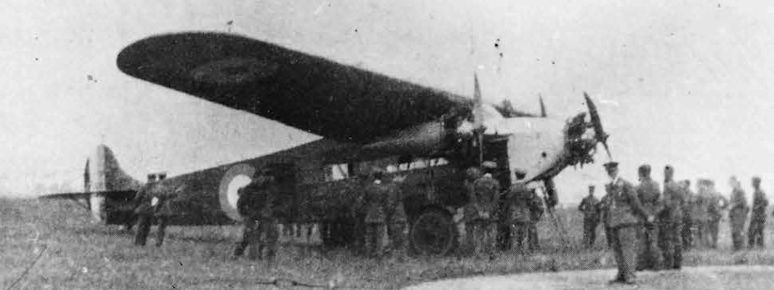
Регистрационный номер: J7986 [3] Clearly arousing a lot of interest among the service personnel F-VIIa/3m c/n 4917 J7986 was a visitor to Digby on an unknown date c.1930. It was initially known as the FVII/3m and was used for a variety of structural and performance tests by the A&AEE at Martlesham Heath and for radio trials by the RAE.
Самолёты на фотографии: Fokker F.VII / C-2 / F.XIV - Нидерланды - 1924
-
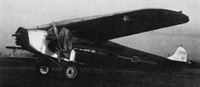
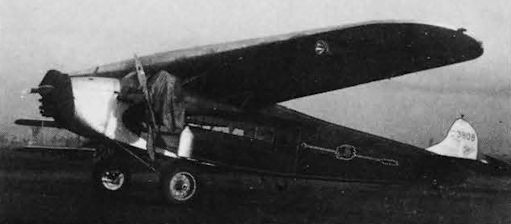
Регистрационный номер: NC3908 C/n 4955 as C3908 of Western Air Express. The large landing light is clearly visible under the port wing,
Самолёты на фотографии: Fokker F.VII / C-2 / F.XIV - Нидерланды - 1924
-
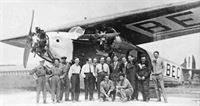
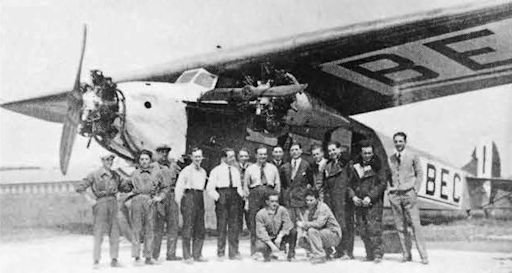
Регистрационный номер: I-BBEC C/n 4982 I-BBEC, with a group of airline employees in this undated print, appears to have the original 7 cyl Lynx engines fitted.
Самолёты на фотографии: Fokker F.VII / C-2 / F.XIV - Нидерланды - 1924
-
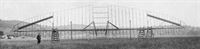
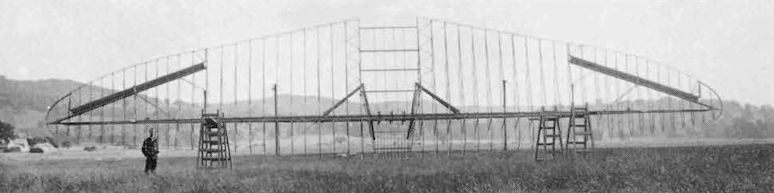
Регистрационный номер: J7986 [3] The Fokker wing was removed from J7986 in 1931 and it was fitted with a 63ft span Gloster-built Stieger Monospar wing, seen here before fitting and covering with the single spar evident but without the stress-bearing leading edge which formed the drag member. A man makes a useful scale.
Самолёты на фотографии: Fokker F.VII / C-2 / F.XIV - Нидерланды - 1924
-
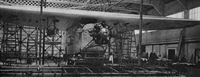
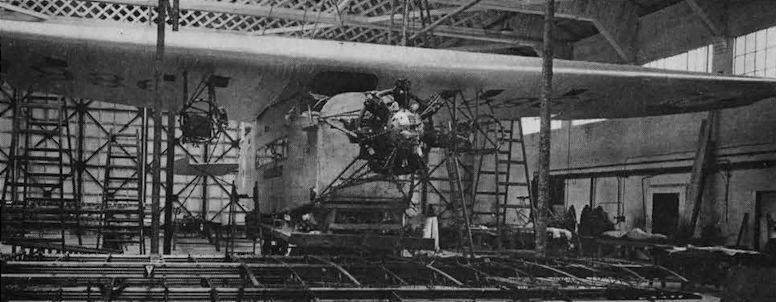
Регистрационный номер: J7986 [3] The fuselage of c/n 4917 with the Lynx nose engine installed and with the Stieger Monospar wing assembled and covered. The wing engine mountings have been fitted and await the power units.
Самолёты на фотографии: Fokker F.VII / C-2 / F.XIV - Нидерланды - 1924
Статьи
- -
- Casualty Compendium (40)
- DH.60 Moth /The Whole Truth/ (44)
- Feedback
- Greece (SX-) /Complete Civil Registers/ (8)
- N9999F: Americans overseas (4)
- Percival Gull /The Whole Truth/ (1)
- The Brantly B.2 /Aircraft Production List/ (5)
- The Fokker F.VII series (1)
- 6 - The Bolkow lightplanes /Aircraft of European Civil Registers/ (5)
- J.Geelen, R.Deerness - New Zealand (ZK-) /Complete Civil Registers/ (3)