

 Wiki
Wiki 
Варианты
- Mignet - Pou-de-Ciel / HM-14 - 1932 - Франция
- Howitt - monoplane - 1937 - Великобритания
Mignet Pou-de-Ciel
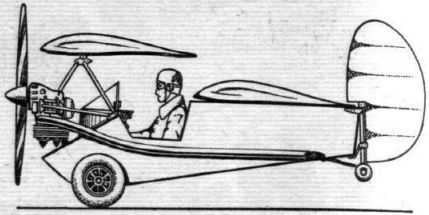
Ультралегкий самолет Pou-du-Ciel француза Анри Минье, название которого буквально означало "небесная вошь", но чаще переводится как "небесная блоха", стал одной из первых машин, чертежи которой легко могли достать конструкторы-любители. Анри Минье и сам был таким любителем-энтузиастом, не имел опыта постройки самолетов и, в общем-то, игнорировал накопленный опыт в аэродинамике и конструкции при создании своего проекта. Его целью и мечтой было разработать простой в постройке и пилотировании самолет, который бы позволил тысячам любителей-энтузиастов подняться в небо при минимальных затратах. Прежде всего, он постарался увеличить устойчивость, используя фюзеляж с низким расположением центра тяжести, затем установил два крыла, переднее и заднее, отказавшись от горизонтального оперения. Угол атаки переднего крыла мог меняться для управления по тангажу. Анри Минье полагал, что большое поперечное V крыльев обеспечит достаточную устойчивость, и установил большой руль направления. Пилот имел единственную ручку, передвижение которой в продольном направлении управляло самолетом по тангажу, а в поперечном - по курсу. Затем Минье выпустил руководство с чертежами и инструкцией по постройке самолета. Вскоре множество энтузиастов по всей Европе, особенно во Франции, Германии, СССР, Италии, Скандинавии и Британии были заняты изготовлением собственных машин. Ряд катастроф привел к запрету полетов на этом самолете во Франции. Изучив проблему, специалисты выдали ряд рекомендаций, но разразившаяся Вторая мировая война поставила крест на любительской постройке аэропланов.
<...>
Описание:
- Mignet Pou-de-Ciel
- The Japanese Civil Register 1919-45
- Flight, September 1934
SIMPLIFIED FLYING - Flight, April 1935
PAVING the WAY for the "POU" - Flight, August 1935
L'AUTRE AVIATION - Flight, April 1936
MODERN LIGHT AIRCRAFT REVIEW - Flight, May 1936
A CANTILEVER "POU"
Фотографии

-

Мировая Авиация 190
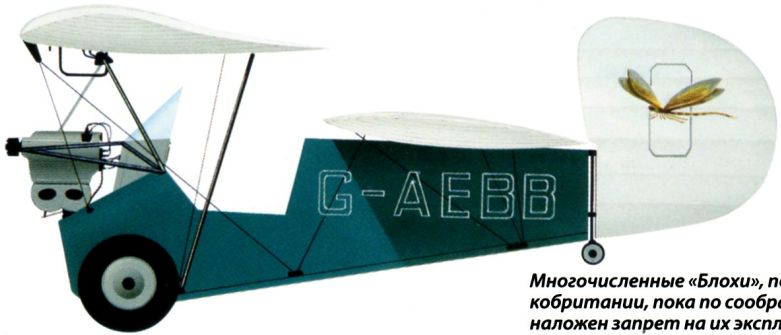
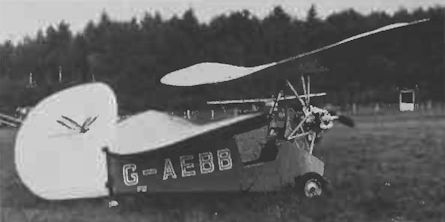
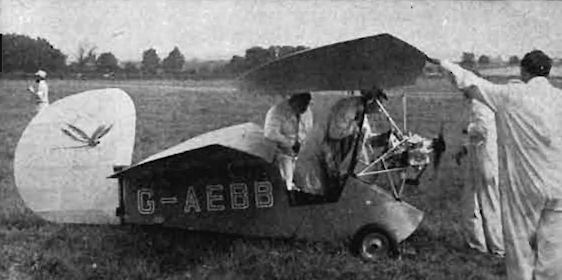
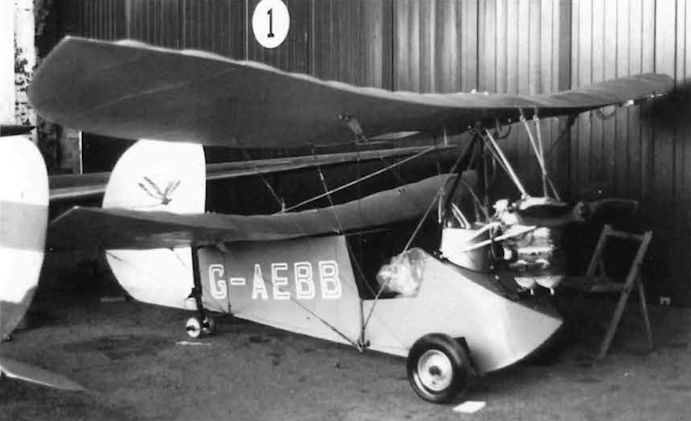
Регистрационный номер: G-AEBB [6] Многочисленные "Блохи", подобные этой, летали в Великобритании, пока по соображениям безопасности не был наложен запрет на их эксплуатацию.
-

Aeroplane Monthly 1993-08 / M.Oakey - Grapevine
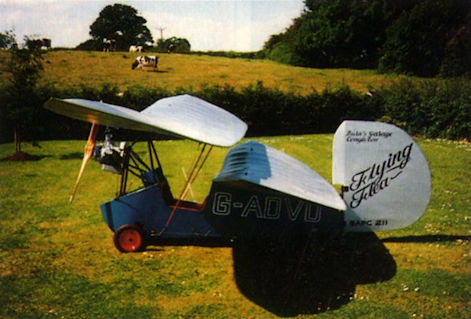
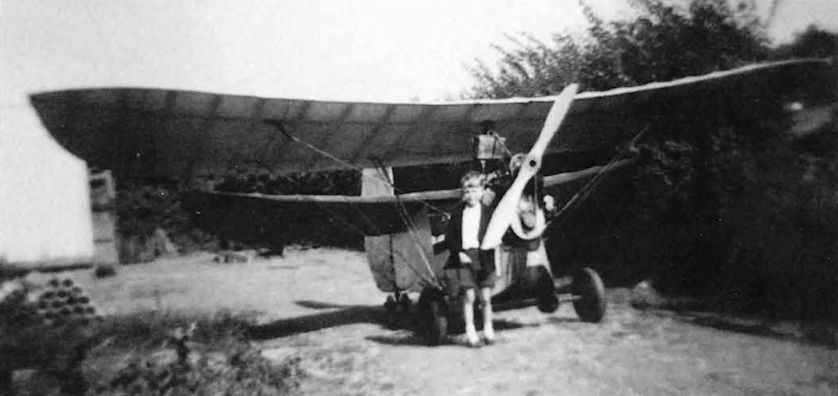
Регистрационный номер: G-ADVU, BAPC-211 Mignet Flying Flea “G-ADVU” / BAPC-211, newly completed by Ken Fern at Stoke-on-Trent, has been on static display at the Congleton garage of project sponsor Ian Burns, whose father built and flew one (unregistered) in the Thirties.
-
Aeroplane Monthly 1996-08 / 1996 UK Aircraft Collections and Museums Guide (2)
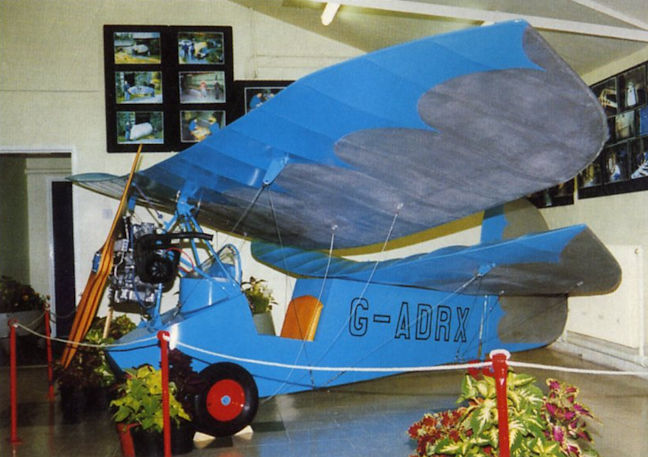
Регистрационный номер: G-ADRX Beautifully restored Pou-du-Ciel “G-ADRX" at the RAF Millom Museum.
-
Air-Britain Archive 2000-03 / K.Ellis - The ABC of the Flying Flea (9)
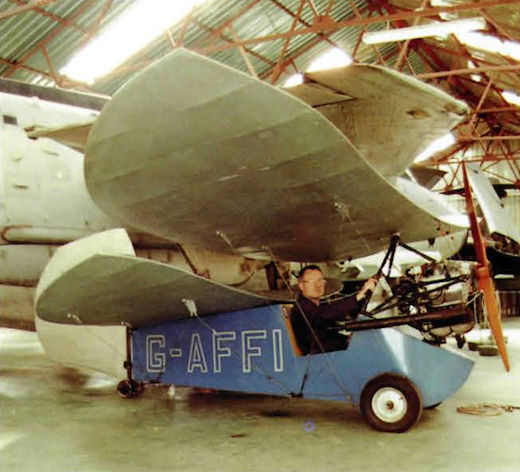
Регистрационный номер: G-AFFI The Yeadon Aeroplanes' post-war Flea 'G-AFFI' amid heavy metal at the Yorkshire Air Museum, Elvington in May 1994.
-

-
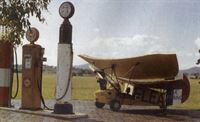
Aeroplane Monthly 1997-06 / G.Jones - The Flea fights back
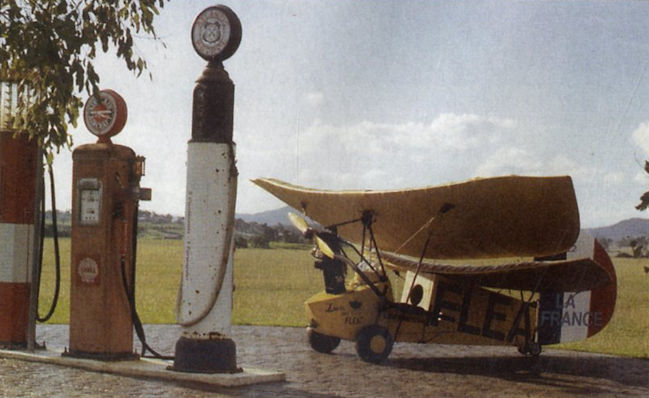
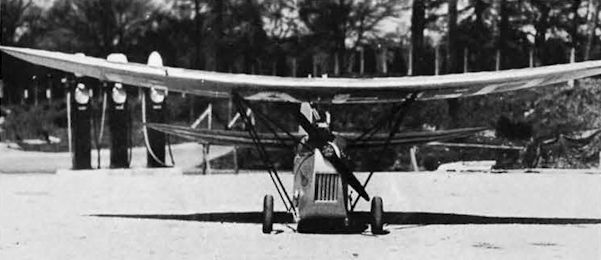
Could be the mid-1930s rather than 1992 at Luskintyre, New South Wales, Australia. Bob Cornwell’s completed Flea stands next to period pumps.
-
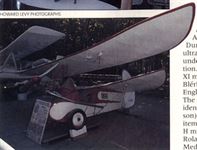
Aeroplane Monthly 1998-12 / M.Oakey, T.Harmsworth - News
The Museum Orleans showed its Mignet H.M.14 Pou-du-Ciel, rebuilt in 1994.
-
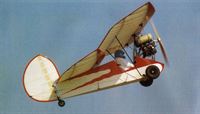
Aeroplane Monthly 1997-06 / G.Jones - The Flea fights back
Jacques Laurent’s Rennes based Rotax 447-powered H.M.14 hops into the air at Marennes in August 1993.
-
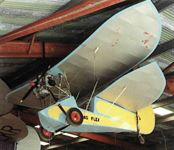
Air-Britain Archive 2000-03 / K.Ellis - The ABC of the Flying Flea (9)
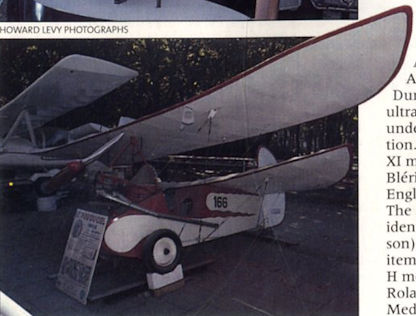
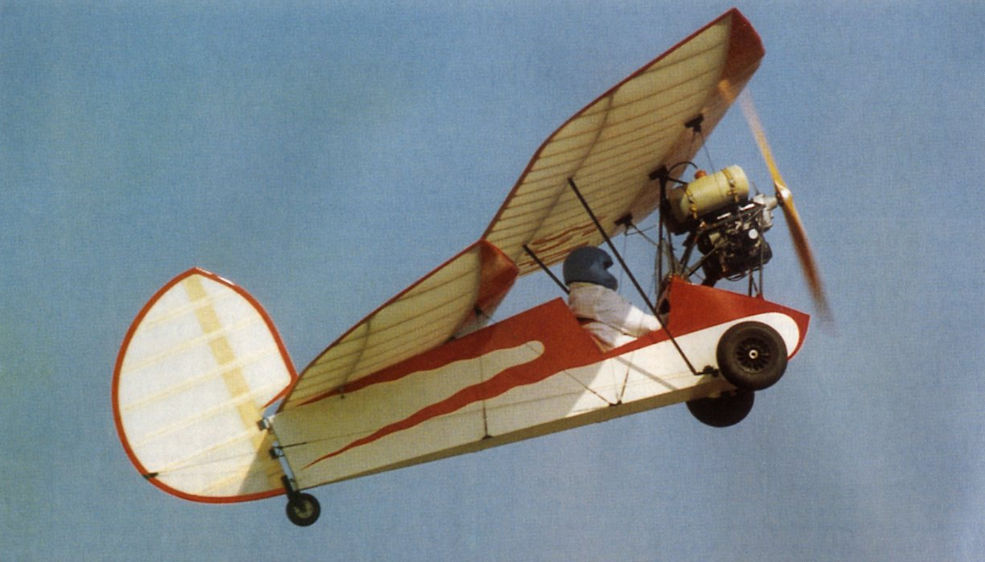
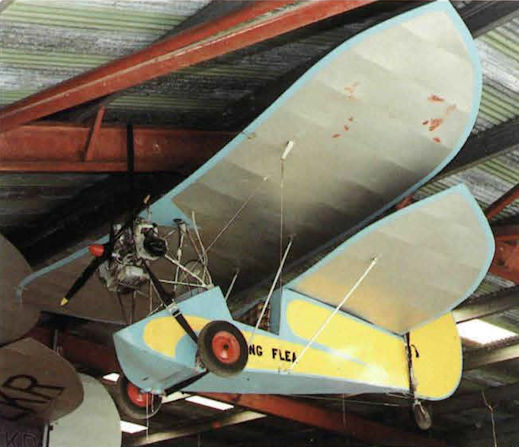
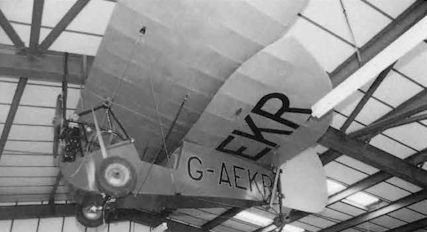
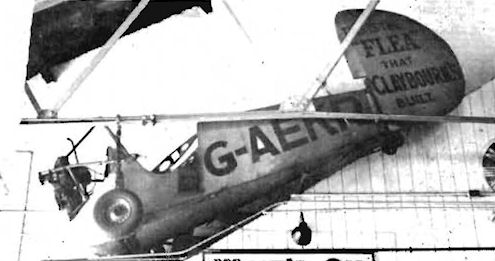
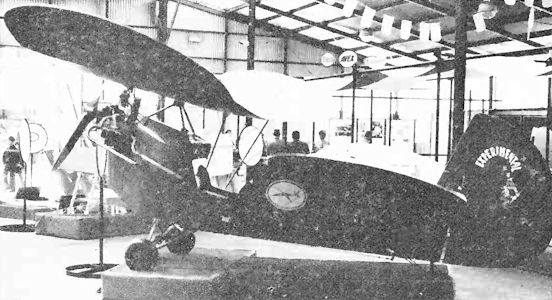
Регистрационный номер: G-AEKR [5], BAPC-121 [5] Mick Ward's Flying Flea 'F50' is kept at Breighton and is seen here in Peter Green's photo suspended from the hangar roof with part of the Claybourne Flea G-AEKR just visible behind.

-

Flight 1935-08 / Flight
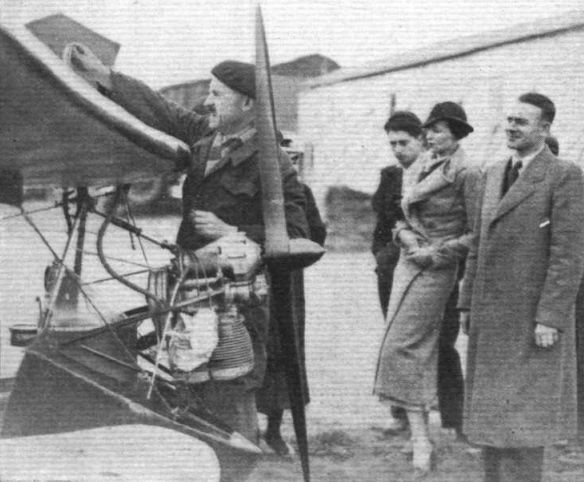
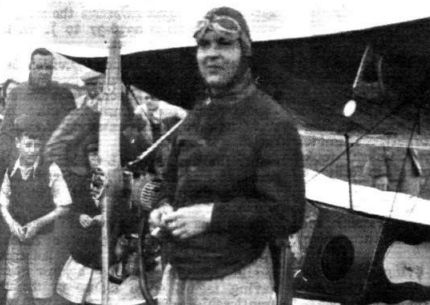
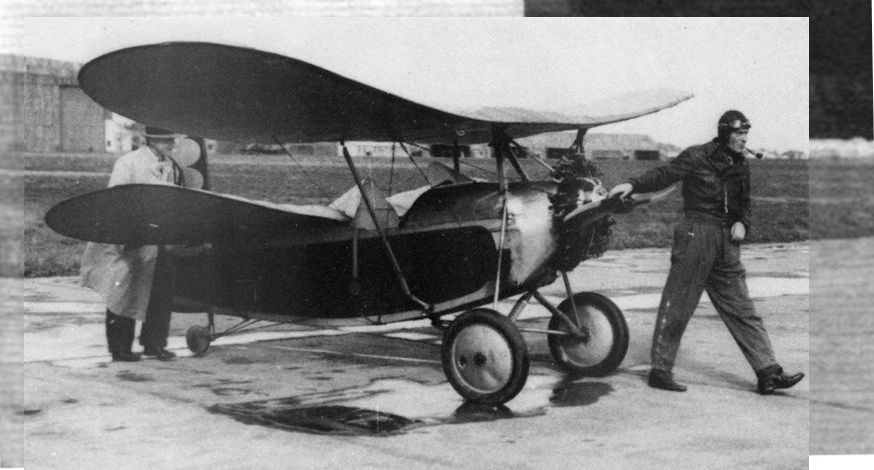
M. Mignet "trundling" his "Pou" on Lympne aerodrome. The engine is an Aubier et Dunne two-stroke.
-
Aeroplane Monthly 1993-11 / H.Shore - Flea fever (1)
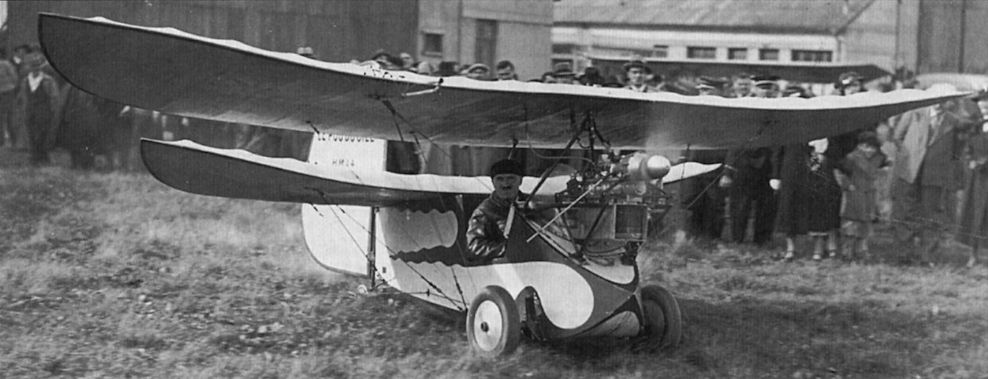
The master himself; Henri Mignet about to fly an H.M.14 Pou-du-Ciel at Orly in October 1935. This “Flea” was fitted with a three-cylinder Aubier et Dunne engine, developing 28 h.p. at 3,400 r.p.m.
-

Aeroplane Monthly 1995-12 / I.Harwood - Fleas over Popham
Henri Mignet’s H.M.14 Pou du Ciel during his 1935 Daily Express-sponsored tour of Britain. He arrived on the evening of August 13, having flown from St Inglevert to Lympne in 52min.
-
Air-Britain Archive 1998-03 / K.Ellis - The ABC of the Flying Flea (1)
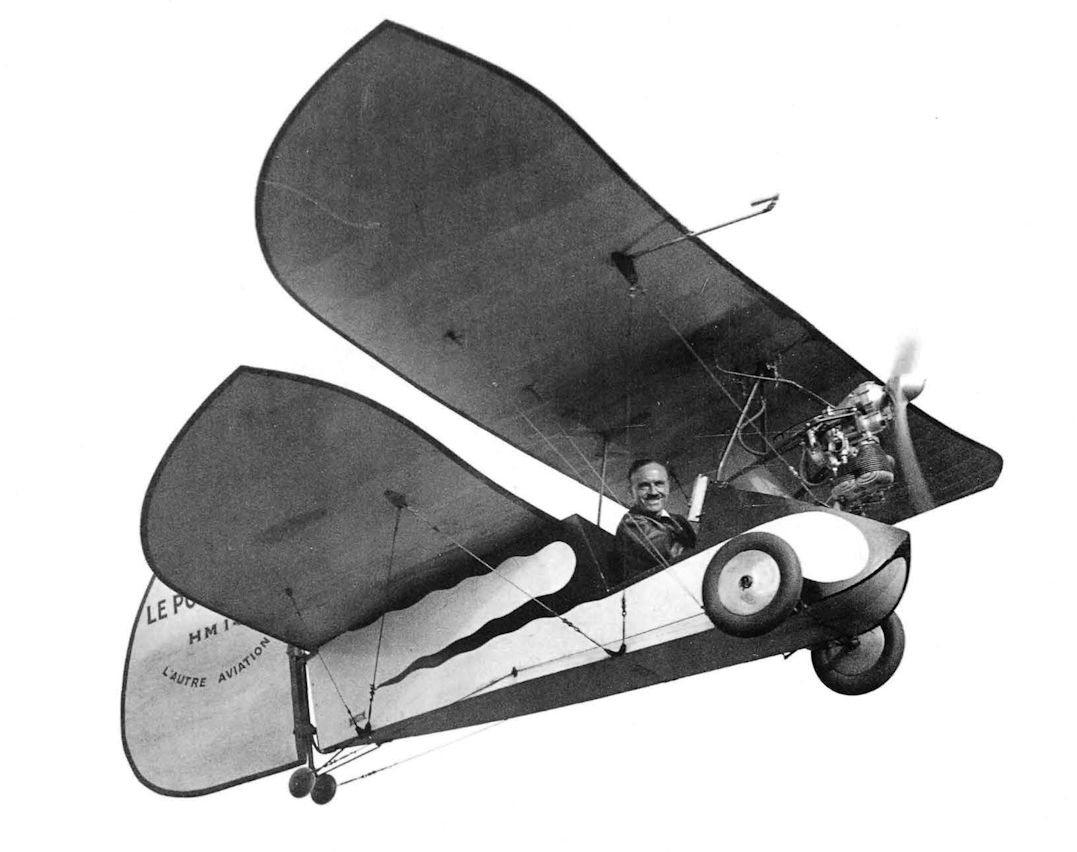
PORTRAIT OF A PIONEER : A remarkable photograph of M. Henri Mignet flying his "Pou-du-Ciel."
The Patron Saint of Homebuilders - certainly in Europe - Henri Mignet beams his infectious smile down at the photographer at Shoreham on August 17th 1935 at the start of his UK tour. He had flown this HM.14 Pou du Ciel across the Channel four days earlier. -
Aeroplane Monthly 1982-02 / A.Ord-Hume - Isn't it time we stopped poo-poohing the pour Pou? (2)
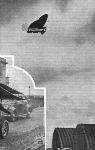
Mignet flying his HM14 at Orly in October 1935.
-
-

Aeroplane Monthly 1995-12 / I.Harwood - Fleas over Popham
Henri Mignet flying his H.M.14 during his Daily Express-sponsored tour of Britain. The H.M.14 was powered by a 17 h.p. Aubier et Dunne engine.
-

Flight 1935-08 / Flight
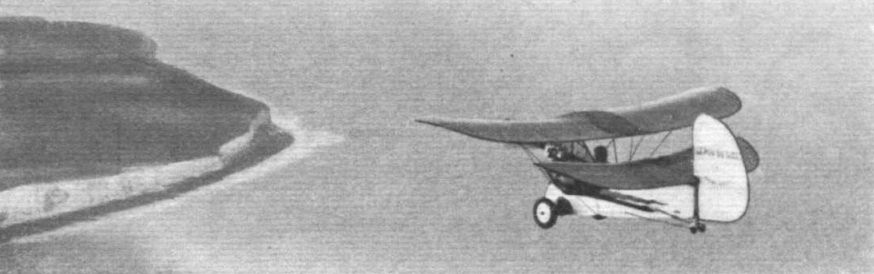
1909-1935! As then so now, a French pioneer crosses the Channel in a machine of his own creation. At. Henri Mignet in his "Pou-du-Ciel" approaching Folkestone on August 13th.
-

Flight 1935-03 / Flight
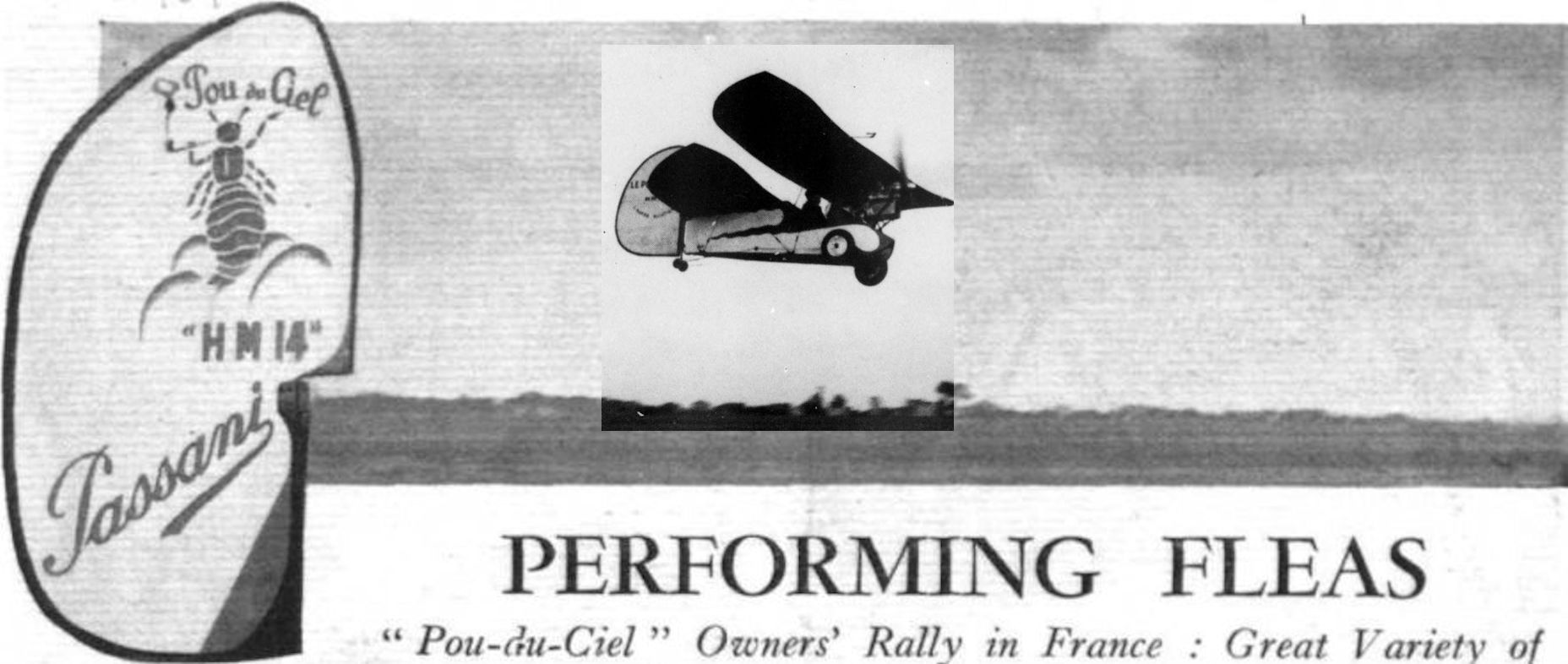
The Mignet Pou-du-Ciel in flight
-

Aeroplane Monthly 1995-12 / I.Harwood - Fleas over Popham
Henri Mignet in his H.M.14 during his 1935 British tour. Born in 1893, Mignet died of cancer on August 31, 1965.
-

Flight 1935-08 / Flight
A Pioneer's "Pou." M. Henri Mignet, designer, or, one might say, inventor, of the "Pou-du-Ciel" with his personal machine. The engine is an Aubier et Dunne.
-

Aeroplane Monthly 1982-01 / A.Ord-Hume - Isn't it time we stopped poo-poohing the pour Pou? (1)
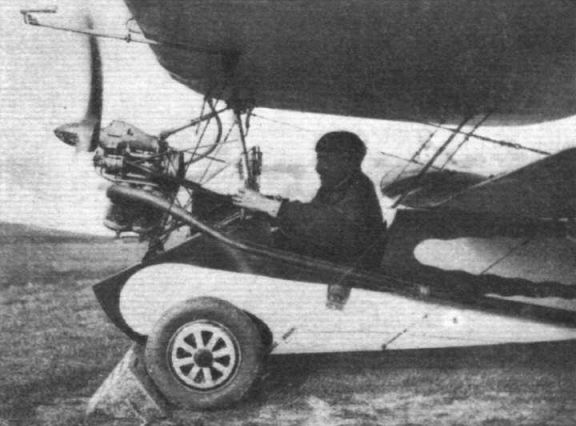
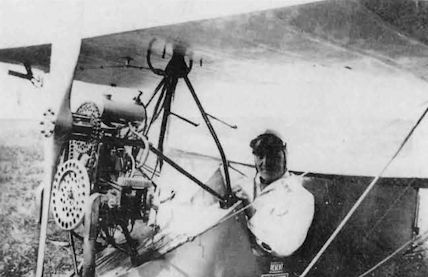
Bereted Henri Mignet sitting behind a whining Aubier et Dunne, whilst the French crowd stand transfixed with amazement.
-
Flight 1935-10 / Flight
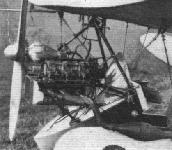
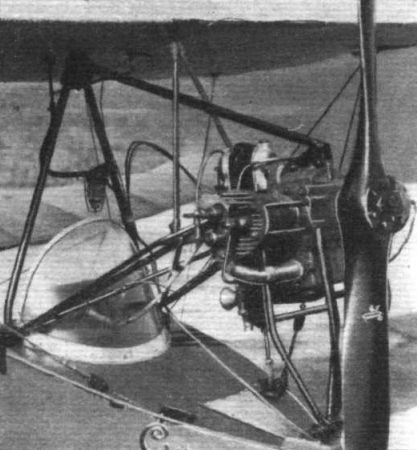
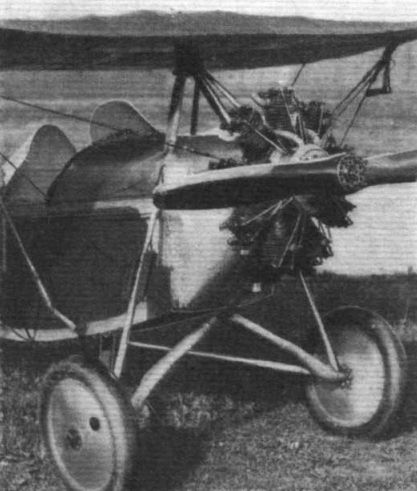
M. Mignet's installation of the new three-cylinder Aubier-Dunne engine. Note the three carburetters, and the air scoop for cylinder cooling.
The French 22 h.p. Aubier et Dunne was fitted to Mignet’s cross-Channel Flea. -

Flight 1935-11 / Flight
The Pou, says our contributor, "is rather ugly and so full of wires you cannot get in" Here is the machine and its originator, M. Henri Mignet
-

Flight 1936-04 / Flight
The Scott Flying Squirrel is particularly suitable for Pou-du-Ciel. At 2,800 r.p.m. (normal) it gives 16 h.p., but at 5,200 r.p.m. the power is 34 h.p.
The 25 h.p. Scott Flying Squirrel engine, a version of the motor cycle engine, was designed expressly for the Flea. -
Flight 1935-10 / Flight
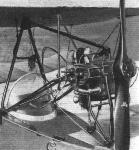
Raymond Pic's Pou equipped with a flat-twin Clerget engine of 16 h.p. has a neatly faired-in nose. He retains the rubber tensioners attached to the leading edge.
-

Aeroplane Monthly 1988-03 / P.Underhill - Birth of a Bebe
Edouard Joly's Pou has a 35 h.p. flat-twin Poinsard engine
Edouard Joly's Mignet Pou-du-Ciel about to be started at the Orly Flea meeting in October 1935. The engine was a 25 h.p. flat-twin Poinsard. -

Aeroplane Monthly 1982-03 / S.Appleby - On home-made wings
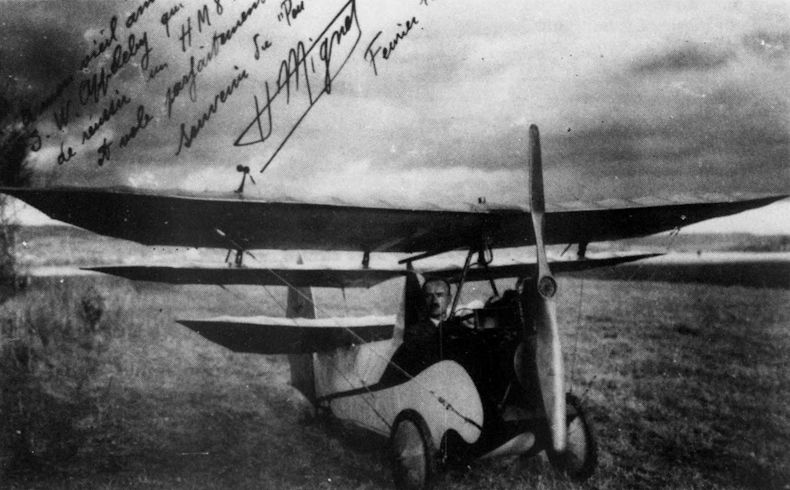
A signed photograph presented by Mignet to the author and inscribed, “To my old friend S. V. Appleby, who has just finished an HM8 ‘D’ and which flies perfectly. Souvenir of the Pou du Ciel”
-

Aeroplane Monthly 1982-03 / S.Appleby - On home-made wings
Appleby seated in a four-metre span Pou at Maux, France. Along the wing leading edge is written: “Le plus petit avion du monde” - the smallest aeroplane in the world.
-
Air-Britain Archive 1999-02 / K.Ellis - The ABC of the Flying Flea (4)
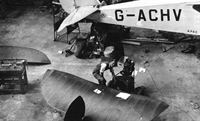
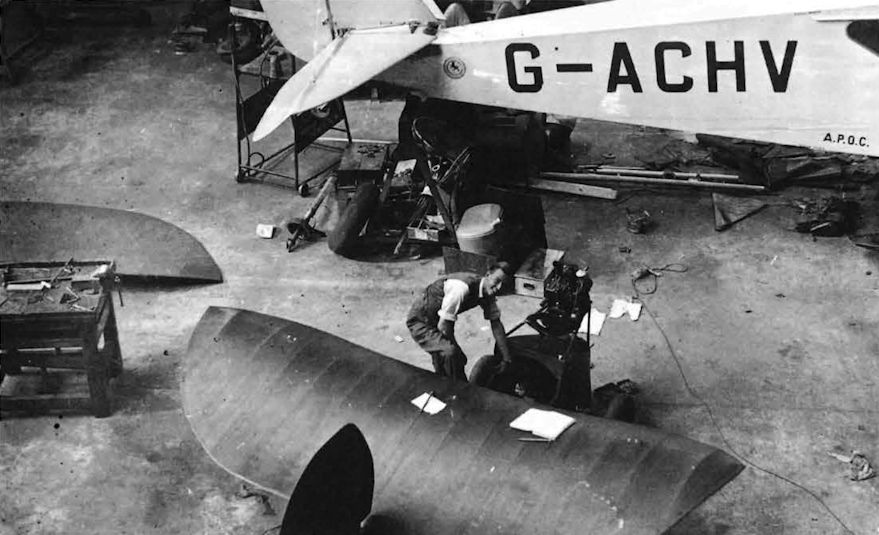
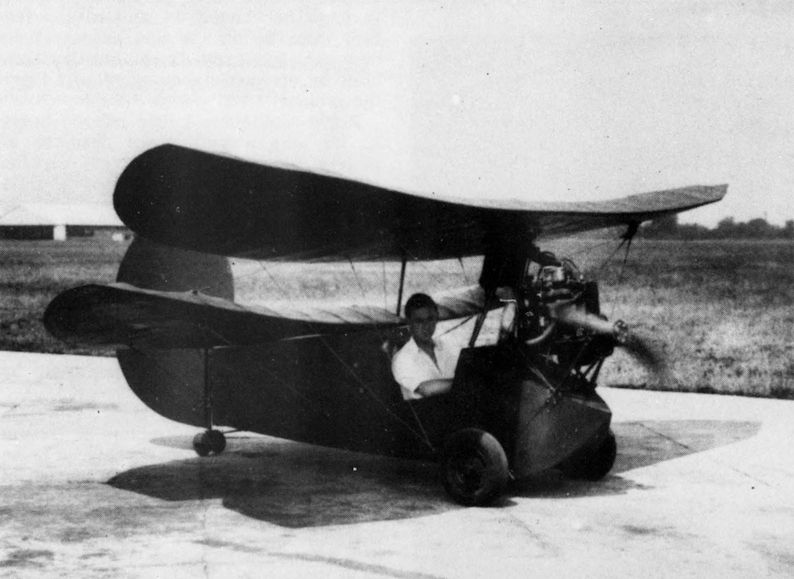
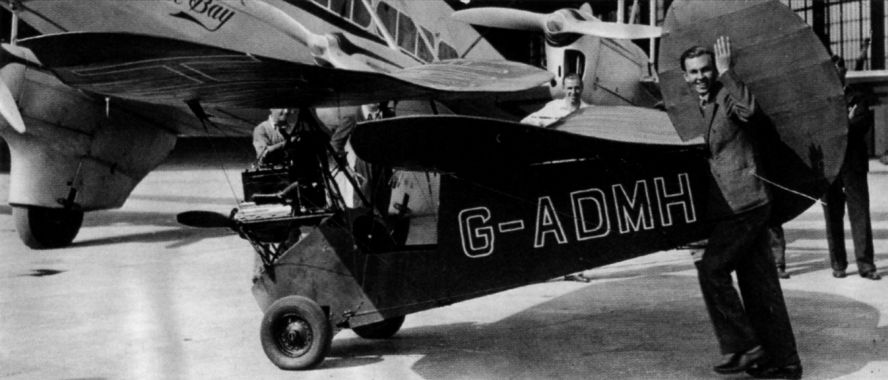
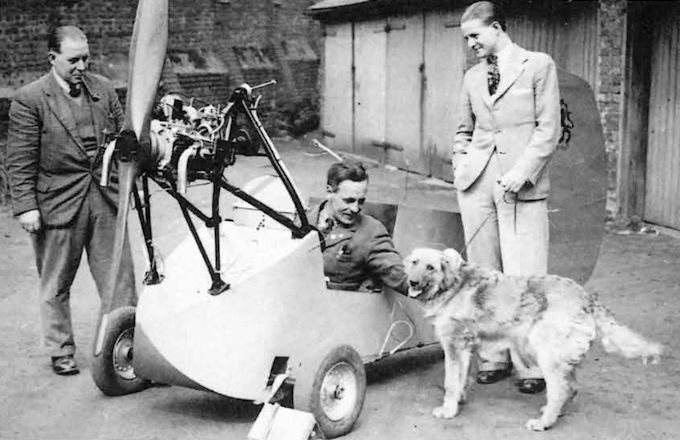
Регистрационный номер: G-ADMH [27] Stephen Appleby posing with his Flea G-ADMH during construction at Heston with DH Dragon I G-ACHV of the Anglo-Persian Oil Company behind. In order of registration date this is the oldest Flea on the list below and it was also the first to be issued with a UK Authorisation to Fly.
Другие самолёты на фотографии: De Havilland Dragon / D.H.84 - Великобритания - 1932
-

Flight 1935-07 / Flight
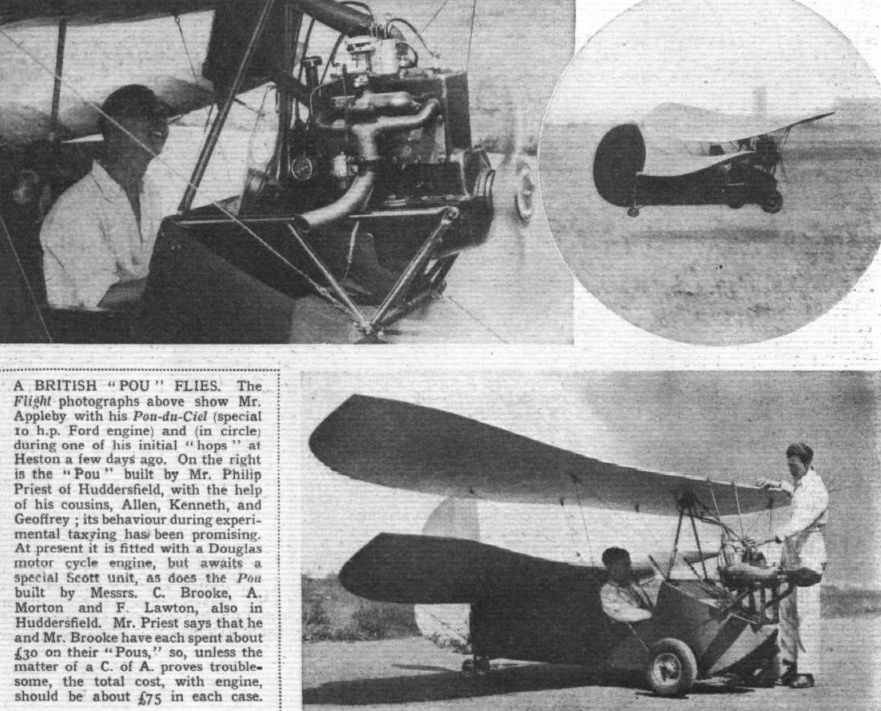
Регистрационный номер: G-ADMH [27] A BRITISH "POU" FLIES. The Flight photographs above show Mr. Appleby with his Pou-du-Ciel (special 10 h.p. Ford engine) and (in circle) during one of his initial "hops" at Heston a few days agp. On the right is the "Pou" built by Mr. Philip Priest of Huddersfield, with the help of his cousins, Allen, Kenneth, and Geoffrey; its behaviour during experimental taxying has been promising. At present it is fitted with a Douglas motor cycle engine, but awaits a special Scott unit, as does the Pou built by Messrs. C. Brooke, A. Morton and F. Lawton, also in Huddersfield. Mr. Priest says that he and Mr. Brooke have each spent about ?30 on their "Pous," so, unless the matter of a C. of A. proves troublesome, the total cost, with engine, should be about ?75 in each case.
-
Air-Britain Archive 1998-03 / K.Ellis - The ABC of the Flying Flea (1)
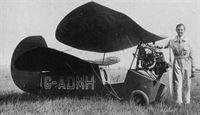
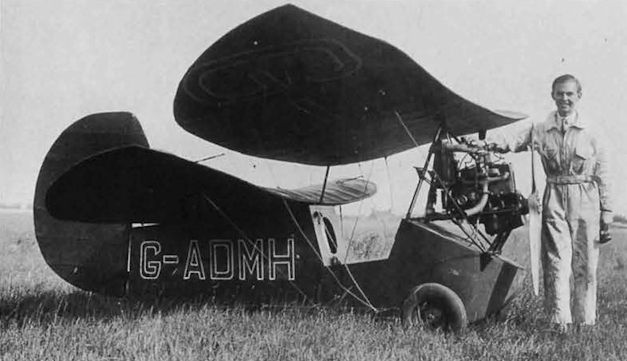
Регистрационный номер: G-ADMH [27] Stephen Villiers Appleby alongside his creation, the Carden Ford-powered G-ADMH at Heston 7.35.
-

Aeroplane Monthly 1982-03 / S.Appleby - On home-made wings
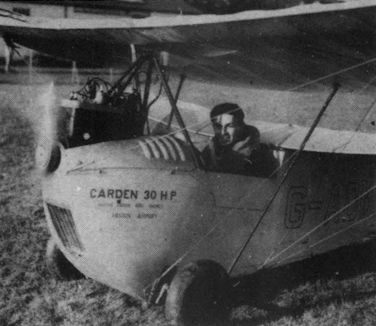
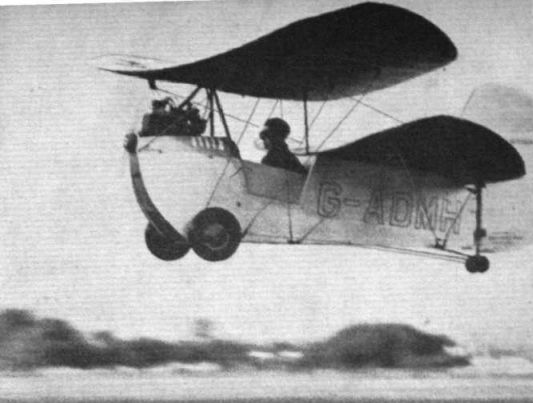
Регистрационный номер: G-ADMH [27] Appleby in his Flea G-ADMH at Heston in August 1935. Note the uncowled Carden Ford engine.
-

Aeroplane Monthly 1981-11 / Skywriters
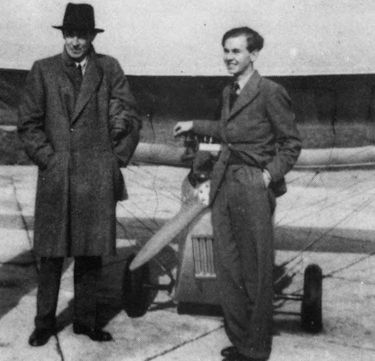
Регистрационный номер: G-ADMH [27] Stephen Appleby sitting in his yet unregistered Flea G-ADMH at Heston in June 1935. Sir John Carden is seen at left.
-

Flight 1936-10 / Flight
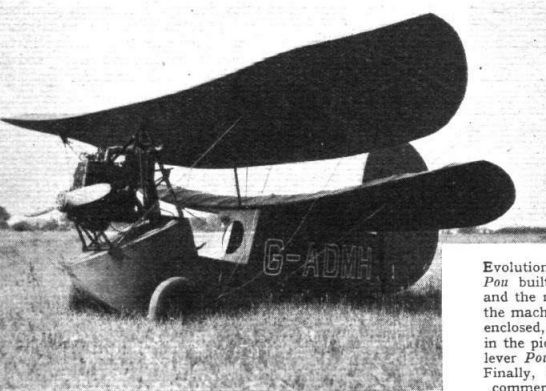
Регистрационный номер: G-ADMH [27] Evolution: The photograph shows the first British Pou built by Mr. S. V. Appleby. Note the exposed engine and the radiator in front of the pilot's face. After a crash the machine was rebuilt with the engine lowered and partly enclosed, and the radiator in the nose of the fuselage.
-

Мировая Авиация 190
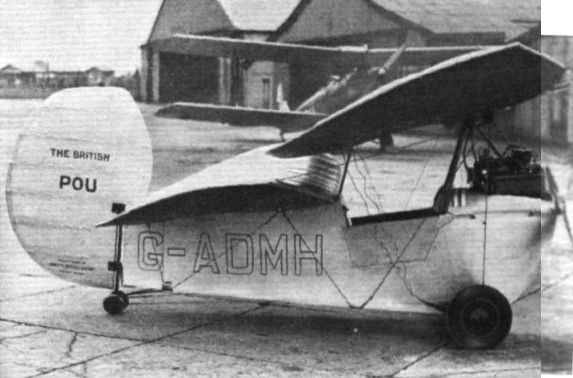
Регистрационный номер: G-ADMH [27] Этот самолет G-ADMH был построен и облетан Стивеном Эпплби. Он был известен в Британии как "Appleby Flea" (Блоха Эпплби).
-

Aeroplane Monthly 1982-03 / S.Appleby - On home-made wings
Регистрационный номер: G-ADMH [27] G-ADMH at Heston in 1935.
-

Aeroplane Monthly 1982-03 / S.Appleby - On home-made wings
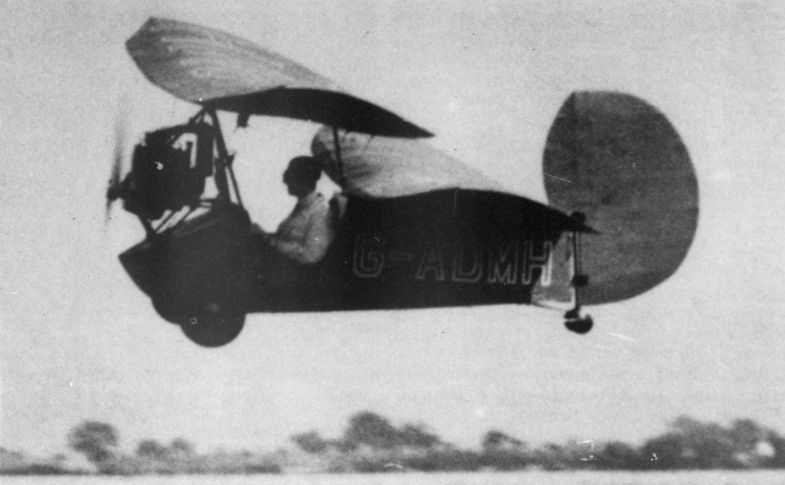
Регистрационный номер: G-ADMH [27] Mr. S. V. Appleby took off from Heston aerodrome in his Carden-engined "Pou" -
The author's Flea G-ADMH in original form with uncowled Carden Ford engine. -

Aeroplane Monthly 1984-07 / J.Viner - The great Flea race
Регистрационный номер: G-ADMH [27] A small boy watches as Stephen Appleby demonstrates his Flea G-ADMH, the first British-built Pou du Ciel to be completed. The registration of the Flea was cancelled in 1938. Stephen Appleby is still with us; we wonder what happened to the little boy!
-

Flight 1935-08 / Flight
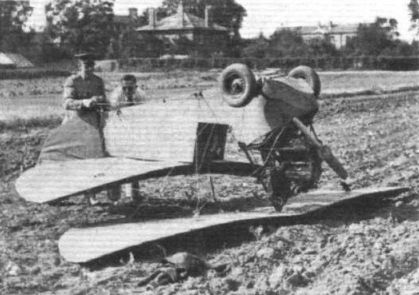
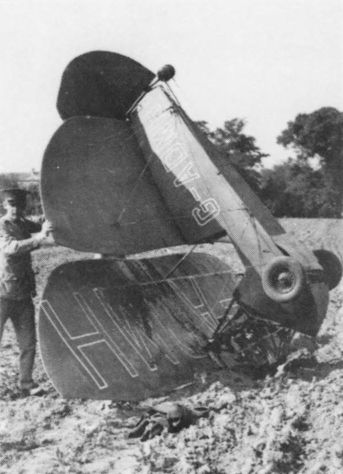
Регистрационный номер: G-ADMH [27] - and landed in an allotment just outside. The plough furrows proved his undoing. On grass he would probably have landed safely. Even as it was, surprisingly little damage was done.
-

Aeroplane Monthly 1981-11 / Skywriters
Регистрационный номер: G-ADMH [27] The same Flea after overturning in a ploughed field near Heston on July 29, 1935. Had the Flea landed on grass it would probably not have turned over.
-

Flight 1935-12 / Flight
Регистрационный номер: G-ADMH [27] A side view - note how the sides of the cockpit, previously open, have been filled in.
-

Aeroplane Monthly 1982-03 / S.Appleby - On home-made wings
Регистрационный номер: G-ADMH [27] -
Flight 1935-10 / Flight
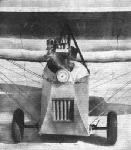
Регистрационный номер: G-ADMH [27] The placing of the radiator in the fuselage nose gives a much neater appearance.
-

Aeroplane Monthly 1982-03 / S.Appleby - On home-made wings
Регистрационный номер: G-ADMH [27] Sir John Carden stands with the author and G-ADMH at Heston in 1935.
-

Aeroplane Monthly 1982-03 / S.Appleby - On home-made wings
Регистрационный номер: G-ADMH [27] Bereted Stephen Appleby at Lympne on December 5, 1935 just prior to his Channel flight.
-
Air-Britain Archive 1998-03 / K.Ellis - The ABC of the Flying Flea (1)
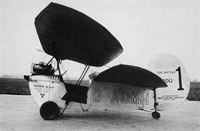
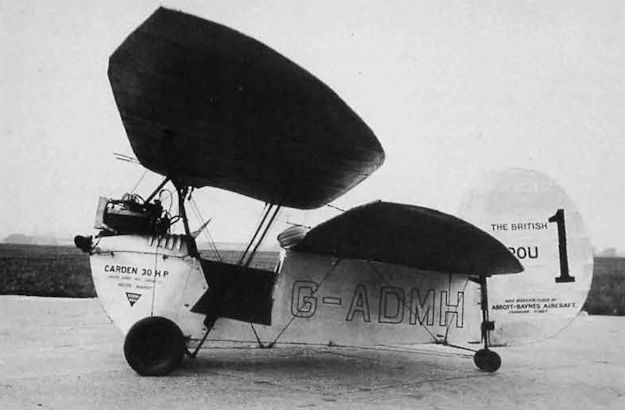
Регистрационный номер: G-ADMH [27] The same aircraft, G-ADMH much modified as the prototype Abbott-Baynes Cantilever Pou, carrying the Ramsgate Race number 'V on the rudder, 8.36.
-
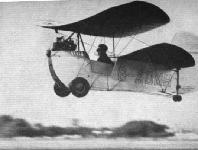
Flight 1935-10 / Flight
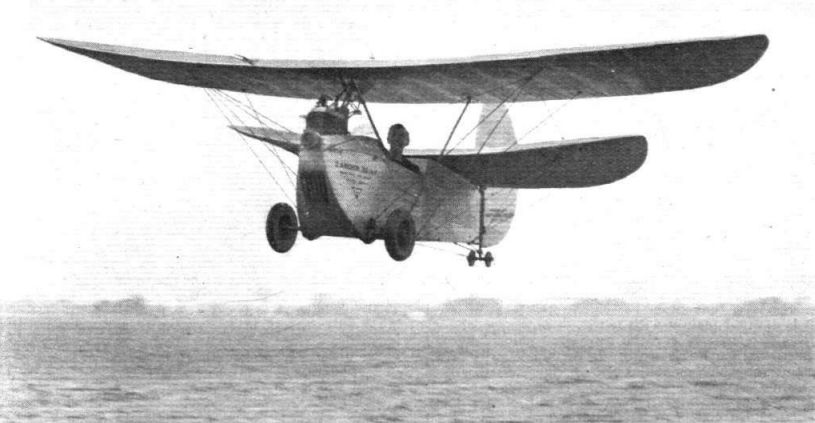
Регистрационный номер: G-ADMH [27] This Pou is now a steady flier, even in gusty weather.
-

Aeroplane Monthly 1982-01 / A.Ord-Hume - Isn't it time we stopped poo-poohing the pour Pou? (1)
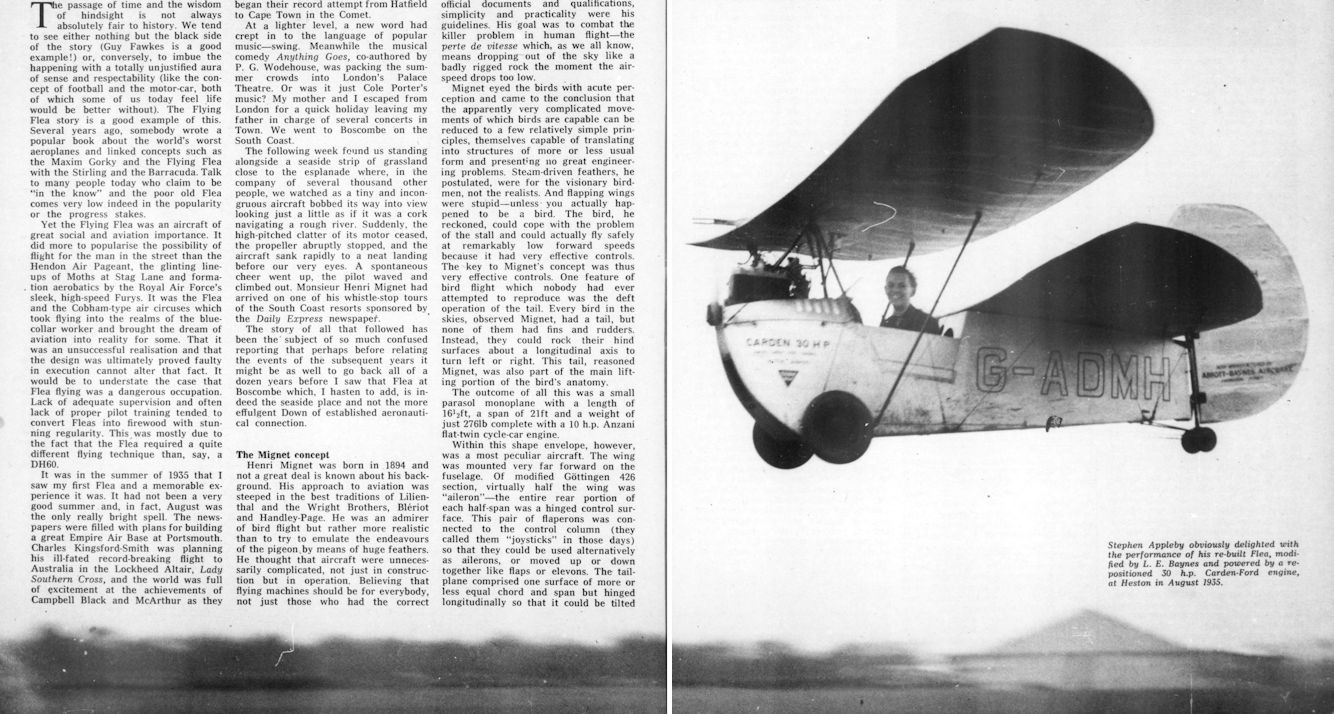
Регистрационный номер: G-ADMH [27] Evolution: After a crash the machine was rebuilt with the engine lowered and partly enclosed, and the radiator in the nose of the fuselage.
Stephen Appleby obviously delighted with the performance of his re-built Flea, modified by L. E. Baynes and powered by a repositioned 30 h.p. at Carden-Ford engine, Heston in August 1935. -

Aeroplane Monthly 1982-03 / S.Appleby - On home-made wings
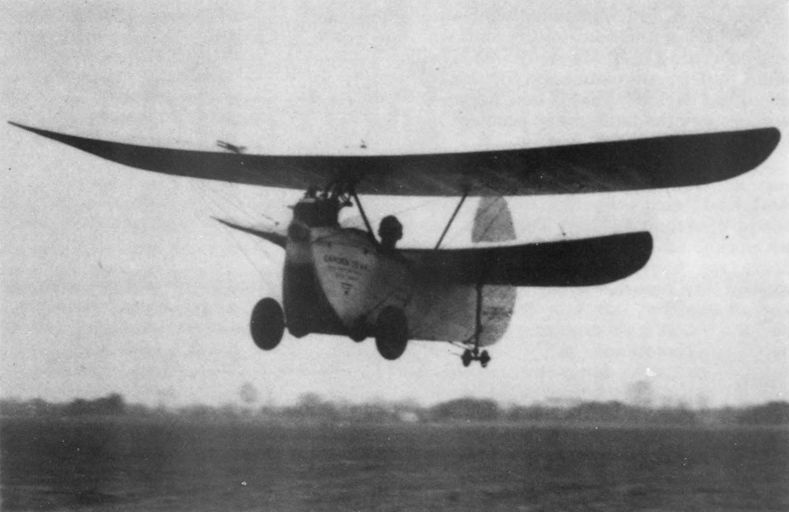
Регистрационный номер: G-ADMH [27] After modification by L. E. Baynes. Note lengthened wings and enclosed engine and radiator.
-
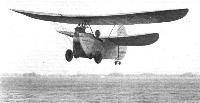
Flight 1936-03 / Flight
Регистрационный номер: G-ADMH [27] THIS ONE FLIES! Remembering the general tendency to be humorous at the expense of the Pou, here is photographic evidence of the fact that the Carden-engined model flies - and flies well. Mr. S. V. Appleby, of course, is the pilot. A reasonable supply of power with careful construction and rigging help to explain its successful performance; one of the rigid incidence control rods can be clearly seen.
-
Air-Britain Archive 1998-03 / K.Ellis - The ABC of the Flying Flea (1)
Регистрационный номер: G-ADMH [27] Cantilever Pou G-ADMH piloted by Appleby on the cross-Channel flight of 5.12.35.
-

Aeroplane Monthly 1982-03 / S.Appleby - On home-made wings
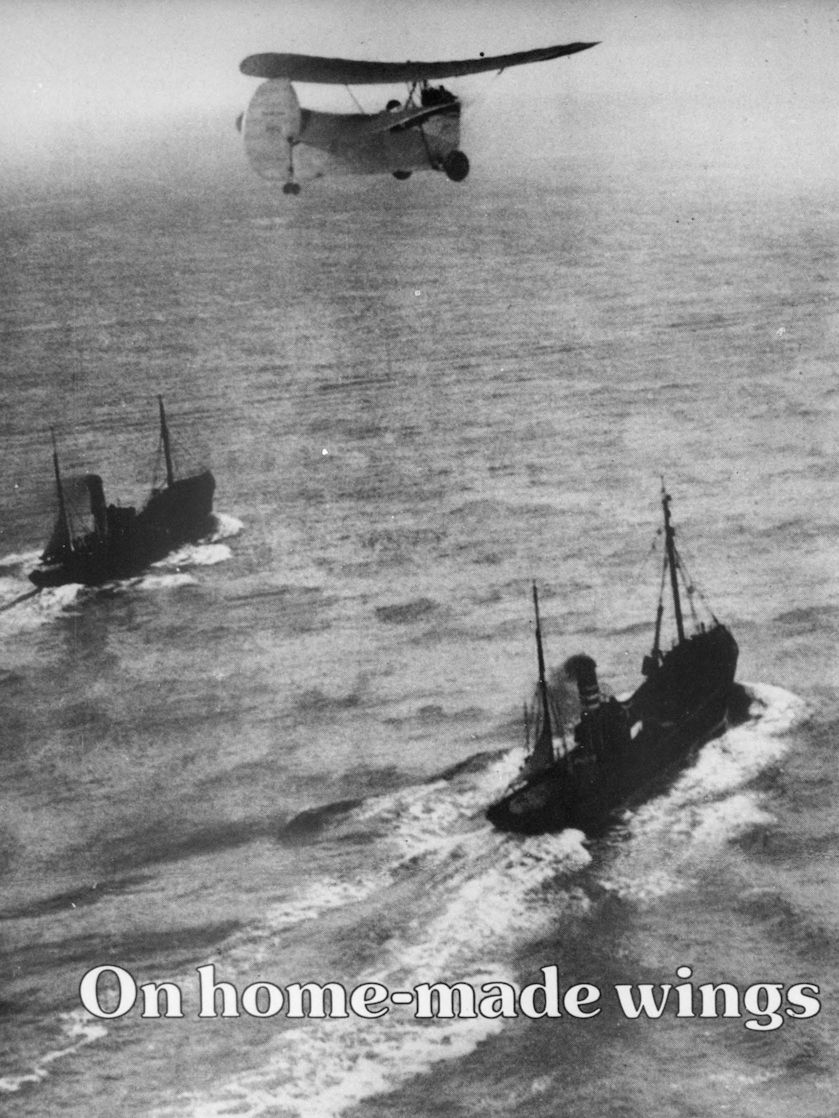
Регистрационный номер: G-ADMH [27] Stephen Appleby crossing the English Channel in his Flea, G-ADMH, on December 5, 1935.
To say that Mr. S. V. Appleby had an escort on his Channel flight would do an injustice to his 70 m.p.h. Pou. -

Aeroplane Monthly 1982-03 / S.Appleby - On home-made wings
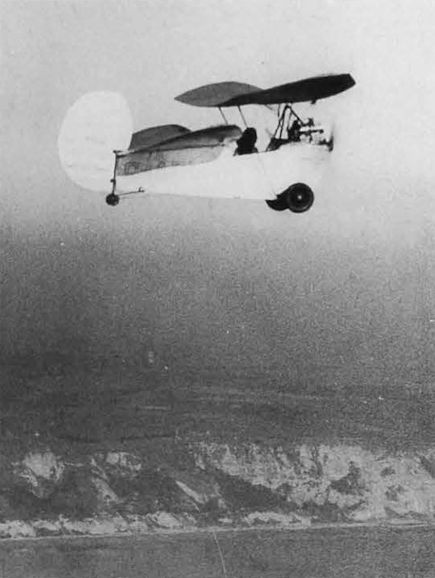
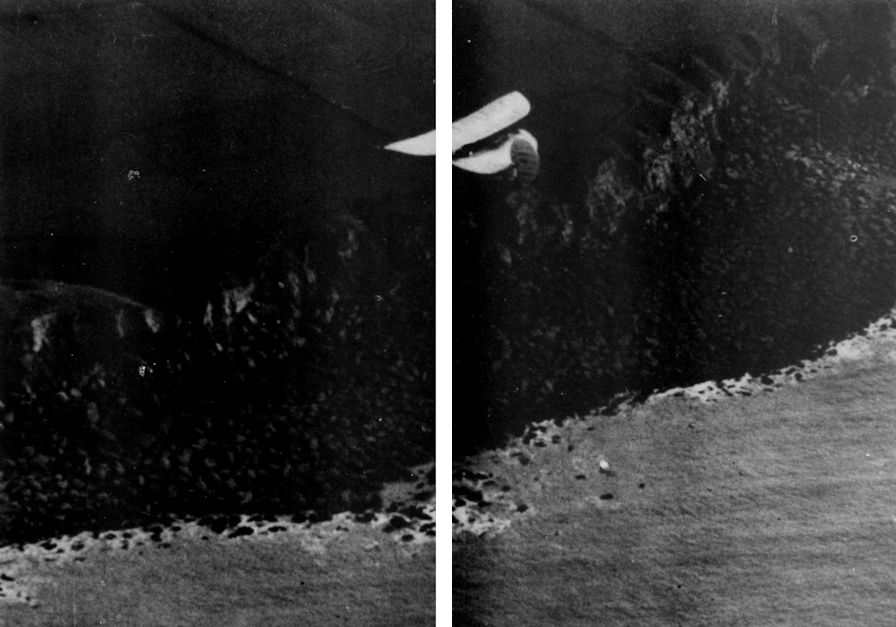
Регистрационный номер: G-ADMH [27] The author crosses the coast of France on his way to St Inglevert, where he landed 35min after leaving Lympne, Kent.
-

Air Enthusiast 1997-03 / B.Marshall - The 'Flea' and Me
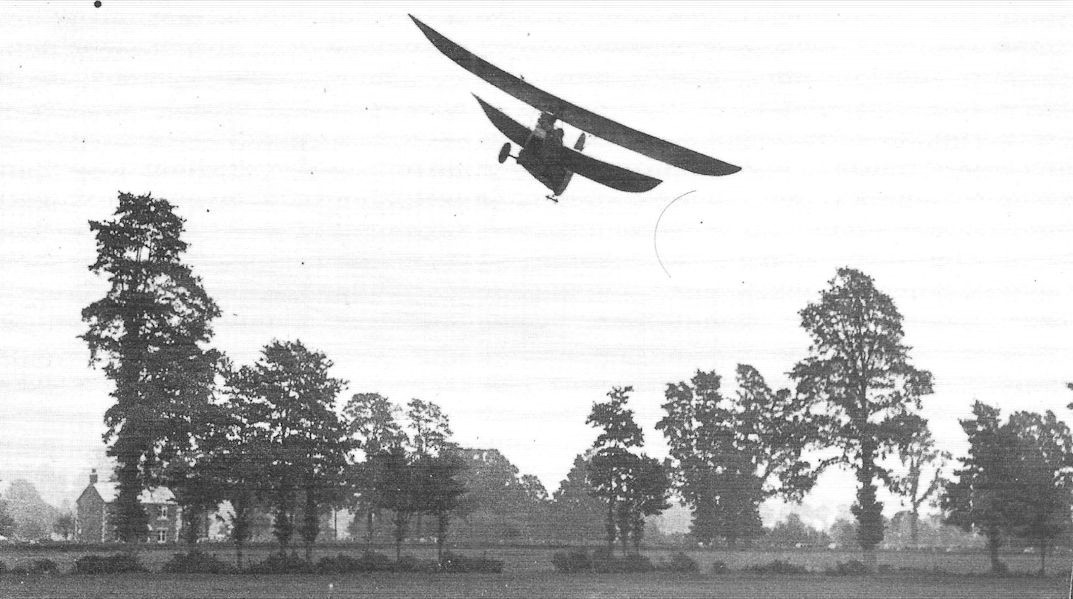
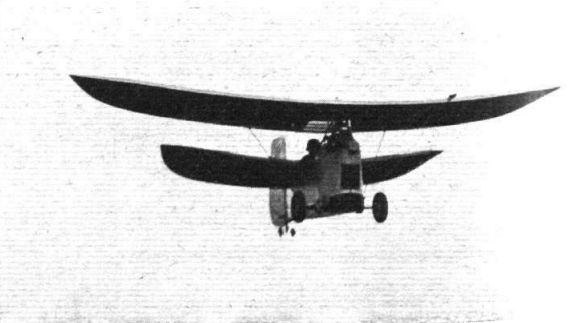
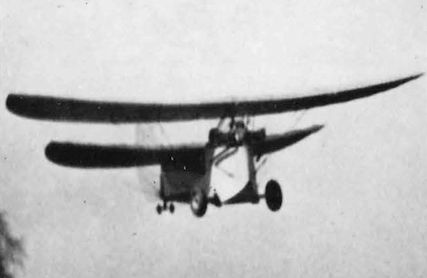
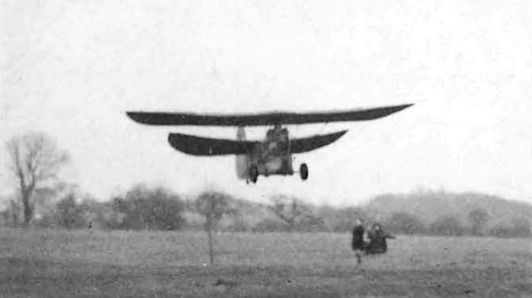
Регистрационный номер: G-ADMH [27] Photographs of ‘Fleas’ in the air are quite rare. An enchanting shot of a Carden Ford-powered example amid a British pastoral scene. This is possibly Stephen Appleby flying G-ADMH after it was modified by L E ‘Baron’ Baynes.
-
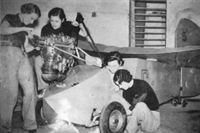
Air-Britain Archive 2000-01 / K.Ellis - The ABC of the Flying Flea (7)
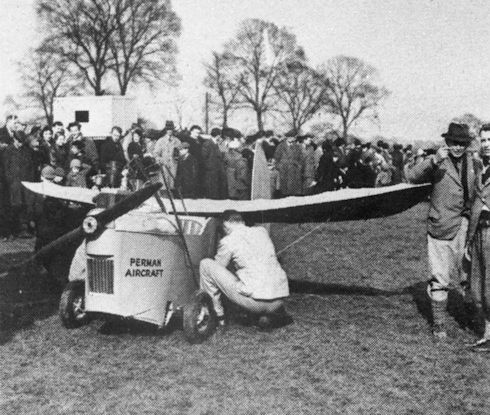
Регистрационный номер: G-ADOV The first Perman Flea receiving some tender loving care to the undercarriage and Scott engine. Although only the marks 'G-A' appear on the side of this publicity shot, the devil logo on the rudder identifies this aircraft as G-ADOV.
-

Aeroplane Monthly 1991-10 / Personal album. Civil
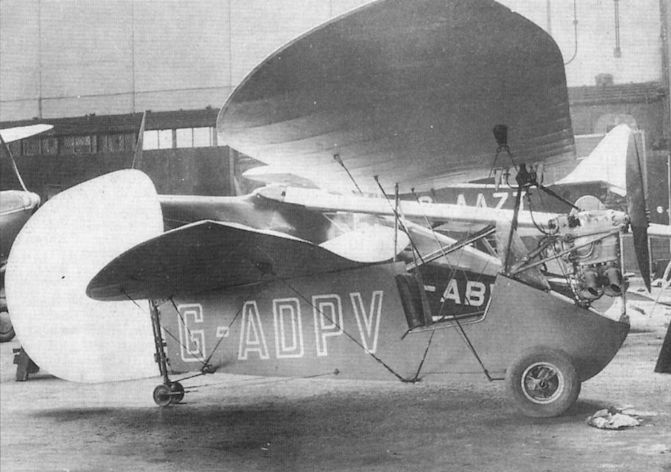
Регистрационный номер: G-ADPV Mignet H.M.14 Pou-du-Ciel (we called them Flying Fleas) G-ADPV was built by E. G. Perman Ltd at their Mews premises in Gray's Inn Road in London. Built for E. W. Cavendish, 'PV was fitted with a 25 h.p. Scott Squirrel and is almost certainly seen here at its Heston base. Perman built 11 Fleas at the time; powerplants included the Anzani and the firm’s own Perman-Ford as well as the Squirrel.
-

Air International 1983-11
Регистрационный номер: G-ADPW [2] The photograph of the Pou du Ciel G-ADPW supplied by Mr Herman.
-
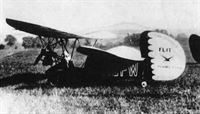
Air-Britain Archive 2000-01 / K.Ellis - The ABC of the Flying Flea (7)
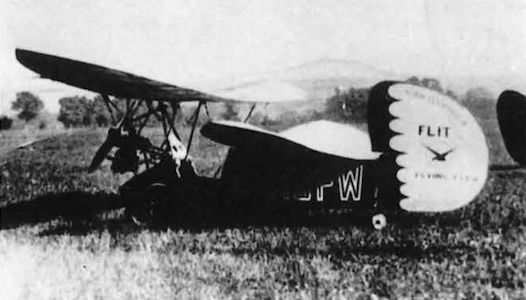
Регистрационный номер: G-ADPW [2] Doig's Perman-built G-ADPW "Flit", with the name "Robin Goodfellow" along the top of the rudder, at a display at Sundridge, Kent.
-
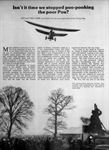
Aeroplane Monthly 1982-02 / A.Ord-Hume - Isn't it time we stopped poo-poohing the pour Pou? (2)
Регистрационный номер: G-ADPX [4] Mr. Appleby flying over the newsreel cameras.
The Perman-Ford powered Perman Pou, G-ADPX, seen performing for the "movie" cameras at a meeting near Southend in April 1936. -

Flight 1936-04 / Flight
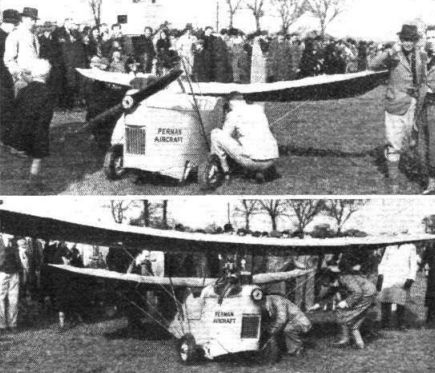
Регистрационный номер: G-ADPX [4] Putting together the Perman Pou - two snapshots taken within a few minutes of each other. Assembly seemed to be a really quick and simple business.
-
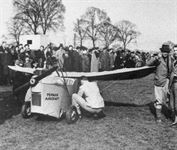
Aeroplane Monthly 1979-06 / A.Ord-Hume - Broughton-Blayney Brawney and Perman Parasol /British pre-war ultralights/
Регистрационный номер: G-ADPX [4] The Perman Pou du Ciel, G-ADPX, built for F. W. Broughton, was one of eleven Fleas built by the company in their mews off the Grays Inn Road.
-
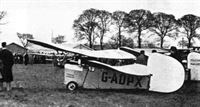
Air-Britain Archive 2000-01 / K.Ellis - The ABC of the Flying Flea (7)
Регистрационный номер: G-ADPX [4] G-ADPX was built by E G Perman Ltd for F W Broughton of Romford and powered by a 30 hp Perman Ford. It is seen here at "Southend 1936" - apparently the Ashingdon rally of 13.4.36 - and of interest is the clearly-labelled "Taxying Machine" immediately behind it.
-
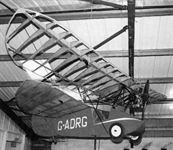
Air-Britain Archive 1999-03 / K.Ellis - The ABC of the Flying Flea (5)
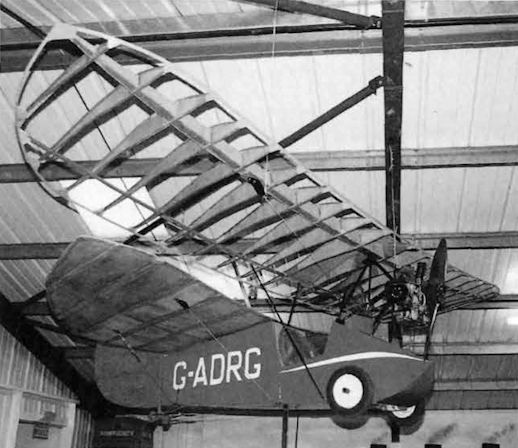
Регистрационный номер: G-ADRG The Juggins and Hayden Flea 'G-ADRG' on display at the Stondon Motor Museum, November 1997, with red & white fuselage and uncovered mainplanes.
-
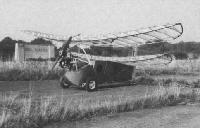
Aeroplane Monthly 1985-12 / Grapevine
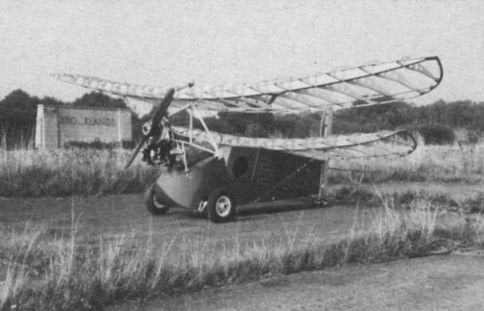
Регистрационный номер: G-ADRY [3], BAPC-29 [3] Meanwhile, at Brooklands, Flying Flea BAPC-29 “G-ADRY” nears completion. The aircraft, built in the late Sixties, was acquired by Mike Beach and brought to Brooklands last winter from its previous home in Wales. A new set of wings has been scratch-built, and work still to be done includes finishing the wing metal fittings, making the rigging wires and covering the flying surfaces. The covering will wait until next spring - the restoration team are not positively itching to do the job - but the Flea will be finished by the summer.
-
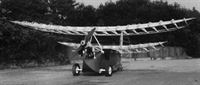
Air-Britain Archive 2000-02 / K.Ellis - The ABC of the Flying Flea (8)
Регистрационный номер: G-ADRY [3], BAPC-29 [3] The post-war Flea built by P D Roberts in Swansea, shown during restoration by Mike Beach at Brooklands with Anzani engine fitted. The completed aircraft is on display at Brooklands Museum as "G-ADRY".
-
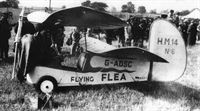
Air-Britain Archive 1999-04 / K.Ellis - The ABC of the Flying Flea (6)
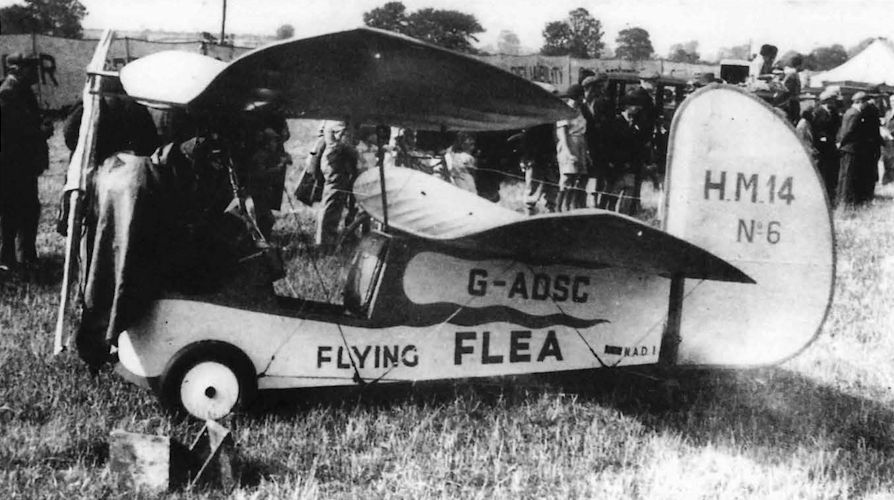
Регистрационный номер: G-ADSC With a coat frustratingly thrown over the engine, Mignet HM.14 No.6 G-ADSC seen at a National Aviation Day. The "c/n" NAD.1 is visible in front of the rudder.
-
Air-Britain Archive 1999-04 / K.Ellis - The ABC of the Flying Flea (6)
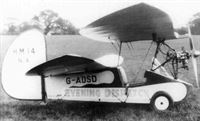
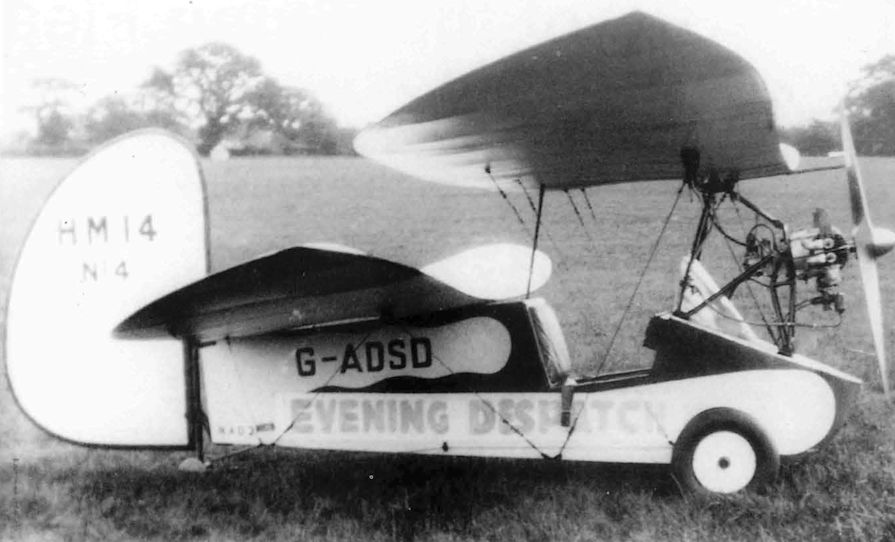
Регистрационный номер: G-ADSD Mignet HM. 14 G-ADSD, also operated by National Aviation Day Displays Ltd,carrying Evening Despatch titling and showing just how 'slight' the 25 hp Poinsard was.
-

Air Enthusiast 1997-03 / B.Marshall - The 'Flea' and Me
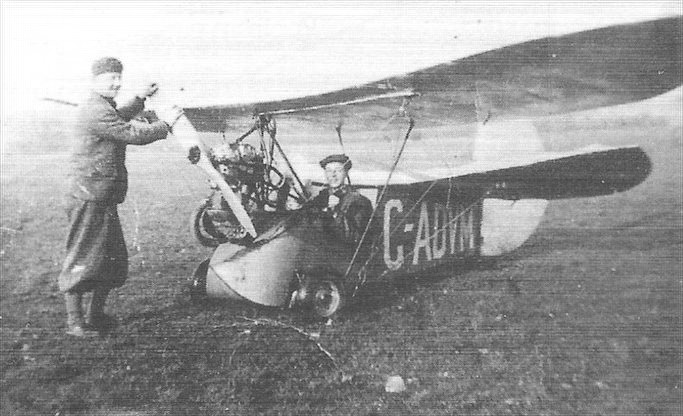
Регистрационный номер: G-ADVM The Planes Ltd HM.14 ‘Flea’ G-ADVM, presumably at Ingatestone. A young Bert Marshall is at the controls, the man with his hands on the propeller is thought to be Harold Bowen.
-
Air-Britain Archive 1999-02 / K.Ellis - The ABC of the Flying Flea (4)
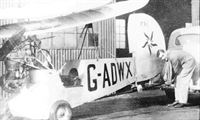
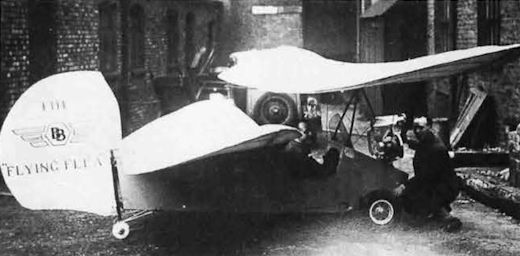
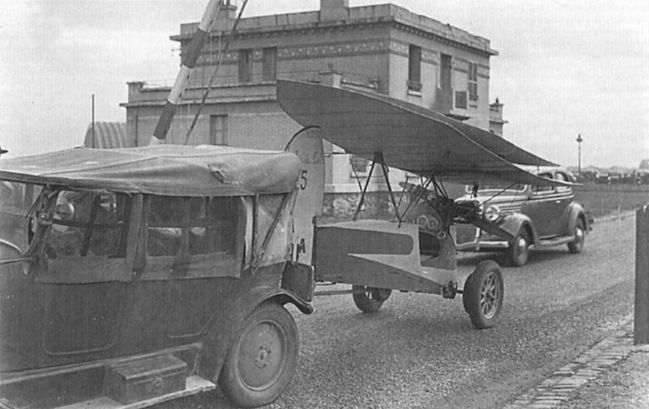
Регистрационный номер: G-ADWX [5] Fraser Brothers' G-ADWX exhibiting another of the items 'designed in' to the Flea by Mignet. Pivoting the main wing around its mount and using a quickly-installed jig on the rear fuselage with the rear wing carefully placed on the main allowed the craft to be roadable. A towing bar was attached under the pilot's rear bulkhead and through the twin rear wheels.
-

Aeroplane Monthly 1995-08 / D.Menzies - Highland Flea
Регистрационный номер: G-ADWX [5] Mr Lamb’s Mignet H.M.14 is hitched on to a car to be towed to a suitable field for flight tests. The designation F.B.1 on the rudder signifies Fraser Brothers No 1, referring to the Dingwall coachbuilders responsible for construction of the fuselage and wings of G-ADWX. The type numbers appear to have ended at that point.
-

Aeroplane Monthly 1995-08 / D.Menzies - Highland Flea
Регистрационный номер: G-ADWX [5] G-ADWX ready for towing, with its wings supported above the fuselage in a fore-and-aft position to keep the width to a minimum.
-

Aeroplane Monthly 1995-08 / D.Menzies - Highland Flea
Регистрационный номер: G-ADWX [5] Mr Lamb’s completed Flea, minus propeller. It was powered by a 25 h.p. Scott Squirrel engine.
-

Aeroplane Monthly 1995-08 / D.Menzies - Highland Flea
Регистрационный номер: G-ADWX [5] The long exhaust extending beneath the cockpit on the starboard side is evident here. Following the Flea’s crash, the registration was cancelled as “lapsed" in 1945.
-
Aeroplane Monthly 1986-01 / 1986 UK Aircraft Collections and Museums Guide
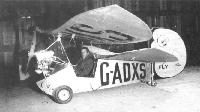
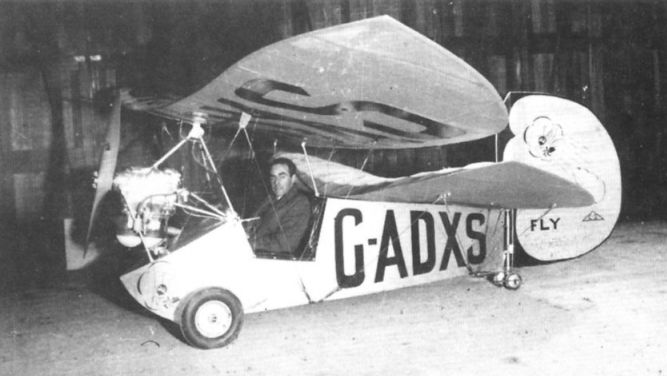
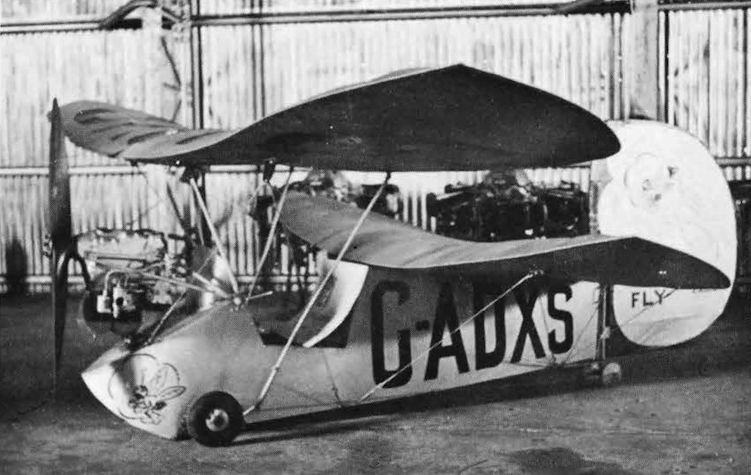
Регистрационный номер: G-ADXS [4] Mignet H.M. 14 Pou-du-Ciel G-ADXS.
-
Air-Britain Archive 1988-03 / Authorisations to Fly 1935-49 (1)
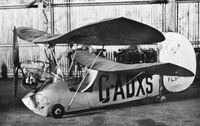
Регистрационный номер: G-ADXS [4] C.L.Storey's well-known Pou du Ciel G-ADXS "Fleeing Fly" which flew at Southend in 1936, seen here in the Staverton museum 18.10.64, is now preserved at Andrewsfield.
-

Air Pictorial 1961-10 / A.Jackson - Register Review
Регистрационный номер: G-ADXS [4] Built by C. L. Storey late in 1935, Pou du Ciel G-ADXS is now on display in Storey's Garage, Alexandria Street, Southend-on-Sea.
-
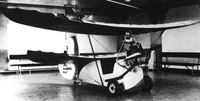
Air-Britain Archive 2000-02 / K.Ellis - The ABC of the Flying Flea (8)
Регистрационный номер: G-ADXS [4] The well-known, and still extant, G-ADXS, Christopher Storey's "The Fleeing Fly", thought to have been photographed at the Alexandra Street, Southend, garage - can anyone confirm this as the location?
-
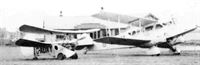
Air-Britain Archive 2000-03 / Feedback
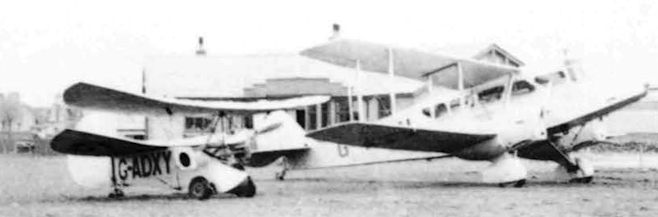
Регистрационный номер: G-ADXY The James Goodall Flea G-ADXY c/n JG.1 Is shown posing next to a DH Dragon 2 which, from the visible parts of the registration, appears to be Aberdeen Airways G-ADFI. As Goodall flew the Flea at Dyce we assume that to be the location seen here, although confirmation, perhaps based on the style of the terminal building, would be welcome.
Другие самолёты на фотографии: De Havilland Dragon / D.H.84 - Великобритания - 1932
-
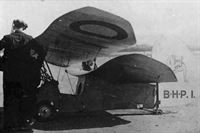
Air-Britain Archive 2000-01 / K.Ellis - The ABC of the Flying Flea (7)
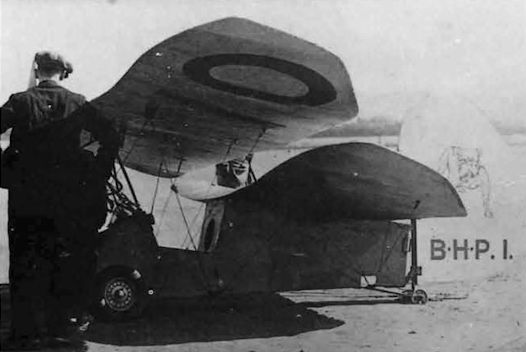
Регистрационный номер: G-ADYO Brian Park's bulldog-adorned G-ADYO under test on Southport Beach.
-
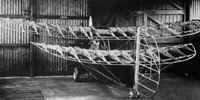
Air-Britain Archive 1999-01 / K.Ellis - The ABC of the Flying Flea (3)
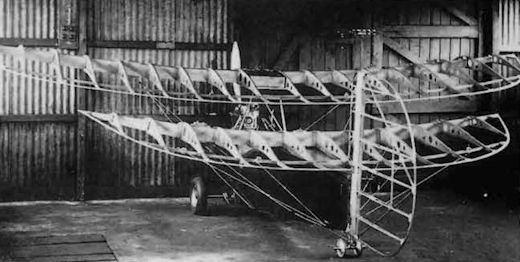
Регистрационный номер: G-ADZV G-ADZV of Dodsom and Caunce seen in skeletal form, probably at Ledsham, Cheshire. It later clocked 40 hours of flying but was abandoned after an accident and the fatal crash of G-AEEW.
-
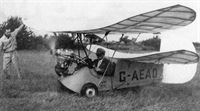
Air-Britain Archive 1999-03 / K.Ellis - The ABC of the Flying Flea (5)
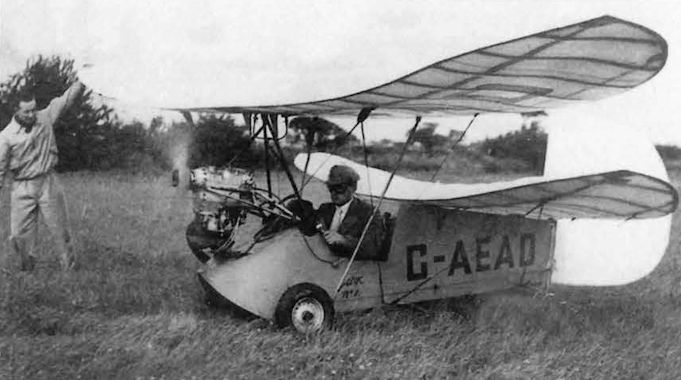
Регистрационный номер: G-AEAD The Scott A2S running as E W Kendrew's Flea G-AEAD taxies. The constructor's number was painted under the cockpit.
-
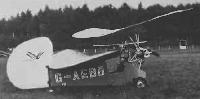
Jane's All the World Aircraft 1980 / Encyclopedia of Aviation - Aircraft A-Z - v4
Регистрационный номер: G-AEBB [6] Mignet Pou du Ciel.
-

Air Pictorial 1968-11 / A.Jackson - Register Review / Airport Movements
Регистрационный номер: G-AEBB [6] Pou du Ciel G-AEBB at the Shuttleworth Air Pageant, Old Warden 8/9/68
-
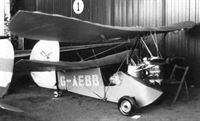
Air-Britain Archive 2000-01 / K.Ellis - The ABC of the Flying Flea (7)
Регистрационный номер: G-AEBB [6] K W Owen's G-AEBB was originally built with a 1300 cc Henderson motorcycle engine but is seen here after restoration with a 25 hp Scott Squirrel by Shuttleworth at Old Warden in 1968.
-

Air-Britain Archive 2000-01 / K.Ellis - The ABC of the Flying Flea (7)
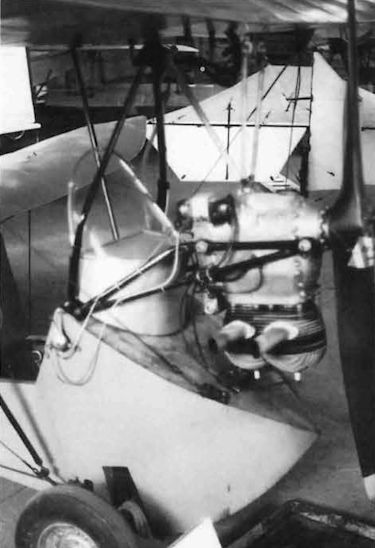
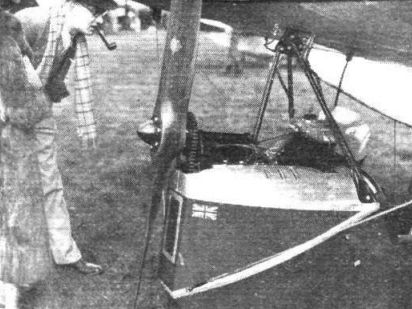
Регистрационный номер: G-AEBB [6] Close up of the Scott A.2S Squirrel installation on G-AEBB, showing the twin stub exhausts.
-
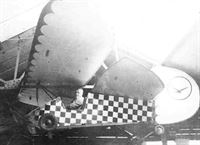
Air-Britain Archive 2000-03 / K.Ellis - The ABC of the Flying Flea (9)
Регистрационный номер: G-AEBT Joe Wood 'hangar flying' the engine less chequered G-AEBT during the aircraft's period of storage in Solihull.
-
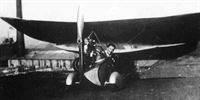
Air-Britain Archive 2000-02 / K.Ellis - The ABC of the Flying Flea (8)
Регистрационный номер: G-AEDM Spelling's Light Aircraft Service "Sky Magic", the be-spatted G-AEDM at Darwen.
-

Flight 1936-04 / Flight Advertisements
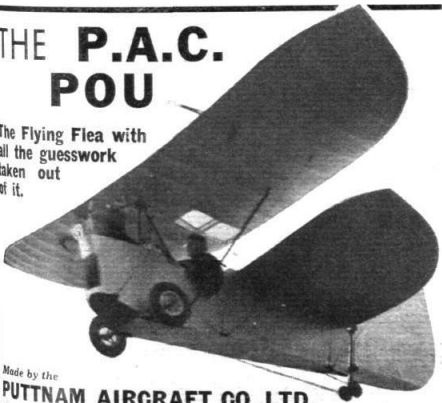
Регистрационный номер: G-AEEC [3] -
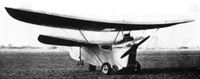
Air-Britain Archive 2000-02 / K.Ellis - The ABC of the Flying Flea (8)
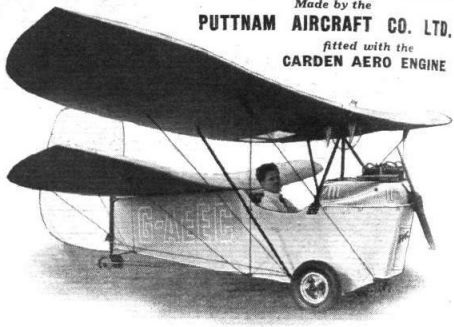
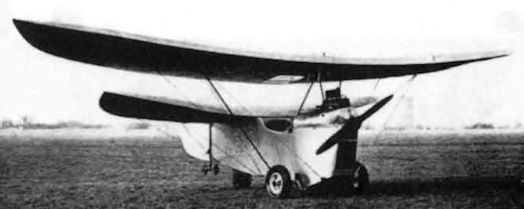
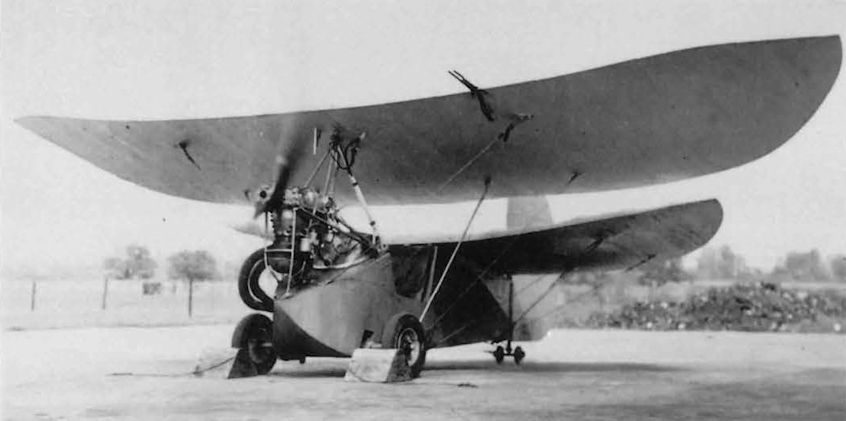
Регистрационный номер: G-AEEC [3] Puttnam's G-AEEC showing the neat 30 hp Carden Ford installation, double tailwheel and, apparently, a clear-view panel in the wing above the pilot's head.
-
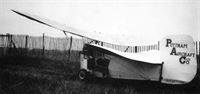
Air-Britain Archive 2000-02 / K.Ellis - The ABC of the Flying Flea (8)
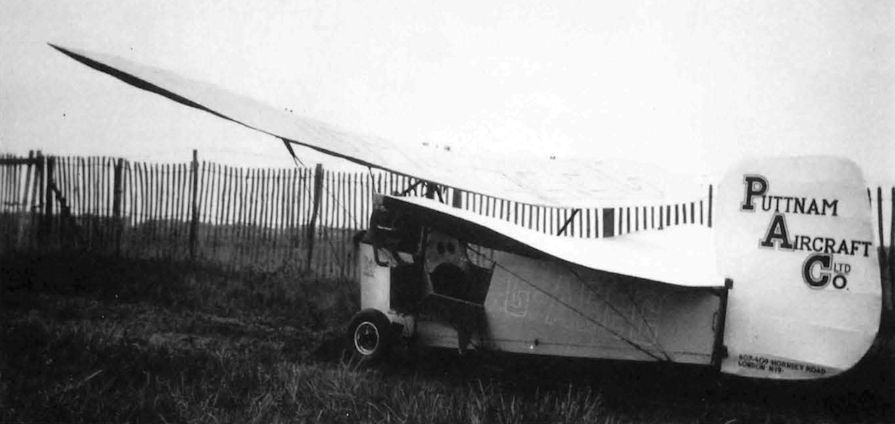
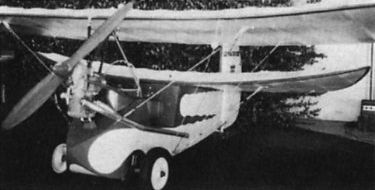
Регистрационный номер: G-AEEC [3] Puttnam's G-AEEC showing cockpit details, the company name on the rudder and "PAC Pou" on the nose.
-
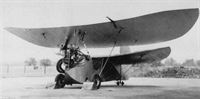
Air-Britain Archive 1999-01 / K.Ellis - The ABC of the Flying Flea (3)
Регистрационный номер: G-AEEH Engine runs underway on EG Davis's G-AEEH at what is thought to be RAF Weston Zoyland, 1936. Note the prominent right-side exhausts of the Scott A.2S.
Squirrel-powered Pou G-AEEH built at Bath in 1936. -
Air-Britain Archive 1998-04 / K.Ellis - The ABC of the Flying Flea (2)
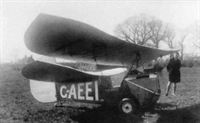
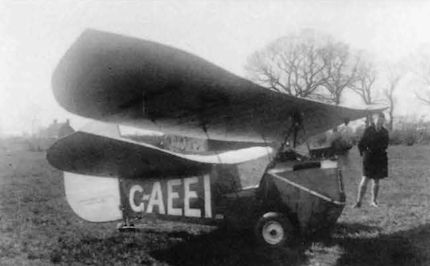
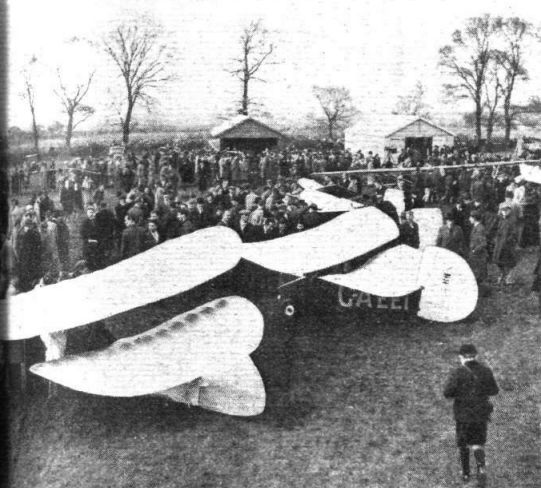
Регистрационный номер: G-AEEI [3] Cooper's Garage Flea G-AEEI chocked and ground-running. Could that be the young John Cooper watching? The constructor's number CG.1 is painted after the 'I' of the registration.
-

Aeroplane Monthly 1988-03 / J.Battison - Flea circus
Регистрационный номер: G-AEEI [3] -

Flight 1936-04 / Flight
Регистрационный номер: G-AEEI [3] Some of the 5,000 spectators getting their money's worth
-
Air-Britain Archive 1999-03 / K.Ellis - The ABC of the Flying Flea (5)
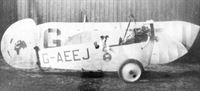
Регистрационный номер: G-AEEJ The Ipswith and District Pou Club's G-AEEJ in dismantled form plus would-be test pilot! With its heavy engine, mainwheels and ply-covered rudder it was almost certainly overweight.
-
Air-Britain Archive 1998-04 / K.Ellis - The ABC of the Flying Flea (2)
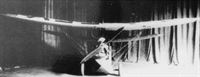
Регистрационный номер: G-AEEY Theatrical pose by Richard Butler's completed G-AEEY does highlight the rigging/control wires and push-rod for the main wing.
-
Air-Britain Archive 2000-03 / K.Ellis - The ABC of the Flying Flea (9)
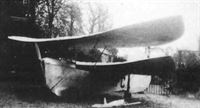
Регистрационный номер: G-AEFC The sleekly cowled G-AEFC with Jim Crampton at Moulton near Spalding.
-
Air-Britain Archive 1998-03 / K.Ellis - The ABC of the Flying Flea (1)
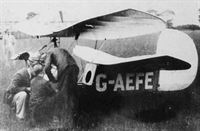
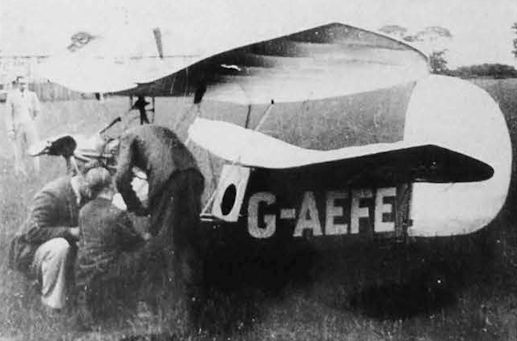
Регистрационный номер: G-AEFE The Scott 'Flying Squirrel' engine on L V G Barrow's G-AEFE receives some attention, circa April 1936.
-
Air-Britain Archive 2000-02 / K.Ellis - The ABC of the Flying Flea (8)
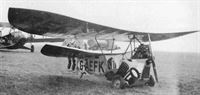
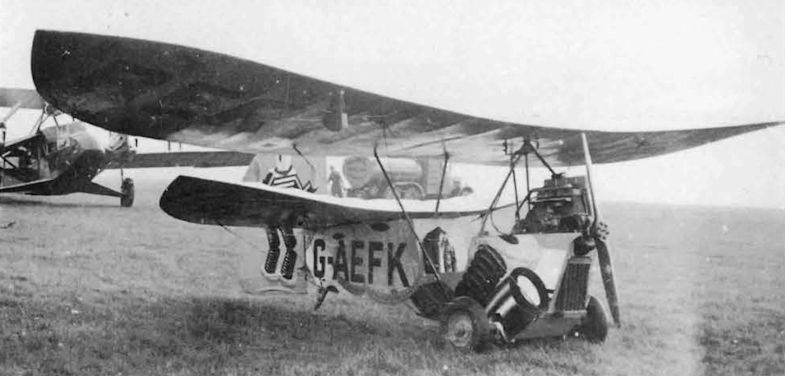
Регистрационный номер: G-AEFK The famous "Bertie Bassett" G-AEFK decorated with liquorice allsorts and with the name in large letters under the front wing. Operated by CWA Scott Air Displays in 1936, it is presumed photographed, with tail skid, in early 1937, in front of one of the Air Publicity AS.4 Ferry inverted Gipsy Major conversions recorded as having taken place in winter 1936/7, either G-ABSI or G-ACFB.
Другие самолёты на фотографии: Airspeed Ferry / AS.4 - Великобритания - 1932
-
Air-Britain Archive 1989-03
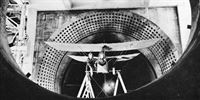
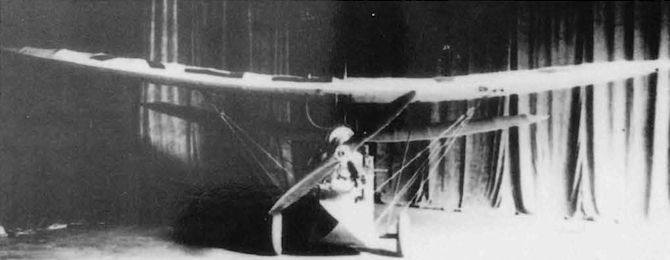
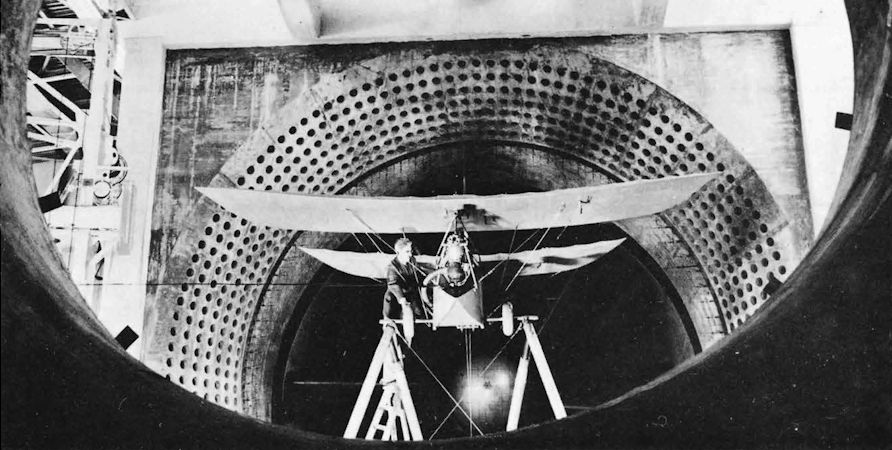
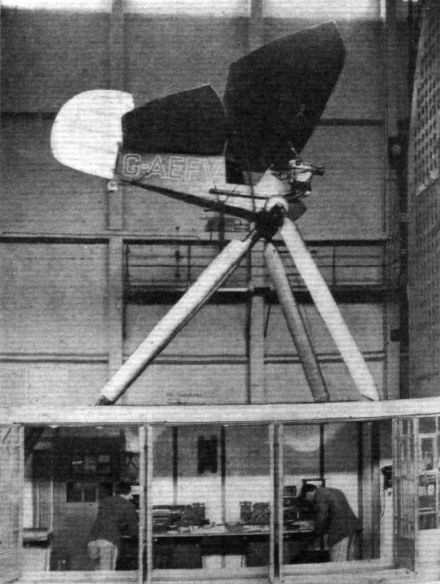
Регистрационный номер: G-AEFV [2] The photo of Flying Flea G-AEFV unfortunately had to be cropped to save half this page. It shows the Flea in the Farnborough wind tunnel for testing on 13.8.36, the result of a number of fatal crashes of the type. Reference to A.J.Jackson's "British Civil Aircraft Vol.3", page 38 seems to imply that testing took place after the Goodall crash of 20.9.36, but this photo proves otherwise. Can anyone add to the story: were other Fleas also tested? When did the ban become effective? Did any continue flying? Come to think of it, how about an article on the pre-war Fleas somebody?
-
Flight 1936-08 / Flight
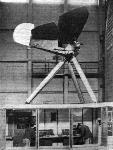
Регистрационный номер: G-AEFV [2] A Pou on test in the large wind tunnel at Farnborough.
-
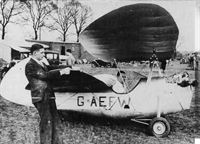
Air-Britain Archive 1998-03 / K.Ellis - The ABC of the Flying Flea (1)
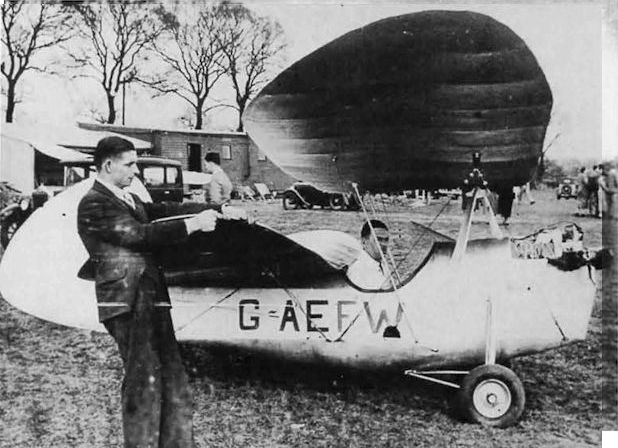
Регистрационный номер: G-AEFW [3], G-AERF [3] The heavily modified Aero 8 Pou G-AEFW at the Ashington rally on 13.4.36.
A later picture of the Aero-Eight Club's Flea, showing it marked correctly as G-AEFW. -

Flight 1936-05 / Flight
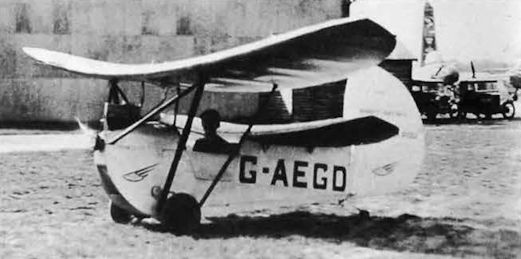
Регистрационный номер: G-AEGD [5] In aerodynamic design the new machine is a big step forward in Pou development. The 30 h.p. Carden engine is neatly installed.
-
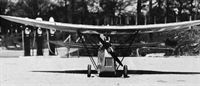
Air-Britain Archive 1998-03 / K.Ellis - The ABC of the Flying Flea (1)
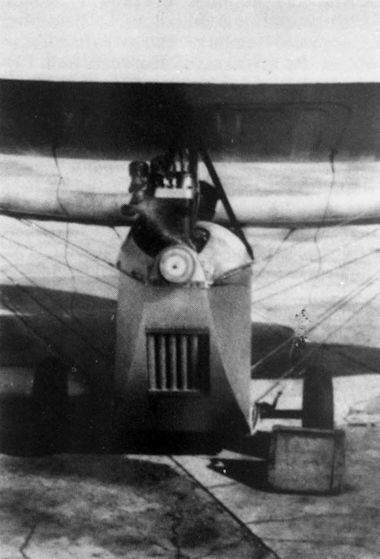
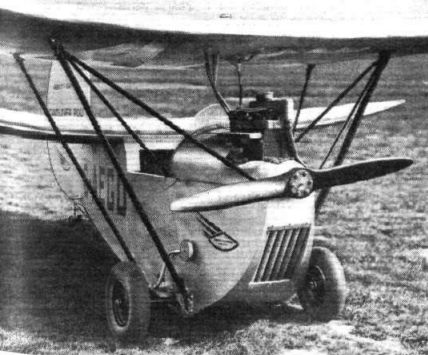
Регистрационный номер: G-AEGD [5] A head-on view of Abbott-Baynes Cantilever Pou G-AEGD showing the engine installation and struts.
-
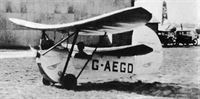
Air-Britain Archive 1998-03 / K.Ellis - The ABC of the Flying Flea (1)
Регистрационный номер: G-AEGD [5] Abbott-Baynes Cantilever Pou G-AEGD. The neat installation of the Carden Ford, radiator and all, plus the robust struts and push rod controls are apparent in this view.
-

Flight 1936-10 / Flight
Регистрационный номер: G-AEGD [5] The Abbott-Baynes Cantilever Pou with 30 h.p. Carden engine.
-
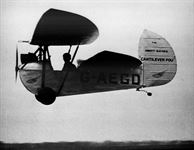
Aeroplane Monthly 1980-07
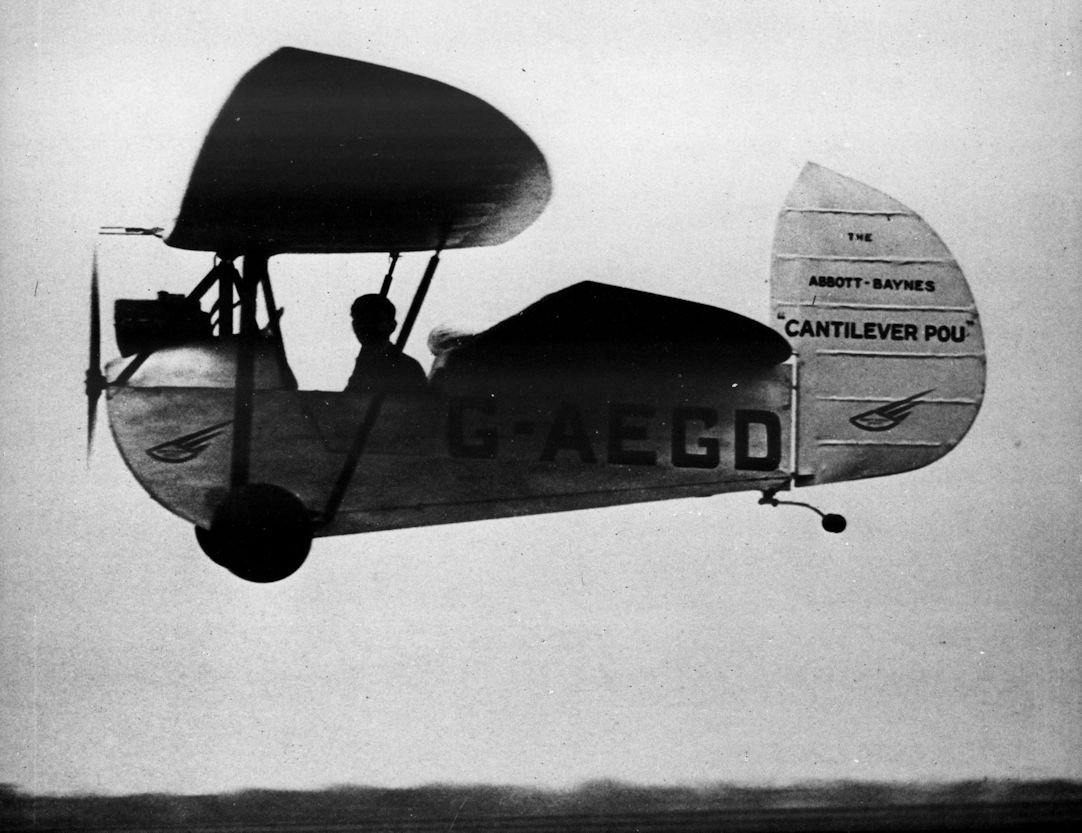
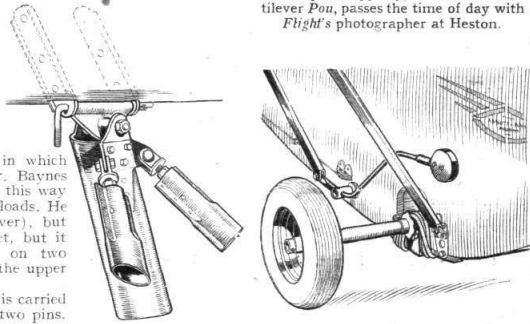
Регистрационный номер: G-AEGD [5] Mr. Stephen Appleby, in the new cantilever Pou, passes the time of day with Flight's photographer at Heston.
Flight shot of Stephen Appleby flying the Abbott-Baynes cantilever-winged Pou du Ciel (Flying Flea), was taken at Heston on May 4, 1936 -
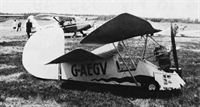
Air-Britain Archive 1988-03 / Authorisations to Fly 1935-49 (1)
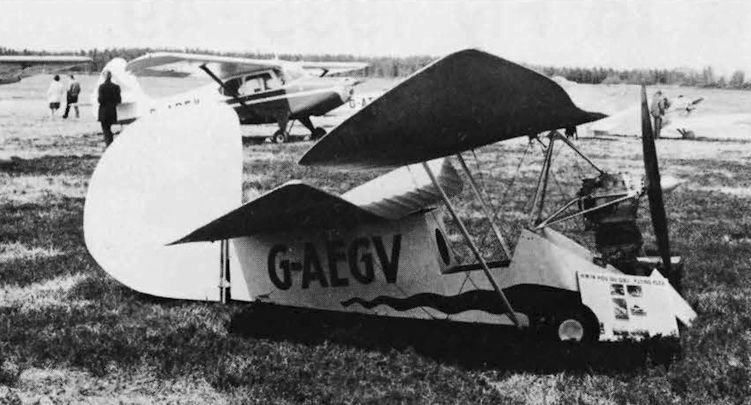
Регистрационный номер: G-AEGV [3] Pou du Ciel G-AEGV was built by the East Midlands Aviation Co and is fittingly now in the care of the Midland Air Museum. It was photographed as a static exhibit at what seems to be Blackbushe in the sixties.
-

Aeroplane Monthly 1974-11 / J.Wood - Seventy hours of Dronish delight
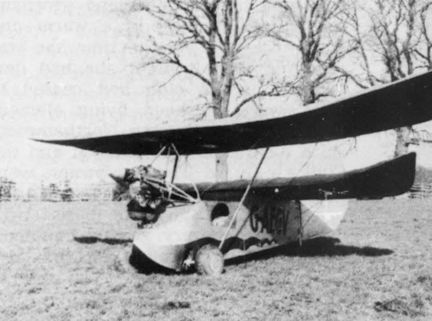
Регистрационный номер: G-AEGV [3] The Flea that the author first soloed in. It is shown as it is today, with wrong engine. The original Douglas Sprite was used by the Drone syndicate as a spare. The Flea is today owned by the Midland Aircraft Preservation Society.
-
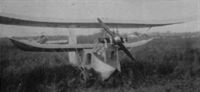
Air-Britain Archive 1999-01 / K.Ellis - The ABC of the Flying Flea (3)
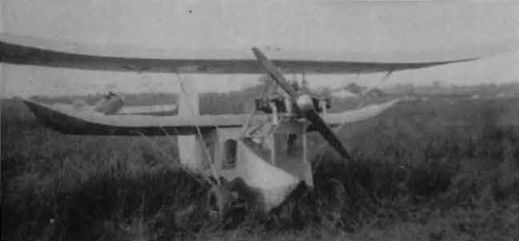
Регистрационный номер: G-AEGV [3] The East Midlands Aviation Company's G-AEGV complete with Douglas at an unknown venue. Tiger Moth G-ACDA is behind.
Другие самолёты на фотографии: De Havilland Tiger Moth / D.H.82 - Великобритания - 1931
-
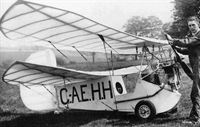
Air-Britain Archive 1998-04 / K.Ellis - The ABC of the Flying Flea (2)
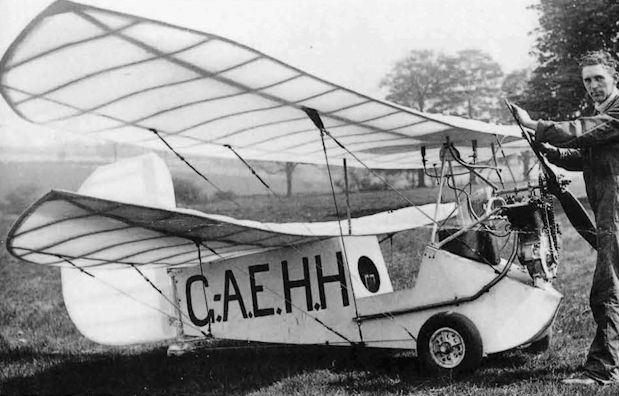
Регистрационный номер: G-AEHH Clear dope on the wings and interesting full stops between each of the letters of the registration are clearly visible on C H Cooper's G-AEHH. The Harley-Davidson engine was not often fitted to Fleas.
-

Aeroplane Monthly 1988-01 / Mignet H.M.14 Pou du Ciel G-AEHM /Preservation Profile/
Регистрационный номер: G-AEHM [6] Early photograph of Harry Dolman’s Flea, G-AEHM. The engine is a 35 h.p. ABC Scorpion.
-

Aeroplane Monthly 1988-01 / Mignet H.M.14 Pou du Ciel G-AEHM /Preservation Profile/
Регистрационный номер: G-AEHM [6] 'HM pictured at Wroughton on June 27, 1986.
-

Aeroplane Monthly 1988-01 / Mignet H.M.14 Pou du Ciel G-AEHM /Preservation Profile/
Регистрационный номер: G-AEHM [6] ADRIAN BALCH'S plate was also taken at Wroughton, current home of the Flea.
-

Aeroplane Monthly 1988-01 / Mignet H.M.14 Pou du Ciel G-AEHM /Preservation Profile/
Регистрационный номер: G-AEHM [6] G-AEHM on exhibition at the Daily Express “50 Years of Flying” event, held at Hendon Aerodrome on July 21, 1951.
-
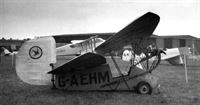
Air-Britain Archive 1999-01 / K.Ellis - The ABC of the Flying Flea (3)
Регистрационный номер: G-AEHM [6] H J Dolman's G-AEHM "on display at an event in 1951", when owned by the Science Museum - we are virtually certain that this was the RAeC 50th Anniversary/National Air Races meeting at Hatfield on 23.6.51 (the Races were cancelled due to bad weather) with the participants in roped enclosures. A further possibility is the Daily Express Trophy meeting at Shoreham 6.8.51 (also cancelled and then run on 22.9.51. Visible are Hawk Major G-ADMW and Hart G-ABMR which took part in both events, though Gloster Aircraft's Rapide G-AHRH was merely a spectator like the Flea.
Другие самолёты на фотографии: De Havilland Dragon Rapide / Dominie / D.H.89 - Великобритания - 1934Hawker Hart - Великобритания - 1928Miles Hawk / M.2 - Великобритания - 1932
-

Aeroplane Monthly 1988-01 / Mignet H.M.14 Pou du Ciel G-AEHM /Preservation Profile/
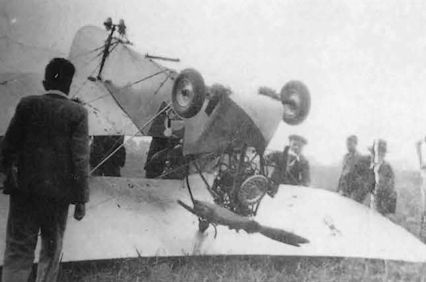
Регистрационный номер: G-AEHM [6] G-AEHM on its back at Bristol on May 4, 1936, possibly after its first flight.
-
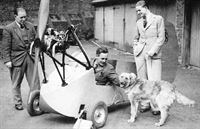
Air-Britain Archive 1999-03 / K.Ellis - The ABC of the Flying Flea (5)
Регистрационный номер: G-AEII Posed shot for the local newspaper of G-AEII with Henry Killick - complete with Scouting badges - in the cockpit. Note the engine mounting.
-
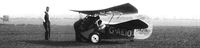
Air-Britain Archive 2000-02 / K.Ellis - The ABC of the Flying Flea (8)
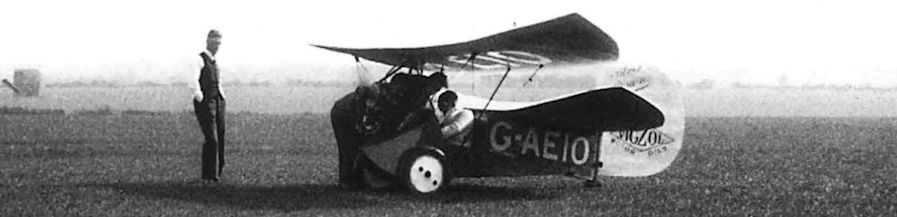
Регистрационный номер: G-AEIO Ideal Flea-flying country? With no hills and hardly a tree in sight, although it eventually hit one, G-AEIO pictured during its hops made near Melton Mowbray by Steven Squires with three helpers visible. It appears to carry a name on the top of the rudder, above the Vigzol Motor Oils logo.
-
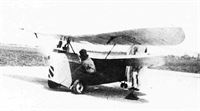
Air-Britain Archive 2000-01 / K.Ellis - The ABC of the Flying Flea (7)
Регистрационный номер: G-AEIP Phoenix Aircraft's G-AEIP ground running - another with a much altered nose shape enclosing its Carden Ford engine.
-
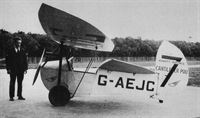
Air-Britain Archive 1998-03 / K.Ellis - The ABC of the Flying Flea (1)
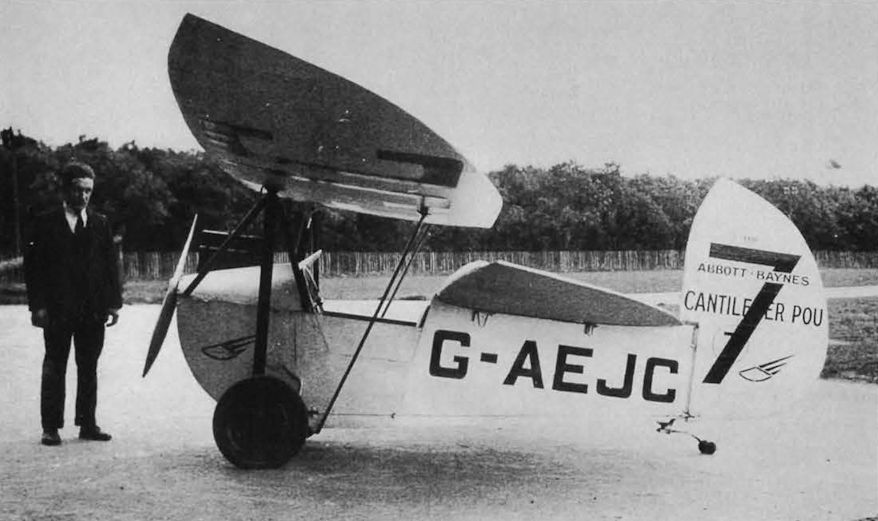
Регистрационный номер: G-AEJC [2] Abbott-Baynes c/n CP.3 G-AEJC carrying the Ramsgate race number '7' applied over the usual lettering on the rudder, 8.36.
-

Aeroplane Monthly 1984-07 / J.Viner - The great Flea race
Регистрационный номер: G-AEJC [2] Competitors itching to take off. At right, the cantilever Pou G-AEJC built by E. D. Abbott Ltd at Farnham during 1936. It was powered by a 30 h.p. Carden-Ford engine and was based at Heston. Stephen Appleby's Flea, G-ADMH, can be seen third from right.
-
Aeroplane Monthly 1982-02 / A.Ord-Hume - Isn't it time we stopped poo-poohing the pour Pou? (2)
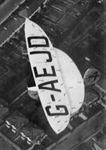
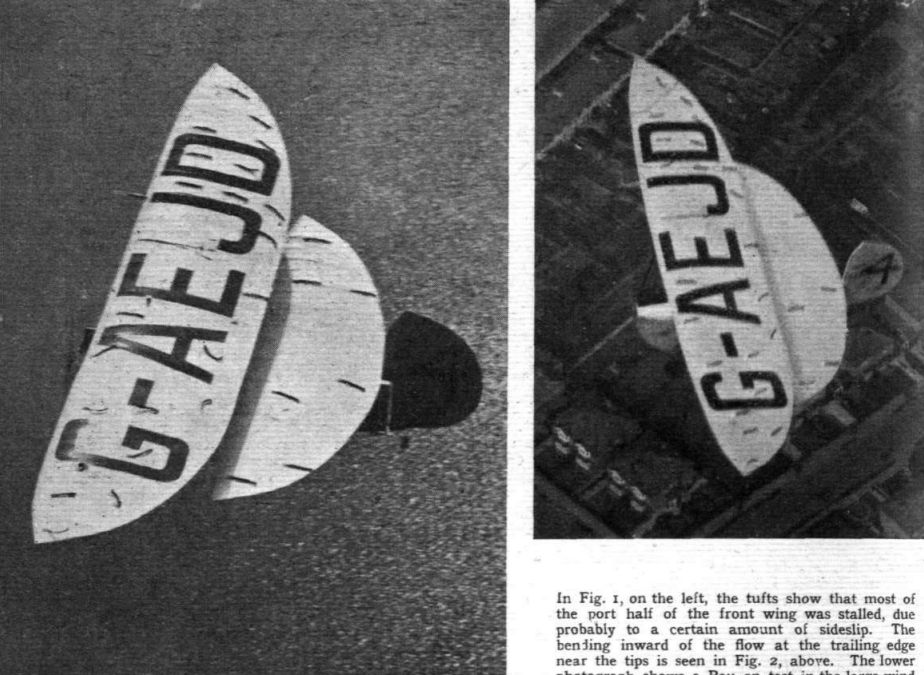
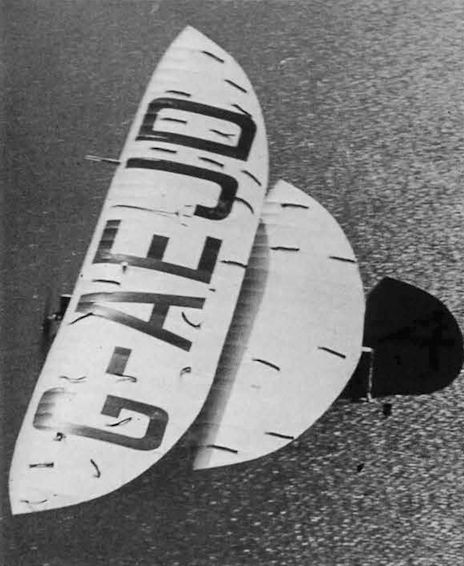
Регистрационный номер: G-AEJD [3] The Abbott-built Pou G-AEJD covered with wool tufts and flown by Stephen Appleby. Most of the port half of the front wing is stalled due probably to a certain amount of sideslip.
-
Flight 1936-08 / Flight
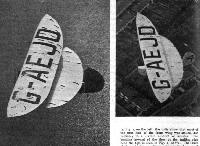
Регистрационный номер: G-AEJD [3] In Fig. 1, on the left, the tufts show that most of the port half of the front wing was stalled, due probably to a certain amount of sideslip. The bending inward of the flow at the trailing edge near the tips is seen in Fig. 2, right.
-
Air-Britain Archive 1998-03 / K.Ellis - The ABC of the Flying Flea (1)
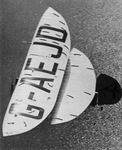
Регистрационный номер: G-AEJD [3] Stephen Appleby flying the Abbott-Baynes G-AEJD during airflow trials - note the behaviour of the wool tufts on the forward port wing.
-
Air-Britain Archive 1998-03 / K.Ellis - The ABC of the Flying Flea (1)
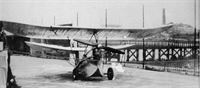
Регистрационный номер: G-AEJU C E Baker's Pou G-AEJU on display at what appears to be a seaside location (any offers?) in 1936.
-
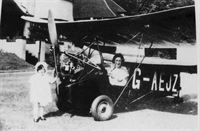
Air-Britain Archive 1999-01 / K.Ellis - The ABC of the Flying Flea (3)
Регистрационный номер: G-AEJZ A family shot of the Leslie Crosland Flea G-AEJZ with Scott A2S. The initials TLC may also be seen just in front of the cockpit.
-
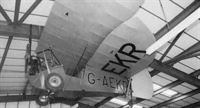
Air-Britain Archive 1998-04 / K.Ellis - The ABC of the Flying Flea (2)
Регистрационный номер: G-AEKR [5], BAPC-121 [5] The purple-fuselaged replica of G-AEKR, BAPC.121 ' flying' from the hangar roof at Breighton between 1993 and 1997. It is now on show at Doncaster Museum.
-

Air Pictorial 1957-03 / Register Review / Airport News
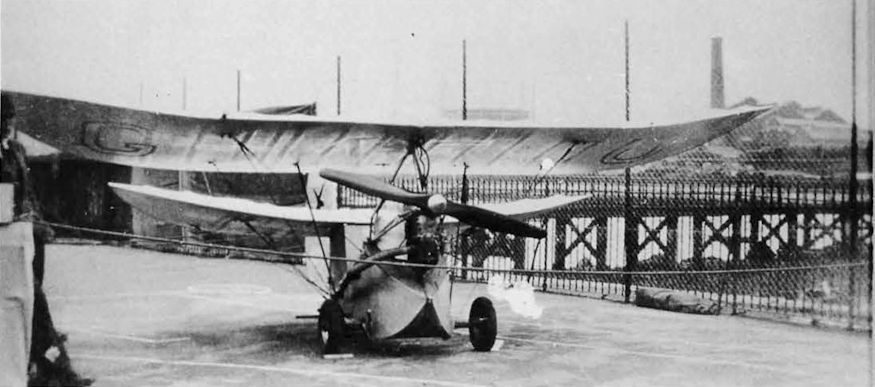
Регистрационный номер: G-AEKR [5], BAPC-121 [5] Pou du Ciel G-AEKR (c/n, C.A.C.I) hangs today in the roof of Claybourn's Garage near Doncaster Airport, scene of its third and last flight on 23rd June 1937. Inscribed "This is the Flea that Claybourn's Built", it is fitted with a twin cylinder Anzani inverted motor.
-
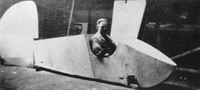
Air-Britain Archive 1998-04 / K.Ellis - The ABC of the Flying Flea (2)
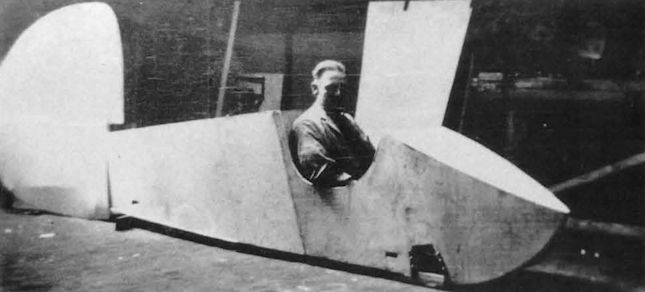
Регистрационный номер: BAPC-121 [5], G-AEKR [5] Dream on! Some 'hangar flying' going on at the Hallgate Garage, Doncaster, during the construction of Claybourne's original G-AEKR.
-
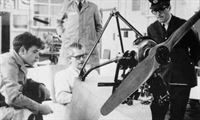
Air-Britain Archive 1998-04 / K.Ellis - The ABC of the Flying Flea (2)
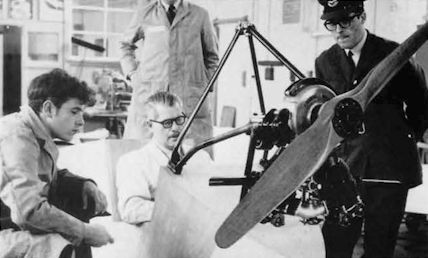
Регистрационный номер: G-AEKR [5], BAPC-121 [5] Work underway on the replica of G-AEKR at RAF Oakington. The mounting of the Anzani engine and the upper wing attachment point can be clearly seen.
-
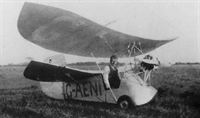
Air-Britain Archive 1998-04 / K.Ellis - The ABC of the Flying Flea (2)
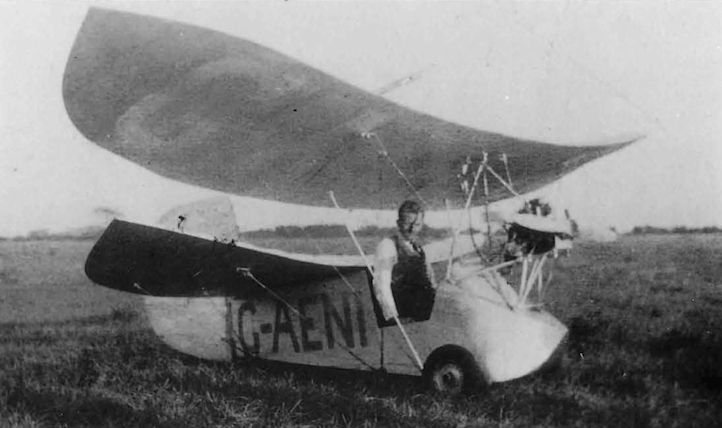
Регистрационный номер: G-AENI [2] Fred Brown's Flea G-AENI assumed photographed at the flying field at Eye, near Peterborough.
-
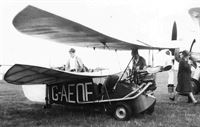
Air-Britain Archive 1999-04 / K.Ellis - The ABC of the Flying Flea (6)
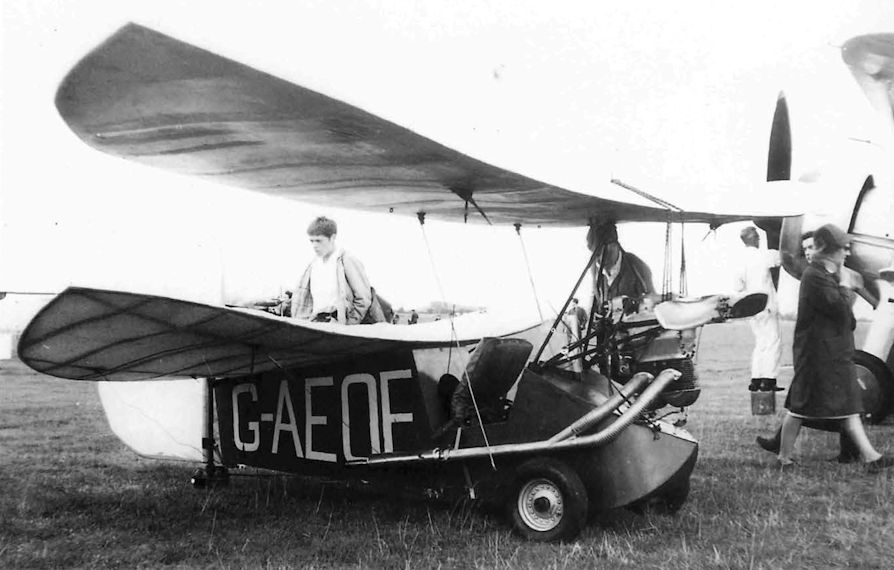
Регистрационный номер: G-AEOF The Walter Millon Flea c/n WM.1 was never registered but it survived the War in storage and was exhibited by the Air-Britain Kent Branch at aviation events wearing the unused period marks G-AEOF. It is currently displayed in the Aviodome at Schiphol.
-
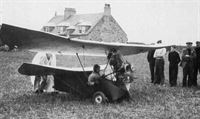
Air-Britain Archive 1998-03 / K.Ellis - The ABC of the Flying Flea (1)
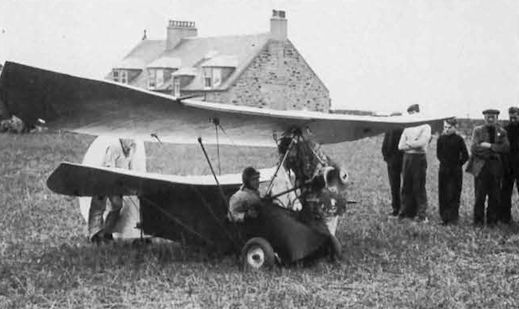
Регистрационный номер: G-AEOJ [4] Dr Armour's G-AEOJ in its initial configuration, note the pushrod control for the main wing.
-
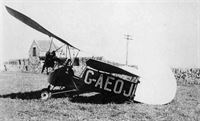
Air-Britain Archive 1998-03 / K.Ellis - The ABC of the Flying Flea (1)
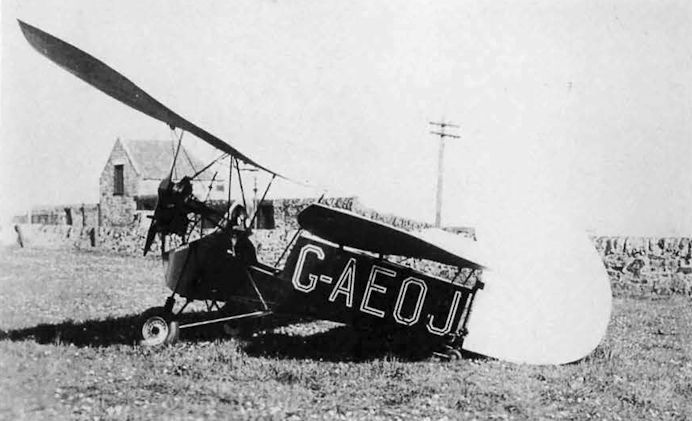
Регистрационный номер: G-AEOJ [4] G-AEOJ following rebuild to the acceptable pivoting rear wing standard. As such it flew after the so-called 'ban', with its A to F expiring in 8.39. The modified undercarriage increased ground clearance but decreased forward visibility during taxying.
-
Aeroplane Monthly 1979-06 / A.Ord-Hume - Broughton-Blayney Brawney and Perman Parasol /British pre-war ultralights/
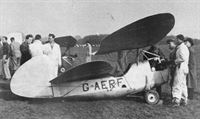
Регистрационный номер: G-AERF [3], G-AEFW [3] One of the Aero-8 club machines has a fuselage of unorthodox but pleasing appearance. The engine is a Douglas flat twin.
The Aero-Eight Club's “Super Flea” wearing incorrect registration letters, later changed to G-AEFW. The Flea is seen at the Club's April 1936 Bank Holiday meeting at Canute Air Park in Essex.
Bearing the same registration as the second Brawney, is a Mignet H.M.14 Pou du Ciel. The Pou's correct registration, G-AEFW, was applied later. -

Aeroplane Monthly 1988-03 / J.Battison - Flea circus
Регистрационный номер: G-AERF [3], G-AEFW [3] The author standing with the Aero-Eight Club’s “high-speed” Flea, G-AEFW. Note the streamlined fuselage and divided undercarriage. The engine was a Douglas Sprite.
-
Air-Britain Archive 1999-01 / K.Ellis - The ABC of the Flying Flea (3)
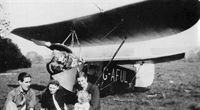
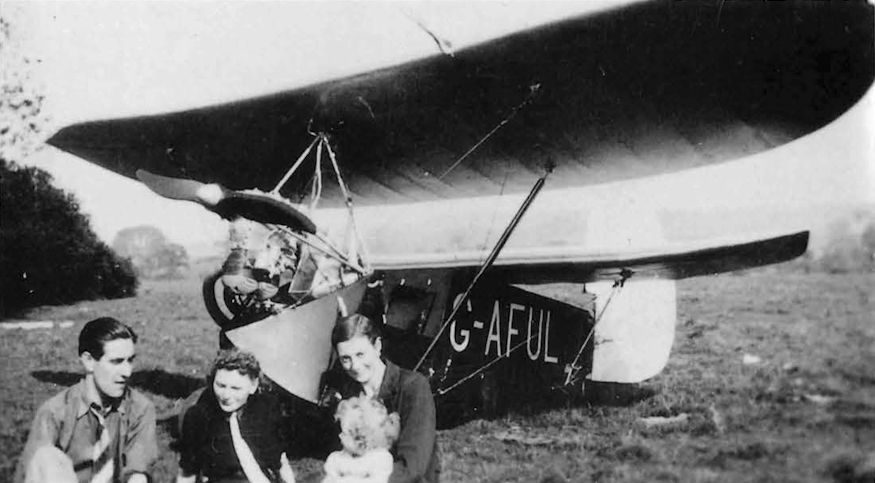
Регистрационный номер: G-AFUL A family scene in front of the last British ‘Flea’ to receive an Authorisation to Fly - TH Fouldes’ G-AFUL with modified undercarriage and push-rod controlled rear wing (compare the ‘sit’ of the rear wing to that of G-ADVM) in May 1939.
The Fouldes Flying Flea was a modified version which gained an Authorisation to Fly in May 1939 some two and a half years after the so-called ban on the type. This happy family scene hides the split undercarriage on G-AFUL but shows well the moving rear wing and the Scott A.2S engine. -
Air-Britain Archive 2000-03 / K.Ellis - The ABC of the Flying Flea (9)
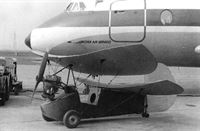
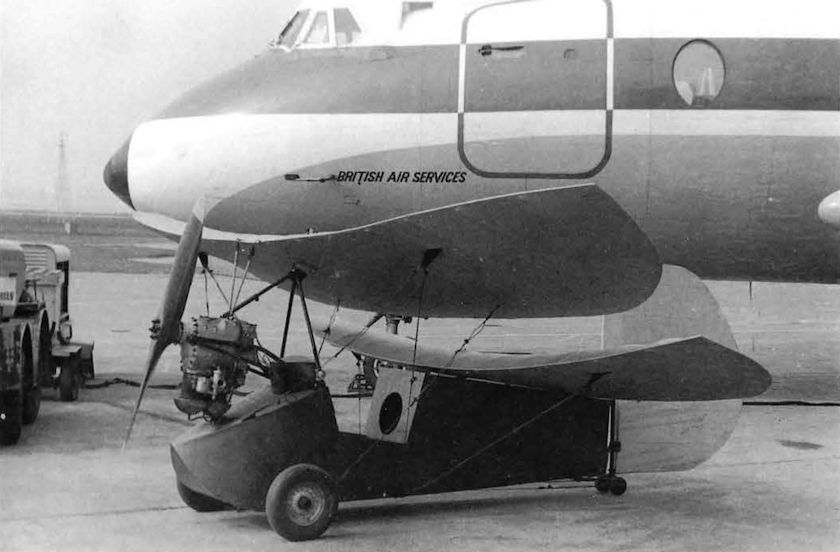
Регистрационный номер: BAPC-12 While with The Northern Aircraft Preservation Society, Whiteley's BAPC.12 appeared at many events. Here it is seen at Liverpool Airport, with a Cambrian Airways/BAS Viscount 800 as a backdrop.
Другие самолёты на фотографии: Vickers Viscount - Великобритания - 1948
-
Air-Britain Archive 2000-03 / K.Ellis - The ABC of the Flying Flea (9)
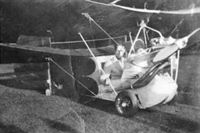
Регистрационный номер: BAPC-43 Alan Troop's Flea, later BAPC.43, with what is thought to be the builder himself on board at Wellingore.
-
Air-Britain Archive 1998-03 / K.Ellis - The ABC of the Flying Flea (1)
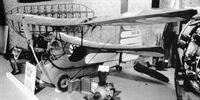
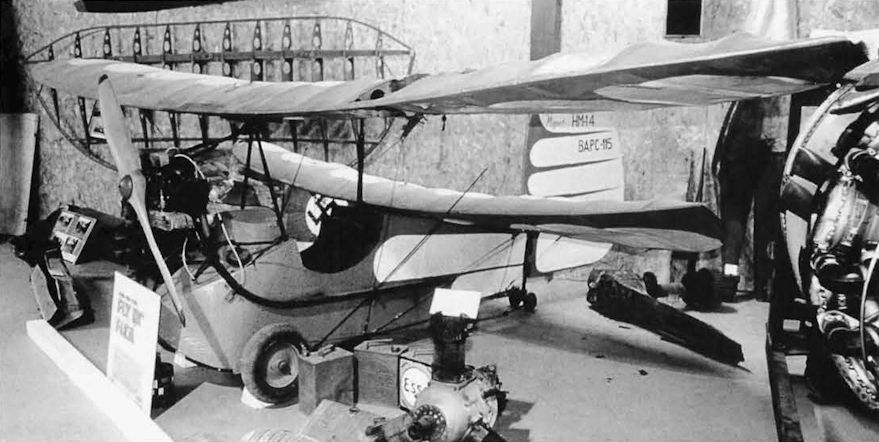
Регистрационный номер: BAPC-115 Stan Brett's Flea BAPC.115 on display at the Rebel Air Museum, Earl's Colne. Note the original rear wing behind. Alas, the RAM has been forced to close.
-
Flight 1936-06 / Flight
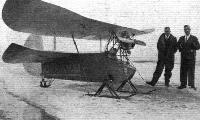
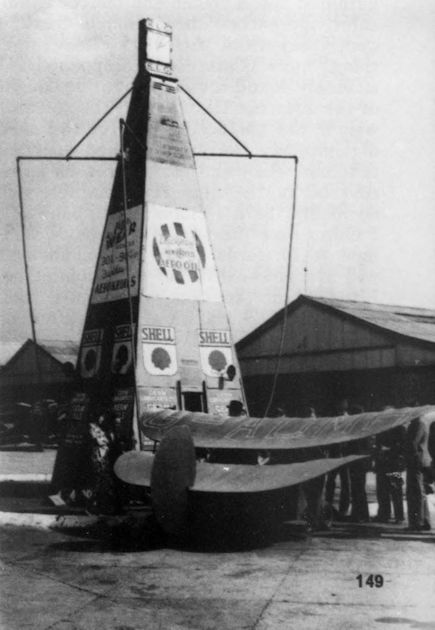
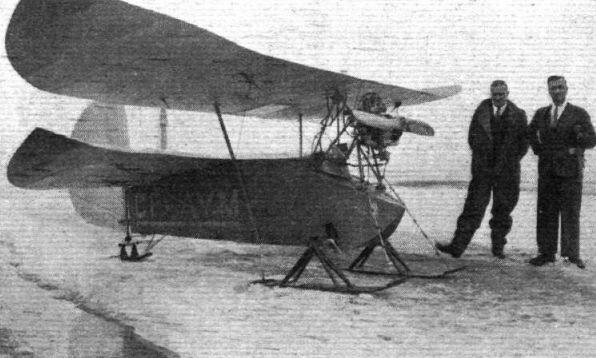
Регистрационный номер: CF-AYM A FLEA ON SKATES: Built by an aircraft engineer to the order of a Montreal private owner, this Pou has performed well. The mysterious erection on the tail is actually the St. Hubert airport airship mooring mast, in the background.
-
Air-Britain Archive 1999-03 / K.Ellis - The ABC of the Flying Flea (5)
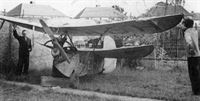
Регистрационный номер: EI-ABH Benson's EI-ABH re-erected for the camera in Dublin, 1952.
-
Air International 1985-01 / G.Jones - In the Mignet Tradition
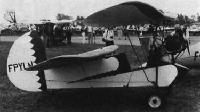
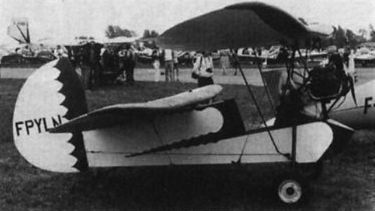
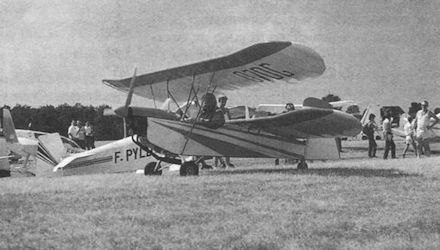
Регистрационный номер: F-PYLN M. Turmeau's flying replica of an HM.14. fitted with a 45 hp/1500 cc Volkswagen engine.
-
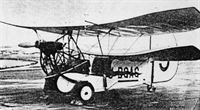
Air-Britain Archive 1998-02 / The Japanese Civil Register 1919-45 /Japanese Civil Register/ (11)
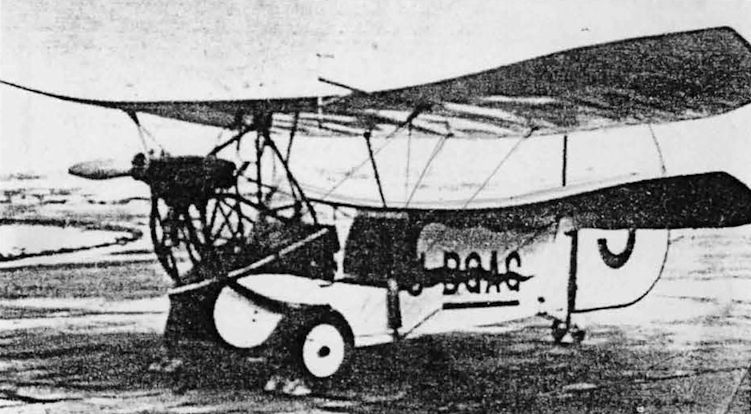
Регистрационный номер: J-BGAG The Mignet Pou-du-Ciel, commonly known in Britain as the Flying Flea, made an impression world-wide as every man's home built aeroplane. This example was built in Japan by Nippon (Nihon Hikoki KK) as the NH-1 Hibari J-BGAG.
-
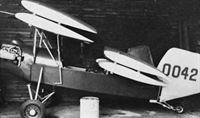
Air-Britain Archive 1988-02 / Belgium (OO-) /Complete Civil Registers/ (1)
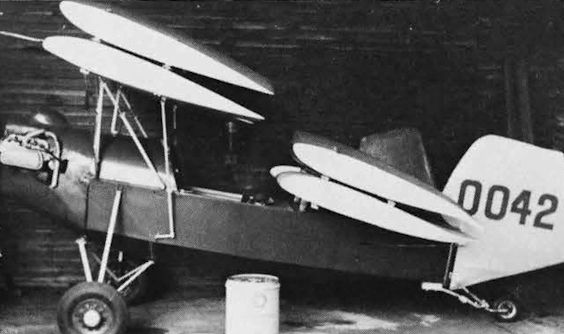
Регистрационный номер: OO-42 Pou-du-Ciel OO-42 with wings folded in the hangar at Diest 21.7.74.
-

Jane's All the World Aircraft 1975 / 01 - Aircraft
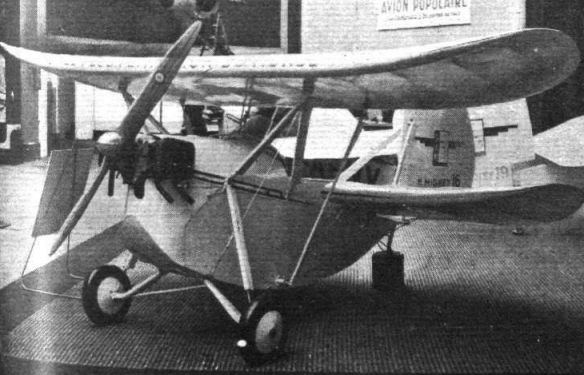
Czerniejewski Piast, Polish-built example of the Mignet Pou du Ciel
-
Air-Britain Archive 1999-03 / K.Ellis - The ABC of the Flying Flea (5)
A poor quality shot of the Leek Amateur Flying Club's machine - note the 'struts' (wires?) from the nose to the leading edge.
-
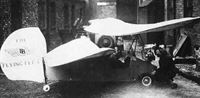
Air-Britain Archive 1998-03 / K.Ellis - The ABC of the Flying Flea (1)
Messrs Birchall and Broughton pose with their unregistered Flea in St Helens, early 1936.
-
Air-Britain Archive 1999-03 / K.Ellis - The ABC of the Flying Flea (5)
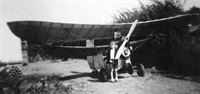
A period shot of the Flea attributed to 'Jones' of Crocker's Ash (3 miles NE of Monmouth, just inside the Herefordshire border) with what is thought to be the Harley Davidson installed.
-
Air-Britain Archive 2000-04 / Feedback
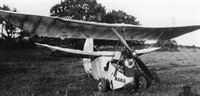
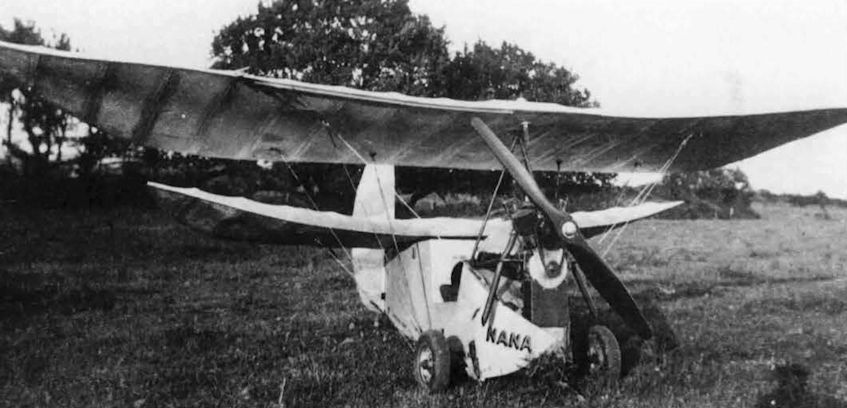
"Nana", the Flea built by Mr W Dean possibly in the field at Wick near Christchurch, Hampshire, where flying trials were held.
-
Air-Britain Archive 1999-03 / K.Ellis - The ABC of the Flying Flea (5)
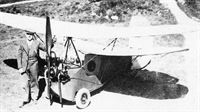
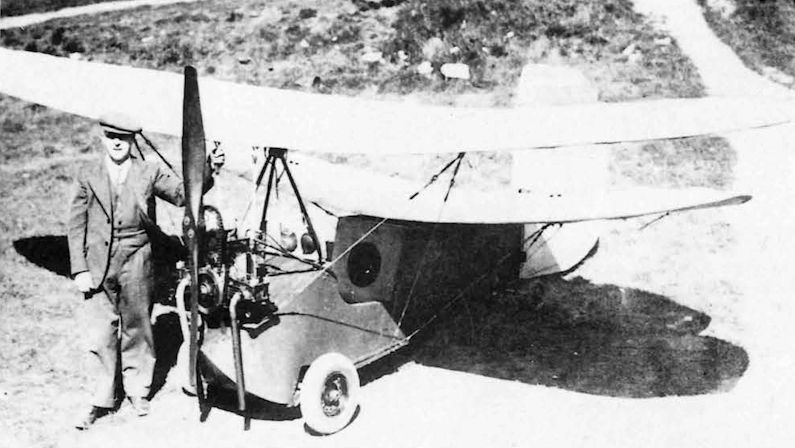
Mr F Jowett poses with his Flea - note the prominent exhaust arrangement on the Douglas engine.
-
Air International 1985-01 / G.Jones - In the Mignet Tradition
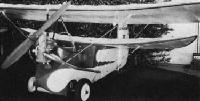
A replica of Henri Mignet's original HM.14 built by the RSA Centre-Loire.
-
Air-Britain Archive 2000-03 / K.Ellis - The ABC of the Flying Flea (9)
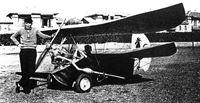
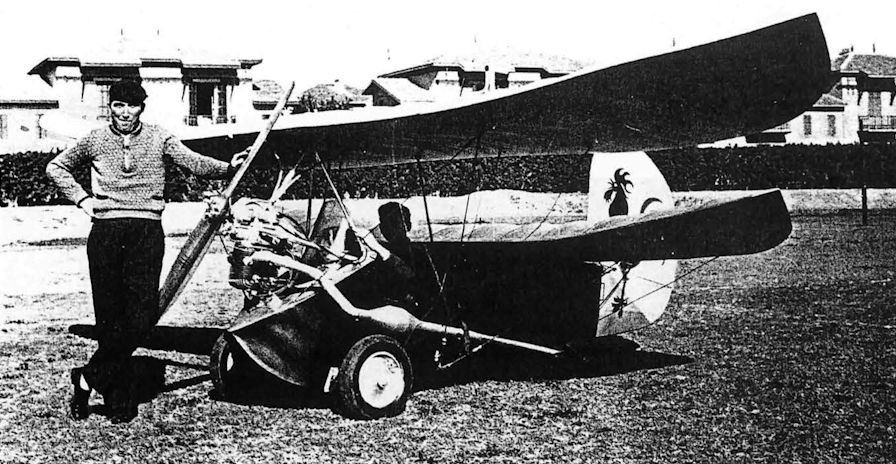
The Workington and West Cumberland Gliding and Flying Club built this unregistered Flying Flea in 1936. The significance of the stylised cockerel is unknown.
-
Air-Britain Archive 2000-04 / Feedback
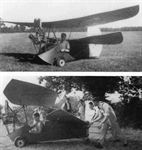
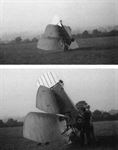
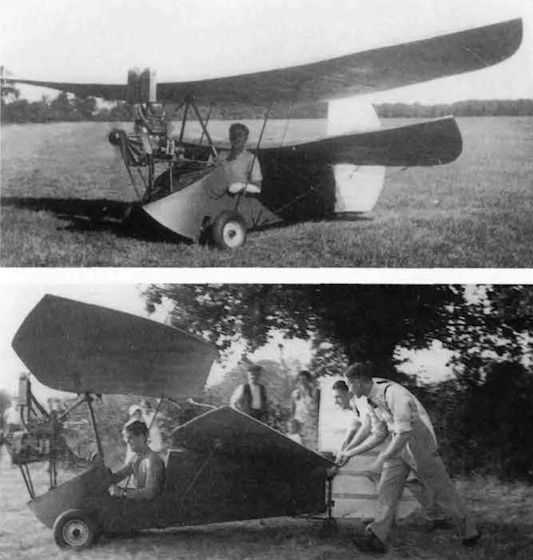
The Houston Flea, showing Matt Houston at the controls and an attempted flight with the aircraft being steadied by his friends Jock Middleton and Ken J Scott prior to the almost inevitable adoption of a nose-down attitude!
-
Air-Britain Archive 2000-04 / Feedback
The Houston Flea, showing Matt Houston at the controls and an attempted flight with the aircraft being steadied by his friends Jock Middleton and Ken J Scott prior to the almost inevitable adoption of a nose-down attitude!
-

-

Flight 1936-04 / Flight
The Putnam Pou-du-Ciel with Carden engine. Note the window in the wing, which improves the view upwards.
-
Air-Britain Archive 1998-04 / K.Ellis - The ABC of the Flying Flea (2)
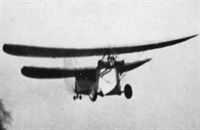
Photographs of Fleas airborne are rare. The Burn's Garage Flea seen flying at some stage during its career.
-
Air-Britain Archive 1999-03 / K.Ellis - The ABC of the Flying Flea (5)
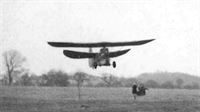
John Lockley's Flea in flight during its 'normal' undercarriage days.
-

Aeroplane Monthly 1984-07 / J.Viner - The great Flea race
Mr. S. V. Appleby, flying the Putnam Flea, indulges in a little formation work with an Aeronca;
Aeronca C-3 G-ADYR dices with a Flea while an elderly gentleman tries out the Flea Taxying Machine's cockpit for size. This device had insufficient power to fly but gave those in search of adventure a quick thrill, though one very small boy managed to get the contraption airborne at an earlier meeting.Другие самолёты на фотографии: Aeronca C - США - 1929
-

Flight 1936-04 / Flight
POWER FOR THE "POU." The new Carden engine installed in a Pou-du-Ciel. Based on the 10 h.p. Ford, it has an aluminium cylinder head and dual ignition. Carden Aero Engines Ltd., of Heston, are to market the engine at ?65.
-

Flight 1936-04 / Flight
The nose of Mr. C. M. Cooper's machine, which has an Austin Seven engine driving the airscrew through a chain reduction gear.
-

Flight 1936-05 / Flight
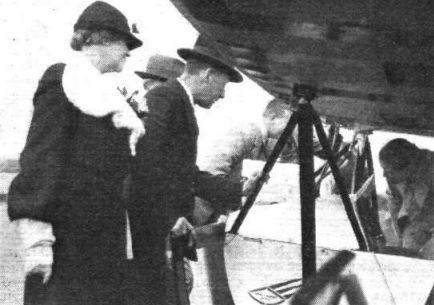
Government investigation of the Pou question! Lt. Col. Sir Francis Shelmerdine (Director-General of Civil Aviation) and Lady Shelmerdine inspect the Abbott-Baynes cantilever machine.
-
Flight 1936-08 / Flight
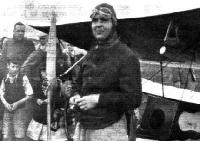
M. Bret, the winner; he used a 4-cyI. Ava two-stroke.
-
Air-Britain Archive 1998-04 / K.Ellis - The ABC of the Flying Flea (2)
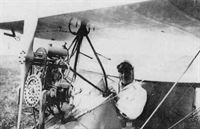
Syd Butler at the controls of his unregistered Flea "Doroli". The OHV chain drive of the Douglas is evident.
-
Air-Britain Archive 1999-02 / K.Ellis - The ABC of the Flying Flea (4)
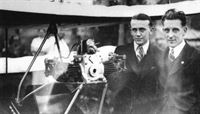
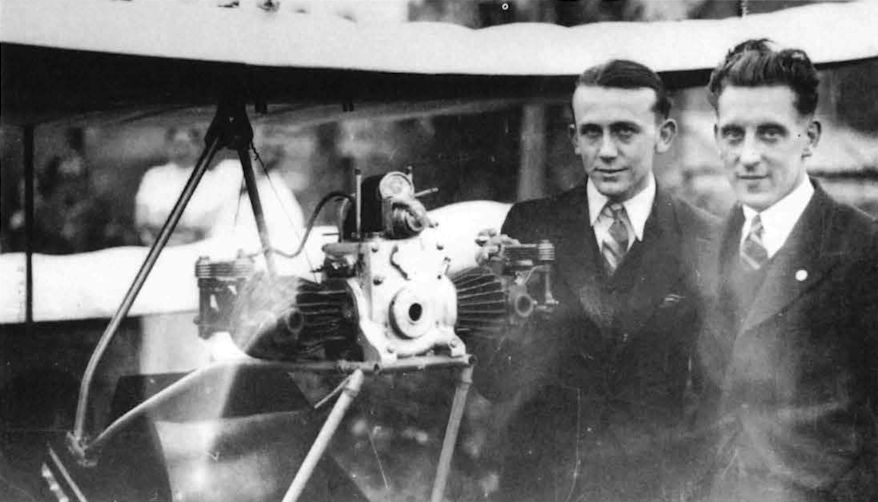
James Hill and John Glyn alongside their propless Flea showing details of the 500cc Douglas engine.
-
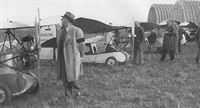
Aeroplane Monthly 1993-11 / H.Shore - Flea fever (1)
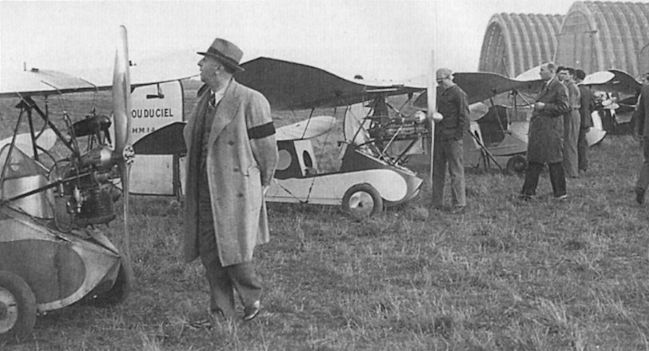
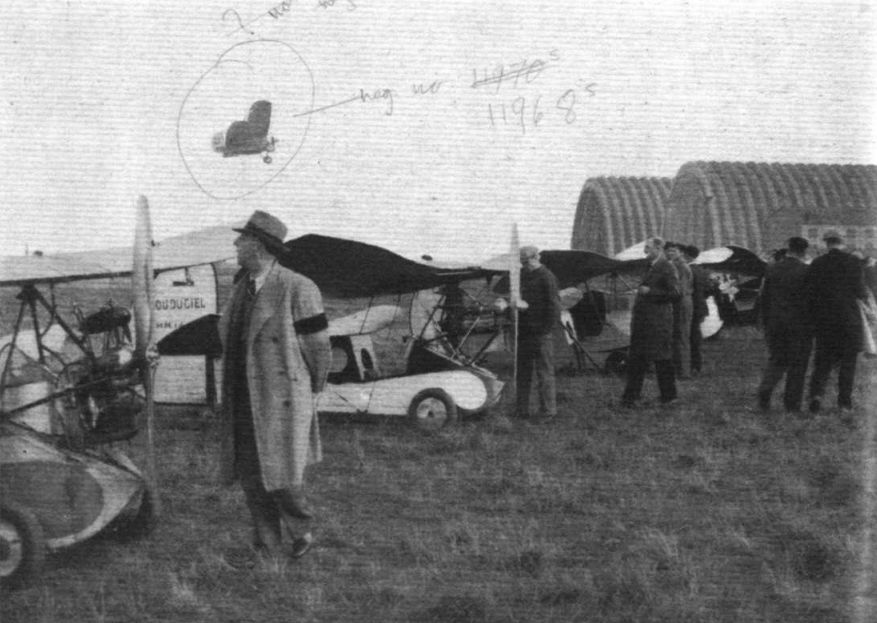
A line-up of Poux at Orly during the October 1935 meeting, when around 15,000 spectators turned up to watch the entertainment. At one stage there were nine Poux airborne at the same time.
-
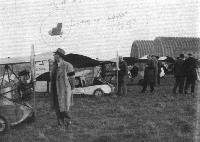
Flight 1935-10 / Flight
POUX ON PARADE. Pou-du-Ciel enthusiasts and thousands of the general public visited Orly Aerodrome, near Paris, to watch a rally of Pou-du-Ciel and other ultra-light aircraft
-

Aeroplane Monthly 1984-07 / J.Viner - The great Flea race
Messrs Dancy and Rowarth flag away the competitors.
-

Aeroplane Monthly 1988-03 / P.Underhill - Birth of a Bebe
Line-up of Fleas at the Orly Flea meeting, held in October 1935. Joly’s machine is third from the right. The Flea to its left was fitted with a 40 h.p. Salmson, and was the most powerful of the breed.
-

Aeroplane Monthly 1984-07 / J.Viner - The great Flea race
THE CROWD that came to see the Poux race at Ramsgate on Saturday - and stayed to joy-ride in the airport's Short Scions. Mr. Whitney Straight, incidentally, is having some fine hangars and club buildings erected.
The scene at Ramsgate Airport on August 3, 1936. In the foreground is Ramsgate Airport's Short Scion G-ADDV; behind that is another Scion, G-ACUZ, Monospar ST-6 G-ACGI, a Swallow, Aeronca C-3, a row of Fleas and the Cierva C.30 autogyro.Другие самолёты на фотографии: Aeronca C - США - 1929British Klemm L.25 Swallow - Великобритания - 1933Cierva/Avro C.30A / Rota - Великобритания - 1932General Aircraft Monospar ST-4 - ST-12 - Великобритания - 1932Short Scion / S.16 - Великобритания - 1933
-
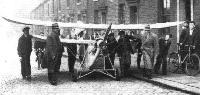
Flight 1936-03 / Flight
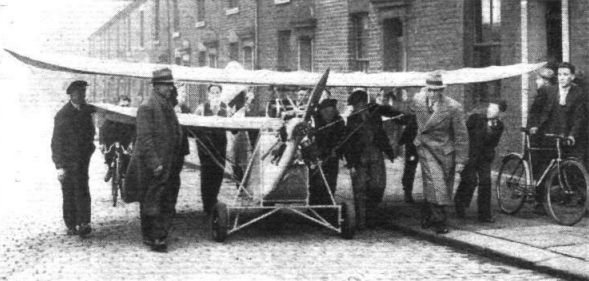
LOST: ONE BEDSTEAD? Mr. Tom Proctor, builder of Blackburn's first Pou, being convoyed to the local Pen-proving ground. The engine is by British Anzani and the undercarriage, apparently, by Mr. Drage; but it may be lighter than it looks.
-
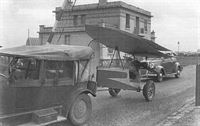
Aeroplane Monthly 1993-11 / H.Shore - Flea fever (1)
Rene Coupez’s H.M.14, No 15, being towed to the Orly Flea meeting in October 1935. Built by Coupez jointly with Victor Lane, this Flea was powered by a 25 h.p. Poinsard engine.
-
Flight 1936-02 / Flight
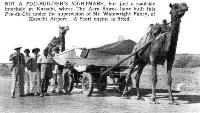
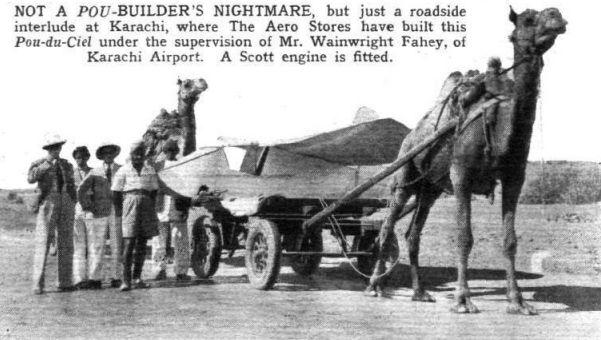
NOT A POU-BUILDER'S NIGHTMARE, but just a roadside interlude at Karachi, where The Aero Stores have built this Pou-du-Ciel under the supervision of Mr. Wainwright Fahey, of Karachi Airport. A Scott engine is fitted.
-
Air-Britain Archive 1999-04 / K.Ellis - The ABC of the Flying Flea (6)
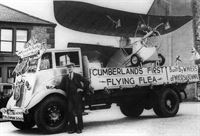
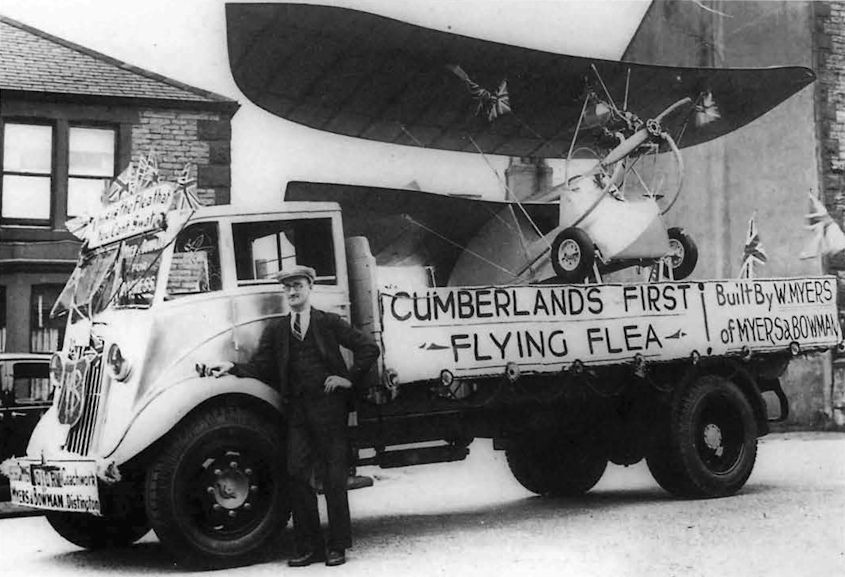
The unregistered Myers' Flea ready for the Workington Grand Carnival held on September 19th 1936. The placard above the lorry windscreen reads 'This is the Flea that You Can't Swat". On the aircraft itself, the smooth curves of the Douglas engine's paired exhausts are clearly visible.
The claim to be Cumberland's first Flying Flea may be open to dispute since it was discovered that a Carden Ford powered example was built by the Workington and West Cumberland Gliding and Flying Club also in 1936. -

Air Pictorial 1964-09 / A.Jackson - Register Review
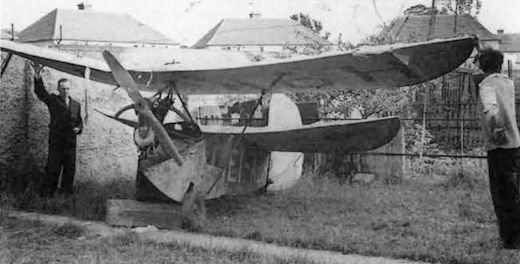
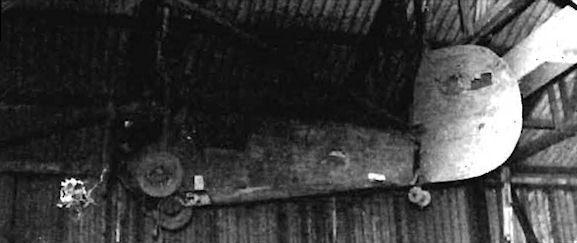
Yet another unregistered Pou, built and flown by a Mr. Troop in 1936, still hangs in a farm building at Wellingore, Lines.
-

Jane's All the World Aircraft 1974 / 01 - Aircraft
Mignet Pou du Ciel built by a member of AVEX
-
Aeroplane Monthly 1982-02 / A.Ord-Hume - Isn't it time we stopped poo-poohing the pour Pou? (2)
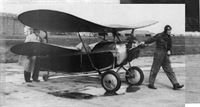
The most powerful Pou extant - Kohler's 40 h.p. Salmson-engined machine. The fact that the split-type undercarriage considerably raises the centre of gravity must make ground control rather a ticklish process.
The German-built “Lerche” was powered by a 45 h.p. Salmson radial engine and is seen here at Orly in October 1935. -
Flight 1935-10 / Flight
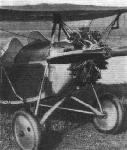
In this picture of Kohler's machine, a close-up view of the 40 h.p. Salmson engine is obtained.
-
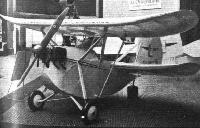
Flight 1936-11 / Flight
The tiny Mignet H.M.16, which is claimed to be the smallest aeroplane in the world.
-
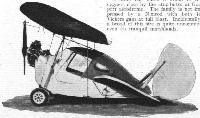
Flight 1936-06 / Flight
POU FOR TWO. This photograph, reproduced by courtesy of Les Ailes, shows a new two-seater cabin version of the Pou-du-Ciel which has been built by M. Henri Mignet. The engine is a 45 h.p. Salmson.
-

Air Pictorial 1991-09 / G.Jones - French homebuilders rally in Moulins
One of the numerous Flying Flea/Pou-de-Ciel types flown into Moulins, this one an ultralight of Belgian design, the Romibutter.
-

Aeroplane Monthly 1988-03 / J.Battison - Flea circus
The Aero-Eight Club's Taxying Flea. It was relegated to this non-flying status after a large gent landed it rather heavily and broke the longerons.
-
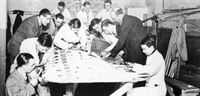
Air-Britain Archive 1998-03 / K.Ellis - The ABC of the Flying Flea (1)
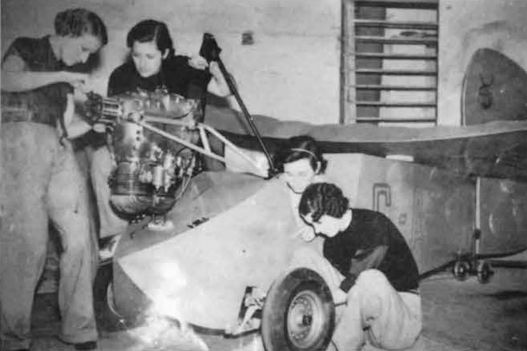
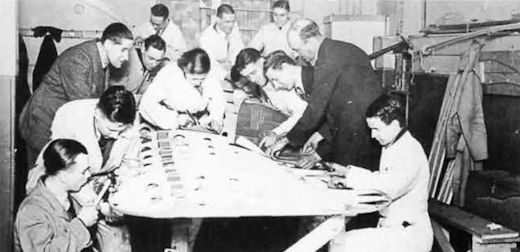
Регистрационный номер: G-AEIZ A press shot of Birkenhead Flying Club members at work on the rear wing of G-AEIZ. The uncovered rudder may be seen in the background.
-
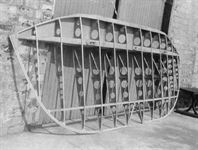
Air-Britain Archive 1998-03 / K.Ellis - The ABC of the Flying Flea (1)
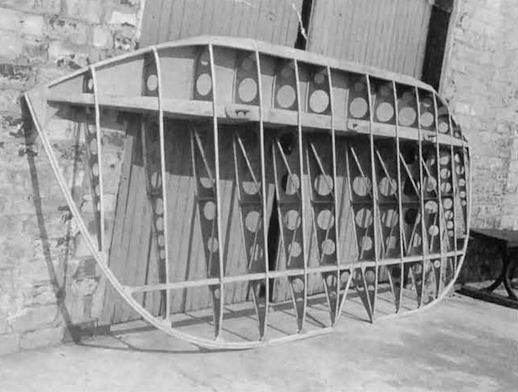
Регистрационный номер: G-AEOJ [4] Dr Armour left a detailed photographic archive of the construction and operation of G-AEOJ. Rear wing details are shown here.
-
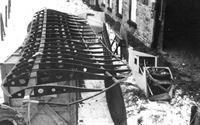
Air-Britain Archive 2000-03 / K.Ellis - The ABC of the Flying Flea (9)
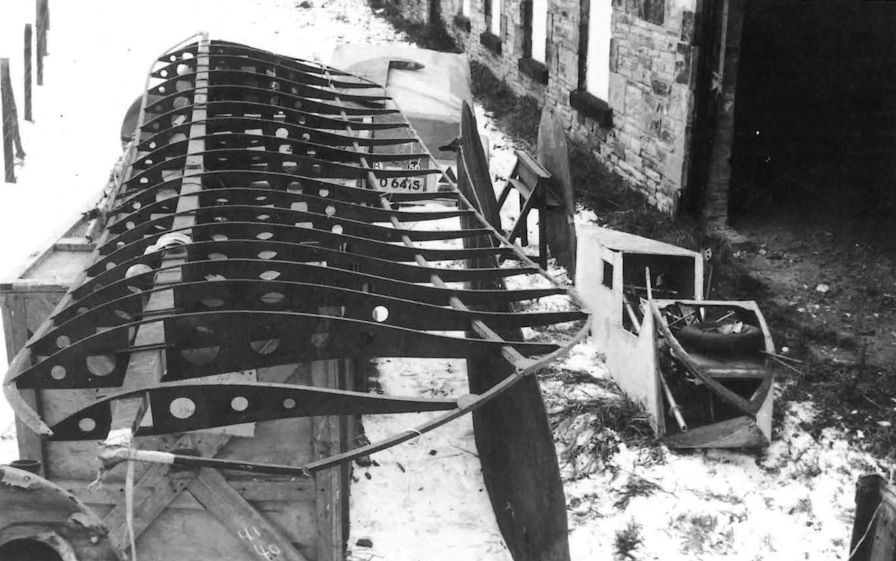
Регистрационный номер: BAPC-13 The dismantled Taylor Flea BAPC.13 as seen at a snowy Warmingham in January 1985, clearly requiring some tender loving care.
-
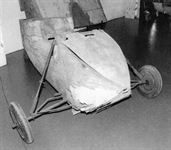
Air-Britain Archive 1999-03 / K.Ellis - The ABC of the Flying Flea (5)
Sophisticated wide-track sprung undercarriage on Idwal Jones' Flea, now on display at the Caernarfon Air Museum.
-
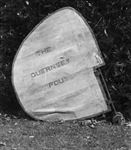
Air-Britain Archive 1999-03 / K.Ellis - The ABC of the Flying Flea (5)
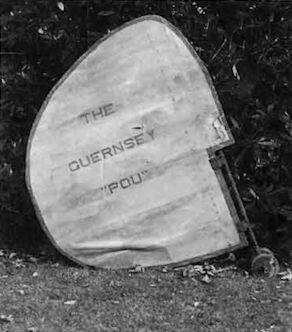
The rudder, rudder post and tailwheel of Laker & Beasley's 'The Guernsey Pou' which are kept by Geoff Jones on the island.
-
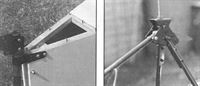
Aeroplane Monthly 1993-12 / H.Shore - Flea fever (2)
Left, the rear fuselage inspection panel and the stainless steel shim on the tailwheel leg.
Right, a detail shot showing the bolted construction of the wing pylon.










































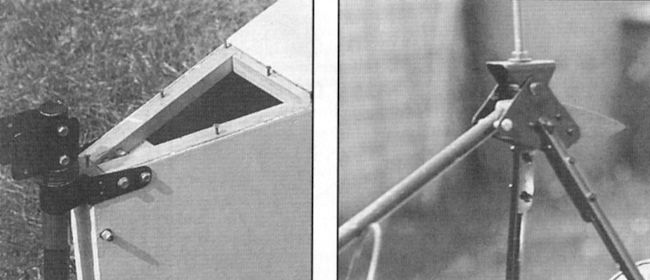
-

Flight 1935-08 / Flight
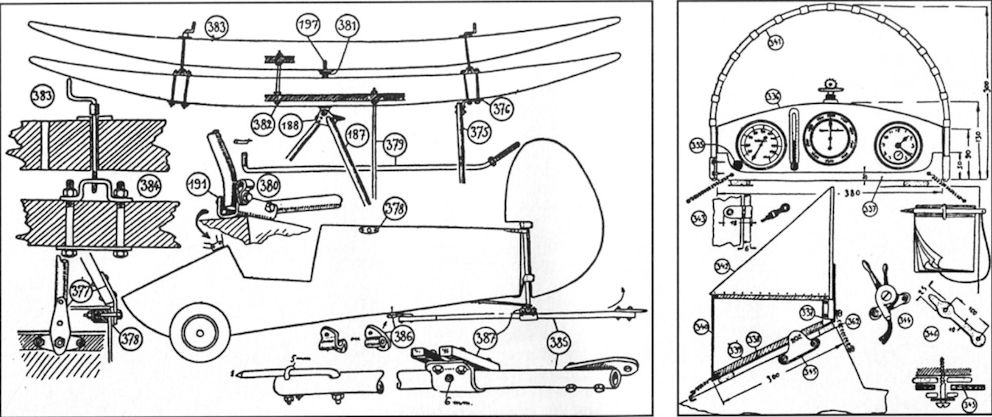
On the left our artist shows a side view ol the cockpit, with the engine controls and fuel supply arrangements; on the right is the roomy cockpit with its instrument lay-out and pilot's seat.
-
Aeroplane Monthly 1993-12 / H.Shore - Flea fever (2)
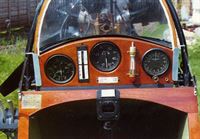
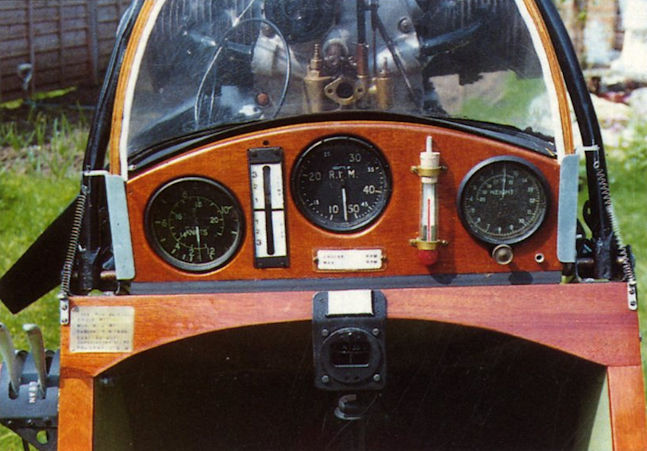
A close-up of the instrument panel, showing, left to right, the airspeed indicator, climb and dive indicator, rev counter, fuel gauge and altimeter. The compass is below in the centre. The Douglas engine is installed.
-
Aeroplane Monthly 1993-12 / H.Shore - Flea fever (2)
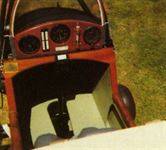
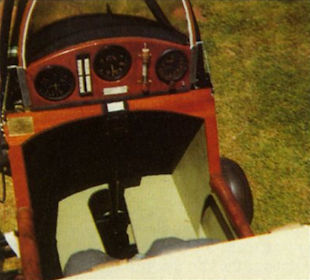
Looking into the cockpit, which is “surprisingly roomy”, though there is barely space to get one’s knees under the instrument panel.
-
Air-Britain Archive 1998-03 / K.Ellis - The ABC of the Flying Flea (1)
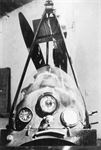
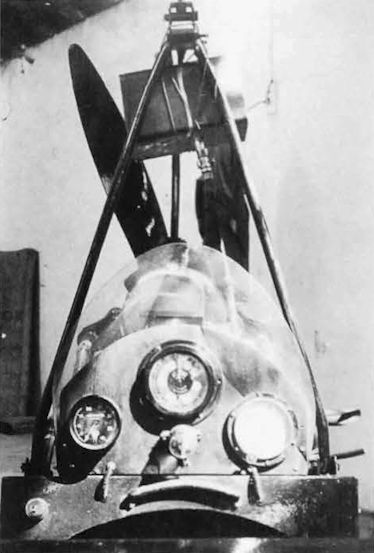
Регистрационный номер: G-AEOJ [4] The instrument panel of G-AEOJ during the rebuild of 2.37. Left to right are: rev counter, air speed indicator, altimeter, below the ASI is a compass and below that a cross-level. The small fuel tank suspended from the main wing struts was for ground running trials.

-

Aeroplane Monthly 1985-03 / Grapevine
Регистрационный номер: G-ADRY [3], BAPC-29 [3] Latest arrival at Brooklands is Flying Flea “G-ADRY”, BAPC-29, which Mike Beach has acquired from J. J. Penney at Aberdare, Wales. The fuselage is in excellent condition, but Beach intends to build two new wings - the rear wing is beyond restoration and the front one never existed.
-
Aeroplane Monthly 1993-12 / H.Shore - Flea fever (2)
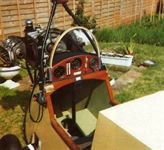
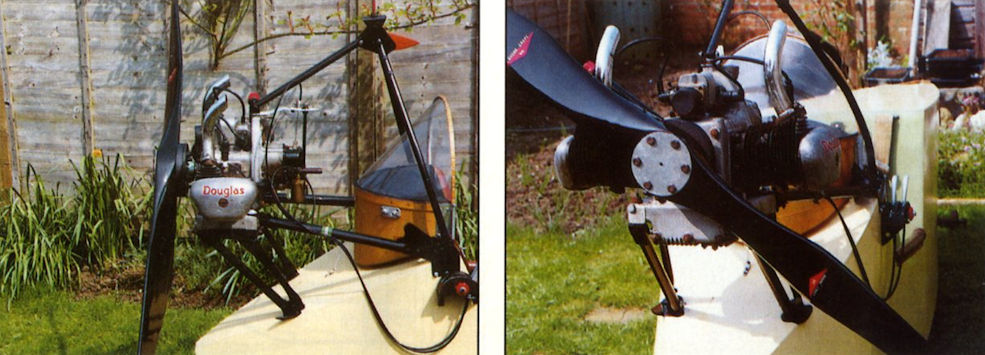
The business end of the author’s Flea, taken when the Volkswagen engine was fitted. The Douglas later installed greatly improved the “authentic” appearance of the aircraft.
-
Aeroplane Monthly 1993-12 / H.Shore - Flea fever (2)
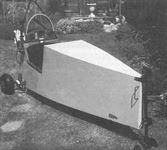
A rear view of the completed fuselage.
-
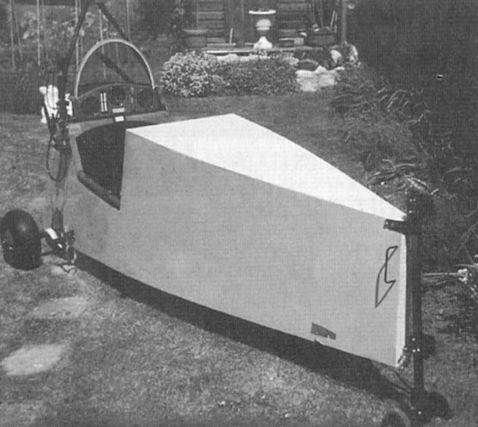
Aeroplane Monthly 1993-12 / H.Shore - Flea fever (2)
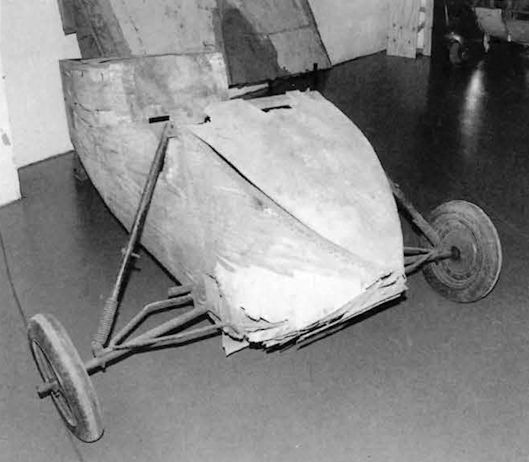
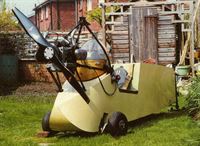
The fuselage in the back garden, complete with engine, seat, windscreen and undercarriage. Its simple, box-like structure with single-plane curvatures is evident.
-
Aeroplane Monthly 1993-12 / H.Shore - Flea fever (2)
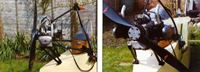
Left, a side view of the engine installation, showing the steel-tube mounting which also supports the front wing. The air-cooled Douglas flat twin was bought by the author’s brother as the result of a chance meeting at an autojumble, and replaced the converted VW 1600 originally installed. Note the throttle and mixture levers at the cockpit edge.
Right, a three-quarter front view of the Douglas engine, showing the propeller handcrafted by the author. It bears the legend “Shore Craft” on its blades. -
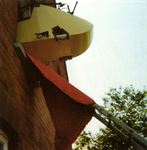
Aeroplane Monthly 1993-12 / H.Shore - Flea fever (2)
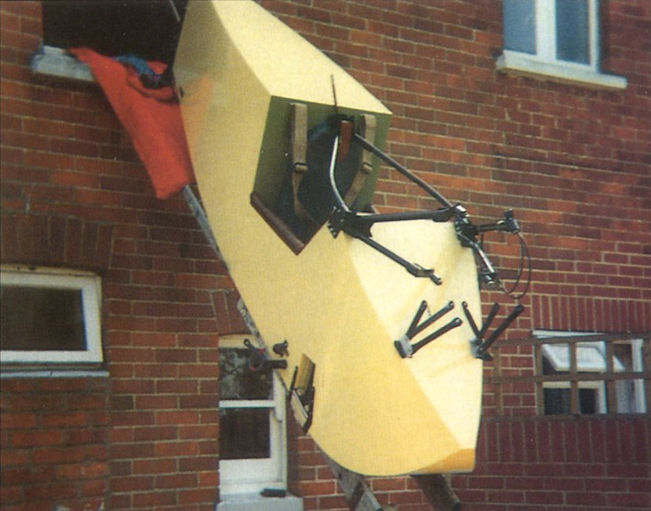
The fuselage of the author’s Flea, with metal fittings, emerges from the window of the spare bedroom of his house on the Isle of Wight, ready for final assembly.
-
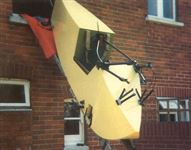
Aeroplane Monthly 1993-11 / H.Shore - Flea fever (1)
The author’s Flea emerges from an upstairs bedroom at his Isle of Wight home.




-
Air-Britain Archive 1998-04 / K.Ellis - The ABC of the Flying Flea (2)
Регистрационный номер: G-AENI [2] Droopy! The sad sight that greeted Fred Brown and team following storm damage to G-AENI at Eye.
-
Air-Britain Archive 1998-04 / K.Ellis - The ABC of the Flying Flea (2)
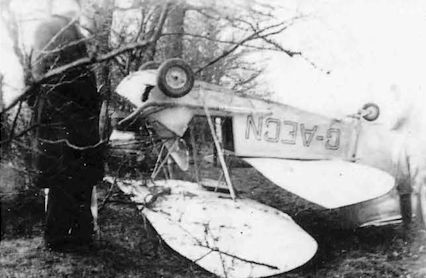
Регистрационный номер: G-AECN Don Burgoyne's G-AECN following the landing accident of 15.3.36 at Bushwood. The figure on the left is looking skyward - expecting more falling Fleas?
-

Air-Britain Archive 2000-01 / K.Ellis - The ABC of the Flying Flea (7)
Регистрационный номер: G-AEBA Albert Oliver's G-AEBA following its forced-landing when being flown by G C Taylor at Kennford near Exeter, circa October 1939.
-
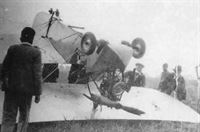
Air-Britain Archive 1998-04 / K.Ellis - The ABC of the Flying Flea (2)
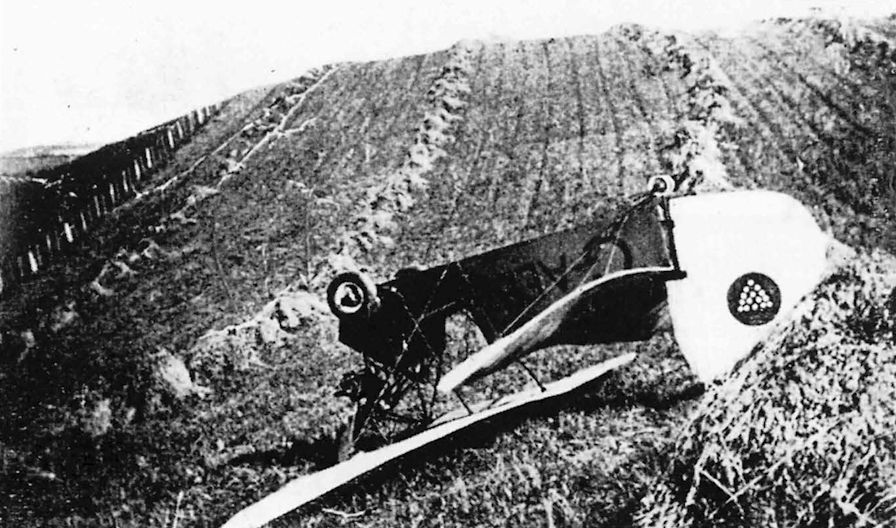
One of the fast taxi runs undertaken by Syd Butler at Storesfield resulted in 'ballooning' followed by an inverted landing.
-
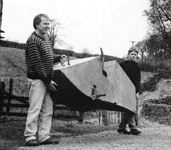
Air-Britain Archive 1999-03 / K.Ellis - The ABC of the Flying Flea (5)
Salvaging the fuselage of Ronald Jolly's unsuccessful Flea from Torver, March 1994.
-

Aeroplane Monthly 1984-08 / R.Brooks - Penshurst /Gone but not forgotten/ (15)
Регистрационный номер: G-AEEW The Air League's official test pilot, Flt Lt Ambrose Cowell, lost his life when he was air testing Flea G-AEEW at Penshurst on May 4, 1936. The aircraft had been built by R. G. Doig of Aircraft Constructions Ltd and crashed on landing after a short flight.
-
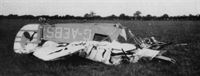
Air-Britain Archive 1999-01 / K.Ellis - The ABC of the Flying Flea (3)
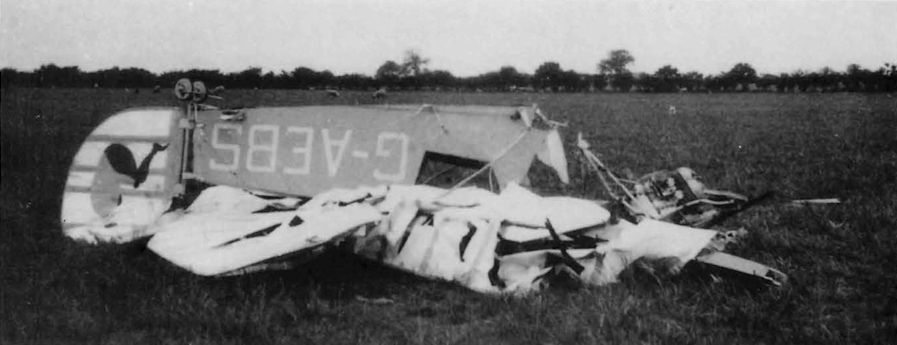
Регистрационный номер: G-AEBS The remains of the Davidson Flea G-AEBS after it crashed at Digby 21.5.36. As a result, Squadron Leader Davidson became Britain's third Flea fatality.
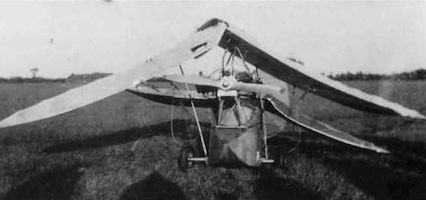


-

Flight 1935-12 / Flight
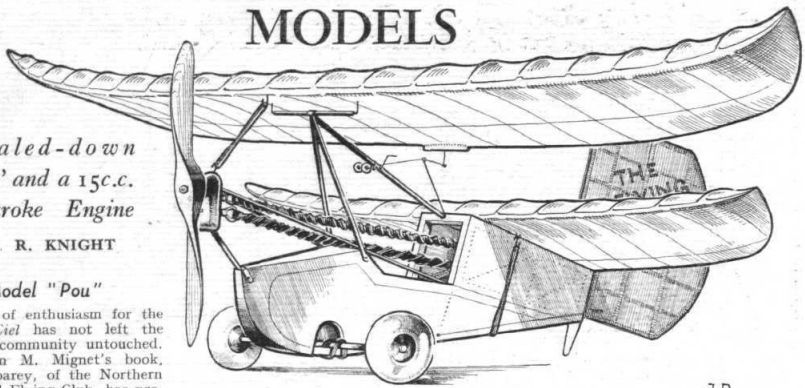
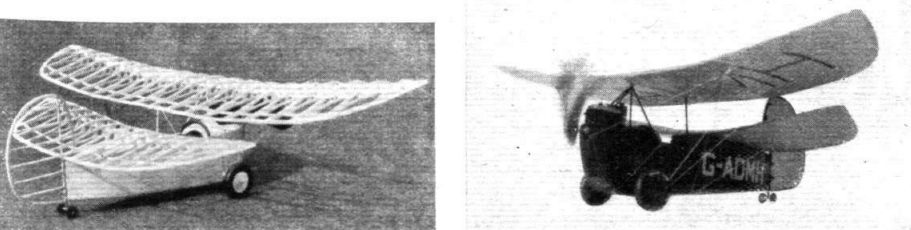
Mr. L. H. Sparey's Pou-du-Ciel - a model exhibiting many characteristics of the original.
-
Flight 1936-03 / Flight
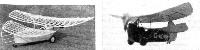
Регистрационный номер: G-ADMH [27] Two views of a model Pou-de-Ciel built by an American enthusiast, Mr. K. W. Hamilton.
-
Aeroplane Monthly 1993-11 / H.Shore - Flea fever (1)
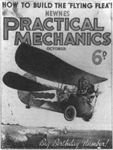
The October 1935 front cover of the magazine Practical Mechanics, containing the first instalment of a three-part article on how to build a Flea.
-
Air-Britain Archive 2002-01 / Feedback
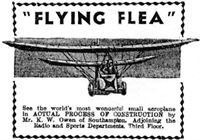
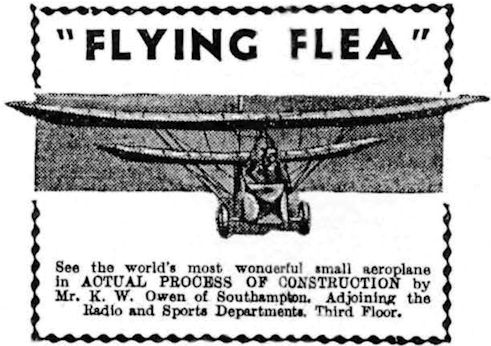
Регистрационный номер: G-AEBB [6] The item is part of a large advertisement in a national Sunday newspaper dated 25.11.35 for a London department store called Whiteleys (Queen's Road and Westbourne Grove, London W2). As it refers to K W Owen of Southampton we assume that the Flea he was building in the store was G-AEBB - does anyone know more?
-

Flight 1935-04 / Flight
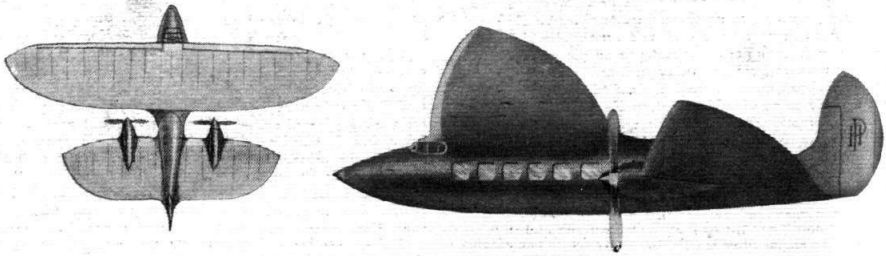
An overgrown Pou-du-Ciel - the drawings.
-

Flight 1935-07 / Flight
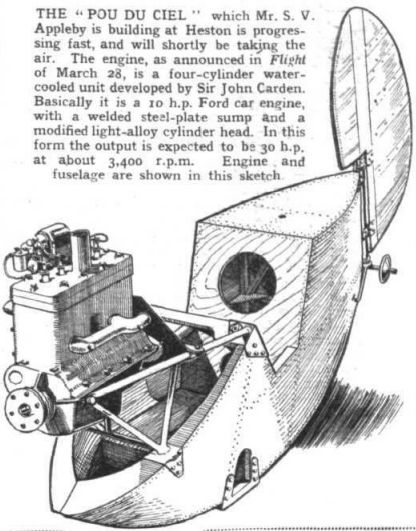
THE "POU DU CIEL" which Mr. S. V. Appleby is building at Heston is progressing fast, and will shortly be taking the air. The engine, as announced in Flight of March 28, is a four-cylinder watercooled unit developed by Sir John Carden. Basically it is a 10 h.p. Ford car engine, with a welded steel-plate sump and a modified light-alloy cylinder head. In this form the output is expected to be 30 h.p. at about 3,400 r.p.m. Engine and fuselage are shown in this sketch
-

Flight 1935-08 / Flight
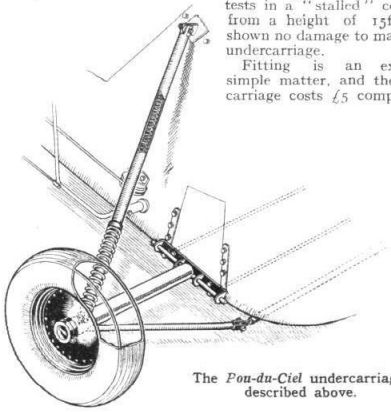
(Centre) the simple undercarriage springing; (left) the sprung strut which supports the trailing edge of the front wing; (right) the springing and operation of the sternpost with rudder and double tail wheel.
-

Flight 1936-05 / Flight
The cantilever wing is pivoted on trunnions at two points and may be detached by withdrawing two pins. On the right is a sketch of the mass balance on one of the arms which operate the wing control rods.
-
Flight 1936-06 / Flight
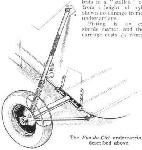
The Pou-du-Ciel undercarriage described above.
-
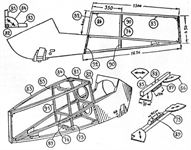
Aeroplane Monthly 1993-12 / H.Shore - Flea fever (2)
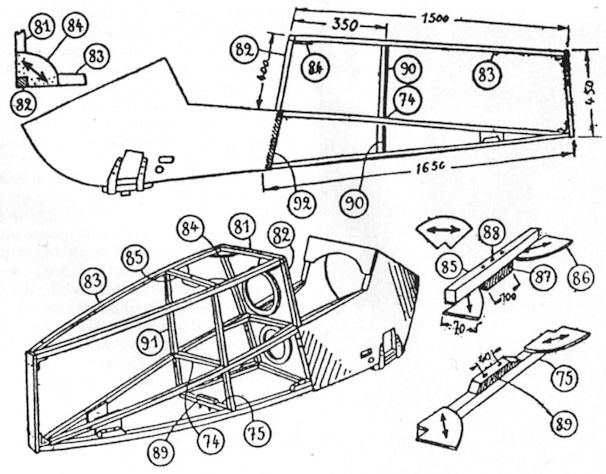
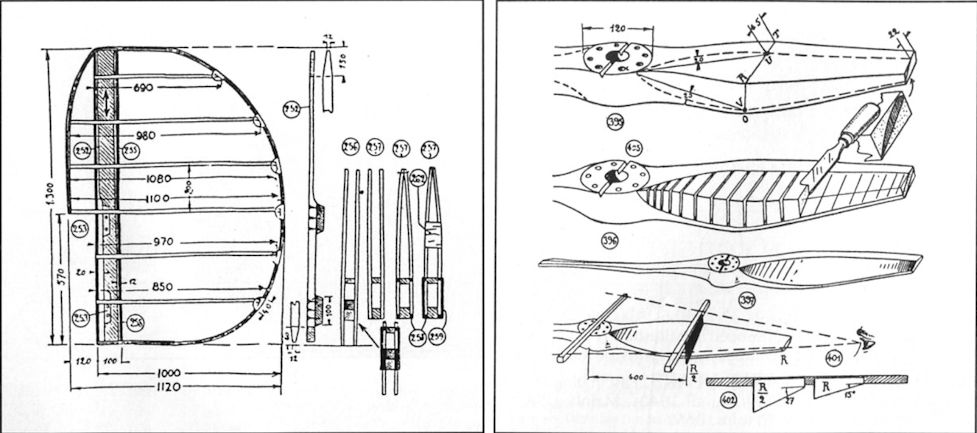
Henri Mignet’s elementary “building by numbers” instructions for assembling the Flea fuselage, as published in his book The Flying Flea, first released in France in 1933 as Le Sport de l’Air.
-
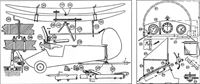
Aeroplane Monthly 1993-11 / H.Shore - Flea fever (1)
Two mouthwatering illustrations from Mignet’s book The Flying Flea, published in English by the Air League in 1935.
-
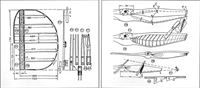
Aeroplane Monthly 1993-12 / H.Shore - Flea fever (2)
Left, diagrams for construction of the rudder in Mignet’s book. This was the first component built by the author.
Right, how not to build a propeller: Mignet suggested carving it from a solid piece of timber. -

Flight 1936-10 / Flight
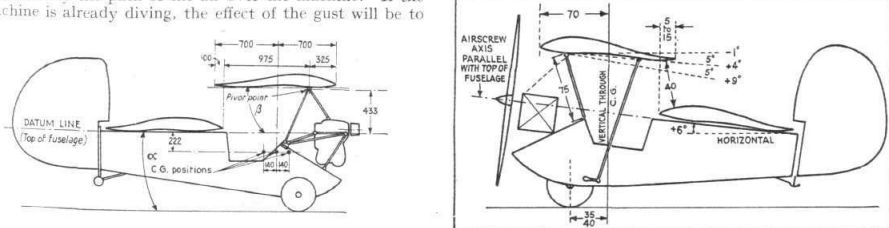
Left: The rigging of the Pou tested in the 24ft. wind tunnel at Farnborough is shown here. Note that the top of the fuselage is the datum line from which angles of incidence A of the whole machine were measured. The angle of the front wing in relation to the datum line, and thus to the rear wing, is indicated by B.
Right: For comparison, the rigging diagram showing the dimensions which M. Mignet recommended is given here. This combination of dimensions' became known as Mignet's "Polygon of Safety," but is not now held to be a complete safeguard against the uncontrollable dive. -

Flight 1936-10 / Flight
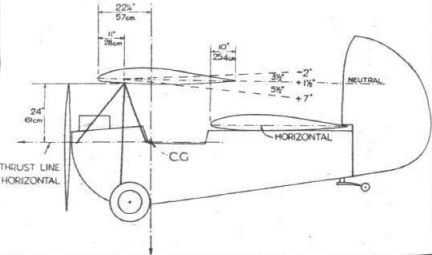
Rigging diagram of the Abbott-Baynes Cantilever Pou. It should be noted that the position of the centre of gravity is at approximately 40 per cent, of the chord from the leading edge. This location of the c.g. lengthens the take-off, but it also improves the stability.
-

Air Enthusiast 1997-03 / B.Marshall - The 'Flea' and Me
General arrangement of a ‘conventional’ Scott A.2S-powered Mignet HM.14.
-

Flight 1935-03 / Flight
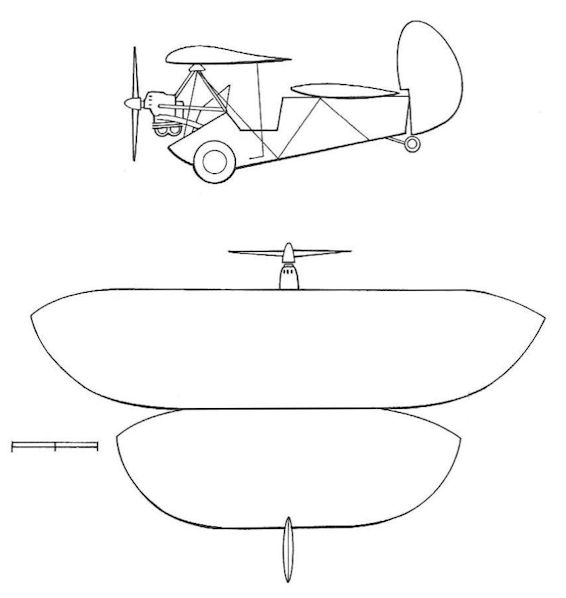
The latest tandem-wing development - M. Mignet's Pou-du-Ciel. The dihedral angle of the wings is not shown.
-

Flight 1935-04 / Flight
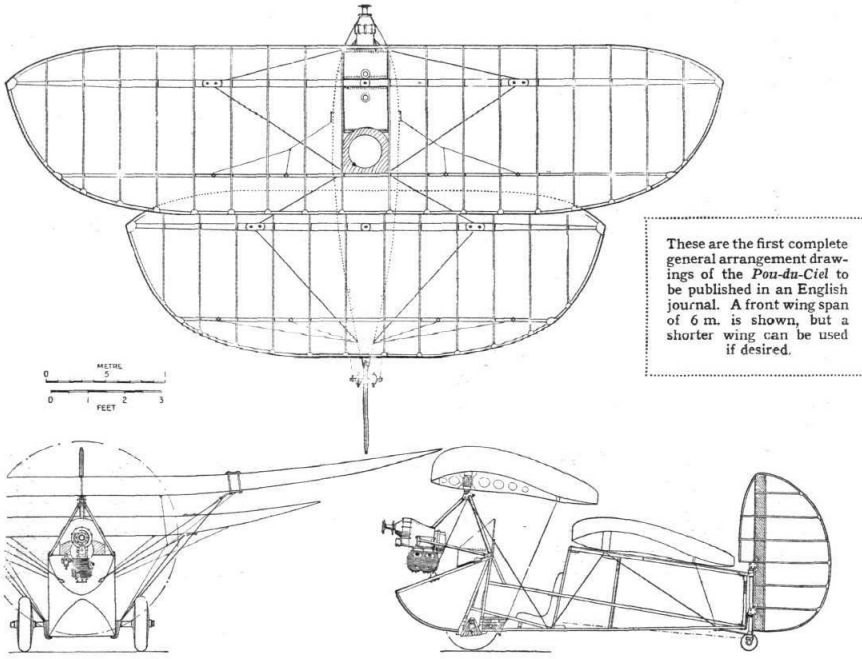
These are the first complete general arrangement drawings of the Pou-du-Ciel to be published in an English journal. A front wing span of 6 m. is shown, but a shorter wing can be used if desired.
-

Flight 1936-10 / Flight
The Abbott-Baynes Cantilever "Pou"



Тип фотографий
- Все фото (226)
- Боковые проекции (1)
- Цветные фото (8)
- Ч/б фото (181)
- Кабина (4)
- Реставрация (7)
- Обломки (7)
- Модели, рисунки, схемы (18)