

 Wiki
Wiki 
Flight, June 1937
THE RISING SUN
Details of a Remarkable Japanese Long-range Monoplane
THE meritorious flight of the Divine Wind from Tokio to London may be said to have placed Japan on the aviation map. Experts were taken by surprise, for not only had Japan failed to make any spectacular contribution to aeronautical development up to that time, but the undertaking seemed to have been launched almost spontaneously. The Japanese public was scarcely aware that the machine had been built before it was off on its record-breaking trip.
It would appear that the Japanese have been making better aeroplanes during the past few years than they themselves have been aware. Typical of this inferiority complex is the six-months-old fact that the Japan Air Transport Co. refused to have its machines powered with Tokio-Gasudenki engines - similar to the power plant of the Divine Wind - but specified foreign units.
That the success of the Divine Wind is no flash in the pan is suggested by the news that the Ishikawajima Shipbuilding Company is preparing to manufacture radial air-cooled engines, that the Hitachi and Miigata Diesel firms will take up similar lines, and that the Aeronautical Research Institute of Japan has nearly completed a machine with which it is hoped to fly round the world in three "hops," which means that it will have an endurance of eighty hours without landing or refuelling.
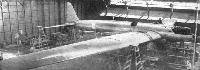
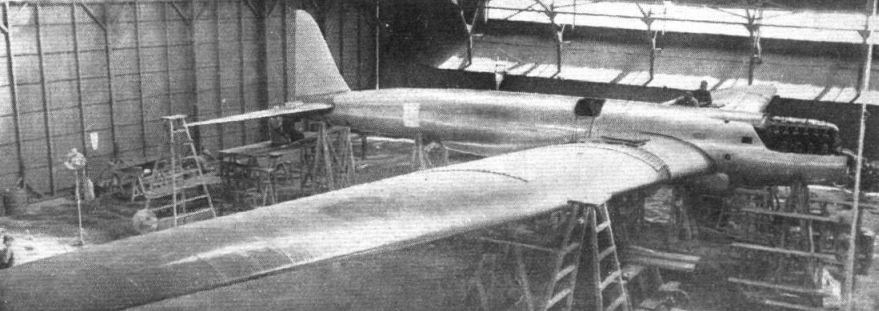
The machine is a low-wing monoplane with 936 sq. ft. and a span of over 91 ft. The wings and fuselage are of duralumin construction, the wing housing fourteen fuel tanks with a total capacity of 7,000 litres. The undercarriage is retractable.
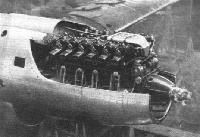
A special liquid-cooled vee-twelve engine developed by the Aeronautical Institute is fitted. A fuel of 96 octane number will be used for the record attempt. It is understood that this fuel is “the product of the fractionation of crude oil produced at Higashiyama in the Niigata Prefecture," and that it contains 0.1 per cent, ethylene.
That the aircraft resembles in general layout certain French and Russian machines intended for similar purposes will be gathered from the accompanying illustrations, although a great deal of original work is evident.
- Flight, June 1937
THE RISING SUN
Фотографии
-
Jane's All the World Aircraft 1938 / 03 - All the world's aeroplanes
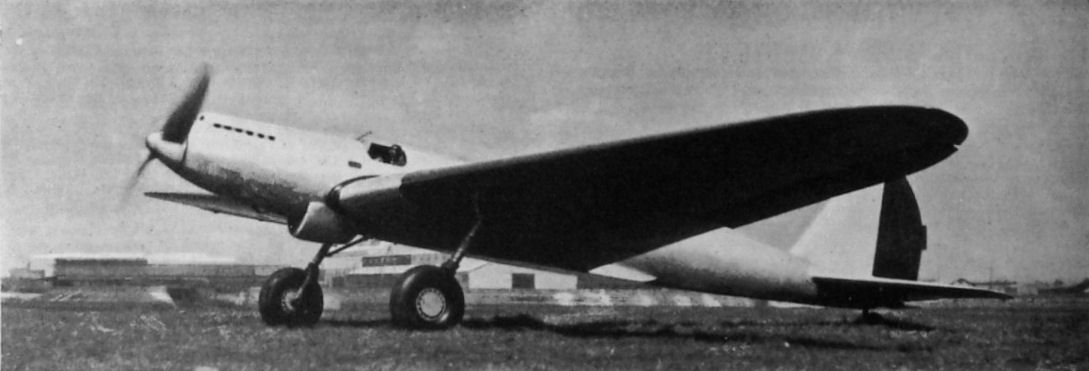
The Koken Long-range Monoplane (800 h.p. Kawasaki engine) built by the Tokyo Gasu Denki K.K. which holds the World's Record for Distance Covered Over a Closed Circuit.
An early shot of Koken in pristine finish and, although the engine is running, there are as yet no exhaust streaks on the cowling. The 'receding chin' radiator gives it a shark-like appearance, emphasised by the long round fuselage. The early form rudder has a curved trailing edge with small chord at the top and a projecting trim tab. -
Air-Britain Archive 2000-03 / J.Meaden - The Koken long-distance monoplane (2)
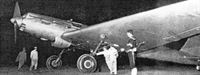
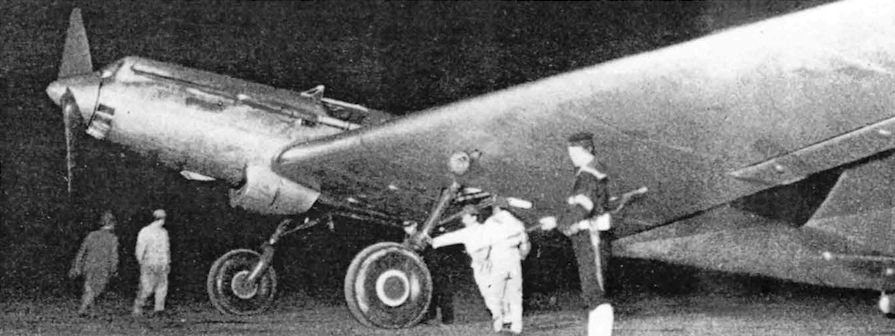
The record flight was made from Kisarazu Naval Air Base commencing at 0445 hr on 13.5.38 and ending at 1921 hr on the 15th. Note the landing light under the wing and the naval military policeman standing guard on the right.
-
Air-Britain Archive 2000-02 / J.Meaden - The Koken long-distance monoplane (1)
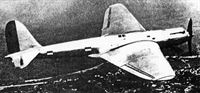
Koken in the air on test with the increased rudder area and exhaust pipe extending past the open cockpit on the port side. At this time a spat was fitted over the fixed tailwheel.
-
Air-Britain Archive 2000-02 / J.Meaden - The Koken long-distance monoplane (1)
A view from above on the starboard side shows the broad chord tapered wing which contained a total of 14 interconnected fuel tanks. A small ground-adjustable tab was fitted on the trailing edge of the elevators on each side and the near one is just visible.
-

Air-Britain Archive 2000-03 / J.Meaden - The Koken long-distance monoplane (2)
The crew of the Koken after the record flight. L to R, Pilot Major Yuzo Fujita, second pilot Warrant Officer Fukujiro Takahashi and flight engineer Kinkichi Sekine.
-
Air-Britain Archive 2000-03 / J.Meaden - The Koken long-distance monoplane (2)
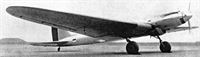
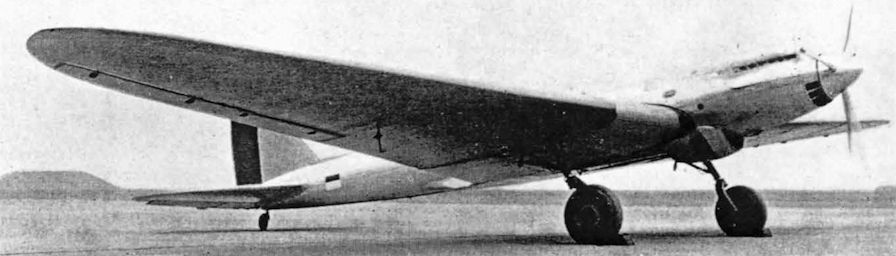
The Koken in late form with engine running and three blade metal propeller. The pitot installation can be seen under the wing inboard and forward of the aileron inner end. With the large area wing flaps were considered unnecessary.
-
Flight 1937-06 / Flight
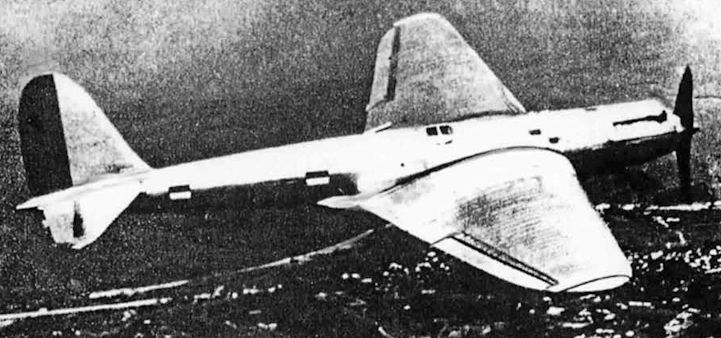
The high aspect ratio of the new monoplane's wing and the lines of the fuselage are apparent here
-
Flight 1937-06 / Flight
The view shows the installation of vee-twelve engine in the new Japanese long-range monoplane.
-
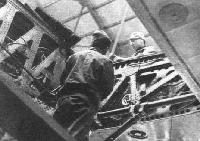
Flight 1937-06 / Flight
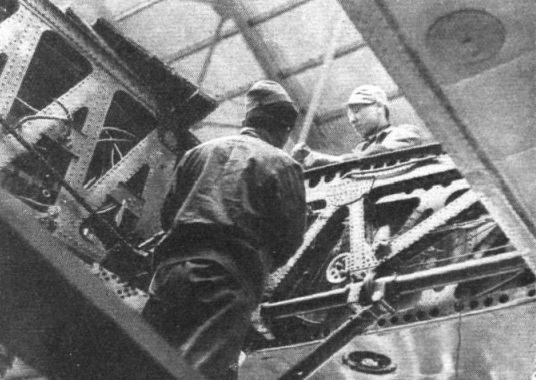
The view reveals the substantial mounting.



- Фотографии