

 Wiki
Wiki 
Flight, May 1932
Increasing the Speed Range
German Plane with Variable Wing Area and Profile
By EDWIN P. A. HEINZE
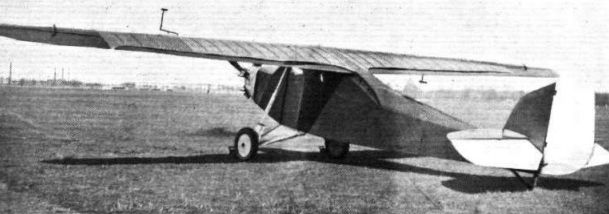
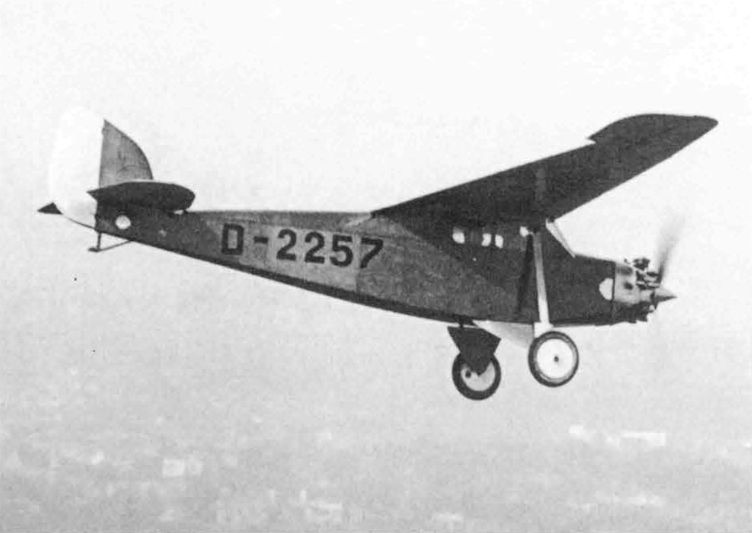
PROF. DR. SCHMEIDLER, of the College of Engineering at Breslau, in Germany, has developed a wing, the area and profile of which are variable in flight to the extent of one-fifth of the full wing area. The manner in which the problem has been solved is very interesting. It is materially different to what has been done in this direction hitherto.
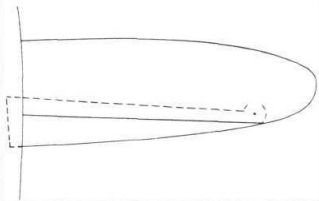
The invention was demonstrated on a monoplane, the wing of which contained a trailing edge portion having the shape roughly of a right-angled triangle, the acute angle of which is pivoted inside the wing at the tip end, while the side opposite is held in a guide on the cabin wall, or rather inside the central section of the wing, which covers the cabin. On its lower side this trailing edge of the wing is provided with a toothed rack, which engages with a pinion on a shaft passing through the central main-wing section to the other wing, where it likewise carries a pinion similarly engaging with a rack on the other wing section. The pinion shaft also carries a chain sprocket, and a chain transmission leads to a sprocket by the side of the pilot's seat, where a handle with a pawl arrangement is provided. The handle is worked in pump-handle fashion, and by its means the trailing edge portions are pushed out or pulled in. The retractable sections are so shaped as to form a continuation of the main wing profile so the latter assumes a different camber when the sections are pulled in.
The invention was demonstrated in flight, as also when starting and landing. With the wing sections drawn in, the starting distance was very materially increased (to the extent, it is asserted by the inventor, or 40 to 50 per cent.). In flight the drawing in of the wing sections effected a very pronounced increase of speed.
- Flight, May 1932
Increasing the Speed Range
Фотографии

-

Flight 1932-05 / Flight
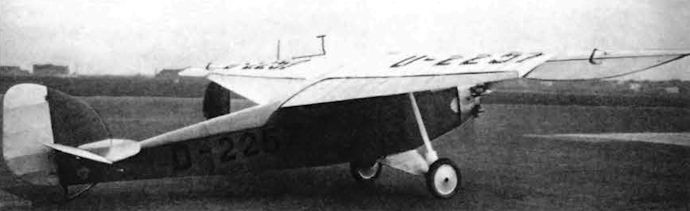
Регистрационный номер: D-2257 [8] THE SCHMEIDLER VARIABLE WING: Three-quarter rear view of the experimental machine.
-
Air-Britain Archive 2001-03 / J.Meaden - The Schmeidler SN-1 /Head-On View/ (1)
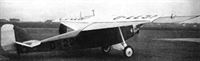
Регистрационный номер: D-2257 [8] The SN-1 with registration D-2257 is seen with engine running at Tempelhof aerodrome during a demonstration of its experimental variable area wing. The stylish tapered flaps are extended to provide maximum are ready for take-off.
-
Air-Britain Archive 2001-02
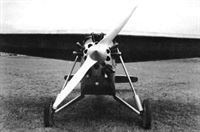
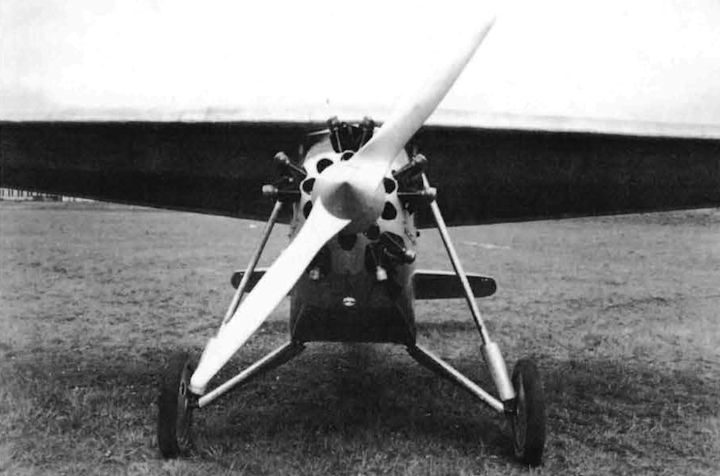
Регистрационный номер: D-2257 [8] Head-on view of the Schmeidler SN-1 is dominated by the BMW 5-cyl radial engine with cooling holes in the front cowling. Although stated to be the BMW X (which gave 50 hp max) it was quoted as 60 hp so was undoubtedly the higher powered BMW Xa.
-
Air-Britain Archive 2001-03 / J.Meaden - The Schmeidler SN-1 /Head-On View/ (1)
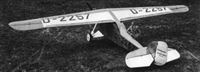
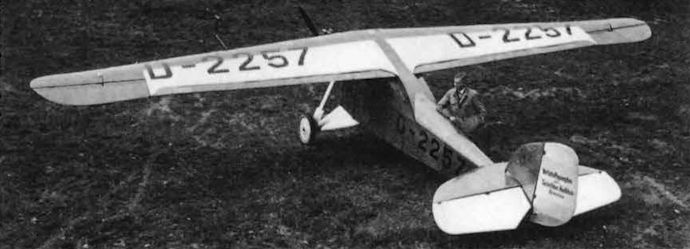
Регистрационный номер: D-2257 [8] With the wing extension flap retracted the SN-1 monoplane wing is seen to have a high aspect ratio. The man leaning on the fuselage wearing a flying suit is probably the unknown test and demonstration pilot.
-
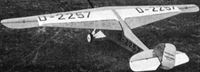
Air-Britain Archive 2001-03 / J.Meaden - The Schmeidler SN-1 /Head-On View/ (1)
Регистрационный номер: D-2257 [8] With the flap fully extended the wing area is much increased, but because of the taper the area increase is less than it appears and the important feature is the curvature obtained.
-
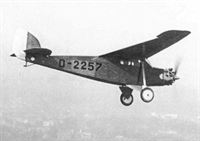
Air-Britain Archive 2001-03 / J.Meaden - The Schmeidler SN-1 /Head-On View/ (1)
Регистрационный номер: D-2257 [8] Viewed from another aircraft, the SN-1 appears a great deal of design work just to test a new type of wing and it seems likely that a two-seater with a more powerful engine was visualised. However, it appears to have attracted no interest from possible buyers and it remained the only one of its type.
-
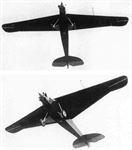
Air-Britain Archive 2001-03 / J.Meaden - The Schmeidler SN-1 /Head-On View/ (1)
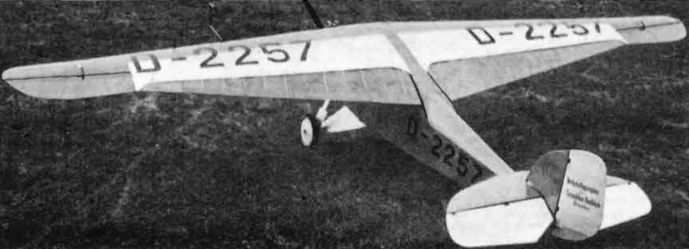
Регистрационный номер: D-2257 [8] Upper: Flying overhead, the SN-1 high aspect ratio wing with the flaps retracted looks almost glider-like except for the blunt tips resulting from the bulging plywood covered ailerons.
Lower: At this angle with flaps extended the area appears impressibly large, especially for a wing with no external bracing. The wide-track undercarriage has long shock absorber outer legs pivoted at the wing roots. -
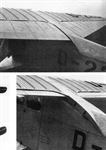
Air-Britain Archive 2001-03 / J.Meaden - The Schmeidler SN-1 /Head-On View/ (1)
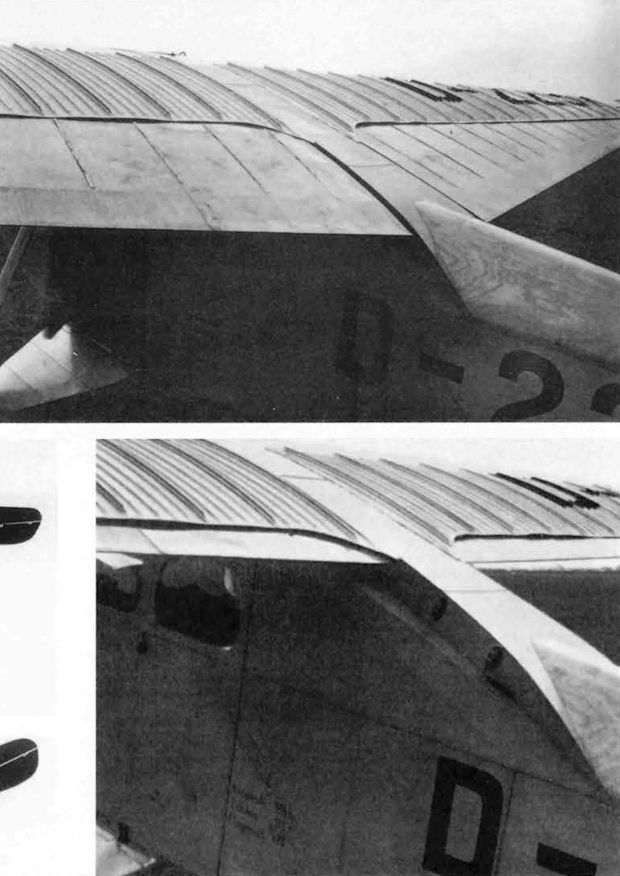
Регистрационный номер: D-2257 [8] Upper: A close-up of the extended flap shows also the extensive ribbing on the wing metal upper surface, clearly essential since it has to be self-supporting to allow the flap to retract beneath it.
Lower: The flap in the fully retracted position leaves a strip projecting along the trailing edge, necessary to avoid leaving a drag-producing gap. -

Flight 1932-05 / Flight
THE SCHMEIDLER VARIABLE WING: Diagrammatic Plan View of the arrangement of the wing. The trailing edge is pivoted at the outer end and housed in the main wing.
-

Flight 1932-05 / Flight
Diagrammatic representation of the operating mechanism of the Schmeidler variable wing. The camber as well as the area is altered.


- Фотографии