Фотографии

-
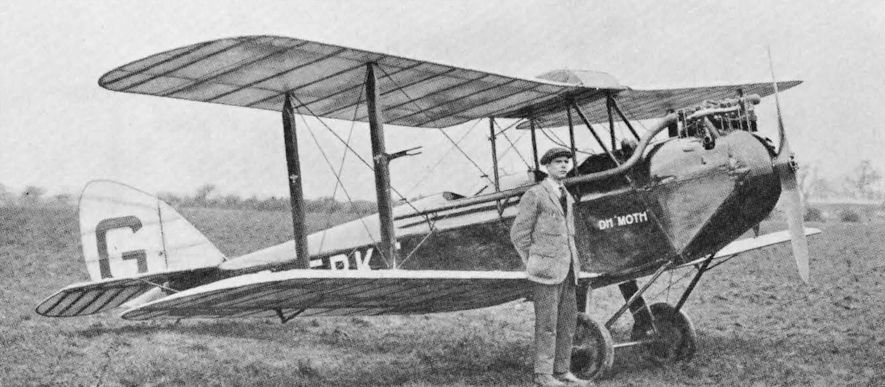
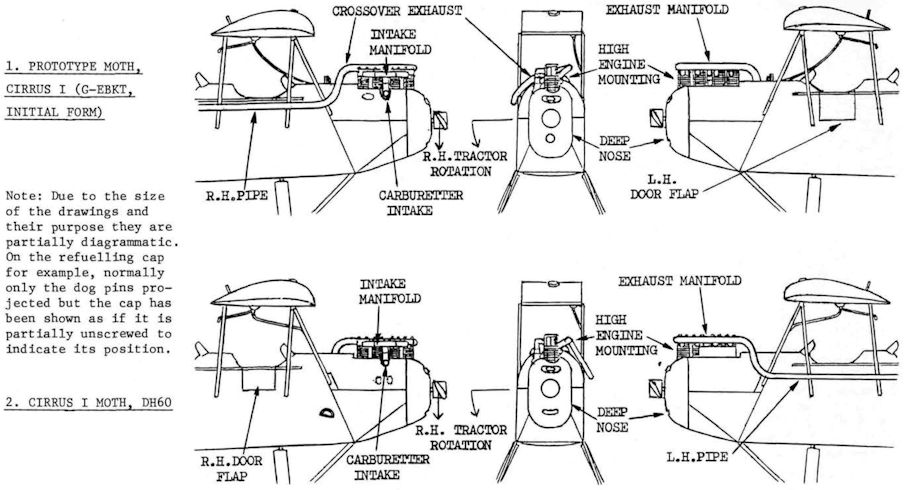
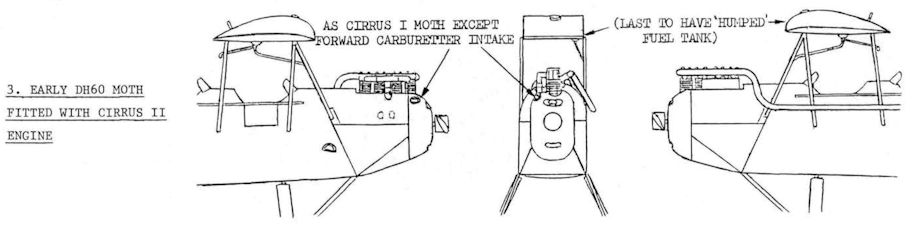
Регистрационный номер: G-EBKT The first Moth G-EBKT c/n 168 showing the high-mounted Cirrus I engine with RH exhaust pipe crossed over from the LH exhaust ports and manifold, RH carburetter intake and induction manifold and in front the rounded 'bull' nose. Two instruments are mounted externally behind the engine, almost certainly Oil Pressure Gauge and RPM Indicator. Other features of the prototype in its initial form are the lack of a refuelling step and the unbalanced rudder.
Самолёты на фотографии: De Havilland Moth / D.H.60 - Великобритания - 1925
-
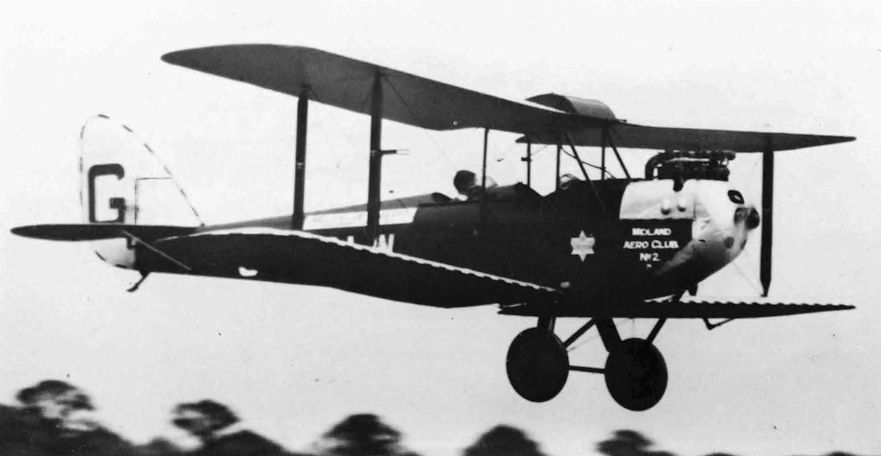
Регистрационный номер: G-EBLW G-EBLW c/n 189, the ninth Cirrus I Moth showing the high engine position of the early production machines, RH side carburetter intake, high LH exhaust manifold and exhaust pipe routed down the LH side. The production balanced rudder can be seen and painted on the nose is 'MIDLAND AERO CLUB No.2' (No.1 was G-EBLT c/n 186). The two air inlet holes under the propeller boss appeared on many of the early aircraft, approximately in line with the ends of the longer oil-breather pipes which were on some of the early Cirrus I engines. Prior to the first DH60X the base of the fuel tank was in line with the lower wing surface giving a humped appearance.
Самолёты на фотографии: De Havilland Moth / D.H.60 - Великобритания - 1925
-
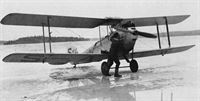
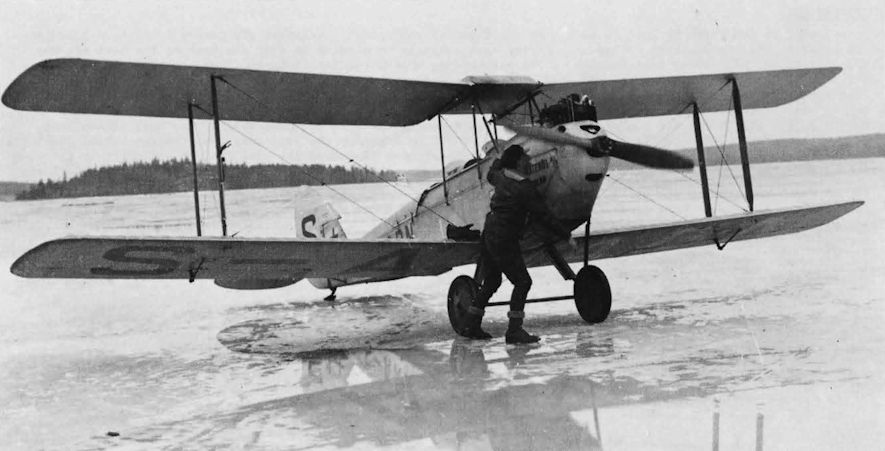
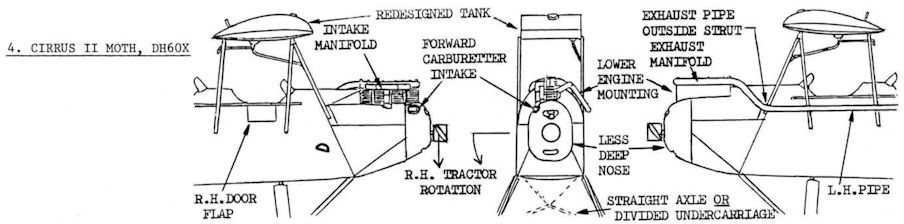
Регистрационный номер: S-AABN Swedish straight-axle DH60X S-AABN c/n 481 on the ice near Stockholm having its low-mounted Cirrus II engine started by swinging the RH tractor rotation prop from behind. The impression of a face is created by the carburetter air intake as an eye, the propeller hub as a nose and the air inlet hole beneath it shaped like a mouth. Above the hub is the oil filler cap with its access hole, now a larger triangular shape. The more symmetrical fuel tank has lost the humped appearance but projects slightly below the wing.
Note: With no brakes or chocks and no-one in the cockpit, this starting method would nowadays be considered 'dicey', but note that the pilot is holding on securely to the front centre-section strut with his ungloved left hand which would enable him to pull himself up onto the wing walkway from where he could climb into the rear (solo) cockpit, the straps of which are already spread and hanging over the side. It is very likely that the engine had already been warmed before pushing it out onto the ice so that the above procedure could be carried out with the throttle fully closed at the tickover setting to counter the risk of a 'runaway'.Самолёты на фотографии: De Havilland Moth / D.H.60 - Великобритания - 1925
-
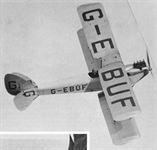
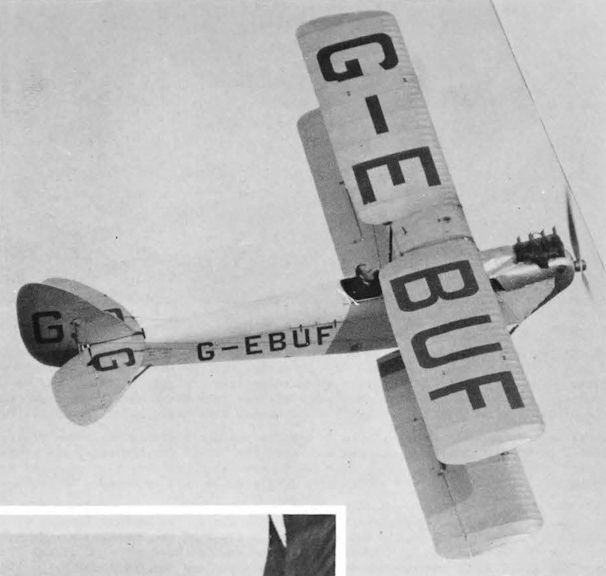
Регистрационный номер: G-EBUF Cirrus II Moth G-EBUF c/n 441 was initially a standard production DH60X with long exhaust pipe but is seen here with stub exhausts and a metal propeller as modified by the first owner ADC engine division who used it from 9.27 to 6.30 for Cirrus and Hermes development. Clearly seen in this photograph is the slight and easily overlooked trailing edge taper at the roots of all four mainplanes which was necessary to prevent the wings from fouling each other when folded.
Самолёты на фотографии: De Havilland Moth / D.H.60 - Великобритания - 1925
-
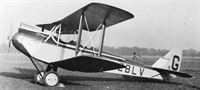
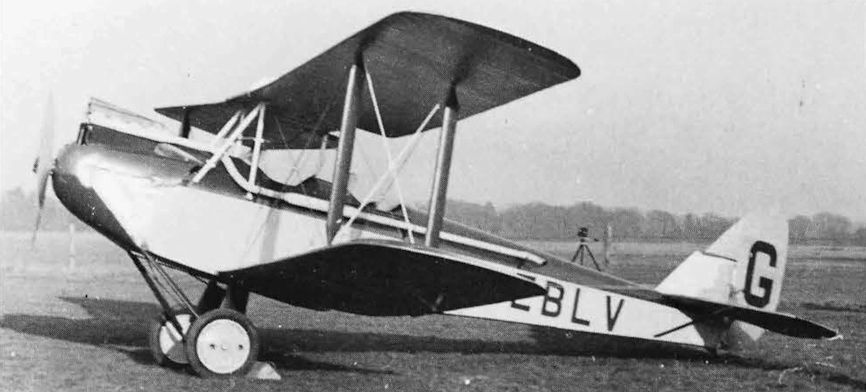
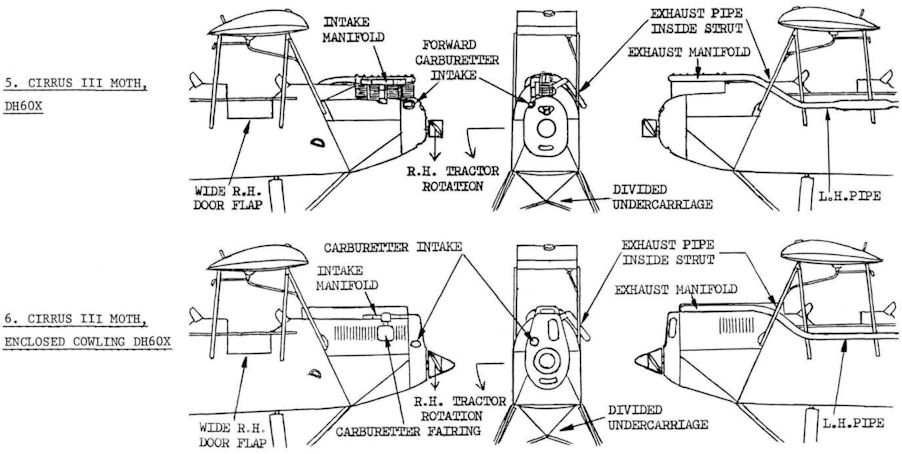
Регистрационный номер: G-EBLV G-EBLV c/n 188, although the eighth Moth to be built and the oldest survivor, has been kept flying by modifications which make it a cross between a Cirrus I Moth with the early humped fuel tank and straight-axle undercarriage, a DH60X with the lowered engine mounting, and a Cirrus III Moth with the exhaust pipe inside the first centre-section strut. Another later feature is the prominent scoop and cover assembly projecting upwards over the tops of the cylinders.
Самолёты на фотографии: De Havilland Moth / D.H.60 - Великобритания - 1925
-
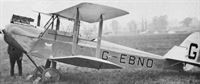
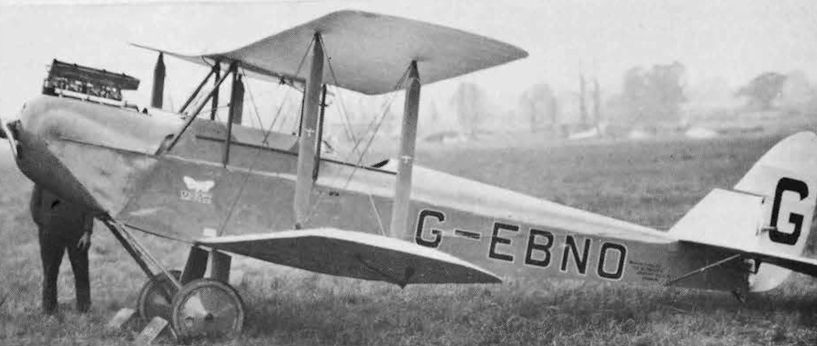
Регистрационный номер: G-EBNO [2] G-EBNO c/n 261 showing early steps taken to improve performance for racing: single seater with front cockpit covered over and long stub exhausts enclosed in a flat fairing with a streamlined tail. This fairing was used as late as the 1929 King's Cup (on G-EBPQ c/n 357) but disappeared when shorter stubs were used without problems in the cockpit. The humped fuel tank and large wheels were unchanged.
Самолёты на фотографии: De Havilland Moth / D.H.60 - Великобритания - 1925
-
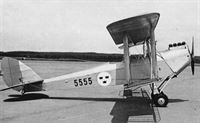
Регистрационный номер: G-EBNO [2] 'G-EBNO' preserved in non-flying condition using a number of non-original parts. The bungee tension-sprung tailskid is replaced by the later compression coil-spring type and associated cut-away rudder which were fitted to the DH60M and T models. The main wheels are the doughnut type, the fuel tank is the late model and a Gipsy LH tractor propeller is fitted. The cowlings have no openings for carburetter or intake and the wings are uncovered except for the starboard upper and the ailerons. Remaining original parts, if any, would be over 60 years old. It has been painted to represent a DH60T at the Ugglarp Flygmuseum.
Самолёты на фотографии: De Havilland Moth / D.H.60 - Великобритания - 1925
-
Самолёты на фотографии: De Havilland Moth / D.H.60 - Великобритания - 1925
-
Самолёты на фотографии: De Havilland Moth / D.H.60 - Великобритания - 1925
-
-
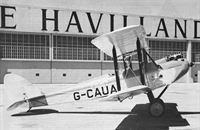
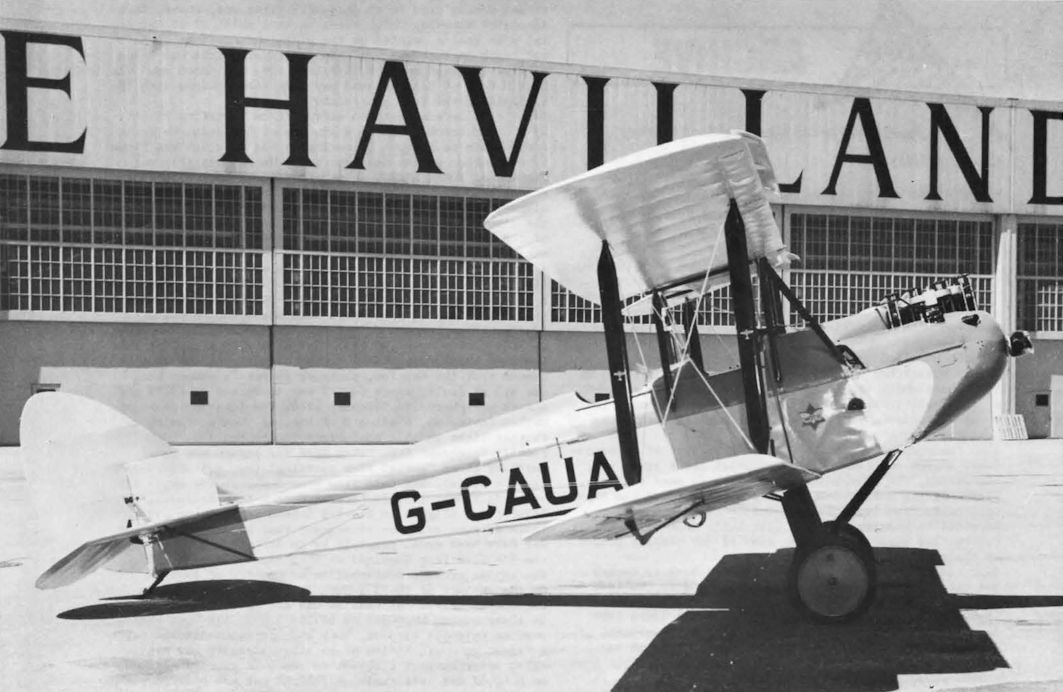
Регистрационный номер: G-CAUA The beautifully restored Cirrus II Moth G-CAUA c/n 630 outside the De Havilland factory at Downsview, Ontario.
Самолёты на фотографии: De Havilland Gipsy Moth / Moth X - Великобритания - 1928
-
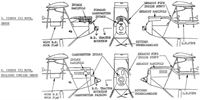
Самолёты на фотографии: De Havilland Gipsy Moth / Moth X - Великобритания - 1928
-
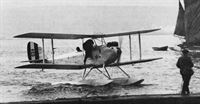
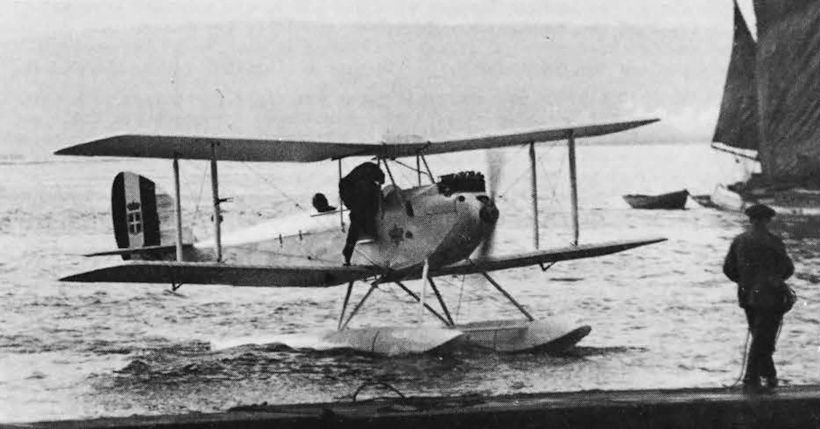
The lower engine mounting for the Cirrus II and the forward intake hole for the carburetter are clearly seen on this DH60X seaplane with Italian rudder markings taxying in to a mooring. The mooring helper stands by with rope and fender while the front cockpit crew member, blocking the view of the neck-craning pilot, climbs out over the open side door-flap on to the wing walkway. From here he can hold onto the front flying wire while getting on to the float ready to take the mooring rope, when the engine can be stopped and the rope tied to one of the 'eyes' on the nose of each float.
Самолёты на фотографии: De Havilland Moth Seaplane - Великобритания - 1926
-
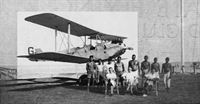
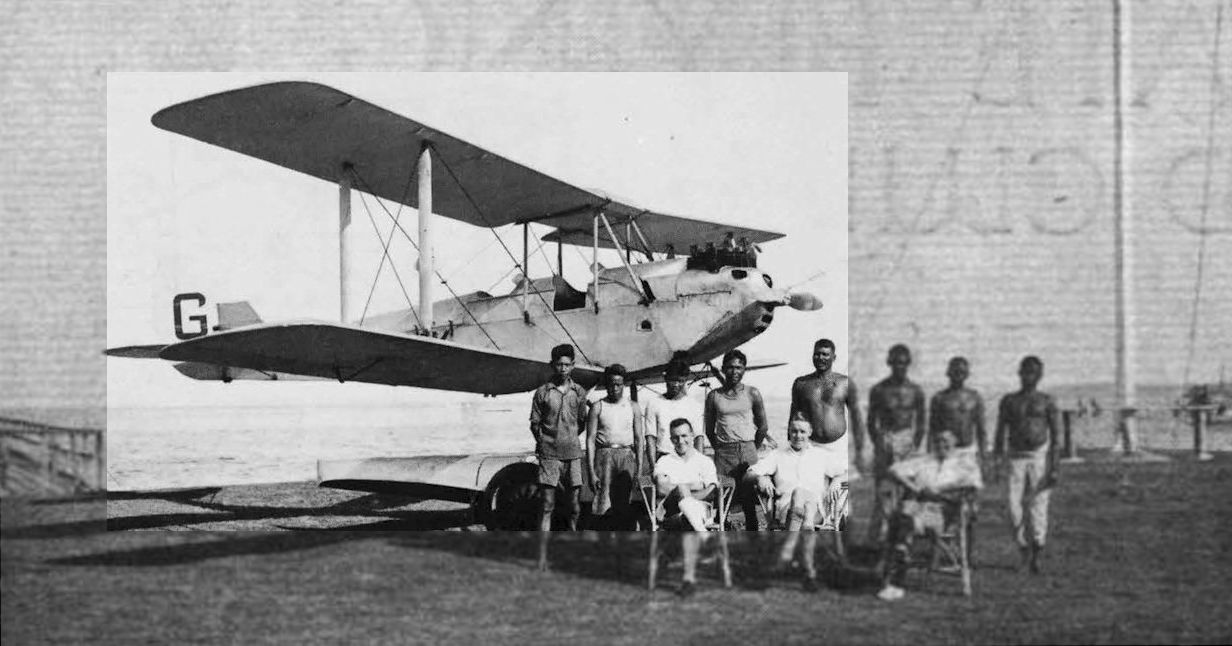
Регистрационный номер: G-AADK, A7-111, VH-ADD The European Staff of the Singapore Club with their "full" bodied native assistants.
Cirrus II Moth floatplane G-AADK c/n 921 of the Singapore Flying Club shows the lower engine mounting and forward carburetter intake inherited from the Cirrus II Moth. The cockpit door-flap, its protection not needed in the warm climate, has been removed to give the front cockpit crew member quicker exit during mooring operations. To allow access to the left float, the long exhaust fitted initially has been replaced by stubs, the downward-turned first stub being visible projecting outwards from the first cylinder. For permanent use on floats no tailskid was fitted.Самолёты на фотографии: De Havilland Moth Seaplane - Великобритания - 1926