

Фотографии

-

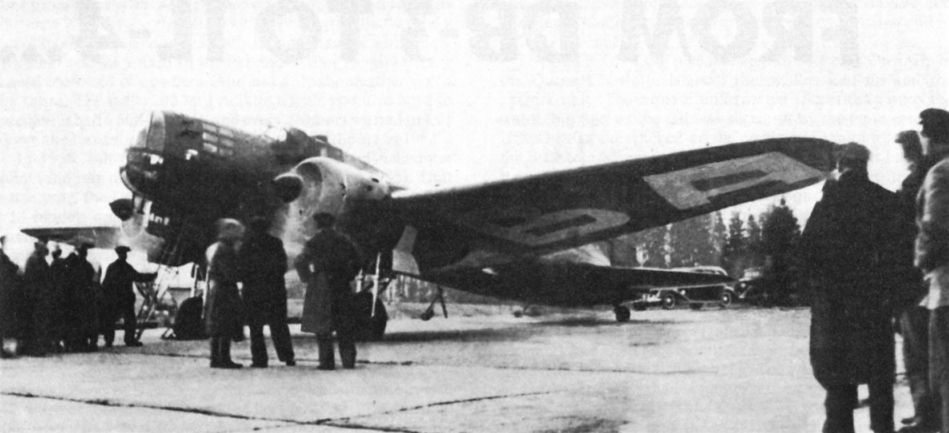
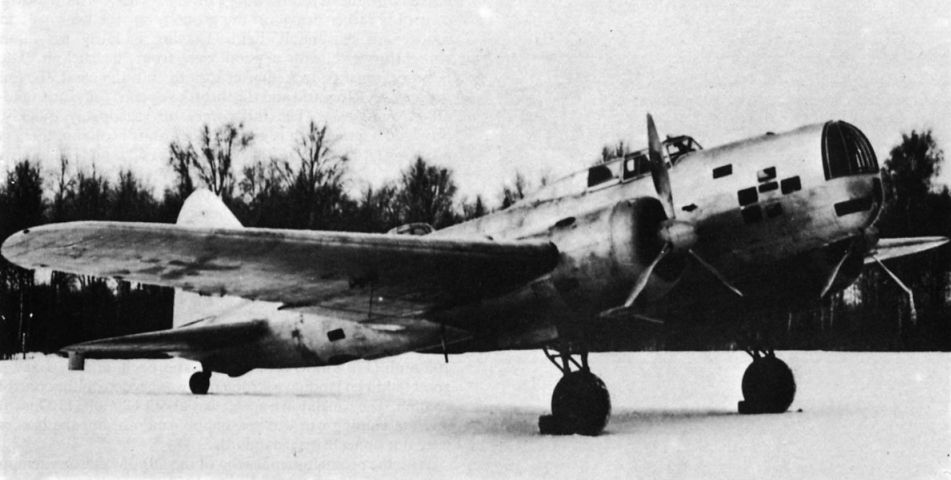
Регистрационный номер: DB-13 [2] One of the DB-3Ms captured by the Finns during the "Winter War" (DB-13) which was demonstrated in Germany in the summer of 1941, and is seen when serving with 2/LeLv48.
Самолёты на фотографии: Ильюшин ДБ-3 / ЦКБ-30 - Россия - 1936
-

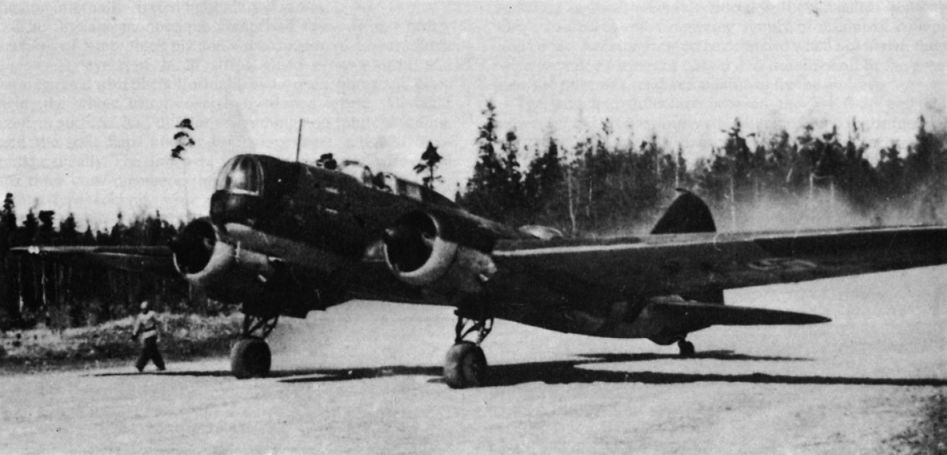
Регистрационный номер: DB-19 One of the DB-3M bombers (DB-19) utilised by the Finnish air arm (Ilmavoimat). This particular aircraft, one of six procured from German war booty depots, is seen while operating with 3/PLeLv 46 from Mensuvaara in the summer of 1944. It was later operated by PLeLv 45 and withdrawn from service in February 1945.
Самолёты на фотографии: Ильюшин ДБ-3 / ЦКБ-30 - Россия - 1936
-

В 1938 году специально подготовленный ЦКБ-30 "Москва" выполнил беспосадочный перелет по маршруту Москва (аэродром Чкаловский) - Спасск-Дальний (Приморье). Самолет был окрашен в красный цвет, а снизу на крыле было написано "Москва". Через год на нем был выполнен беспосадочный перелет Москва - Нью-Брансуик (Канада).
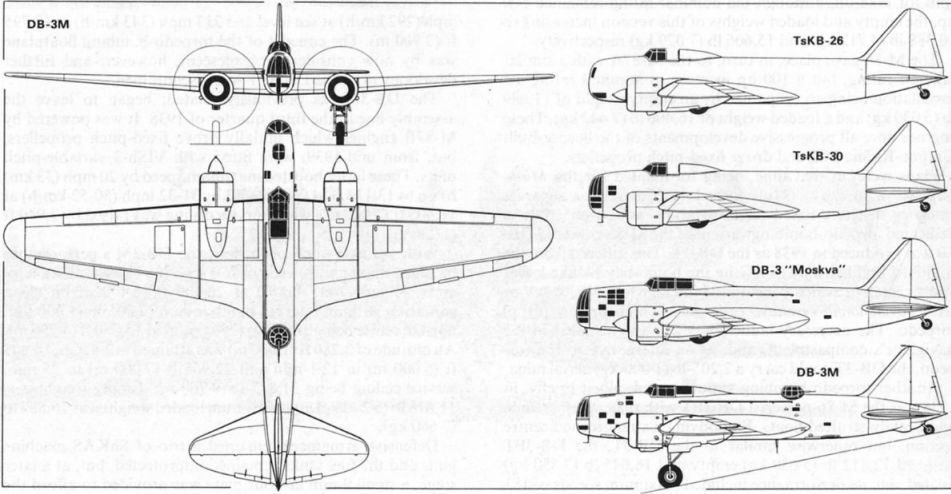
The specially-modified DB-3 "Moskva" which, in 1938, flew non-stop from Moscow to Spassk-Dalnii, near Vladivostok. This aircraft, painted red overall and displaying its name in white beneath the wings, flew from Moscow to Canada in the following year.On 27-28.6.38 Vladimir K Kokkinaki, who had flown the first prototype llyushin TsKB-26 (DB3) bomber (two 800 hp Gnome-Rhone K-14 14-cyl 2-row radial engines), flew the later DB-3 "Moskva", all red with its name in white beneath the wings, for 4,710 miles from Moscow by way of Sevastopol and Sverdlovsk to Vladivostock in just over 24 hours non-stop at an average speed of 191 mph.
Het Vliegveld: 28.06.38: Soviet airmen Kokkinaki and Brindiadinsky flew non-stop from Moscow to Vladivostok in 24 hours.
Het Vliegveld: 28.06.38: Vladimir K Kokkinaki and A M Bryandinsky were flying a modified llyushin TsKB-30 long range bomber, number 9, which had entered production as the DB-3. Completed in May 1936 without armament but fitted with a modified nose and extra fuel tankage in the bomb bay and fuselage gun position, it was painted red and named "Moskva" but if it was given a registration this is not recorded. Taking off from Moscow on 27.8.38 they flew non-stop to Spassk-Dal'nii, near Vladivostok, a distance of 7580 km in 24 hours 36 minutes. The two crew were each awarded the title 'Hero of the Soviet Union' and the Order of Lenin together with prizes of 25,000 roubles for their achievement.Самолёты на фотографии: Ильюшин ДБ-3 / ЦКБ-30 - Россия - 1936
-

The DB-3 "Moskva” seen after its forced landing on the island of Miscou, at the northern tip of the Canadian province of New Brunswick, at the conclusion of a 22 hr 56 min flight.
So far as is known this machine, in which Kokkinaki was forced down in New Brunswick on a flight from Moscow to New York, is similar to the Z.K.B.-26 bomber. The engines are of the M.85 type which is virtually the Gnome-Rhone K.14.
The following year, on 28-29.4.39 Kokkinaki flew the DB-3 "Moskva" from Moscow in a bid to reach New York but he ran out of fuel and landed, undercarriage retracted, with only minor damage on the island of Miscou in New Brunswick. The distance covered bettered his previous record flight as he achieved 4,970 miles in 22 hr 56 min at an average speed of 216 mph.
Het Vliegveld: 28.06.38: Soviet airmen Kokkinaki and Brindiadinsky flew non-stop from Moscow to Vladivostok in 24 hours.
Het Vliegveld: 28.06.38: This flight was intended as preparation for a Moscow - New York flight the following year. In the meantime the "Moskva" was modified for the over-water attempt and the two 760/800 hp M-85 fourteen-cylinder 2-row radials with 3-blade fixed-pitch propellers were replaced by 950 hp M-87Bs with variable-pitch props. Leaving Moscow on 28.4.39 with Kokkinaki partnered by M Kh Gordinenko, the flight suffered several setbacks, strong headwinds, extreme cold, shortage of oxygen and finally lack of fuel so that a forced landing had to be made on Miscou Island, New Brunswick, Canada on the following day. It is assumed that the aircraft, which was not seriously damaged, was recovered and returned to the Soviet Union.Самолёты на фотографии: Ильюшин ДБ-3 / ЦКБ-30 - Россия - 1936
-

Регистрационный номер: VP-101 После серьезной модернизации появился вариант ДБ-3М, сменивший к концу 1939 года первую версию ДБ-3Б на трех сборочных линиях. ДБ-3М имел два мотора М-87А либо М-87Б.
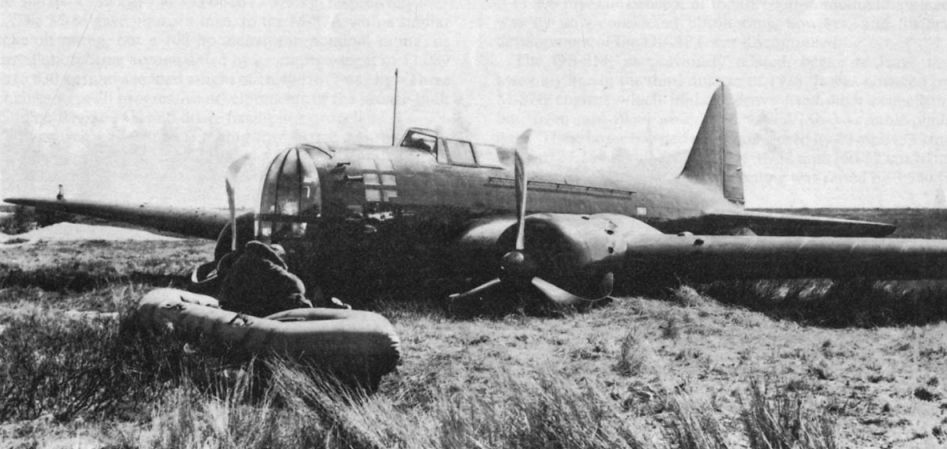
The first DB-3M to be acquired by the Finnish air arm, which, bearing the construction number 392320, was captured at Hauho on 29 January 1940. This was assigned the Finnish serial VP-101, later changed to VP-11, and belonged to 2/LeLv 46 at the beginning of the "Continuation War" but was lost five days after the resumption of Russo-Finnish hostilities when it alighted on Lake Hirvaslampi after a failure of the starboard engine.Самолёты на фотографии: Ильюшин ДБ-3 / ЦКБ-30 - Россия - 1936
-
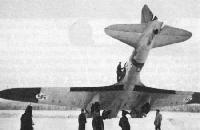
Регистрационный номер: DB-13 [2] One of the DB-3Ms captured by the Finns during the "Winter War" (DB-13) which was demonstrated in Germany in the summer of 1941, and is seen on 23 January 1943 after nosing over at Luonetjarvi.
Самолёты на фотографии: Ильюшин ДБ-3 / ЦКБ-30 - Россия - 1936
-

Самолёты на фотографии: Ильюшин ДБ-3 / ЦКБ-30 - Россия - 1936Ильюшин ЦКБ-26 - Россия - 1935
-

Самолёты на фотографии: Ильюшин Ил-4Т - Россия - 1940



Статьи