


Air-Britain Archive 2-1997
The Lanier Slow-Flight Aeroplanes, 1928-1960
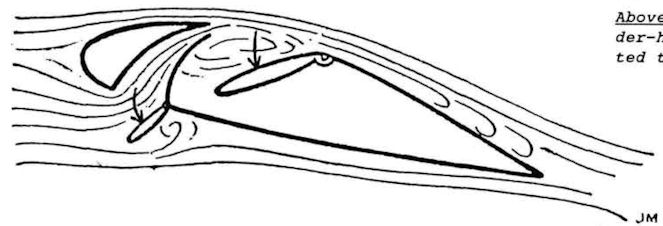
In 1928 a research professor named Edward Lanier at the University of Miami, commenced building an aeroplane with the help of students which was intended to explore his ideas on low speed flight. These ideas were based on diverting the airflow over a wing to flow through it by an extension of slot effect to form a zone of reduced pressure in the region of the upper surface. He called this a "vacuplane", an oblique reference to a vacuum which of course it was not as to produce a vacuum requires a closed vessel. However this name was convenient to put the idea in the public eye without a great deal of detailed explanation.
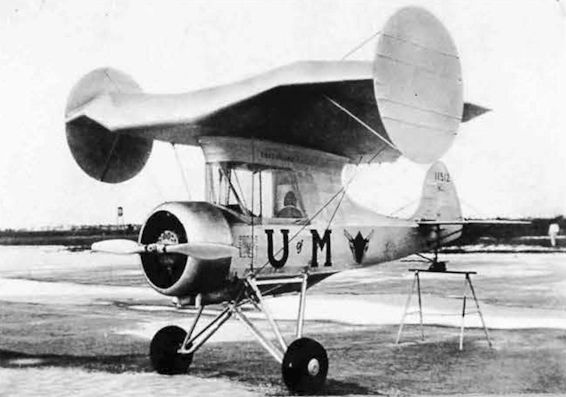
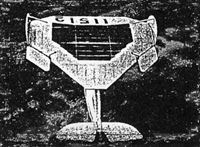
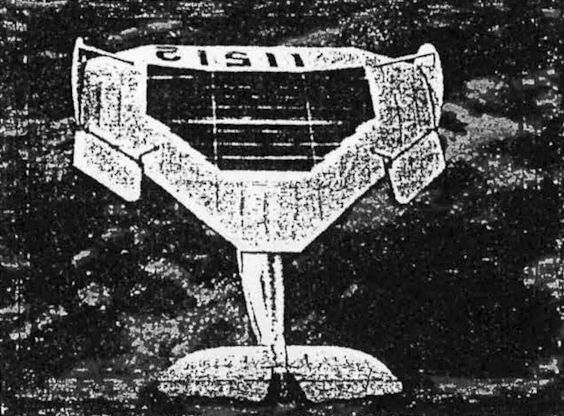
Professor Lanier's first attempt at an aeroplane to use his system was registered 11512, and this was marked on the top surface of the strangely-shaped wing. Its span was little more than the plane's length, and the wing was mounted as a parasol on top of a streamlined central pillar with a transparent front formed around the upper part of the enclosed pilot's position. The undercarriage, tail surfaces and controls were orthodox and it was powered by an unidentified NACA-cowled radial engine driving a right hand tractor metal propeller. The wing had a hollowed-out centre through which the structure could be seen as a framework. Ailerons projected from the trailing edge at the outer ends and large oval endplate fins were mounted on the tips.
Changes to the vacuplane during Lanier's early experiments are not known, but photos show nothing unusual about the aircraft on which the Lanier wing was mounted. The University of Miami was identified on the fuselage side by "U of M" in large letters and a coat of arms. At this stage it was described as the XL-4 which presumably stood for the 4th Experimental variant.
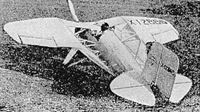
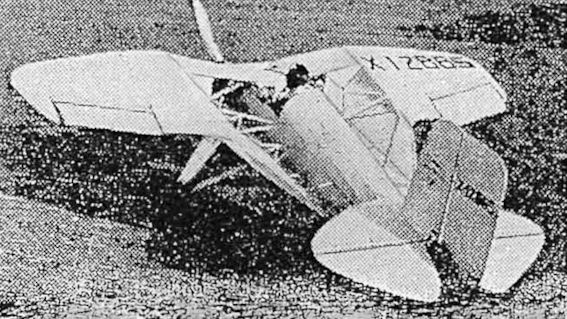
A final pre-war (ie pre-1942) variant was the 6th, a complete redesign with a 40 hp 2-cyl Aeronca engine, which was registered X12865. It was still a single seater, but now the layout had changed to a shoulder wing monoplane with orthodox stub mainplanes and ailerons outside the much redesigned vacuplane centre section which now extended in the form of a depression on either side of the fuselage. Professor Lanier was not to see any results of his work as he died just before the US entered WW2 and his designs passed into the hands of his son, Edward M. Lanier.
<...>
- Air-Britain Archive 2-1997
Фотографии

-
Air-Britain Archive 1997-02 / The Lanier Slow-Flight Aeroplanes, 1928-1960 /Fact file/ (10)
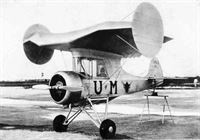
Регистрационный номер: 11512 [2] The Lanier Vacuplane in its initial form separated the experimental wing with its endplate fins by mounting it on top of an otherwise orthodox airframe.
-
Air-Britain Archive 1997-02 / The Lanier Slow-Flight Aeroplanes, 1928-1960 /Fact file/ (10)
Регистрационный номер: 11512 [2] Vacuplane 11512 in the only photograph to show the open-top wing during trials with the ailerons hinged separately to the trailing edge.
-
Air-Britain Archive 1997-02 / The Lanier Slow-Flight Aeroplanes, 1928-1960 /Fact file/ (10)
Регистрационный номер: X12865 X12865 was the sixth pre-war variant, with shoulder-high wing and depressed centre section, which pointed to a final practical form.
-
Air-Britain Archive 1997-02 / The Lanier Slow-Flight Aeroplanes, 1928-1960 /Fact file/ (10)
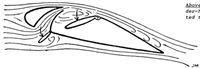
The Vacuplane wing had two controlling hinged aerofoils, here seen fully open as for landing with the wing at a high angle of attack. For take-off only the small aerofoil was opened slightly to provide slot effect, and for cruising JM both aerofoils were closed.
- Фотографии