

 Wiki
Wiki Aeromilitaria 3-2000
Retractable Float Seaplane
Attempting to obtain similar performance to land-based aircraft with a floatplane was almost impossible, given the additional weight and drag of floats. But in the absence of a suitable airfield, there was no practicable way to provide fighter cover other than by carrier-based fighters. OR.114 was devised for this purpose.
By 1942, there was seen to be a need for a water-based fighter in view of the need to provide carriers for Fleet use that left little scope for using one as virtually a floating airfield until one could be built ashore. Plans to build a mobile airfield of ice - Habbakuk - were in hand but at the beginning of 1942, it was the Pacific and South-East Asia that seemed mainly in need of water-based fighters.
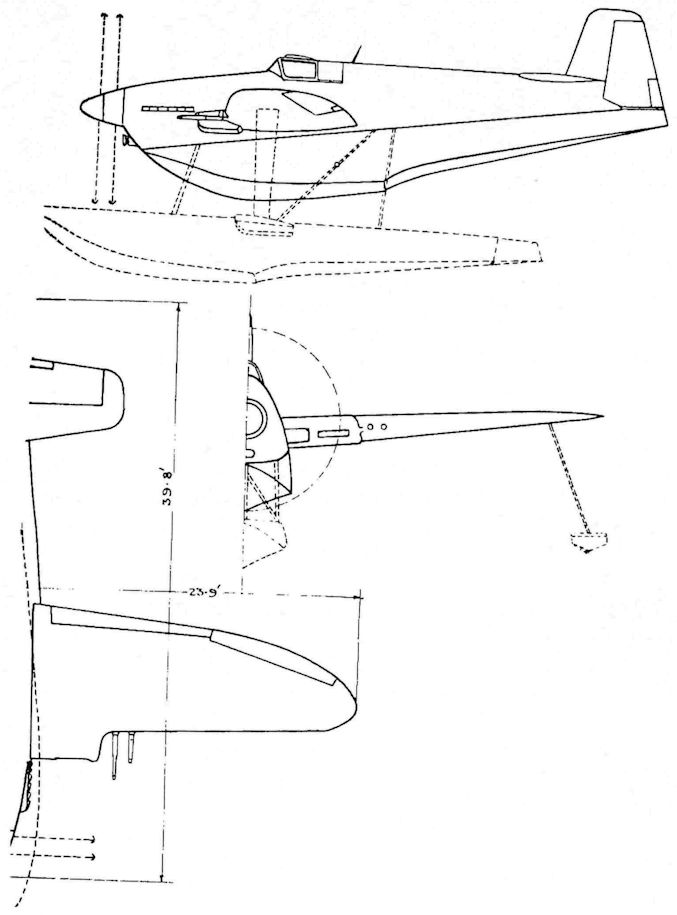
Putting floats on Spitfires had been reasonably successful but Specification N.2/42 called for something more radical. The Blackburn company produced a design that drew on their B.20 twin-engined reconnaissance-bomber which had a retractable planing bottom which fitted snugly under the fuselage.
This was a standard single-seat fighter, armed with four 20 mm cannon and powered by a Napier Sabre IV. A single float was carried on retractable struts which was raised after take-off to form the underside of the fuselage. Retractable wing-tip floats gave stability while afloat.
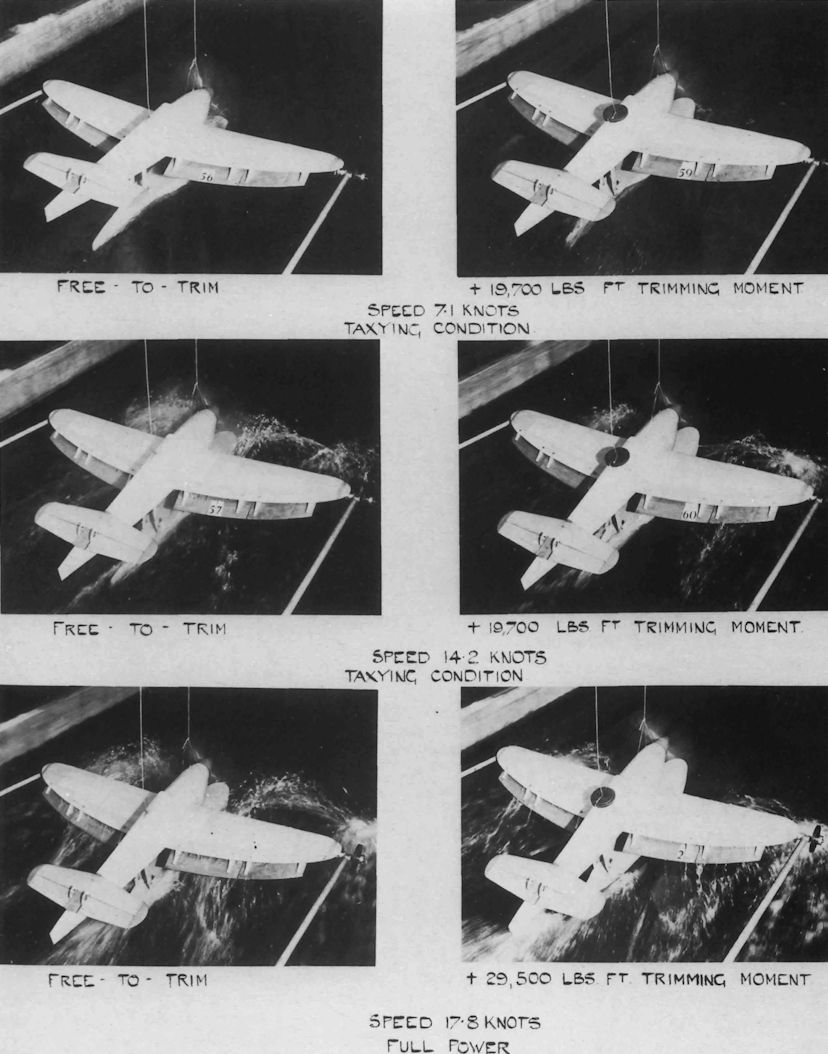
The RAE was asked to undertake tank tests to check the suitability of the design to operate from the sea in respect of stability and spray formation. The latter was important in that spray thrown up into the propeller did serious damage when the rapidly-moving blades came in contact with the spray. For this reason, marine aircraft were normally designed to keep the propellers clear.
The stability tests suggested that the original design was likely to run into porpoising trouble while taking off and calculations showed that take-off was doubtful even with a normal load. The pontoon had been developed from the design for the twin-float Firebrand, the ability to change from land to water undercarriage being still a requirement when the Firebrand was planned.
A modified pontoon was designed and this was judged satisfactory as regards stability, spray formation and water drag, but it was thought that a certain amount of tuning would be necessary to clear away the spray at low speed.
Take-offs were calculated at 32 seconds - 750 yards with a normal load of 14,600 lb and 71 seconds - 1,650 yards at maximum load of 16,700 1b.
The Blackburn B.44 had been designed for operations from sheltered waters and could be adapted to carry two 500-lb bombs or two 90-gallon drop tanks. A top speed of 355 mph at 24,000 feet had been called for with a ceiling not less than 30,000 feet.
It was also envisaged that these fighters could be hoisted out from an escort vessel when land-based cover was too distant but the advent of large numbers of escort carriers removed this requirement. The speed with which airfields could now be carved out after amphibious landings also meant the end of the need for a floatplane fighter and the project was abandoned.
- Aeromilitaria 3-2000
Фотографии
-
Air-Britain Aeromilitaria 2000-03 / Out of the Archives
Tank tests being carried out at the Royal Aircraft Establishment at Farnborough at various speeds and angles
-
- Фотографии