

Описание
 Wiki
Wiki 
Страна : Великобритания
Год : 1910
Одноместный моноплан
Handley Page Type A, Type C и Type D (H.P.1, H.P.3 и H.P.4)
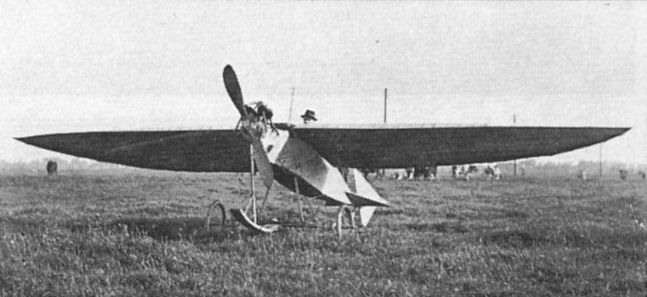
Фредерик Хэндли Пейдж заинтересовался авиацией в начале 1900-х годов, вступив в 1907 году в британскую ассоциацию Аэронавтики. В 1909 году он спроектировал и построил свой первый планер, а в 1910 году переделал его в самолет Handley Page Type A, или Bluebird. Этот одноместный моноплан деревянной конструкции с полотняной обшивкой имел шасси с хвостовым костылем и четырехцилиндровый мотор Advance мощностью 20 л. с. (15 кВт), вращавший тянущий воздушный винт. После аварии, произошедшей 26 мая 1910 года, аэроплан модифицировали для улучшения поперечного управления. Самолет, переименованный в Type C, получил мотор Alvaston с двумя горизонтально расположенными цилиндрами мощностью 25 л. с. (18.6 кВт). В этом виде аэроплан так и не взлетел. Тогда Хэндли Пейдж разработал улучшенный проект, известный как Type D, или Antiseptic, который имел серповидное монопланное крыло с расчалками, прикрепленными к фюзеляжу и шасси. Шасси состояло из легких колес и установленной между ними длинной деревянной лыжи-полоза, делавшего ненужной хвостовую опору. На выставке в Олимпии в апреле 1911 года Type D имел мотор Green мощностью 35 л. с. (26 кВт), но еще до первого полета, состоявшегося 15 июля 1911 года, его заменили на звездообразный мотор Isaacson. К сожалению, этот первый полет закончился аварией при посадке, но вскоре аппарат восстановили. Впоследствии он совершил еще ряд полетов, получив неофициальное прозвище Yellow Peril из-за расцветки его крыла и оперения. С введением новой системы обозначения типов в 1924 году аэропланам Type А,Type С и Type D присвоили индексы H.P.1, H.P.3 и H.P.4.
ТАКТИКО-ТЕХНИЧЕСКИЕ ХАРАКТЕРИСТИКИ
Handley Page Type D
Тип: одноместный моноплан
Силовая установка: пятицилиндровый звездообразный ПД Isaacson мощностью 50 л. с. (37 кВт)
Летные характеристики: максимальная скорость 80 км/ч
Масса: пустого аппарата 200 кг; максимальная взлетная 281 кг
Размеры: размах крыла 9,75 м; длина 6,71 м; площадь крыла 14,49 м2
- Описание
Фотографии
-

Aeroplane Monthly 1986-02 / K.Desmond - H.P. (1)
The Bluebird was priced at ?375.
-

Flight 1939-06 / Flight
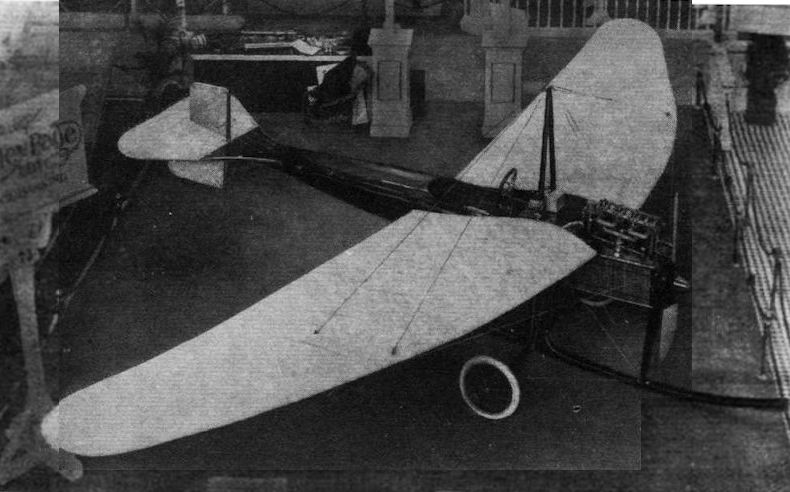
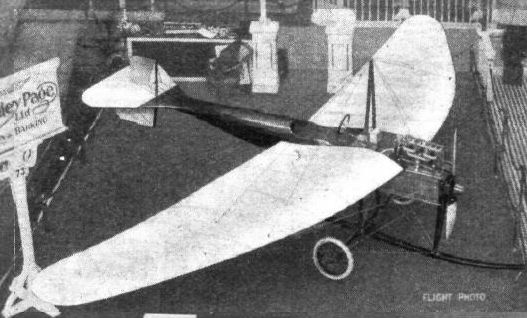
Before the days of slots. Here is a view from above of the 1911 Handley Page monoplane with 35 h.p. Green engine. Note the crescent-shaped wings.
-
Flight 1933-11 / Flight Advertisements
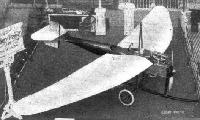
The Handley-Page monoplane was designed for automatic stability, and for many years "H.P." was a great believer in the crescent-shaped wing. The wing-tips were given a pronounced "wash-out" in addition to their sweep-back.
-

Aeroplane Monthly 1986-02 / K.Desmond - H.P. (1)
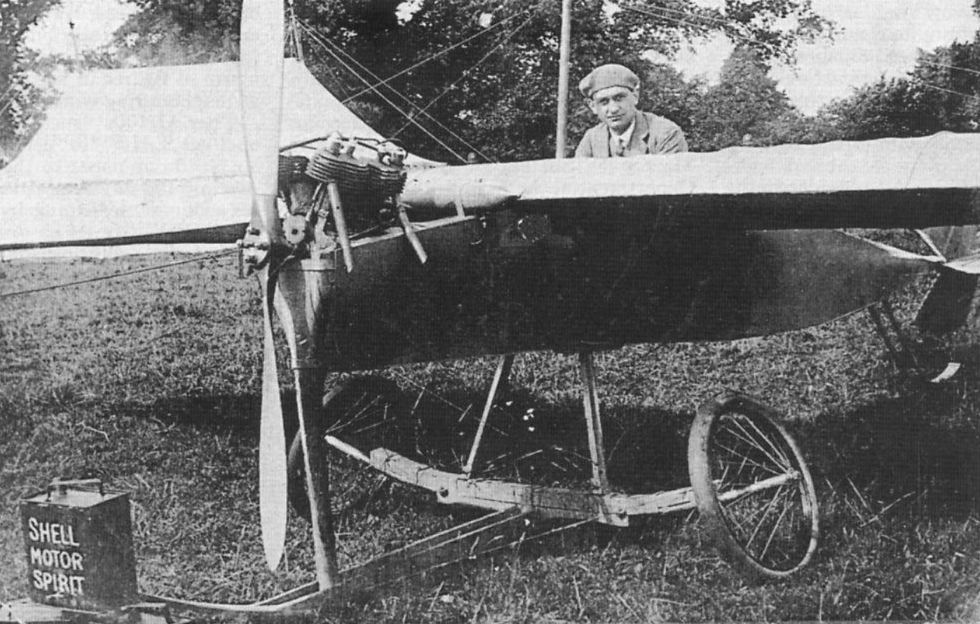
Фредерик Хэндли Пейдж выглядывает из кабины пилота своего моноплана Type A, известного как Bluebird.
IT IS NOT ALWAYS THЕ aeroplanes in photographs that pose a dilemma. Many readers will be familiar with the picture of Frederick Handley Page, aged about 25, seated in the cockpit of his first powered aeroplane, the Type A or Bluebird, in April 1910. It shows the monoplane in its original form, with a 20 h.p. Advance air-cooled four-cylinder vee engine. The picture was clearly taken at some sort of event, perhaps a fete or a presentation to show off his first-born, as a marquee is conspicuous in the background. Although Handley Page has optimistically reversed his cap in true aviator fashion, he was never able to persuade this diminutive monoplane, with its temperamental engine, to achieve more than a short straight hop before he crashed it. Perhaps that was just as well, as he had made no provision for any form of lateral control. <...> Philip Jarrett. -
Aeroplane Monthly 2001-09 / News
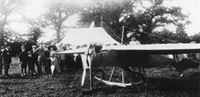
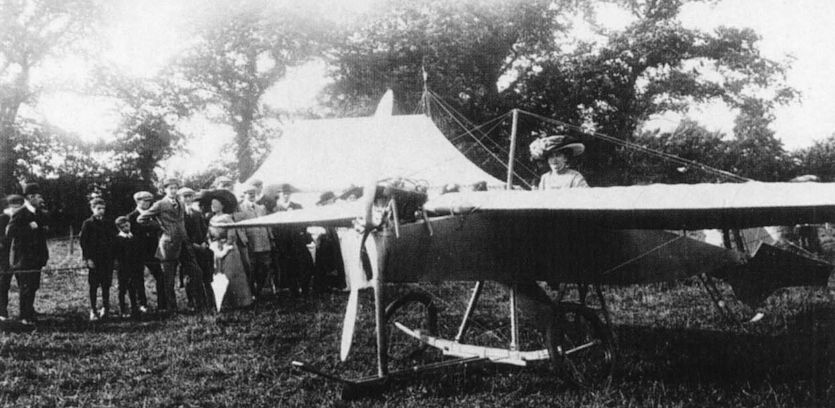
<...> A year or two ago I chanced upon the other photograph shown here. Clearly taken at the same event, it shows the Bluebird, so named because it was covered with blue rubberised cotton fabric, with a lady in the cockpit, wearing florally extravagant headgear completely unsuited to early aviation. Who was this lady? She is definitely not Mrs Handley Page-to-be, as Frederick did not marry Una Helen Thynne, who was a rather petite woman, until May 18, 1918. Consultation with Harry Fraser-Mitchell of the Handley Page Association drew a blank. If the lady cannot be identified, then perhaps the occasion can be pinpointed. As the second photograph reveals, there was an audience present, so it might have attracted some attention from the local press. Presumably the location was somewhere reasonably close to Creekmouth, Barking, where Handley Page had his first works and flying ground; but that is pure speculation. Philip Jarrett.
TWO READERS RESPONDED with suggestions for the identity of the lady in the Handley Page Bluebird. David Lang thought that it might be Mrs Rowland Ding, wife of the pilot who flew the Handley Page Type G biplane in 1914, as both Ding and Frederick Handley Page were we born in 1885 and they had known each other since 1902, having studied together at Finsbury Technical College. The Dings married long before FHP did. Mr J.R.D. Uphaugh guessed that she might be Princess Ludwig Lowenstein-Wertheim, a well-known society sportswoman who was much involved in early flying with Handley Page, but Harry Fraser-Mitchell of the Handley Page Association refutes this. -
Aeroplane Monthly 2002-01 / H.Fraser-Mitchell - Handley Page H.P.42 /Database/ (15)
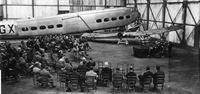
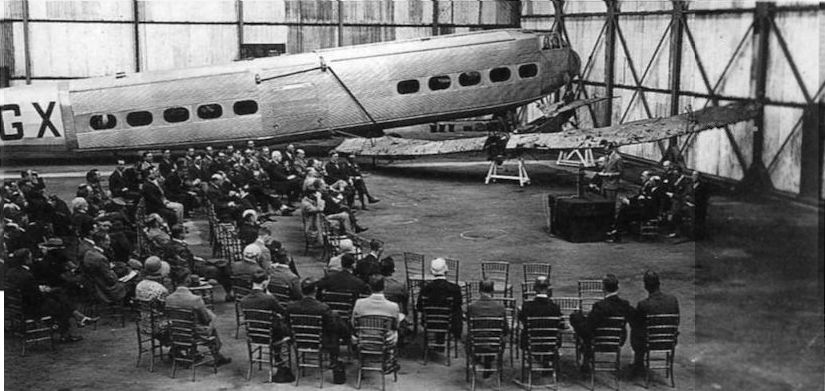
The first public glimpse of the H.P.42 came at the opening of Handley Page’s new factory at Radlett on July 7, 1930, by HRH Prince George. The remains of HP’s “Yellow Peril” of 1912 stand in front of the H.P.42.
The scene in the main hangar during the official opening on July 7, 1930 with the fuselage of H.P.42 G-AAGX still under construction and the remains of the 1910 Yellow Peril nestling under it.
Prince George making his speech. The remains of the 1910 "Yellow Peril" stand beside the fuselage of a 40-seater passenger machine.Другие самолёты на фотографии: Handley Page H.P.42 / H.P.45 - Великобритания - 1930
-

Aeroplane Monthly 1983-10 / L.Coombs - Cockpits of the RAF (1)
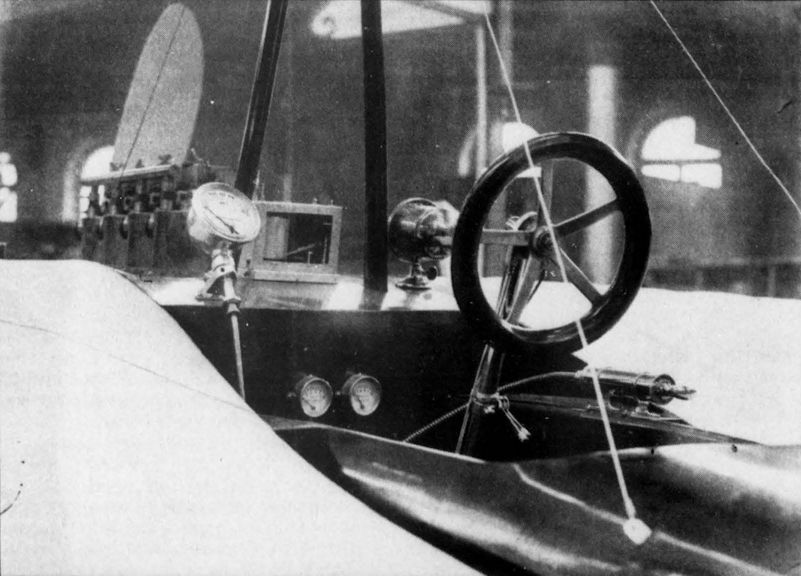
The control system of the Handley Page Type D pictured at Olympia in 1911 was conventional in that fore and aft stick motion operated the elevators and lateral motion warped the wings - but the rudder was controlled by rotation of the steering wheel.
- Фотографии