

 Wiki
Wiki 
Flight, December 1920
The Do. D.I, 1918
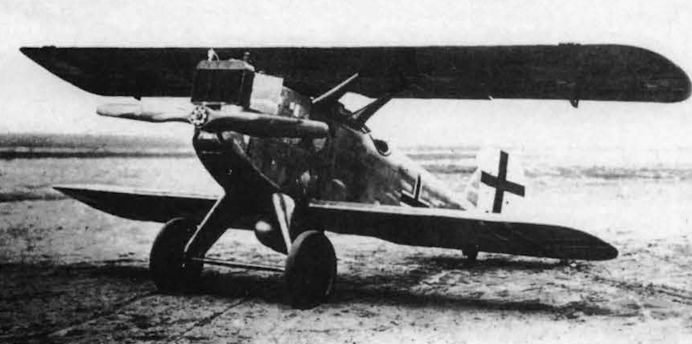
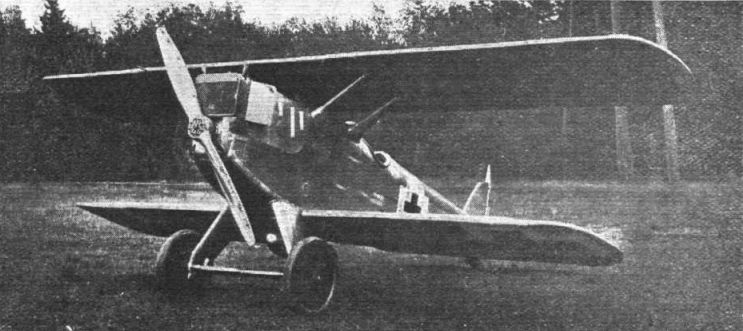
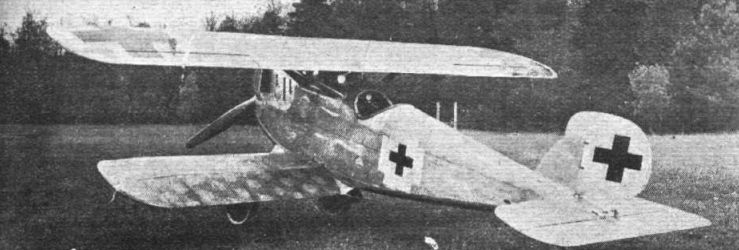
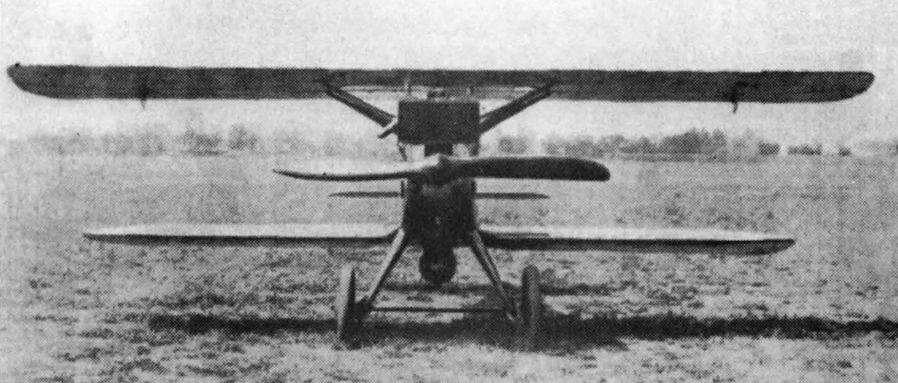
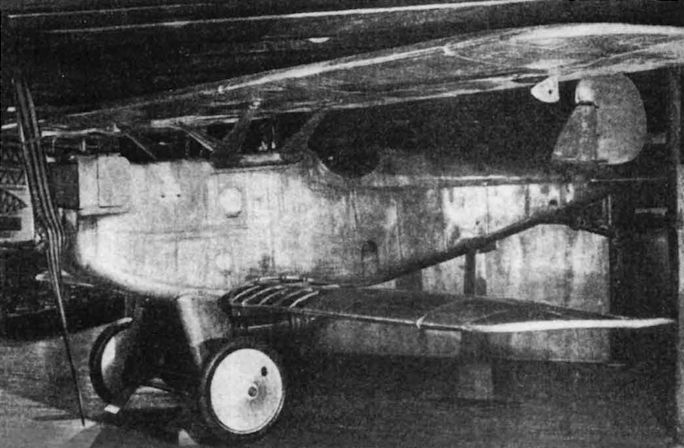
Although being a land machine, and thus having no direct relation to the development of Dornier fiying boats, a machine produced early in 1918 is of more than ordinary interest, as being probably the first all-metal machine in the world in which the metal covering not only of the fuselage but also of the wings is designed to take part of the stresses. The machine referred to was a small single-seater with a 185 h.p. B.M.W. engine, and was given the series number Do. D.I. As the two photographs will show, it was of extraordinarly clean appearance with its cantilever biplane wings and its metal cocque fuselage. The radiator was placed in the nose, and appears to English eyes to be decidedly on the small side. From the accompanying table it will be seen that for its area the D. I was fairly heavy, the weight empty being 7.6 lbs./sq. ft. and the useful load only 400 lbs., bringing the total wing loading up to 9.6 lbs./sq. ft. That the cantilever wings were able to support such a heavy loading appears to indicate that the construction was sound.
- Flight, December 1920
The Do. D.I, 1918
Фотографии
-
Air-Britain Archive 2003-03 / J.Meaden - Dornier - pioneer and survivor /Head-On View/ (9)
The Dornier D I all-metal single-seat fighter biplane first flew on 4.6.18 with cantilever wings and fuel in a circular section tank between the undercarriage legs.
-
Flight 1920-12 / Flight
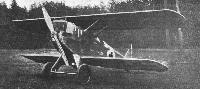
THE DO.D.I: This land machine is entirely without wire or cable bracing, the wings being of the cantilever type and the fuselage having metal covering. Note the faired undercarriage members.
-
Flight 1920-12 / Flight
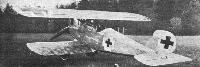
THE DO.D.I: Three-quarter rear view.
-
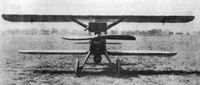
Air-Britain Archive 2003-03 / J.Meaden - Dornier - pioneer and survivor /Head-On View/ (9)
A head-on view of the D I shows the strutless cantilever wings which broke up on a test flight, killing Hauptmann Reinhardt, commander of JG1. The fuel tank was not jettisonable.
-
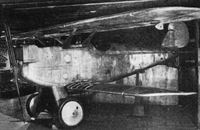
Air-Britain Archive 2003-03 / J.Meaden - Dornier - pioneer and survivor /Head-On View/ (9)
The D I was on view in the Dornier museum at Friedrichshafen between the wars as seen here, but it was destroyed in WW2 by bombing.
- Фотографии