

 Wiki
Wiki 
Flight, December 1920
It might be mentioned that at the same time as the building of the Rs. IV, work was progressing at Lindau on the development of metal floats for seaplanes, and such good results were obtained that in the latest Dornier machines metal floats are employed exclusively, with, it is claimed, excellent results. One of the first machines to be fitted with these metal floats was
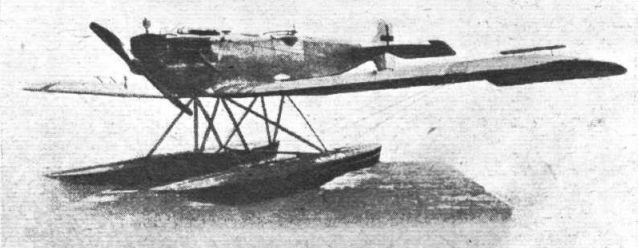
The Do. Cs. I, 1918
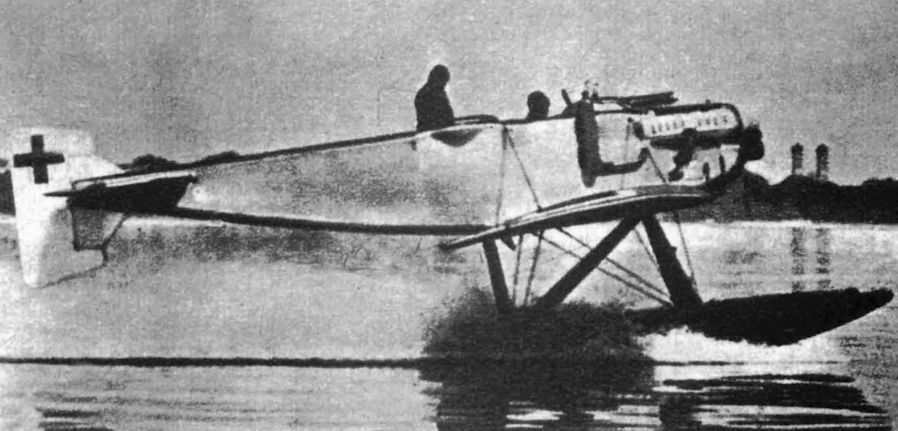
Of this machine little information is available, except that which may be gleaned from an inspection of the accompanying photograph. She was, it will be seen, designed somewhat on the lines of the Hansa-Brandenburg monoplane seaplanes if which were such a familiar sight in the North Sea once upon a time. That is to say she was a monoplane with the wings placed in the position occupied by the lower wing of a biplane. The engine was a 195 h.p. Benz, and the machine was a two-seater, with a turntable for the rear gun and with two synchronised machine-guns for the pilot. This machine had the metal covered unbraced fuselage and all-metal floats, but from the fact that she does not appear to have been turned out in quantities one presumes that she showed no advantage over existing types, at any rate not sufficient to supplant the Hansa-Brandenburg.
- Flight, December 1920
Фотографии
-
Flight 1920-12 / Flight
The Do.Cs.I: This machine was a twin float seaplane somewhat similar to the Hansa-Brandenburg.
-
Air-Britain Archive 2003-03 / J.Meaden - Dornier - pioneer and survivor /Head-On View/ (9)
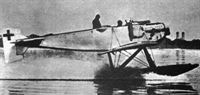
In 1918 Dornier produced the Cs I two-seat twin-float seaplane. It was fitted with side radiators on its 195 hp Benz BzIIIb as seen in this photo, said to have been taken on its first flight.
-
Air-Britain Archive 2003-03 / J.Meaden - Dornier - pioneer and survivor /Head-On View/ (9)
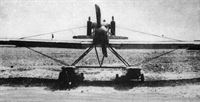
The Cs I seen head-on shows the side radiators, although a nose radiator was also tried. The wire-braced wing was metal, fabric covered.
-
Air-Britain Archive 2003-03 / J.Meaden - Dornier - pioneer and survivor /Head-On View/ (9)
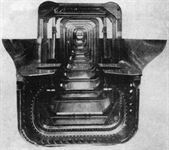
The Cs I rear fuselage looking aft, separated at the gunner's cockpit, the widest portion supporting the gun ring. The metal structure is seen to be pure monocoque without stringers.


- Фотографии