

 Wiki
Wiki 
Варианты
M.Hardy. Gliders & Sailplanes of the world
Dagling Primary
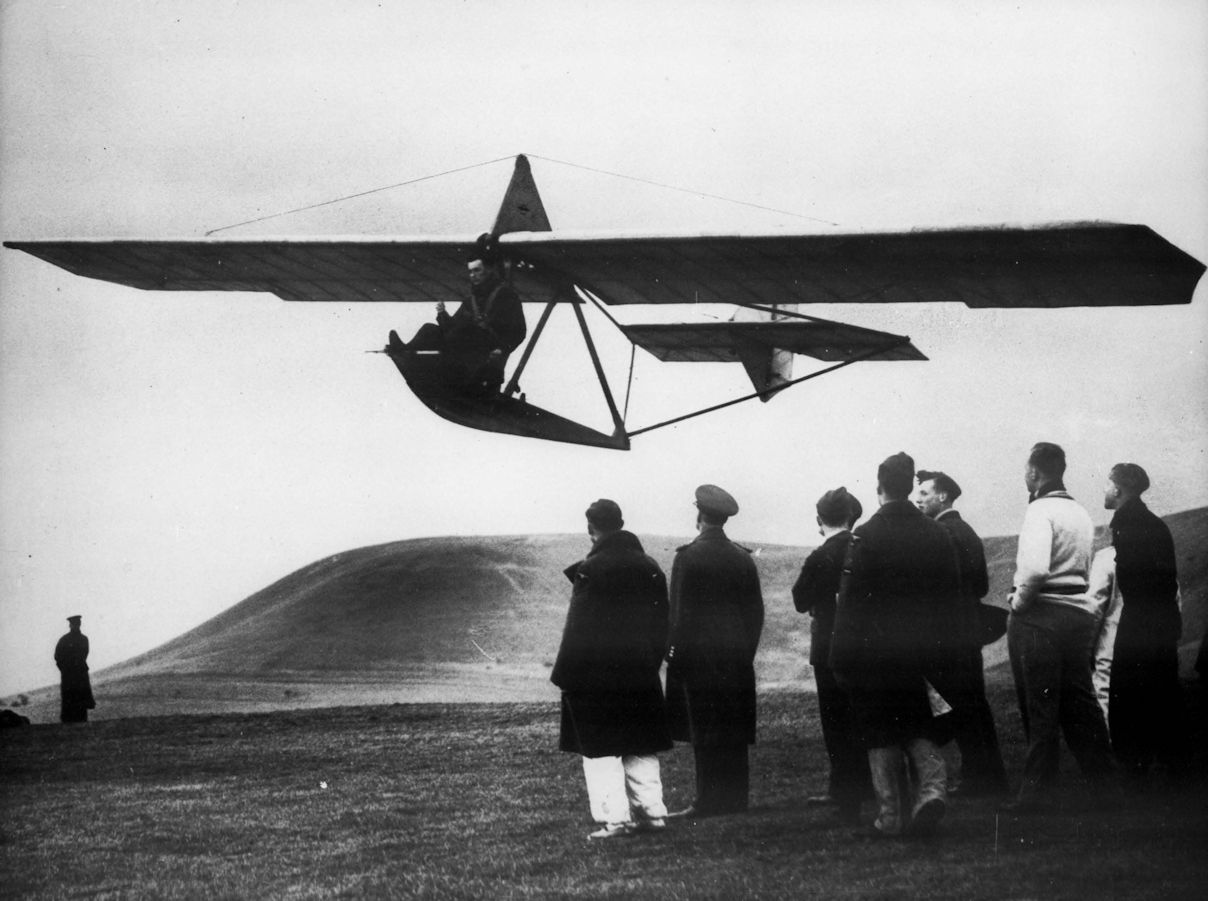
Primary training gliders evolved as very simple, even crude, airframes sufficiently basic and strong to withstand the rough handling of inexperienced beginner pilots while having just enough flying ability (and vices) to give the trainee pilot the feel of the controls and enable him to grasp the basic skill of controlling an aircraft in flight. The best known British prewar example in this category was the Dagling, a primary glider the prototype of which was built in 1930 by R. F. Dagnall, founder of the R.F.D. Co Ltd, for the London Gliding Club using plans acquired through America; this was a version of the German Zogling primary, and the combination of 'Dagnall' and 'Zogling' resulted in the name Dagling, which was often later applied to all primary gliders regardless of their true identity. The Dagling had a low aspect ratio constant chord wing from which a rudimentary wooden A-frame fuselage framework was suspended housing the pilot, the tail unit being carried on four steel tubular members - these had been wooden members in the Zogling, but were changed to metal to give a stronger support for the tail. Simple wood and fabric construction was employed, with wire-braced wings and only a main skid on the bottom fuselage member for the landing gear. Some Daglings had a nacelle fitted to give the pilot some protection from the elements, while others had rounded instead of squared-off wing tips, and at least one had a nacelle with two seats in it. Although pretty basic, the Dagling was successful enough to go into production and the R.F.D. Co built at least 27 but in January 1932 announced the cessation of its glider making activities to concentrate on its Air Ministry contracts, and the name of R.F.D. was henceforth to become far better known for liferafts, dinghies, parachutes, air and sea rescue equipment and related products. Dagling production was taken up by several other British firms, the foremost of which was Slingsby, which started building the type at Scarborough in 1933 as the T3 Primary, and eventually built 67; Slingsby's 1933 price for a complete Dagling was a mere £45, and this had risen to £57 15s (£57.75) by 1939, or £66 with a nacelle. For amateur constructors, the British Gliding Association offered a complete set of Dagling plans in 1933 for only £2. Dagling production was also undertaken by Hawkridge Aircraft Ltd, who built five after the war, by Dart Aircraft Ltd, by the Dunstable Sailplane Co, who built one, and Abbott Baynes Sailplanes Ltd; the type's simplicity also enabled it to be built by students at technical schools and colleges such as the College of Aeronautical Engineering, who built one at Redhill. Several other nations produced single-seater primary types in the 1930s basically similar in appearance and performance to the Dagling, such as the Italian Allievo Pavullo, also available with or without a nacelle, the US-designed Denver Primary and the German Schulgleiter SG 38 (the 108-14) and the Grunau Ei.
Data: Slingsby T3 Primary
Span: 33 ft 0 in
Span: 33 ft 11 1/2 in (with rounded tips)
Length: 17 ft 10 1/2 in
Wing area: 163 sqft
Aspect ratio: 6.6
Tare weight: 180 lb
All-up weight: 380 lb
Stalling speed: 25 mph
- M.Hardy. Gliders & Sailplanes of the world
Фотографии
-

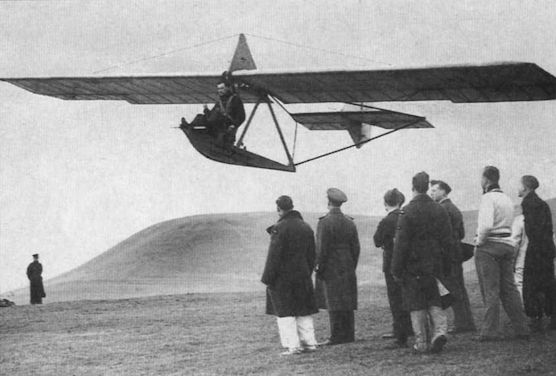
Aeroplane Monthly 1983-03
Photograph, taken in March 1940, shows RAF sergeant pilots being taught to glide by civilian instructors of the London Gliding Club at Dunstable, Beds. A Slingsby Type 3 Primary Trainer is being launched before a group of expectant RAF personnel.
-

Aeroplane Monthly 1991-09 / M.Challinor - 60 years of Ups on the Downs
The open version: primaries without nacelles resembled “a five-bar gate suspended below a wing”.
-

Aeroplane Monthly 1985-06 / N.Ewart - When flying was still an adventure (3)
It was on this type of glider that the author obtained his gliding “A” Certificate. The R.F.D. Primary Dagling was a British-built version of the German Zogling, which resulted in the name Dagling.
-

Flight 1935-08 / Flight
A member of the Summer Camp making a "ground-hop" in a "Dagling."
-

-
Aeroplane Monthly 2002-02 / News
THE APPEARANCE OF the Zogling primary glider, designed in Germany by Alexander Lippisch in the 1920s, greatly facilitated the teaching of ab initio glider pilots, and this skeletal machine with its stark simplicity was widely copied. In Britain, R.F. Dagnall produced the Dagling, with dimensions based on the Imperial system rather than the metric, and this, too, was copied by amateur builders, all of these generic machines still being called Daglings.
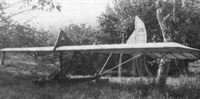
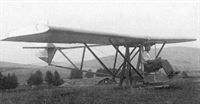
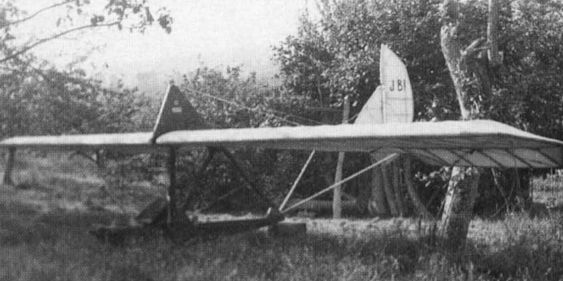
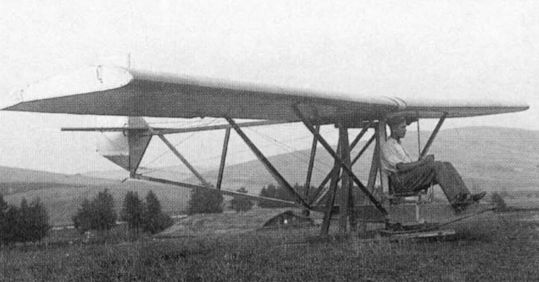
The two primary gliders seen here are both probably amateur-built Daglings, but little or nothing is known about them.
The glider in what appears to be an orchard seems to follow the pattern quite closely, apart from its distinctive tall rudder with its curved trailing edge, which contrasts with the craft's otherwise angular lines. The designation "JB1" is painted on the rudder, and on the back of the postcard is written: "The JB1 Dagling Type Primary Glider. wt 195lb, span 33ft. Photo taken 5.6.37". I'd love to know who "JB" was, and what adventures he had on his creation.
<...> -
Aeroplane Monthly 2002-02 / News
<...>
The other machine is of rather cruder construction, and has square-cut wingtips which reveal the deep wing section. It was photographed in countryside rather more suitable for gliding, with shallow hills; and in the middle distance, beneath the tailboom structure, may be seen what looks like a Bessoneau-type portable fabric hangar, possibly of First World War vintage. The glider seems to be held in a form of supporting framework, perhaps to enable the pupil to use it as a sort of ground trainer before essaying free flights.
Unfortunately there are no clues on the back of this picture. Any suggestions or, preferably, positive identifications, would be most welcome. -

Flight 1935-08 / Flight
A "Dagling" primary trainer which the London Gliding Club has made more efficient by fitting a nacelle around the pilot.
-

Aeroplane Monthly 1991-09 / M.Challinor - 60 years of Ups on the Downs
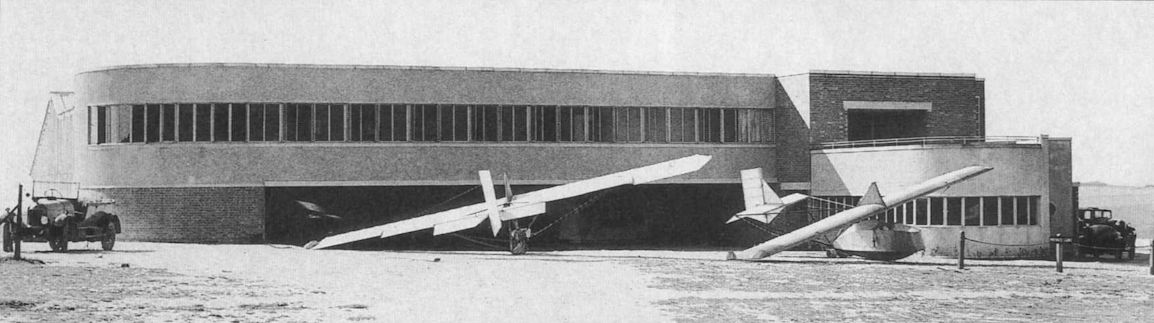
The innovative clubhouse photographed just after it opened in 1936.
-

Aeroplane Monthly 1991-09 / M.Challinor - 60 years of Ups on the Downs
Amy Johnson receiving her first gliding lesson from Jack Rice at Dunstable in 1937. The glider is a nacelled Dagling primary - Amy later bought a Kirby Kite I.
-
Air-Britain Archive 2001-02 / T.Fujita - The Japanese Civil Register 1919-45 /Japanese Civil Register/ (21)
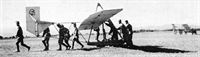
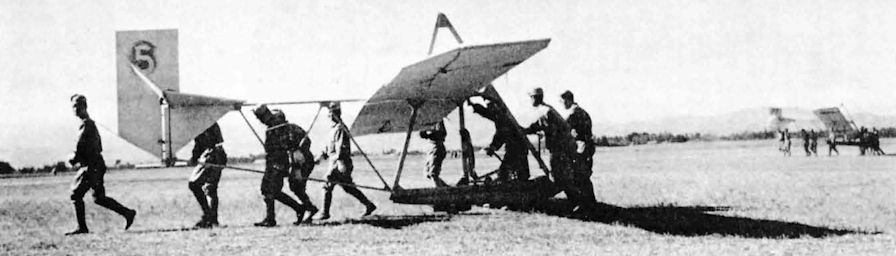
Two primary gliders are seen being manhandled at the Kumagaya Flying School in January 1945. These primaries appear to be Daglings. Identification is just a number on the rudder and anyway there is little room for a registration anywhere on a primary!
-
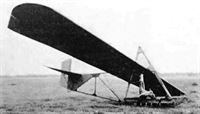
Air-Britain Archive 2001-02 / T.Fujita - The Japanese Civil Register 1919-45 /Japanese Civil Register/ (21)
This Japanese primary is basically a Dagling modified to have a larger wing span of 11.85 m (38ft 10in.) to provide longer glides when training over flat ground areas. The RFD Dagling was based on the German Zogling, itself a slightly smaller derivative of the SG-38 Schulgleiter.
-
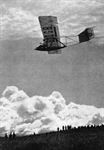
Air-Britain Archive 2003-02 / T.Fujita - The Japanese Civil Register 1919-45 /Japanese Civil Register/ (29)
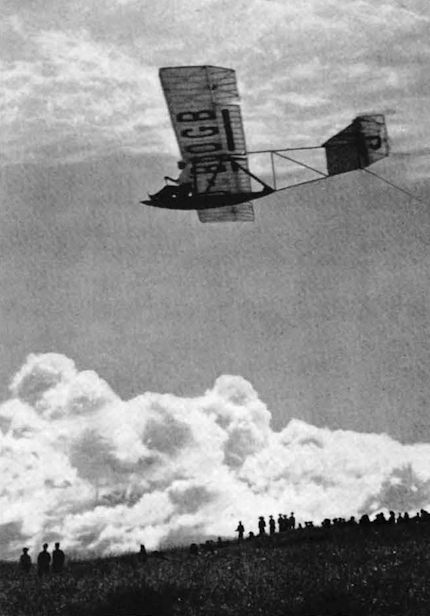
Регистрационный номер: J-BOJB Modified R.F.Dagnall Dagling primary glider J-BOGB "Hido No.10" of R.Fujimori at Kirigamine.
-
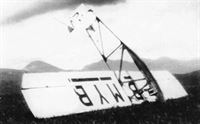
Air-Britain Archive 2003-02 / T.Fujita - The Japanese Civil Register 1919-45 /Japanese Civil Register/ (29)
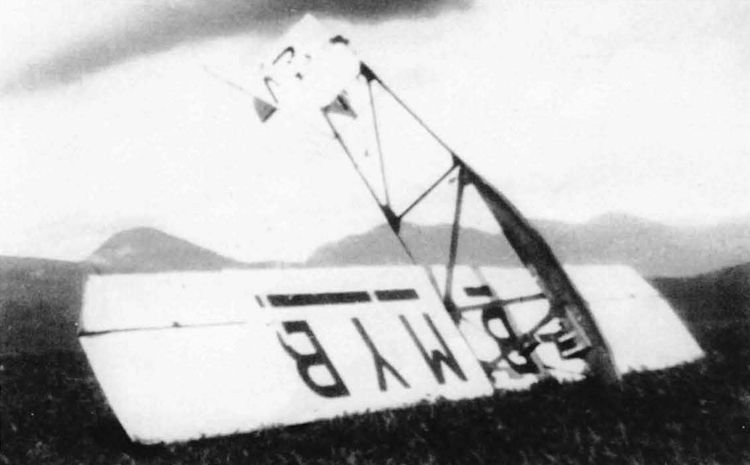
Регистрационный номер: J-BMYB R.F.Dagnall Dagling type modified primary glider J-BMYB "Hido No.3 Nishi Sugamo" appears to have nosed-over on landing.
-

Flight 1930-11 / Flight
A BRITISH GLIDER: A series of photographs showing the R.F.D. "Dagling" under construction at Mr. R. F. Dagnall's works at Guildford. The "Dagling" is an improved Zogling type, cleaned up to give greater efficiency.
-

Aeroplane Monthly 1993-12 / M.Simons - Sling's sailplanes (12)
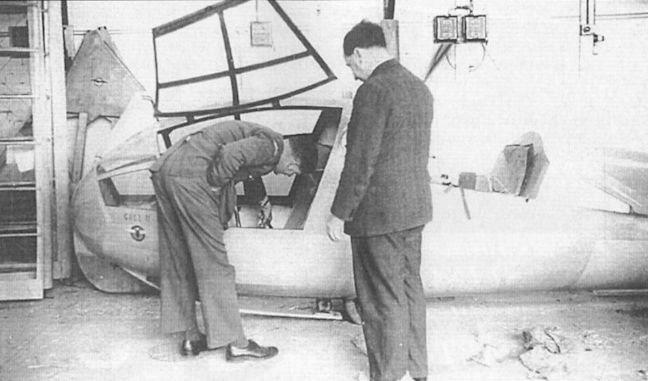
The Gull 2 nearing completion. Fred Slingsby, right, and an unknown assistant check the controls. Note the butterfly-type canopy. In the background the A-frame and wings of a Slingsby Primary glider bear the old golden eagle trademark.
Другие самолёты на фотографии: Slingsby T.12 / T.14 / T.15 Gull - Великобритания - 1938





- Фотографии