

Фотографии
-
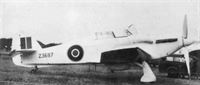
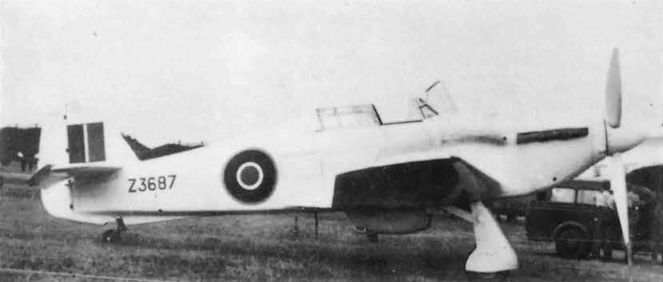
Регистрационный номер: Z3687 All-white Hawker Hurricane II Z3687 with laminar flow mainplanes seen at Farnborough in 1948.
Flight September 23rd 1948 *p.374 - Also on display at the Farnborough Show was an all-white painted Hurricane in use by the RAE for flight-testing wings of various sections. The photo showed it to be serialled Z....
F: 23.9.48 p.374 - The all-white Hurricane II was Z3687, formerly of five RAF fighter squadrons, 17, 123, 132, 43 and 245. It was fitted with laminar-flow mainplanes of reduced thickness/chord ratio by Armstrong Whitworth at Coventry and first flew as such 23.3.45. At first the fuselage remained camouflaged and the wing roundels applied instead to the centre-section. At RAE the fuselage was also painted white but it is not known whether the wing-root roundels were then deleted. Test reports of September 1946 indicate the end of the experiment but it is also known that Z3687 was used for boundary layer research at Farnborough from 6.9.48 to 18.11.48. The 1948 Farnborough Show was its only public appearance; it was broken up for spares and soc 9.4.51.Самолёты на фотографии: Hawker Hurricane - Великобритания - 1935
-
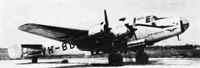
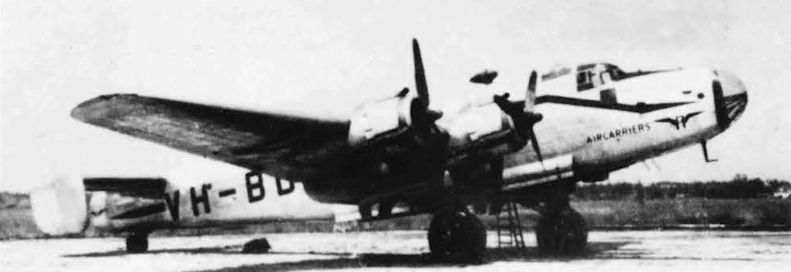
Регистрационный номер: VH-BDT, G-AGXA, NR169 Halifax VH-BDT still named "Waltzing Matilda", ex G-AGXA, seen at Tengah in 1947 possibly during its only revenue earning flight - see story on 7.5.48.
A: 7.5.48 p.543: Mention of Halifax G-AGXA last time has brought a potted history: built as a B.III NR169 served with 466 Sqdn RAAF and held the record for number of bombs dropped by a Halifax. Post-war it was bought by Geoffrey Wickner, converted to passenger carrying at Radlett in 1946 and named "Waltzing Matilda". It flew from Hurn to Australia, arriving 29.4.46 still in camouflage and carrying Wickner's family and British emigrants.
A: 7.5.48 p.543 - The story of "Waltzing Matilda" is told by Geoffrey Wickner in Aeroplane Monthly 9.79. There is a full account of the flight from Hurn to Sydney, completed in 71hrs flying time, navigating with a Daily Telegraph map of the World! G-AGXA was offered to the RAAF and to Canberra War Museum without success but was bought by a group of pilots and engineers trading as Air Carriers who were forced into liquidation after only one revenue flight, so the Halifax, now re-registered VH-BDT, was sold for scrap.Самолёты на фотографии: Handley Page Halifax / H.P.57 - Великобритания - 1939
-
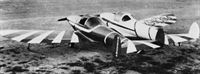
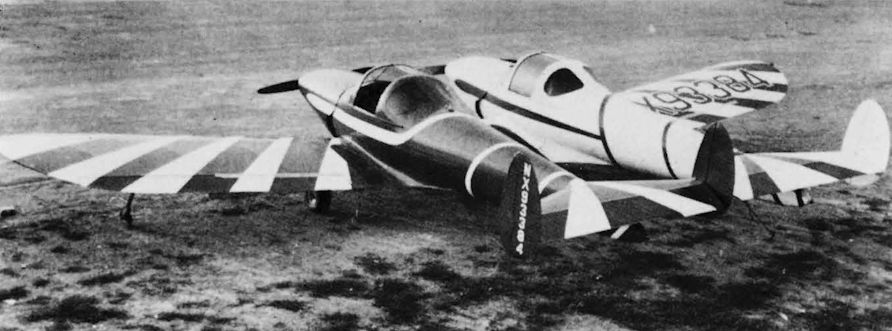
Регистрационный номер: NX93384 The only example of the Twin Ercoupe, NX93384, showing its Air Display 'sunburst' paint scheme in reverse on the two components and its three fin tail unit.
Flight October 14th 1948 *p.453 - Photo and report of the Twin Ercoupe NX93384 at the 1948 National Air Races, Cleveland. The aircraft comprised two fuselages and a triple tail.
F: 14.10.48 p. 453 - Twin Ercoupe NX93384 c/n 707 was produced for airshow work by taking the starboard mainplane off one Ercoupe, the port mainplane off another, and joining the two wing roots together likewise the inboard ends of the tailplanes. The result was two engines, cabins, fuselages and undercarriages, and three fins and rudders although only two worked at a time. The elevator area was thus increased but the ailerons and working rudders were the same as on a single Ercoupe. The only example, NX93384 was flown by Grady Thrasher of Elberton, GA, who flew it over 250 hours and looped and rolled it at airshows. Wing span was 37 ft, empty weight 1550 lb, cruise 120 mph, stall 60 mph, endurance 3.5 hrs, service ceiling 15,000 ft. A photo showed it being flown from the left cabin's left seat. The registration was still listed, as a 415-C, in 1970.Самолёты на фотографии: ERCO 415 Ercoupe - США - 1937
-
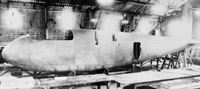
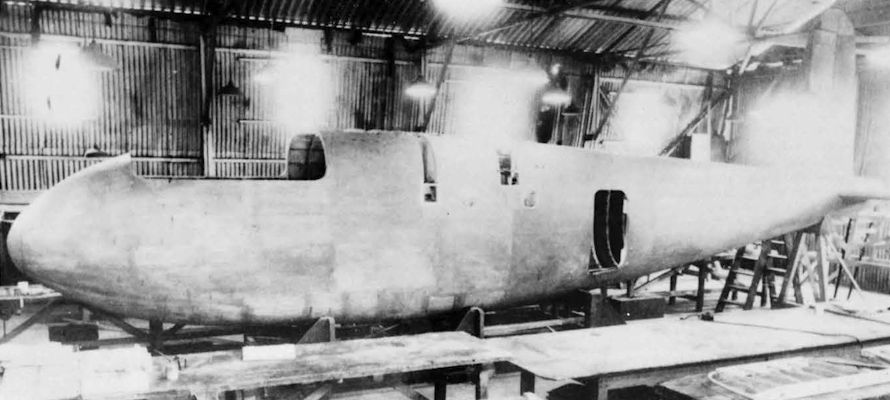
Illustrating the three-view drawing in the last issue, this photo of the Miles Technical School "Venture" was taken at Woodley on 17.9.47 when the fuselage shell was quite complete.
Самолёты на фотографии: Miles Aeronautical Technical School (MATS) Venture - Великобритания - 1947
-
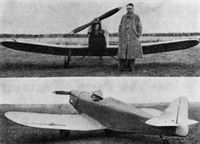
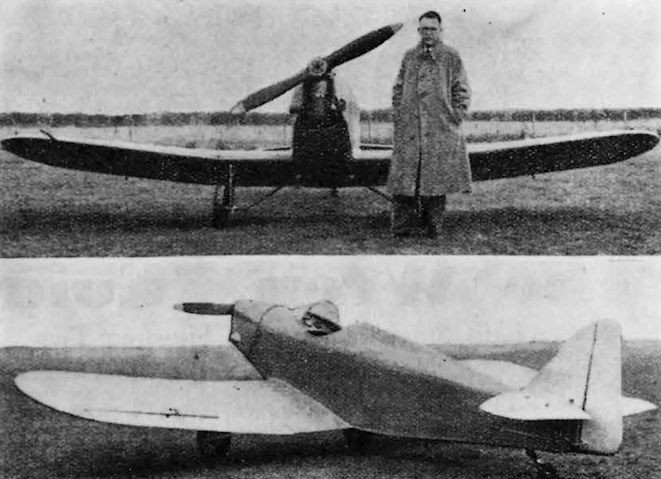
Регистрационный номер: G-AICX Two views of the only Wren Goldcrest G-AICX, seen without markings. There is no evidence that it flew successfully, if at all. See 23.9.48
Flight September 23rd 1948 *p.378 - In a survey on ultralight aircraft, it was reported that work on the Wren Goldcrest had been unavoidably suspended at Carlisle but not yet abandoned.
F; 23.9.48 *p.378 - The Wren Goldcrest G-AICX was built to the design of R.G.Carr at Kirklington, Carlisle. It appears to have been completed (see photos) and is said to have flown in 1947 but was then abandoned prior to this announcement. A low-wing monoplane with a 25hp 2-cyl inverted in-line Scott Squirrel engine, it used every possible simplification to reduce costs. There were no flaps or slots and the all-wood aircraft had a span of only 23 ft. Production aircraft were intended to have a 30hp 4-cyl horizontally opposed engine which the Wren Aircraft Company was to design and produce. Cost was to be £370 but the programme was dropped, according to the company because of the difficulty in obtaining aircraft materials, and the prototype was later burnt. If it flew, no details of performance were ever released, but the estimates for the production version were: max speed 98 mph, cruise 75-80 mph, initial rate of climb 450 ft/min, ceiling 15,000 ft.Самолёты на фотографии: Wren Goldcrest - Великобритания - 1947
Статьи
- -
- Casualty Compendium (55)
- Cyprus (VQ-C 5B-) /Complete Civil Registers/ (10)
- Extracts
- The de Havilland DH.114 Heron /The Whole Truth/ (1)
- The Piper Vagabond /Aircraft Production List/ (6)
- The Tandem-canopy Magisters /Fact file/ (5)
- J.Geelen, R.Deerness - New Zealand (ZK-) /Complete Civil Registers/ (3)