RU

/

EN
burger-menu
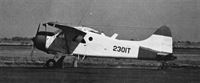
  • One new photographic problem this time contributed by Janie Geelen who recently received this shot of a Beaver taken at Khartoum in 1964. It is perhaps a natural assumption to make that ’2301T' should read N2301T and in fact our records show that there was a Beaver with this registration. However this was c/n 1229, ex 57-6143 which became N7336 in 1972 and N2301T later - thus it could not have been N2301T in 1.64 and does not appear in the FAA register of that date.. Can anyone positively identify this aerial-bristling machine?

    Самолёты на фотографии: De Havilland Canada DHC-2 Beaver - Канада - 1947
  • The prototype M.2 with a Cirrus IIIA, G-ACGH had four stub exhausts and six louvres on each side of the cowling (see Fig.A).
      The first two production Hawks G-ACHJ/K had very short exhausts extending only just outside the cowling. They had five louvres on the left and four on the right initially but were soon modified to five each side.(B) 'CHJ was later given a coupe top and a long exhaust pipe down the left side for Wing Cmdr Probyn. Then came G-ACHL/Z with slightly longer stubs projecting perhaps 3" at the front and 1 1/2" at the rear pipe. Later on of the M.2Ds, G-ACPD had the same system.
      In 1933 a new system was put into production for all standard Hawks, having possibly been tried out in modified form on G-ACIZ first. (When later raced, 'CIZ used pattern B above but with longer stubs.) The standard layout had an exposed manifold with air scoop behind, ducting exhaust gasses downward to an eflux pipe below and thus away from the occupants of the open cockpits. Three louvres, longer than before, were positioned on each side. (Fig.C) When built, PK-SAL was of this standard type with the addition of two more louvres on the right side. On delivery the front cockpit was faired over but not as a permanent feature. The "Colonial" specification was for internal strengthening, fabric-covered ply wings and extra equipment such as a compass. In Britain the North Staffs AC ordered a Colonial Hawk (at a cost of £510 against the standard £450) presumably to reduce maintenance costs, this was G-ACTN.
      The M.2A used an inverted Gipsy III with a long exhaust pipe and the M.2B had an inverted Hermes IV with four stubs below the cowling, the lower part of which was open to the rear like a gill. This type (Fig.D) was found on Man Mohan Singh's VT-AES.
      In January 1935 G-ADBK appeared with a long external exhaust pipe and this type was announced as an alternative to the standard internal system. Production Hawks thus fitted such as G-ADGI/R had no louvres on the left (Fig.E). The system was retro-fitted to several earlier examples which may have retained 1 or 2 louvres - one such being Colonial Hawk G-ACTN and another, from the photographic evidence, being PK-SAL although the photo in Digest p.132 Nov-Dec 1978 shows that its pipe ended just behind the cowlings. On the same page Pander PK-SAJ, said to have donated its Gipsy I to the Hawk, has a full length pipe. Perhaps the internal system proved less efficient in the higher tropical temperatures?

    Самолёты на фотографии: Miles Hawk / M.2 - Великобритания - 1932

  • Регистрационный номер: LV-PRA

    Learjet 24D LV-PRA at Wichita prior to delivery to Argentina.

    Самолёты на фотографии: Learjet Learjet 23 / 24 / 25 - США - 1963

  • Регистрационный номер: LV-PQW

    Cessna 402B LV-PQW at Wichita prior to delivery to Argentina.

    Самолёты на фотографии: Cessna 411/401/402/421/414/404 - США - 1962