Фотографии
-
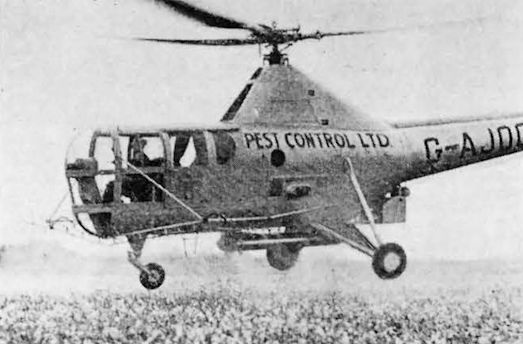
Регистрационный номер: G-AJOO Pest Control's Sikorsky S-51 G-AJOO showing its 65 gallon belly tank, rear-mounted pump unit and short spray booms during a spraying demonstration. See item 17.6.48.
Flight June 17th 1948 *p.659 - Pest Control Ltd demonstrated their Sikorsky S-51 G-AJOO fitted with spraying equipment at Bourn on June 11th. With a capacity of 65 gallons, they were placing orders for three or four WS-51s next year. They had also ordered a version of the Cierva W.11 Air Horse called the Spraying Mantis, which had a 500 gallon capacity (or 2.5 tons of dust) and were interested in a further development, the W.11T, powered by two 1200 hp Merlins, which would have a payload of five tons. Pest Control conducted experimental work with helicopters in 1941 and in 1946 acquired a Sikorsky R4 for practical flight trials.
F: 17.6.48 p.659: Sikorsky S-51 G-AJOO was c/n 5121. It was written off at Fawar, Sudan on 16.10.49.Самолёты на фотографии: Westland Dragonfly / Widgeon - Великобритания - 1948
-
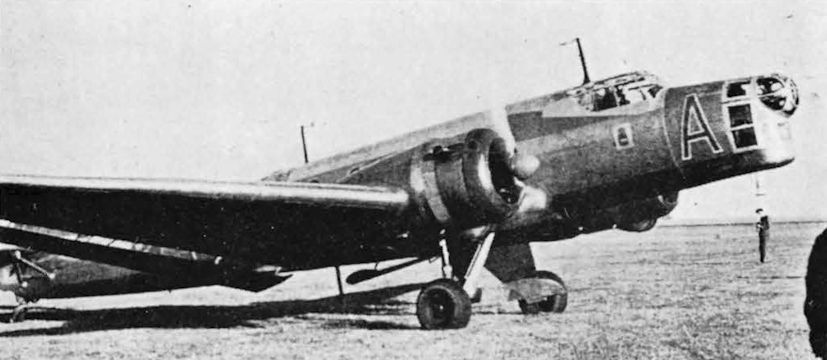
Aeroplane June 18th 1948 *p.723 - The Swedish Air Force made a goodwill visit to West Mailing on June 7th with thirteen P-51s accompanied by three Ju 86s - allegedly the last flying. Two were Swedish-built Ju 86Ks, in highly polished metal, and the third was a Ju 86Z-7, built at Dessau in 1938 for ABA as SE-BAE. Initially powered by P & W Hornets, these were replaced by Swedish-built Bristol Pegasus.
The other two Junkers visitors were 12 passenger Tp37 transports, SAAB-built Ju 86 K-13 ex-bombers in silver finish and retaining the bomber nose. One of the two, "A" seen here, had cabin windows added.Самолёты на фотографии: Junkers Ju.86 - Германия - 1934
-
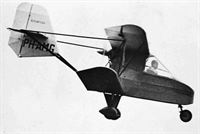
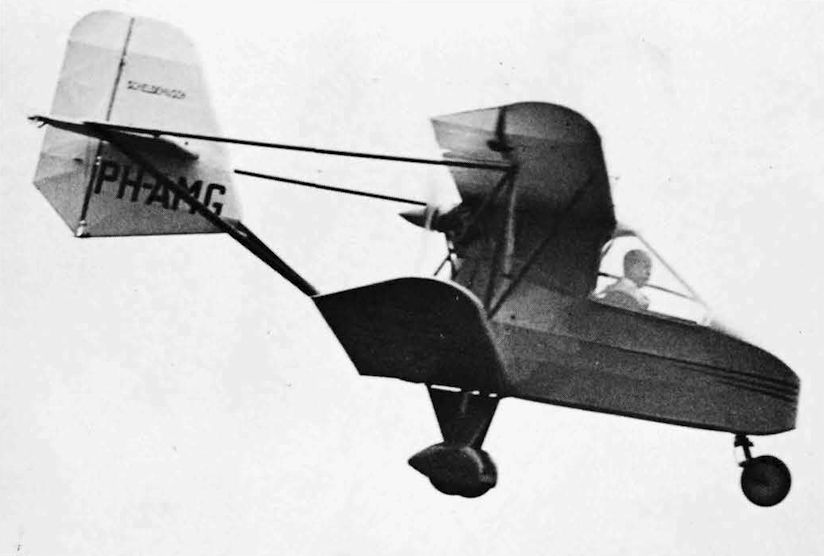
Регистрационный номер: PH-AMG The Scheldemusch single seater with a 40hp Praga B flat twin mounted as a pusher. It had HP slots and a steerable nosewheel undercarriage and is seen here being flown at Gravesend in May 1937 by R.G.Doig. We still do not have precise details of its fate.
Flight July 15th 1948 * Ads - The famous Scheldemusch 22 ft biplane pusher, dismantled and ready to tow away - £175. Wood, Blossomfield, Solihull.
F: 15.7.48 Ads: The de Schelde Scheldemusch PH-AMG c/n 53 was owned by Joe V.Wood, who bought it 15.9.45 from the widow of Sqdn Ldr Longbottom, and kept in a shed at Wood's Garage in Stratford Rd, Shirley, Birmingham. G-AHJR was reserved but ntu and later reallotted to a BOAC Sunderland. The Scheldemusch was flown at 5 Glider Training School, Hockley Heath, nr Birmingham, between 10.45 and 8.46 in RAF markings and registration PH-AMG (although this had already been cancelled). Because of vandalism by children, sometime after 4.47 Wood gave the aircraft to a friend Flt Lt David Langford who lived in Lincolnshire. It was reportedly damaged when it turned over while being taxied without the tail attached.Самолёты на фотографии: De Schelde Scheldemusch - Нидерланды - 1935
-
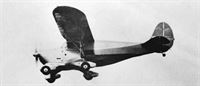
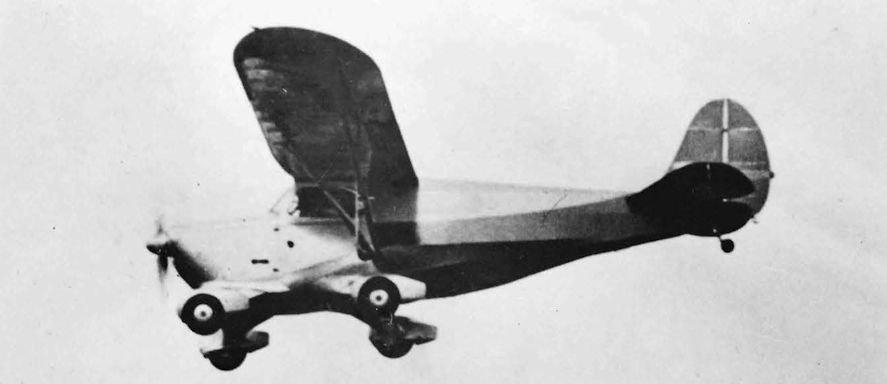
Регистрационный номер: NX60374 The prototype Fulton "Airphibian" NX60374 (150 hp Franklin flat six) shown in flight. The leading edge of the wing is cut back close to the cabin and this version has a tailwheel fitted.
Самолёты на фотографии: Fulton FA-2 Airfibian - США - 1947
-
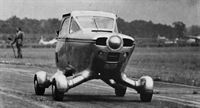
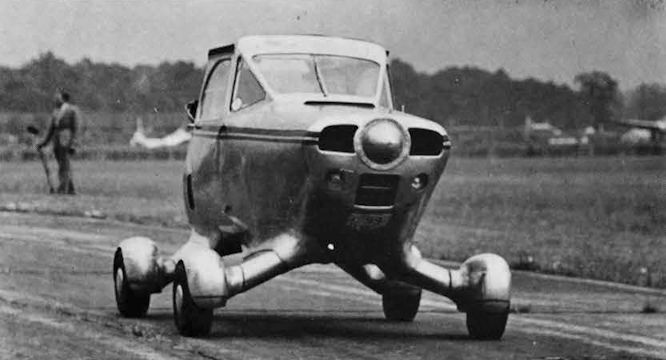
The prototype as a car with the propeller and the wing and tail structure removed. In this form the "registration" appears to be ED 99!
Самолёты на фотографии: Fulton FA-2 Airfibian - США - 1947
-
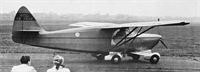
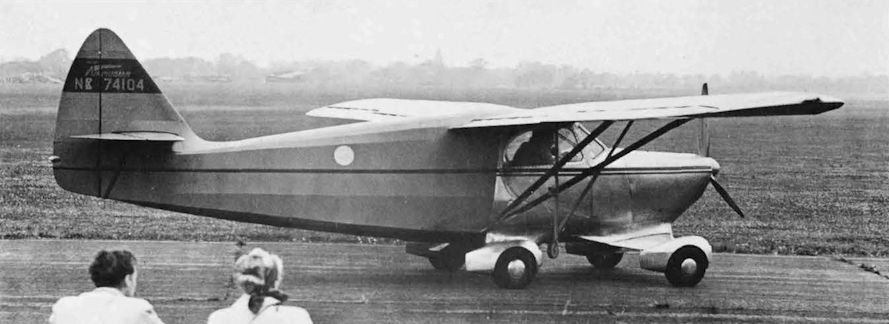
Регистрационный номер: NX74104 The revised FA-2 version with redesigned fuselage and tail. The fixed ground support struts can be seen clearly beneath the wing although the tailwheel has now been removed. The three-blade Pasadena propeller originally fitted is also visible.
Самолёты на фотографии: Fulton FA-2 Airfibian - США - 1947
-
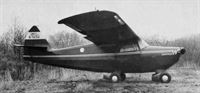
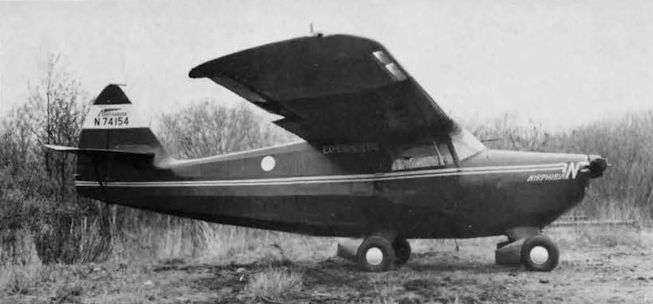
Регистрационный номер: N74154 The final FA-3 version N74154 c/n 101 seen in March 1954 with a cantilever slotted wing containing retractable support struts and mass-balanced ailerons. A two-blade propeller is fitted.
Самолёты на фотографии: Fulton FA-2 Airfibian - США - 1947
-
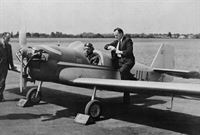
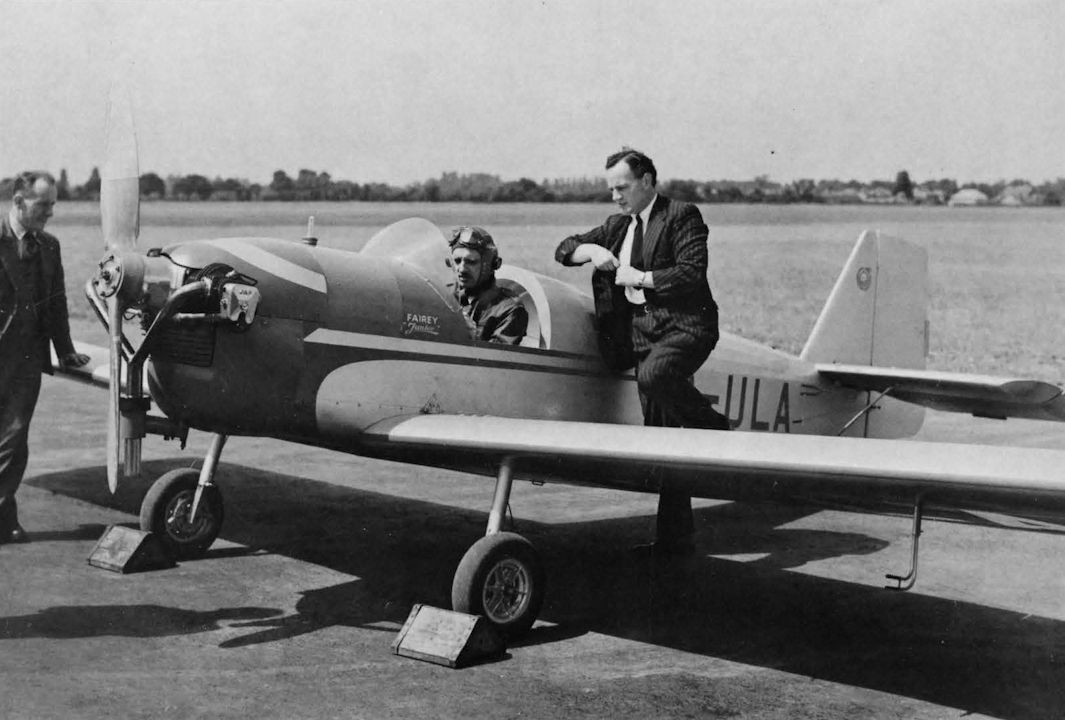
Регистрационный номер: OO-ULA, G-AMVP The JAP-powered Tipsy/Fairey Junior OO-ULA was one of two demonstrated to British pilots in 1948. Here Air Chief Marshal Sir James Robb is seen at the controls, being briefed by former Fairey Chief Test Pilot F.H.Dixon.
Aeroplane June 11th 1948 *p.689/701 - The first two Fairey Juniors, OO-TIT (62 hp Walter Mikron) and OO-ULA (35 hp JAP J-99) were demonstrated by Faireys at White Waltham on June 5th, having been flown over from Belgium together. OO-ULA's engine was loaned by its UK sponsors, the Ultra Light Aircraft Association, hence its registration.
A: 11.6.48 p.689/701: Of the Fairey (or Tipsy) Juniors, OO-TIT c/n J-110 has no known fate, but OO-ULA c/n J-111 became G-AMVP on 23.10.52, re-engined with a Walter Mikron which failed at Wroughton on 4.7.93 necessitating a forced landing from which it is still recovering.Самолёты на фотографии: Tipsy Junior - Бельгия - 1947
-
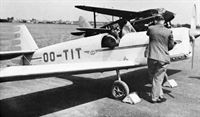
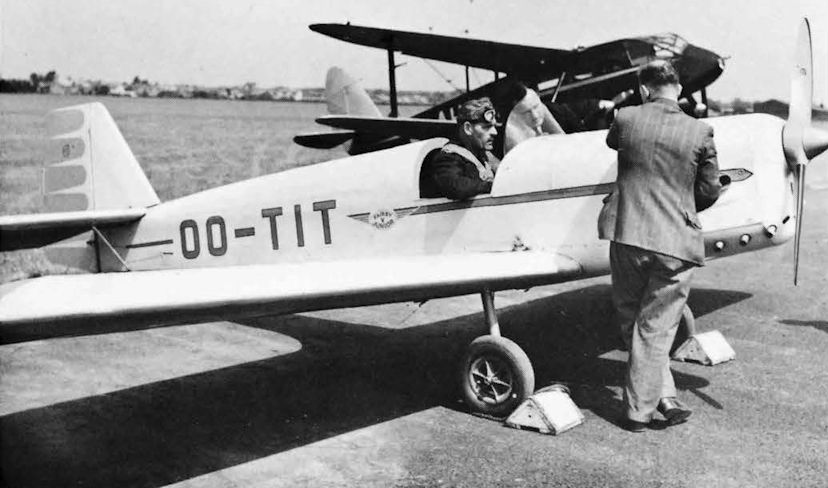
Регистрационный номер: OO-TIT The Walter Mikron powered Tipsy/Fairey Junior OO-TIT, also at White Waltham on June 5th 1948 (see item 11.6.48 below). The pilot on this occasion is Air Chief Marshal Sir Roderick Hill, with F.H. Dixon behind.
Aeroplane June 11th 1948 *p.689/701 - The first two Fairey Juniors, OO-TIT (62 hp Walter Mikron) and OO-ULA (35 hp JAP J-99) were demonstrated by Faireys at White Waltham on June 5th, having been flown over from Belgium together. OO-ULA's engine was loaned by its UK sponsors, the Ultra Light Aircraft Association, hence its registration.
A: 11.6.48 p.689/701: Of the Fairey (or Tipsy) Juniors, OO-TIT c/n J-110 has no known fate, but OO-ULA c/n J-111 became G-AMVP on 23.10.52, re-engined with a Walter Mikron which failed at Wroughton on 4.7.93 necessitating a forced landing from which it is still recovering.Самолёты на фотографии: Tipsy Junior - Бельгия - 1947
-
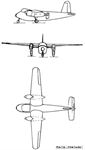
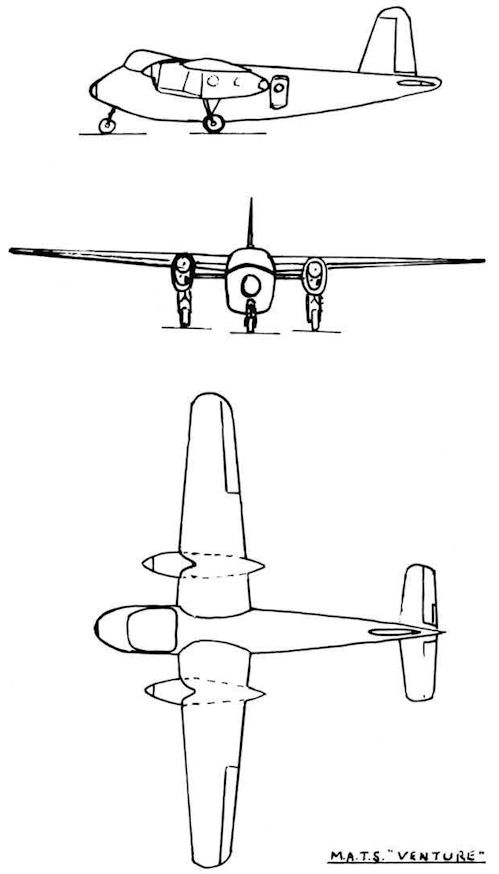
A re-drawn three-view sketch of the Miles Technical School Venture, see 19.4.46 entry. If the scale of the original was unaltered the project would be about 23.5 ft long and 31 ft span.
Aeroplane 19 April 1946 *P.467 - In an article on the Miles Technical School, is a lengthy reference to the Miles Venture. (This aircraft is not dealt with in the Putnam book and is only briefly covered in 'Wings over Woodley'). FG Miles asked the school in August 1943 to design a high wing monoplane powered by two Gipsy Sixes. It had a nosewheel undercarriage, a low landing speed and a crew of four. The mock-up had been completed and metal fittings were being produced for the aircraft itself. It was to be used as a test-bed for Miles automatic pilot development.
A: 19.4.46 p.467: The Miles Technical School Venture was a design study for a twin-engined high-wing monoplane for use as an aerial laboratory and research aircraft. At the time, August 1943, the only students with drawing office experience were a dozen females. The best of their submitted designs were incorporated into the final scheme which F.G.Miles then commissioned the School to build. Construction of the aircraft at Woodley was quite advanced when the company collapsed in September 1947. Its fate is not recorded.Самолёты на фотографии: Miles Aeronautical Technical School (MATS) Venture - Великобритания - 1947