

Фотографии
-
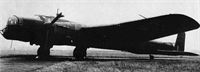
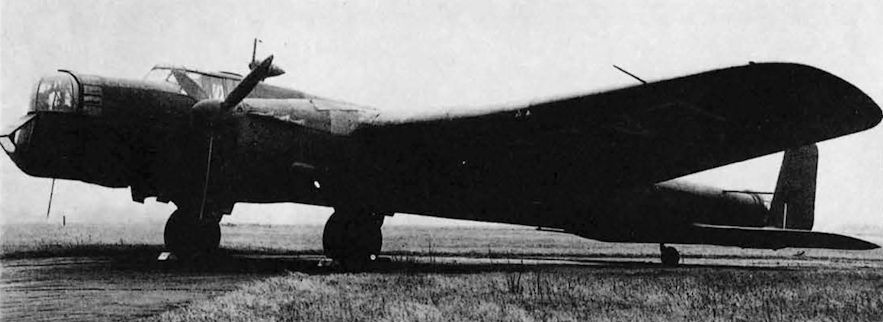
Регистрационный номер: LA951 The final item in the last issue p.95/54 was about the last Whitley, LA951. It was handed over to Armstrong Whitworth 9.6.43 for glider-towing trials
Flight March 31st 1949: *p.365 - The last AW Whitley was being broken up at Baginton. It had been used to tow the AW.52G glider and was being replaced by a Lancaster.
F: 31.3.49 p. 365 - The last Whitley was LA951, a Mk.V which was handed over to Armstrong Whitworth Aircraft at Baginton 9.6.43 on indefinite loan for trial installation work on the type. It was selected as a tug for the AW.52G glider 9.7.44, which first flew on 2.3.45, towed by the Whitley. On 15.7.48 LA951 was loaned to GAL for their test pilot to gain glider flying experience, the gliders involved were not identified - possibly a Hamilcar but GAL were then building prototypes of a troop carrying X.30/46, later cancelled. The loan terminated 30.9.48 and LA951 was sold to Thos W Ward Ltd on 30.5.49 as scrap.Самолёты на фотографии: Armstrong Whitworth Whitley / A.W.38 - Великобритания - 1936
-
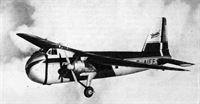
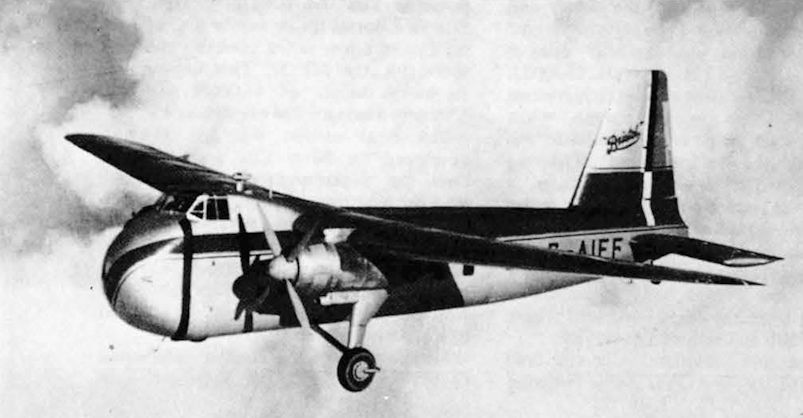
Регистрационный номер: G-AIFF Bristol Freighter Mk.21 prototype G-AIFF in test markings flying with one engine stopped and propeller feathered. In a similar test on a single-engine climb it was lost when the fin structure failed. Note the absence of dorsal fillet applied to later marks to correct this weakness.
Aeroplane May 13th 1949: * p.536 - Bristol 170 on a development flight from Filton crashed into the English Channel, 12 ml SE of Portland Bill 6.5.49. Asst CTP J A C (Dick) Northway and Chief Flight Test Engineer John Radcliffe plus 5 others from Bristols all killed.
A: 13.5.49 p.536 - Bristol 170 G-AIFF c/n 12766, originally the Mk.XI prototype Freighter with rounded wingtips which increased the span to 108 ft. It remained a test aircraft with Bristol and was modified to become the prototype Mk.21 with more powerful Hercules 672/673 engines. The purpose of the flight was to measure the strains on the rear fuselage during yawed cruising flight, and single engine climb rate. During single-engine climb the fin structure failed and directional control could no longer be maintained. The aircraft crashed into the English Channel 12 mis SE of Portland Bill. Later G-AHJJ crashed near Cowbridge 21.3.50 during similar tests, which led to the addition of the dorsal fillet and stronger fin on the Mk.31.Самолёты на фотографии: Bristol Freighter / Type 170 - Великобритания - 1945
-
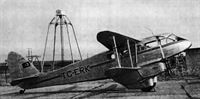
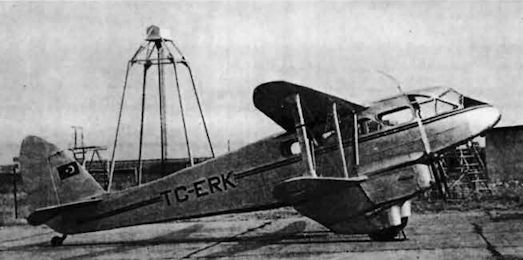
Регистрационный номер: TC-ERK Turkish Rapide registered TC-ERK.
A: 4.3.49 p.252 - Although TC-ERK is listed on p95/54 as a DH.86B c/n 2355, another photo shows these marks applied to a Rapide. Was this a question of re-use or an error?Самолёты на фотографии: De Havilland Dragon Rapide / Dominie / D.H.89 - Великобритания - 1934
-
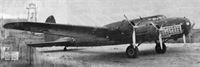
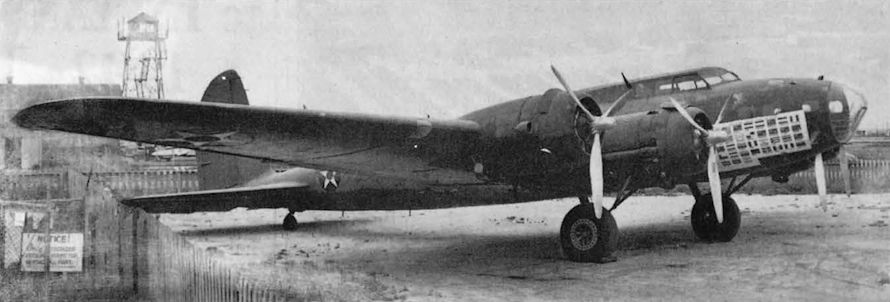
Boeing B-17D 40-3097 "The Swoose", patched-up survivor of the Philippines campaign, became General Brett's personal transport and in 1948 went to the National Air & Space Museum,
Flight May 26th 1949: * p.612 - A Boeing B-17D, which had remained in service throughout WWII, was recently installed in the National Air Museum/Smithsonian Institute. It was damaged in the Japanese attack at Clark Field, Philippines on 7.12.41 and was rebuilt. Named "Alexander The Swoose", it has the flags of 35 countries that it has visited on its nose.
F: 26.5.49 p.612 - "Alexander the Swoose" was probably named "Swoose" (half swan, half goose) because of its repairs using parts from all the wrecked aircraft which it survived. Many sources now omit the "Alexander" part - does anyone know who he(?) was? Vic Smith suggests that "Alexander the Swoose" was the name of a song about a swan/goose and that the correct name of the aircraft was "The Swoose - It Flys?" However, Dan Hagedorn who works with the NASM says that it was always just "The Swoose". After bombing raids against the Japanese in Java, Boeing B-17D 40-3097 survived the Philippines campaign to be used as the personal VIP transport of the Panama Canal Department/Caribbean Defense Command Flight Section CO and was flown all over Latin America. It then became a ground training airframe for New Haven cadets until purchased by the City of Los Angeles for $300 as a war memorial before they presented it to the National Air & Space Museum who have it in storage at their Silver Hill restoration facility.Самолёты на фотографии: Boeing B-17 Flying Fortress - США - 1935
Статьи