

Фотографии
-
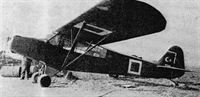
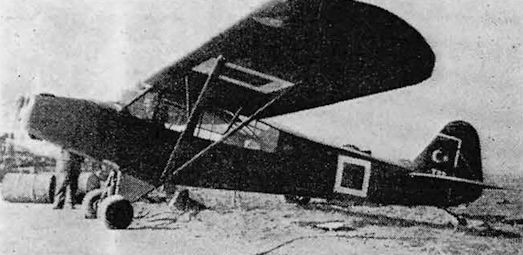
A photo reportedly taken in South Korea of a Piper L-18B Super Cub of the Turkish Army. The Korean war took place from 25.6.50 to 27.7.53.
Flying, Oct 1949: * p.8 - Piper Aircraft Corp is building 105 Cub trainers for the Turkish Air Force. C/ns and serials?
Flying. October 1949: Apart from the adjoining photo we have no further news of the Turkish military L-18B Super Cubs other than a report of one serialled 10306 noted in Istanbul-Yesilkoy Museum 8.91.Самолёты на фотографии: Piper Super Cub PA-18 / L-8 / L-21 - США - 1949
-
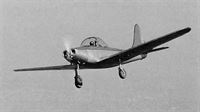
Регистрационный номер: NX90648 The prototype of the 1945 All-American Ensign NX90648 with 85 hp Continental C-85-12-FJ engine and fixed pitch propeller seen during early trials. The bubble hood was later lowered slightly but without affecting the excellent all-round view.
Flying, August 1950: * p.6 - Letter requests details of the 2-seat All American Ensign of which five examples were completed but only three sold. One appears to be NX14281.
Flying. August 1950; The All-American Ensign 10-A described on p.97/78 is illustrated here. The production version was intended to have a 125 hp engine with variable pitch propeller and spinner.Самолёты на фотографии: All-American Model 10 Ensign - США - 1945
-
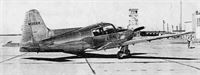
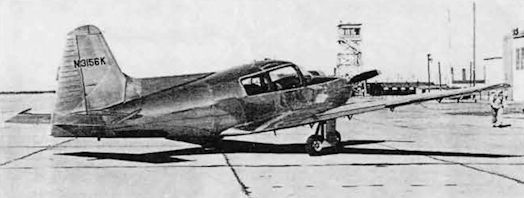
Регистрационный номер: N3156K The fourth Fairchild F-47 N3156K showing the final form of the much-revised tail unit, now with greatly increased fin area and large fin fillet - compare with the prototype on p.97/77.
Самолёты на фотографии: Fairchild F-47 - США - 1949
-
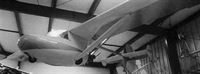
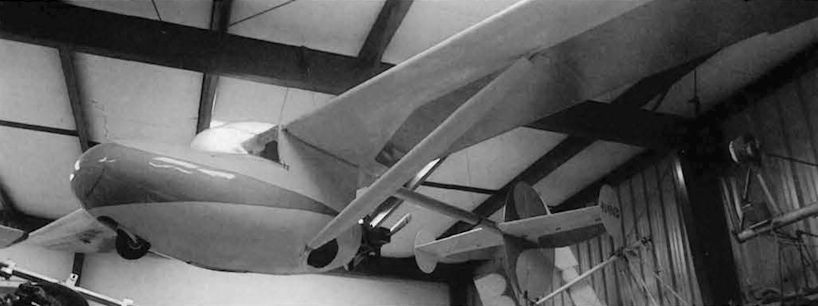
Регистрационный номер: N4ND The Nelson-Bowlus Dragonfly: At least two examples of the seven built are now known to survive. These match our description, duralumin fuselage pod, retractable tricycle u/c, high tailboom and pusher engine. These two are clearly fitted with a larger fin/rudder than the earlier Bumblebee and have circular endplates on the tailplane.
Here is N4ND in yellow/blue which is suspended in the California Antique Aircraft Museum at Morgan Hill, south of San Francisco. This example clearly still has an engine fitted, but the c/n is unknown.Самолёты на фотографии: Nelson-Bowlus Bumblebee / BB-1 Dragonfly - США - 1944
-
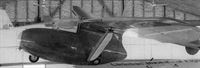
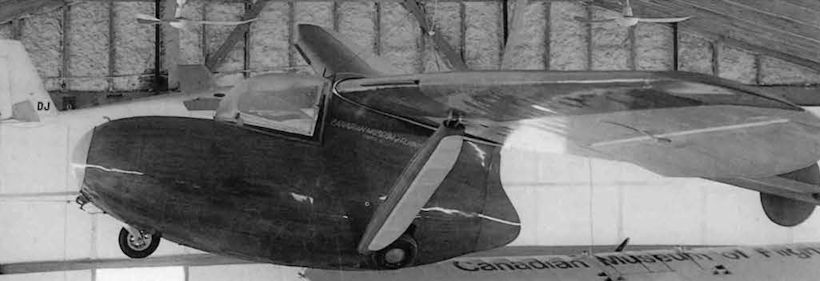
Регистрационный номер: CF-VFA The Nelson-Bowlus Dragonfly: At least two examples of the seven built are now known to survive. These match our description, duralumin fuselage pod, retractable tricycle u/c, high tailboom and pusher engine. These two are clearly fitted with a larger fin/rudder than the earlier Bumblebee and have circular endplates on the tailplane.
Here is CF-VFA displayed in the Canadian Museum of Flight and Transportation at Langley BC. This is quoted as a Bumblebee c/n 506 and is said to have both Canadian and American previous identities. The engine has been removed and replaced by a fairing so this is one of the glider conversions.Самолёты на фотографии: Nelson-Bowlus Bumblebee / BB-1 Dragonfly - США - 1944
-
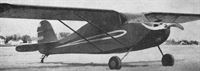
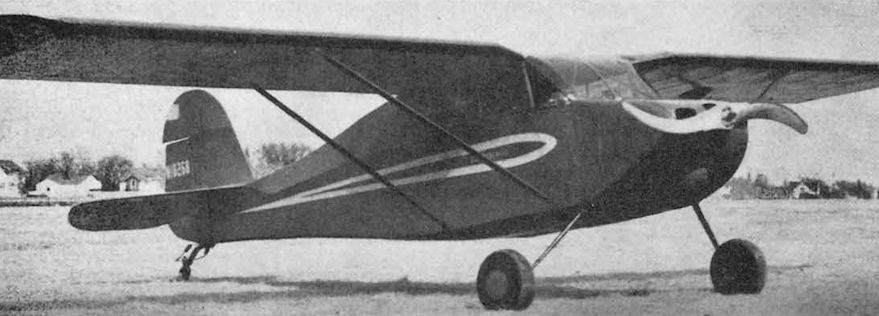
Регистрационный номер: N18268 Steve Wittman's two-seat Buttercup was a one-off design developed into the larger four-seat Big X and later into the Tailwind. The sole example was N18268, here showing the simplicity of the rugged design, with Wittman's steel spring undercarriage legs and a curved-blade propeller fitted to the 85 hp Continental.
Flying, January 1951: * p. 31 - Two lesser-known designs by racing pilot Steve Wittman are described. Both are high-wing monoplanes, the 4-seat Big X and the 2-seat Buttercup, of typically box-like appearance not unlike the Wittman Tailwind design. The Buttercup appears to be registered N18268 but the other seems unmarked. Were these produced in any numbers?
Flying. January 1951: Steve Wittman's two-seat Buttercup was built in 1937 and was a high-wing strut-braced monoplane with welded steel tube fuselage and wooden wing both fabric-covered. Wing span was 28 ft 6in, length 21 ft and height 5 ft. Power was supplied by an 85 hp Continental C-85 which produced a cruise speed of 130 mph, max 147 mph, though the landing speed, with flaps, was only 33 mph. Originally fitted with a 50 hp Lycoming O-145, this was replaced by Continental C-85 and later C200. Mechanically-operated flaps were fitted and later leading edge slats were added. The tailwheel undercarriage featured the patented Wittman steel spring mainwheel legs later adopted by Cessna. At one time Fairchild showed interest in putting a 3-seat version into production but nothing came of the idea. Wittman was still flying Buttercup until at least 1989.
The Model WD Big X (for Big Experimental) was a larger four-seat development first flown on 6.1.45. It had a 29 ft span, length 24 ft 10 in, height 6 ft 6 in and was powered first by a 130 hp Franklin and then by a 150 hp Franklin 6A4-150-B3 with a McCauley propeller producing a cruise of 147 mph and max 165 mph. This design formed the basis for the later Tailwind but the only Big X built NX/N31637 was written off in a fatal crash on 19.7.86. No production of either type took place.Самолёты на фотографии: Wittman Buttercup / Big X - США - 1937
Статьи
- -
- Casualty Compendium (68)
- Croydon Watch Log 1937-8 (12)
- Extracts
- Feedback
- India: 31.12.35 (3)
- The Gwinn Aircar /Fact file/ (12)
- The Japanese Civil Register 1919-45 /Japanese Civil Register/ (10)
- J.Geelen, R.Deerness - New Zealand (ZK-) /Complete Civil Registers/ (3)
- M.Fillmore - The de Havilland Puss Moth /The Whole Truth/ (3)
- P.Gerhardt - East Germany (DM- DDR-) 1955-91 /Complete Civil Registers/ (13)