

Фотографии
-
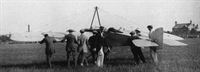
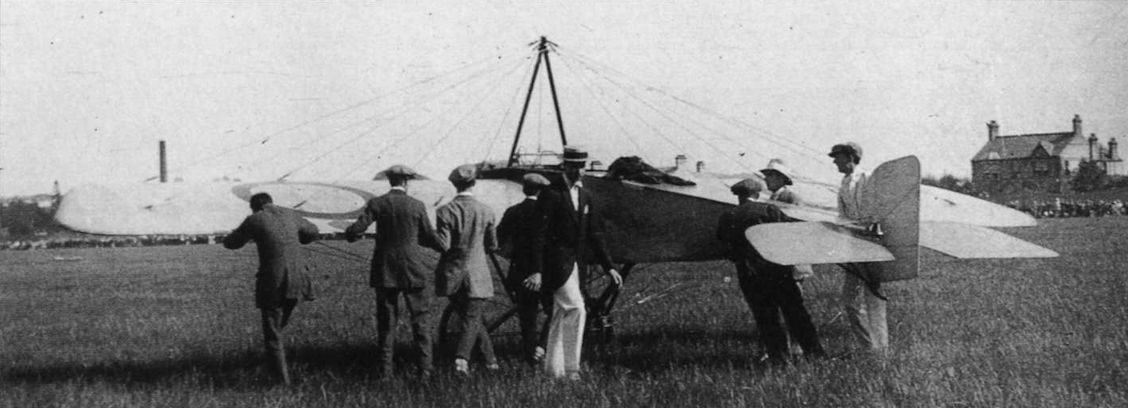
Faith in the monoplane was greatly restored when the likes of Adolphe Pegoud and B.C. Hucks began their demonstrations of aerobatics in 1913, with loops and inverted flying. The most obvious modification to the aeroplanes used for such flying was a much higher cabane pylon to improve the angle of the bracing wires above the wing and reduce tension in the cables to enable them to meet higher loads, as seen in this picture of Gustav Hamel’s 80 h.p. looping Morane at Cambridge in 1914.
Самолёты на фотографии: Morane-Saulnier Type G/H - Франция - 1912
-

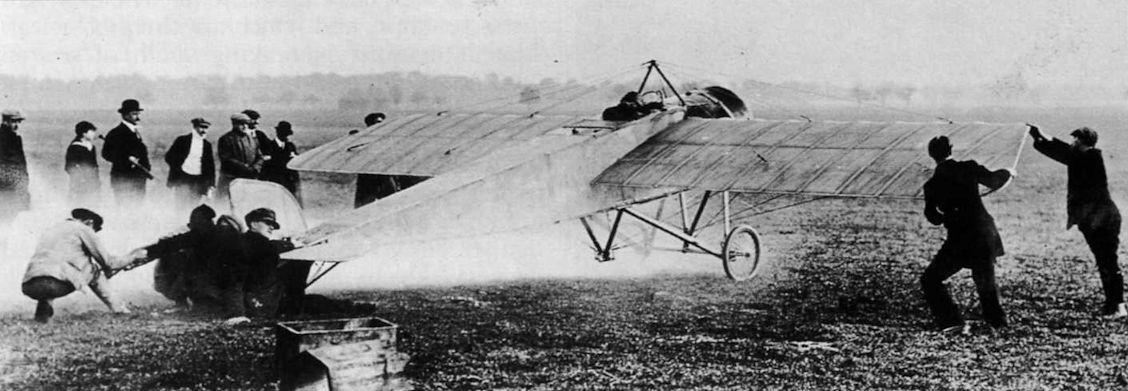
The Morane monoplanes were trickier to fly than Bleriots, but appear to have suffered less from wing failures. In this study of Brindejonc de Moulinais about to depart in 1913, the short bracing pylon in front of the cockpit is apparent. The human “restrainers” could impose abnormal strains on the airframe structure.
Самолёты на фотографии: Morane-Saulnier Type G/H - Франция - 1912
-

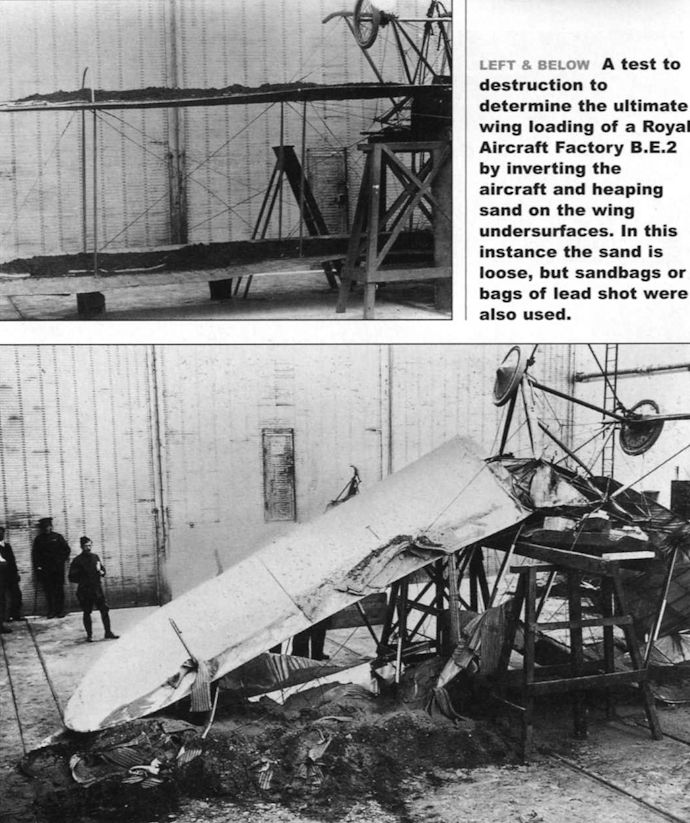
A test to destruction to determine the ultimate wing loading of a Royal Aircraft Factory B.E.2 by inverting the aircraft and heaping sand on the wing undersurfaces. In this instance the sand is loose, but sandbags or bags of lead shot were also used.
Самолёты на фотографии: RAF B.E.2 - Великобритания - 1912
-

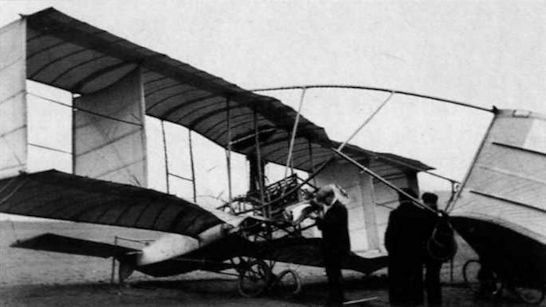
The Voisin biplanes, with their side curtains between the wings, were vulnerable to wind. This one came to grief at Brooklands while “trying to turn in a side wind without leaving the ground”. The flexibility of the tailbooms is evident.
Самолёты на фотографии: Voisin Voisin-Delagrange / Voisin-Farman - Франция - 1907
-

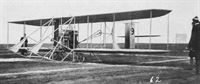
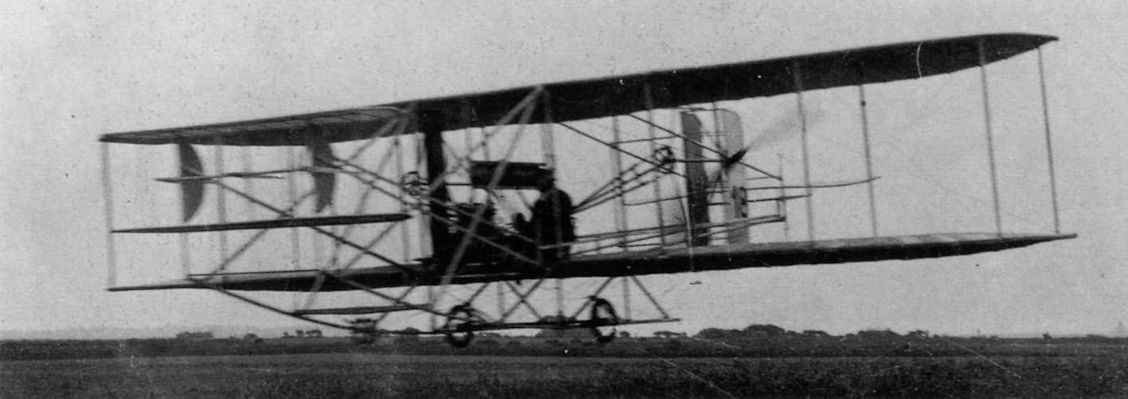
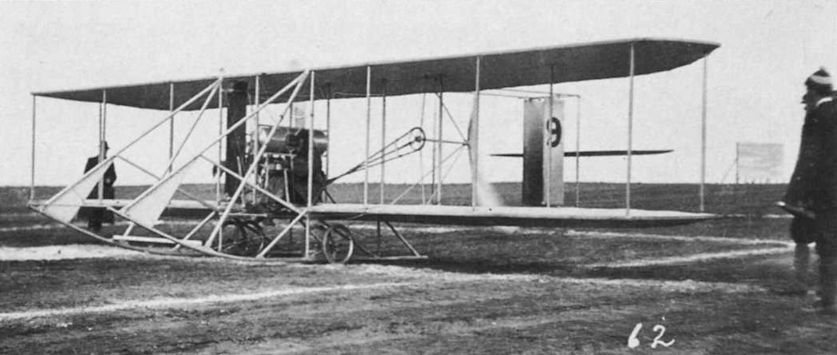
Taken only minutes before Charles Rolls’s fatal accident at Bournemouth on July 12, 1910, this photograph of his French-built Wright biplane shows the outrigger framework carrying the movable tailplane aft of the twin rudders. The surface’s unsupported extremities can be seen to be bending downwards.
Самолёты на фотографии: Wright Wright III / Wright A / Military Flyer - США - 1905
-
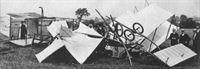
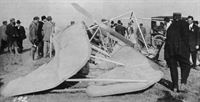
The wreckage of the Bristol Boxkite in which Capt Reynolds had his remarkable escape on August 19, 1911. He stood on the underside of the upper wing as the inverted aeroplane made its haphazard descent from 1,700ft, then jumped clear just before impact.
Самолёты на фотографии: Bristol Boxkite - Великобритания - 1910
-

Seen here in his 1911 Circuit of Britain biplane, S.F. Cody (Cowdery) is wearing a felt-padded safety helmet sold by Gamages, a London department store, but has no safety belt or protective clothing. Also visible are some of the bamboo booms carrying the forward elevators, and the long bamboo poles from the base of the control column by which those controls were operated. They have been reinforced with binding between the nodes.
Самолёты на фотографии: Cody No.2 / No.3 - Великобритания - 1910
-
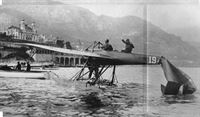
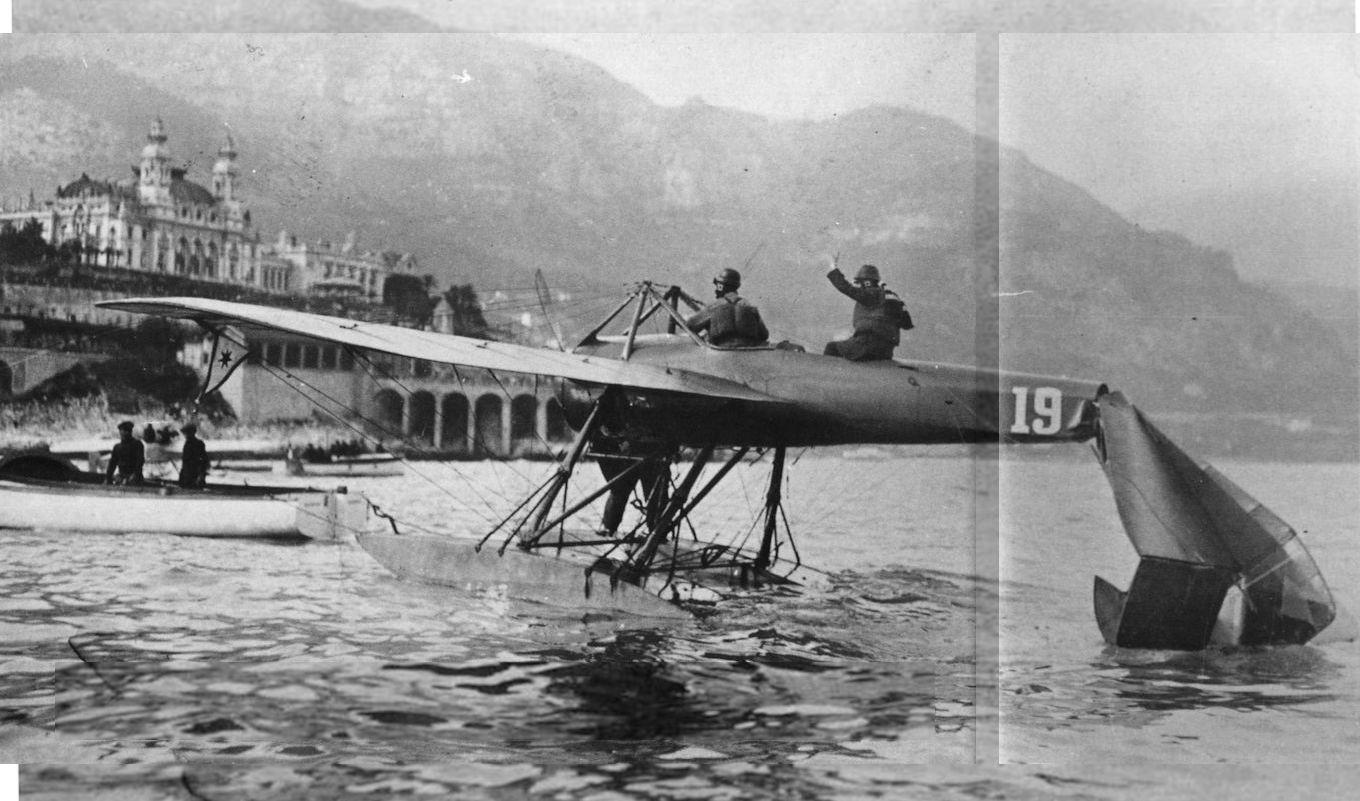
Early aircraft were easily damaged but easily repaired. On April 7, 1913, French pilot Maurice Prevost flattened out “perhaps a foot too high” as he alighted in his Deperdussin seaplane during the Monaco Hydro-aeroplane Meeting. As the aircraft pancaked, its tail float hit a wave and the rear fuselage failed. Two days later the aircraft was nearly ready to fly again, and on April 16 it became the winner of the first Schneider Trophy contest.
Самолёты на фотографии: Deperdussin Racer - Франция - 1912
-
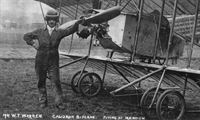
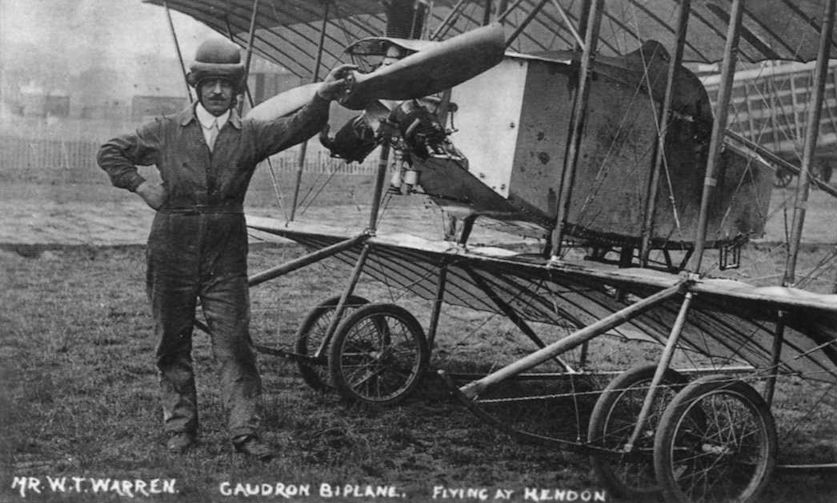
In an age when pilots and passengers were often very exposed to the elements and safety belts were optional, protective clothing was developed by enterprising individuals and companies. Here Mr W.T. Warren models his heavily-padded safety helmet alongside a Caudron biplane at Hendon.
Самолёты на фотографии: Caudron A / B / C / D / E - Франция - 1911
-
Daredevil Wright exhibition pilot Arch Hoxsey prepares to take off from Dominguez Field, Los Angeles, on December 31, 1910, in his Wright Model B, for what was destined to be his last flight.
Самолёты на фотографии: Wright B - США - 1910
-
After he failed to come out of a spiral dive, Hoxsey lost his life in the resulting crash. He was not the only Wright pilot to defy the entreaties of Orville and Wilbur by performing dangerous stunts.
Самолёты на фотографии: Wright B - США - 1910



Статьи
- -
- Navigator
- News
- Skywriters
- ??? - Silver City Association /High society/
- B.Turpin - Bristol 170 Freighter: Bristol Fashion (Pilot's perspective) /Database/ (21)
- D.Septer - Bristol 170 Freighter: "Buffos" in British Columbia (Freighters in Canada) /Database/ (21)
- I.Hancock - Wing Commander Ken Wallis /Pilot biography/
- M.Hooks - Personal album /Readers' photographs/
- P.Jarrett - Handle with Care /Early flight safety/
- P.Makanna - Wanaka Gallery /Airshow air-to-air/
- R.Carvell - Bristol 170 Freighter /Database/ (21)
- R.Nesbit - Shipbusters off Spain /WW2 Mediterranean operations/
- R.Paver - Phoeinx from the Ashes /Warbird restoration/
- S.Hanna, J.Hanzl - Forgotten Heroes
- T.Harmsworth - Bristol 170 Freighter: The Golden Years (Airline history) /Database/ (21)