

 Wiki
Wiki 
Sud-Ouest S.O.30P Bretagne
После капитуляции Франции в 1940 году группа конструкторов компании "Sud-Ouest" продолжила работу на образованной в мае 1941 года в Каннах компании "Groupe Technique de Cannes". Здесь удалось спроектировать и построить несколько самолетов, два из которых были запущены в серию после окончания войны.
Первым был средний пассажирский самолет Sud-Ouest S.O.30N, прототип которого выполнил первый полет 26 февраля 1945 года с двумя моторами воздушного охлаждения Gnome-Rhone 14R мощностью по 1600 л. с.
Первый серийный вариант обозначался S.O.30P Bretagne, он выполнил первый полет 11 декабря 1947 года. Строился в двух вариантах: S.O.30P-1 с двумя моторами Pratt & Whitney R-2800-B43 мощностью по 1800 л. с. и S.O.30P-2 с двумя моторами R-2800-CA18 мощностью по 2400 л. с. Экипаж состоял из пяти человек, включая стюардесс, пассажировместимость составляла от 30 до 43 пассажиров. За счет большей крейсерской скорости время полета на основных линиях удалось снизить примерно на 40%.
Грузовой вариант S.O.30C отличался более низким и прочным полом кабины, большим грузовым люком в нижней хвостовой части фюзеляжа и силовой установкой из двух моторов Gnome-Rhone 14R.81 мощностью по 1850 л. с.
Всего построили лишь 45 самолетов, которые эксплуатировались "Air France" и "Air Algerie" и рядом совсем мелких авиакомпаний во французских колониях, машины также состояли на вооружении ВВС Франции.
Несколько самолетов S.O.30P-1 оборудовали установленными под крылом дополнительными ТРД Turbomeca Pallas. На Bretagne испытывали ТРД SNECMA Atar 101 и построенный по лицензии "Hispano-Suiza" Rolls-Royce Nene.
ТАКТИКО-ТЕХНИЧЕСКИЕ ХАРАКТЕРИСТИКИ
Sud-Ouest S.O.30P-2 Bretagne
Тип: пассажирский самолет
Силовая установка: два мотора воздушного охлаждения Pratt & Whitney R-2800-CA18 по 2400 л. с. (1790 кВт)
Летные характеристики: крейсерская скорость на высоте 4800 м - 430 км/ч; практический потолок 6500 м; дальность со стандартной заправкой 1330 км
Масса: макс. взлетная 19 500 кг
Размеры: размах крыла 26,90 м; длина 18,95 м; высота 5,90 м; площадь крыла 86,20 м2
- Описание
Фотографии

-
Aeroplane Monthly 2001-12 / News
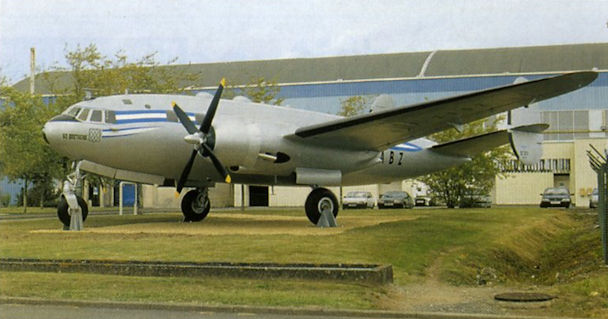
Регистрационный номер: F-BANZ The closest thing to a twin-engined Constellation: SNCASO 30P Bretagne F-BANZ was unveiled at the Airbus factory at Saint-Nazaire on October 5, 2001.
-

Aviation Historian 11 / R.Simpson - Rule Bretagne!
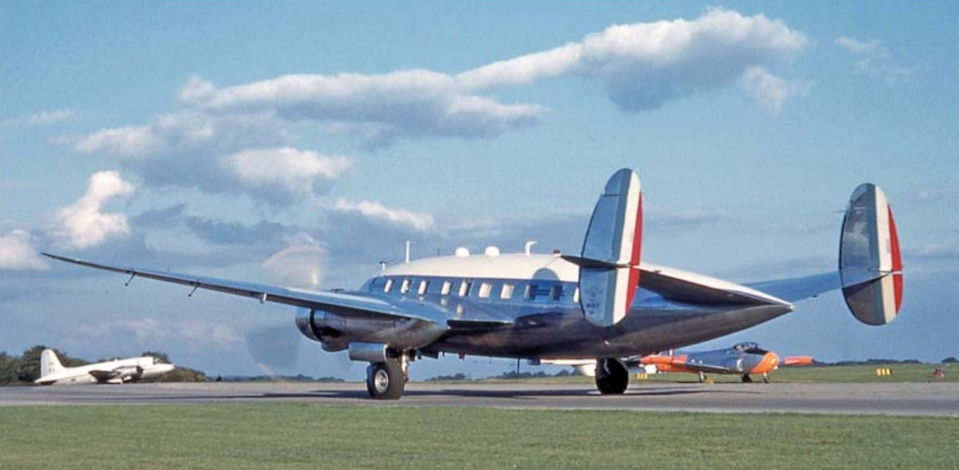
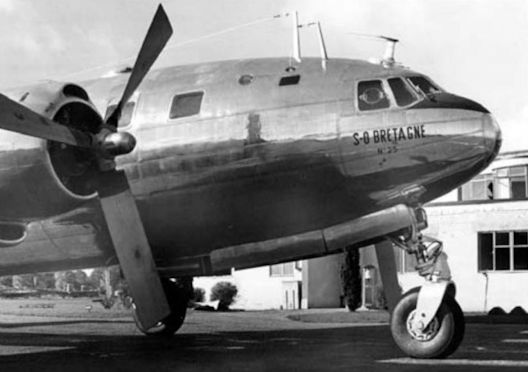
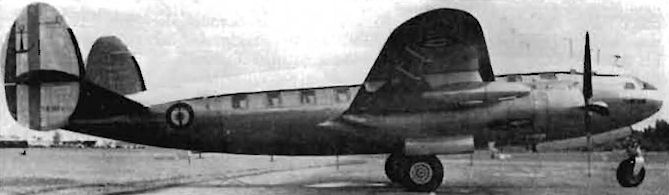
Bretagne in uniform - following its brief career as an airliner, the type was put into service with the French military, operating with the Aeronavale and the Armee de I’Air, as well as Government agencies. The 37th production example is seen here at Blackbushe in 1959.
-

Jane's All the World Aircraft 1947 / All the world's aeroplanes
The S.O.30N built by the Groupe Technique de Cannes during the War. It was the prototype of the Sud-Ouest S.O.30R Bellatrix.
-

Jane's All the World Aircraft 1947 / All the world's aeroplanes
The S.O.30R Bellatrix Twin-engined Passenger Monoplane (two 1,700 h.p. Gnome-Rhone 14 R5 engines).
-

Jane's All the World Aircraft 1947 / All the world's aeroplanes
The S.O.30R Bellatrix Twin-engined Passenger Monoplane (two 1,700 h.p. Gnome-Rhone 14 R5 engines).
-

Aviation Historian 11 / R.Simpson - Rule Bretagne!
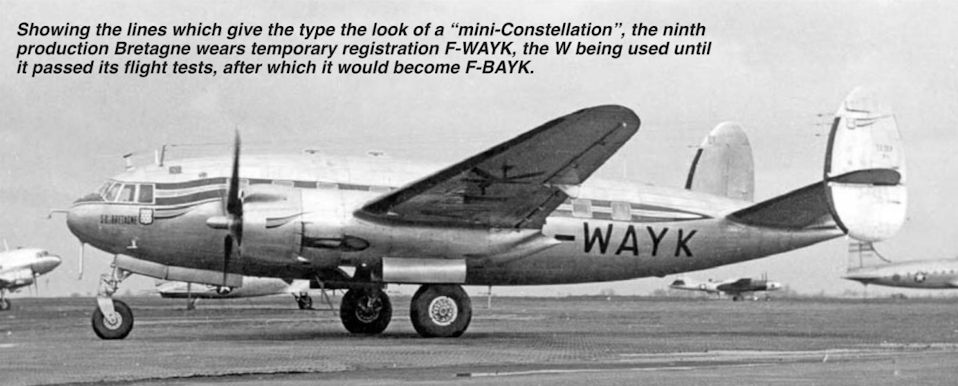
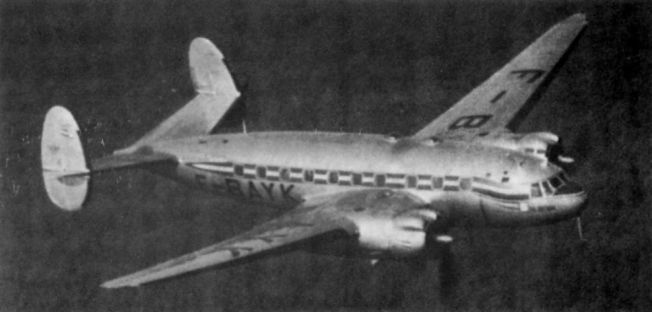
Регистрационный номер: F-WAYK [4], F-BAYK [4] Showing the lines which give the type the look of a "mini-Constellation", the ninth production Bretagne wears temporary registration F-WAYK, the W being used until it passed its flight tests, after which it would become F-BAYK.
-
Air-Britain Archive 1993-02 / Extracts. Paris 1946 (5)
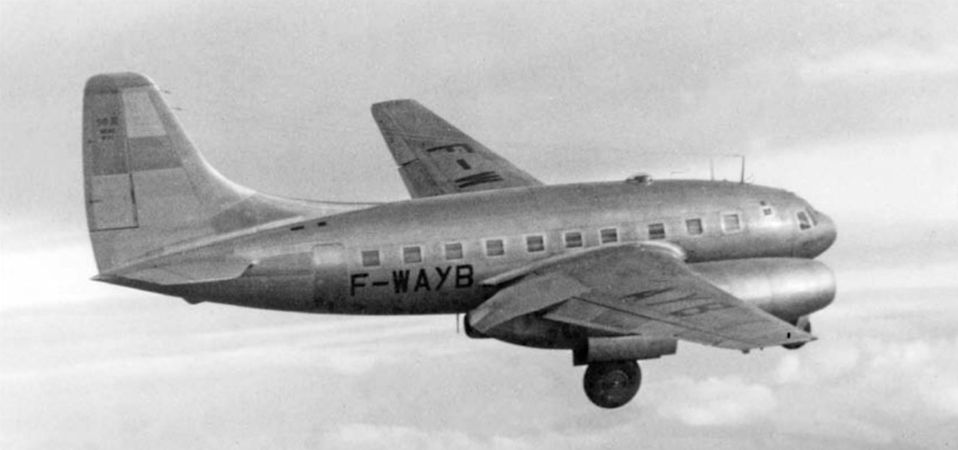
Регистрационный номер: F-WAYK [4], F-BAYK [4] The SO 30 Bellatrix prototype seen at Paris was not in fact the first, as an SO 30N-01 prototype F-BALY had been completed in 1942 but was dismantled and hidden, not flying until 26.2.45 in military marks. It was followed by the SO 30R-01 F-B/WAYA which was tested with a single fin tail unit, and the SO 30R-02 F-WAYB which reverted to twin fins and rudders and was also the Paris show aircraft.
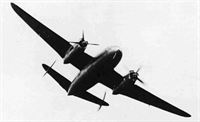
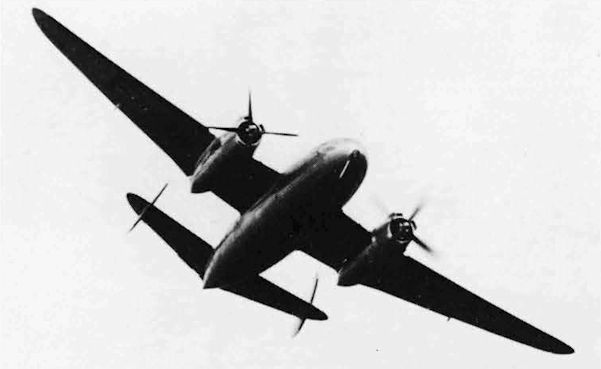
The production model was the 30/37 passenger SO 30P Bretagne which was produced in two versions, the first with 2000hp war surplus P&W 18-cyl 2-row R-2800-B43 radial engines (Photo, F-WAYK c/n 9 with starboard engine stopped and prop feathered, making a turn against the dead engine). -

Aviation Historian 11 / R.Simpson - Rule Bretagne!
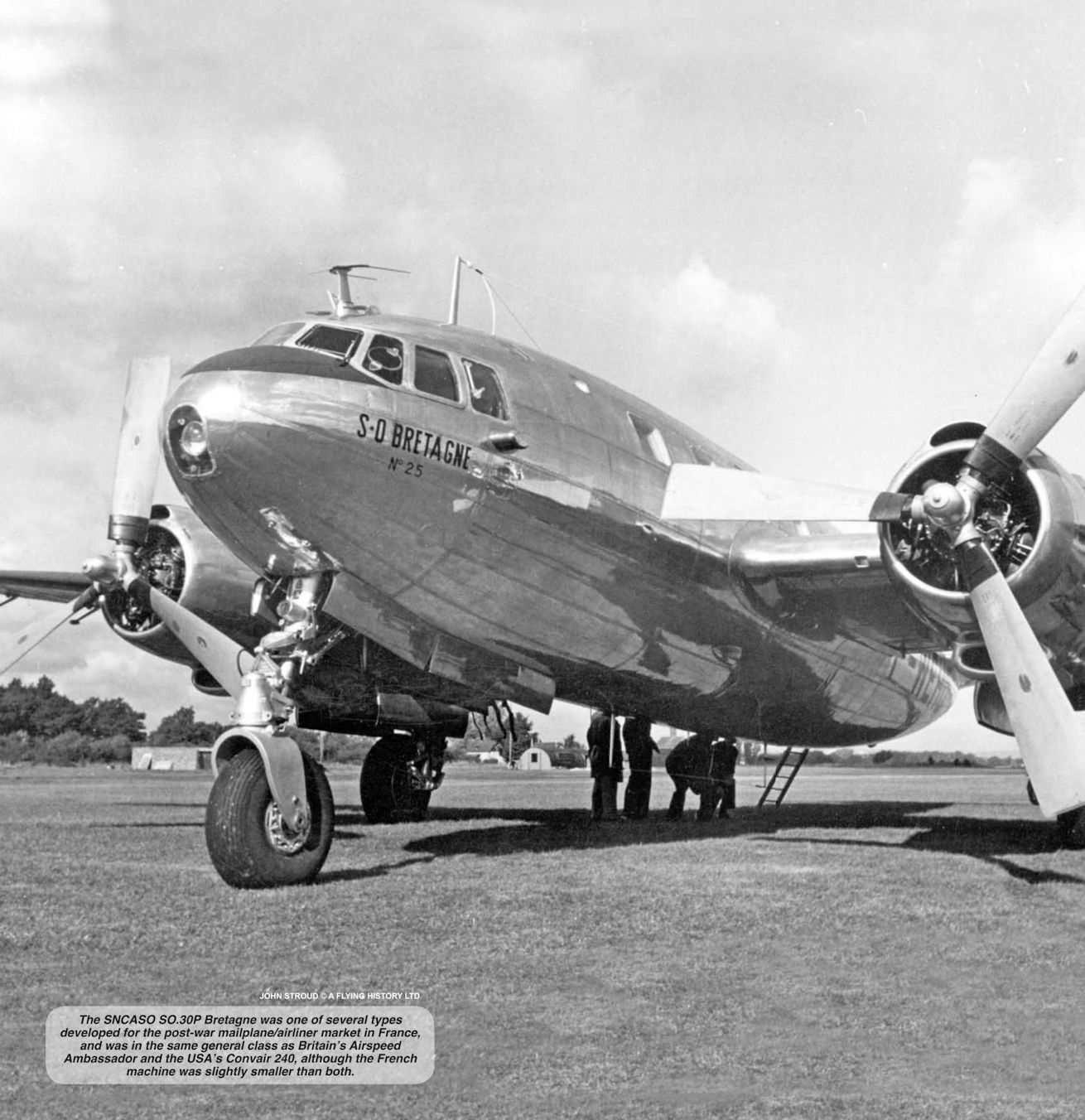
The SNCASO SO.30P Bretagne was one of several types developed for the post-war mailplane/airliner market in France, and was in the same general class as Britain’s Airspeed Ambassador and the USA’s Convair 240, although the French machine was slightly smaller than both.
-

Aviation Historian 11 / R.Simpson - Rule Bretagne!
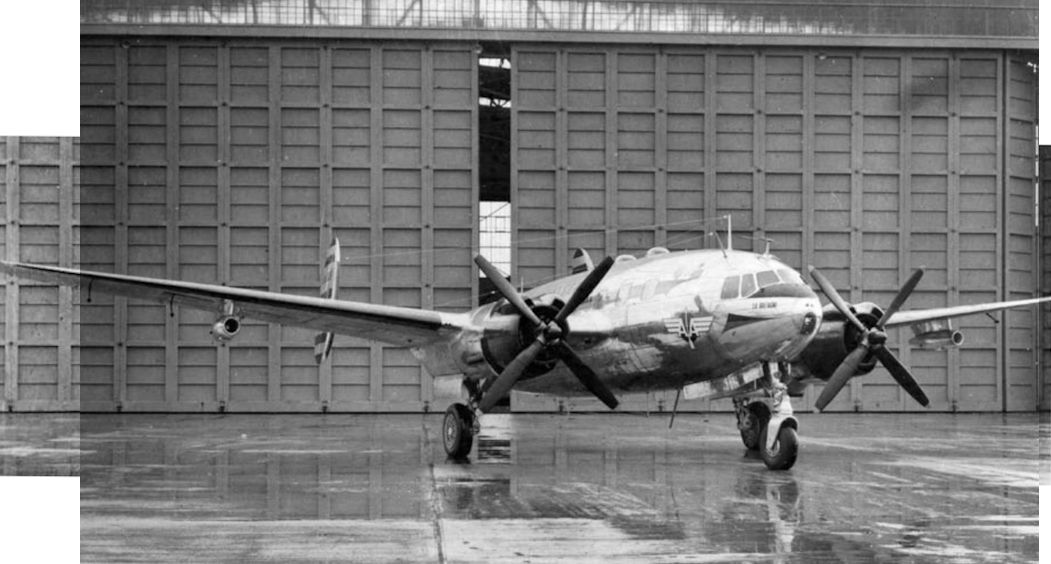
An early production Bretagne at the 1951 Paris Air Salon. The type could be fitted with standard Curtiss Electric four-bladed propellers, as seen here, or three-bladed Hamilton Standard props with square-tipped paddle blades.
-
Air-Britain Archive 1993-02 / Extracts. Paris 1946 (5)
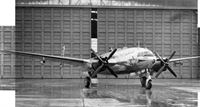
Регистрационный номер: F-OAIX, F-WAYR The second version had the more expensive civil 2400hp R-2800-CA18 engines. Several SO 30P obtained a power increase from two Palas "jet boosters" mounted under the outer mainplanes (photo, F-OAIX ex F-WAYR c/n 15 of Aigle Azur in 1954).
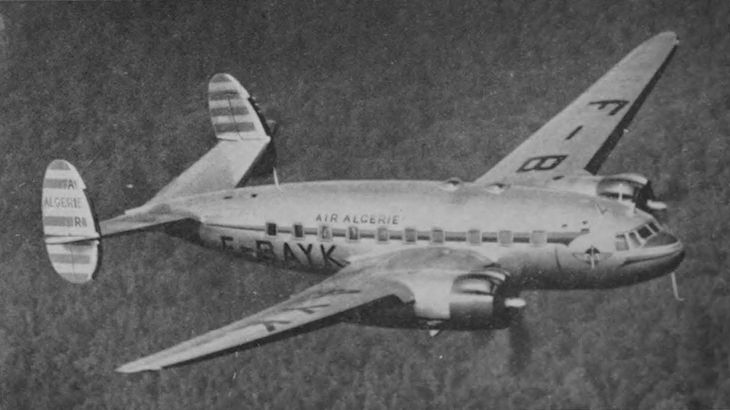
One of the few commercial operators to use the Bretagne extensively was AirAlgerie, which operated nine examples during 1951-52. This example has been fitted with a pair of Turbomeca Palas centrifugal-flow turbojet engines to improve take-off performance. -

Aviation Historian 11 / R.Simpson - Rule Bretagne!
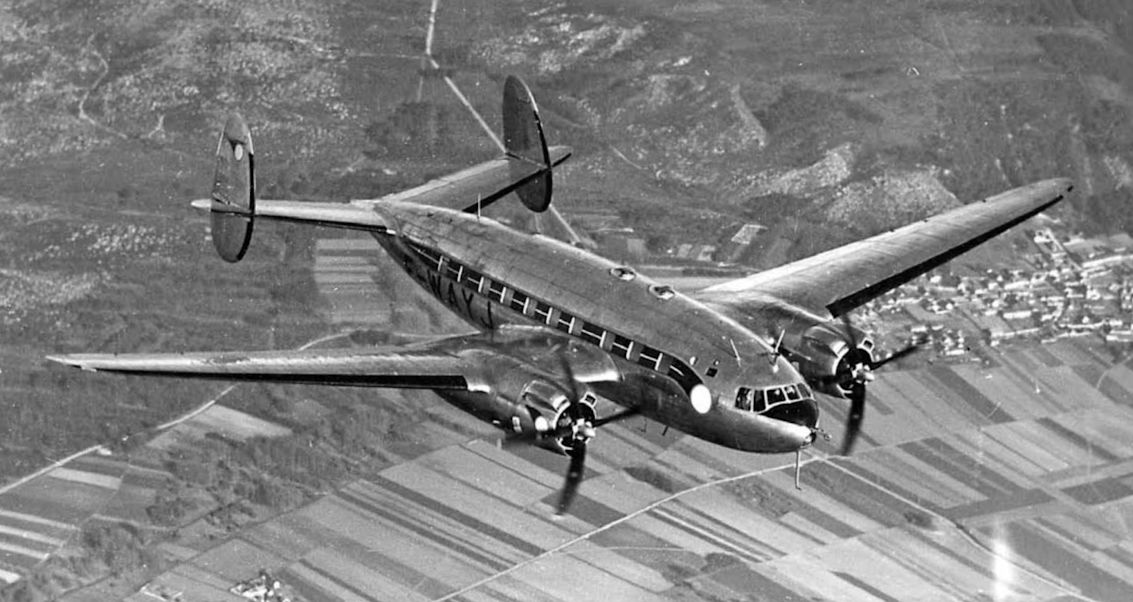
Регистрационный номер: F-WAYJ The purposeful and yet elegant shape of the Bretagne, in this case the eighth production example, F-WAYJ, in flight. To demonstrate its confidence in the aircraft, SNCASO flew a Bretagne 600 miles (965 km) from Paris to Bordeaux and back on one engine during the 1949 Paris Air Salon.
-

Мировая Авиация 242
Регистрационный номер: F-BAYK [4], F-WAYK [4] Самолет Sud-Ouest S.O.30P-2 предназначался для коммерческого использования, но он также эксплуатировался в ВВС и авиации ВМС. Некоторые самолеты использовались для испытаний двигателей.
-
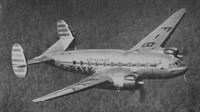
Jane's All the World Aircraft 1954 / All the world's aeroplanes
Регистрационный номер: F-BAYK [4], F-WAYK [4] The Sud-Ouest S.O. 30P Bretagne Airliner
-

Aviation Historian 11 / R.Simpson - Rule Bretagne!
Регистрационный номер: F-WEHC [2] This view of F-WEHC shows the revised cowling arrangement of the Pratt & Whitney Double Wasp engines on the SO.30P-2, which sported simplified top and bottom intakes, in contrast to the "chin” and “eye” positions for the oil cooler and carburettor on the SO.30P-1.
-

Air Pictorial 1956-10 / A Rowing Spotter at Farnborough
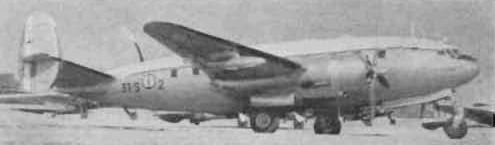
An S.O.30P of the French Navy, with Marbore thrust augmenters under the wings.
-

Air Pictorial 1955-12 / Air Pictorial's photo-review
One of the french Navy SO.30-P Bretagne transports seen at Blackbushe with wing-mounted Turborneca Palas auxiliary jet units.
-

Air-Britain Archive 1992-02 / Extracts. Paris 1946 (1)
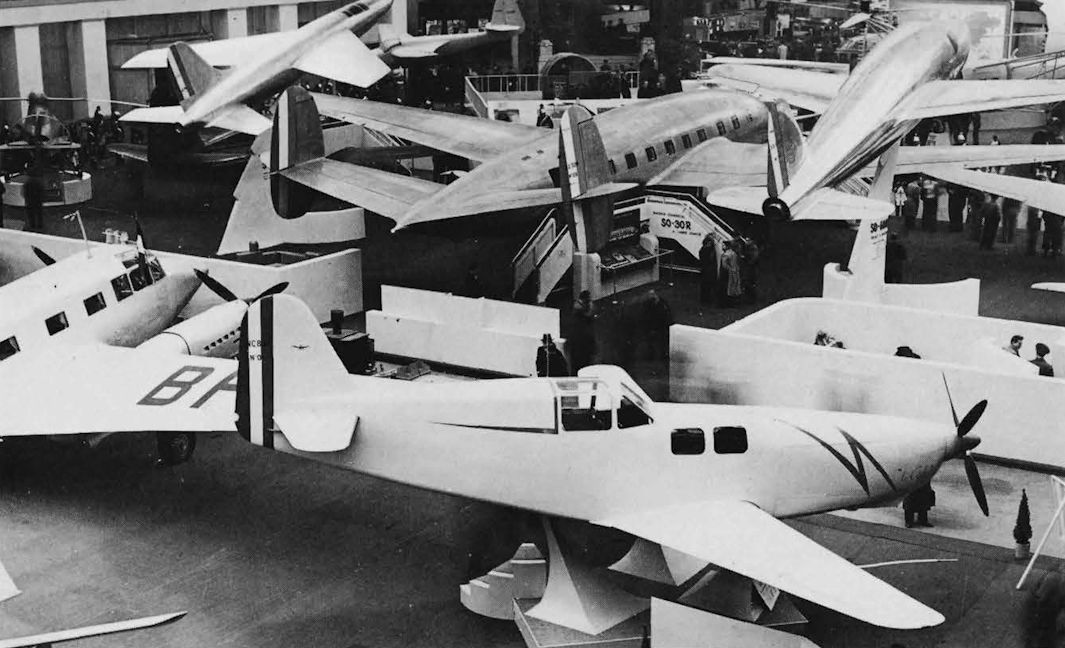
Регистрационный номер: F-WAYB [3] The SNCAC NC800 Cab in the foreground was a mockup for an air taxi to carry four passengers seated in pairs facing each other with the pilot's cockpit above and behind. The 240 hp 6-cyl in-line 6Q engines were to be mounted side by side driving a pair of 2 blade counter-rotating propellers. No undercarriage was apparent and "le Cab" appeared to be an uncompleted project which never flew as nothing more was heard of it. On the left, F-BBFP was the all-metal NC702 Martinet with two 590 hp 12-cyl inverted vee Renault 12S-00 engines driving Ratier 3 blade controllable pitch propellers. The NC702 was the German Siebel 204A built by SNCAC during the war with the Renault engines in place of the Argus and its production was continued postwar.
Top left is the SO M1 swept-wing glider aerodynamic development airframe which led to the Derwent powered SO M2, this becoming the first French aircraft to achieve 1000 km/hr (621 mph) in level flight. From these were developed the SO 6020 series jet fighters and France's first jet bomber the SO 4000 of which the twin Nene prototype flew only once before being abandoned.
Top centre is the twin-finned SO 30R, the 02 second prototype Bellatrix (two Gnome-Rhone 14-cyl 2 row 14R radials driving 3-blade c/s propellers) later registered F-WAYB. The production version was the SO 30P and 45 were built.
Top right is the first French jet plane the SO 6000 Triton, which was designed as a test bed for the Rateau GTS 65 turbojet. It was first flown 11.11.46 with a Jumo 004B-2 and proved suitable as a jet engine test bed. With its side by side cockpit seating it was also adapted for jet training.Другие самолёты на фотографии: Siebel Si.204 - Германия - 1941SNCAC NC.800 Cab - Франция - 1947Sud-Ouest SO.4000 Vautour - Франция - 1949Sud-Ouest SO.6000 Triton - Франция - 1946
-

Aviation Historian 11 / R.Simpson - Rule Bretagne!
Регистрационный номер: F-WAYB [3] The second prototype SO.30R, F-WAYB, was initially built with a twin tail, but was fitted with a single fin and rudder when the original Gnome-Rhone piston engines were replaced with a pair of Nene turbojets. After its first flights at Villacoublay in March 1951, it was fitted with soundproofing, air-conditioning and de-icing equipment.
-
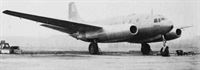
Air-Britain Archive 1993-02 / Extracts. Paris 1946 (5)
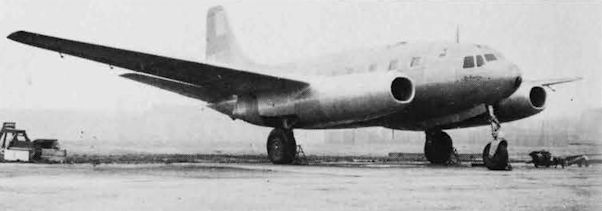
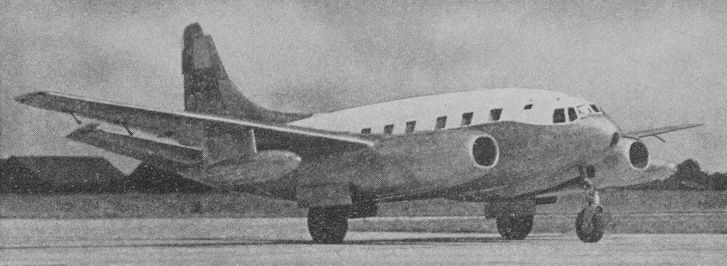
Регистрационный номер: F-WAYB [3] F-WAYB was converted with a single fin and rudder as a test bed for two Hispano-Suiza built RR Nenes (photo) and F-WAYD was similarly converted to two SNECMA Atar 101 turbojets. In total 45 production aircraft and 4 prototypes were built.
-
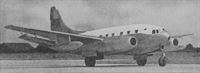
Jane's All the World Aircraft 1954 / All the world's aeroplanes
The Sud-Ouest S.O. 30 Nene Research Aircraft.
-

Aviation Historian 11 / R.Simpson - Rule Bretagne!
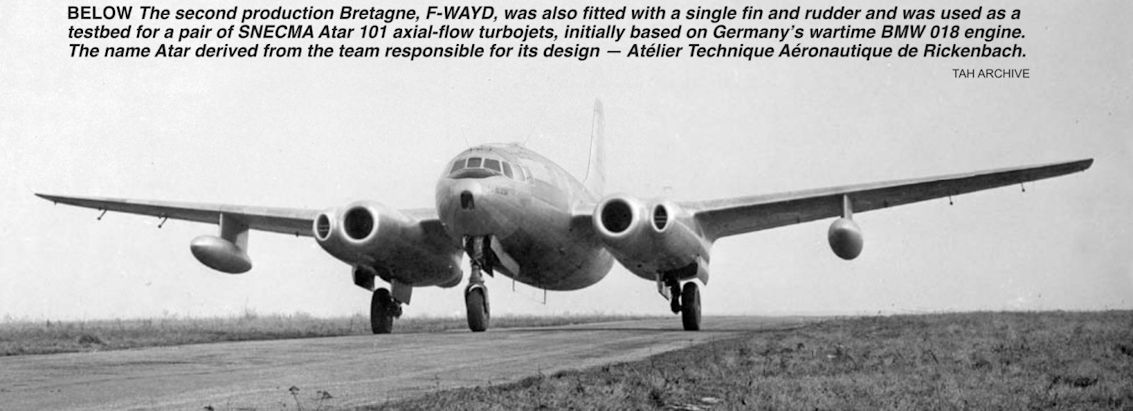
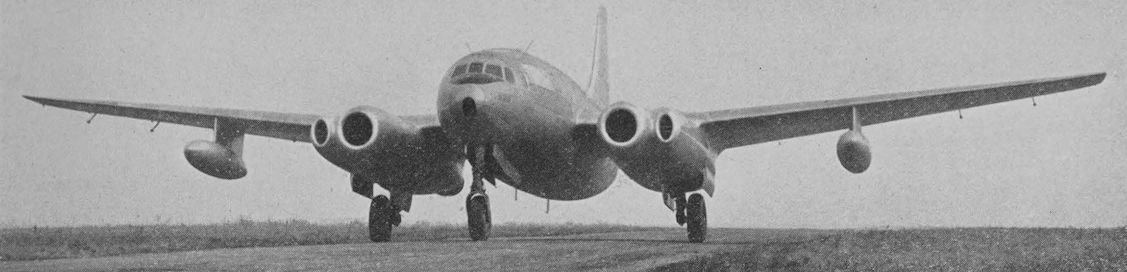
Регистрационный номер: F-WAYD The second production Bretagne, F-WAYD, was also fitted with a single fin and rudder and was used as a testbed for a pair of SNECMA Atar 101 axial-flow turbojets, initially based on Germany’s wartime BMW 018 engine. The name Atar derived from the team responsible for its design - Atelier Technique Aeronautique de Rickenbach.
-
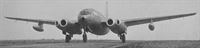
Jane's All the World Aircraft 1954 / All the world's aeroplanes
The Sud-Ouest S.O. 30P Atar Research Aircraft.
-

Aviation Historian 11 / R.Simpson - Rule Bretagne!
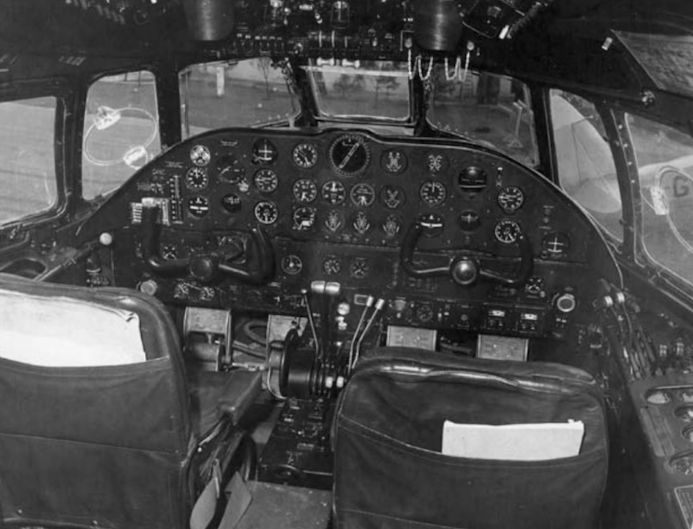
Регистрационный номер: F-WEHC [2] The cockpit of SO.30P-2 F-WEHC. The Bretagne’s cockpit layout was snug but orderly, with ample glazing for good visibility. The engineer’s controls were located on the starboard side. A panel above the windscreen housed the flap and undercarriage controls.
-

Aviation Historian 11 / R.Simpson - Rule Bretagne!
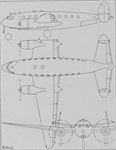
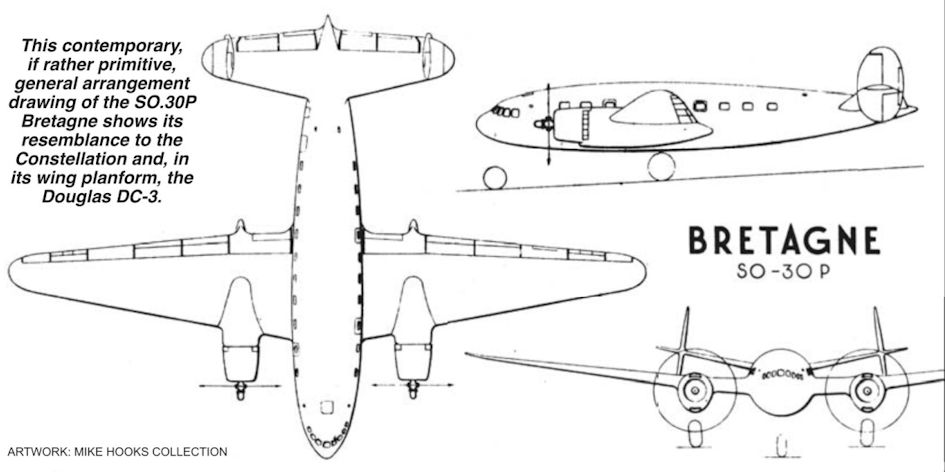
This contemporary, if rather primitive, general arrangement drawing of the SO.30P Bretagne shows its resemblance to the Constellation and, in its wing planform, the Douglas DC-3.
-
Jane's All the World Aircraft 1954 / All the world's aeroplanes
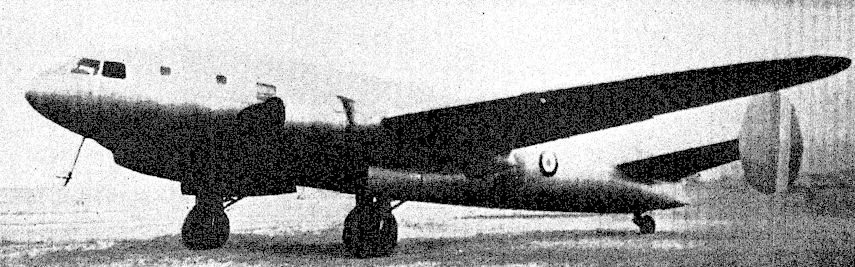
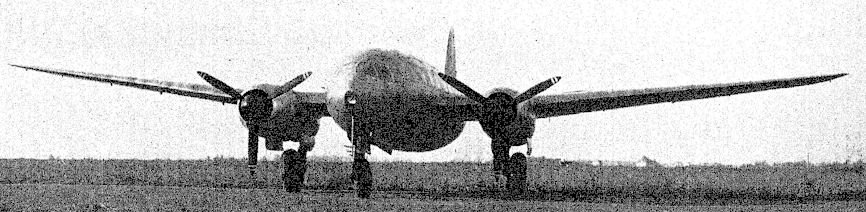
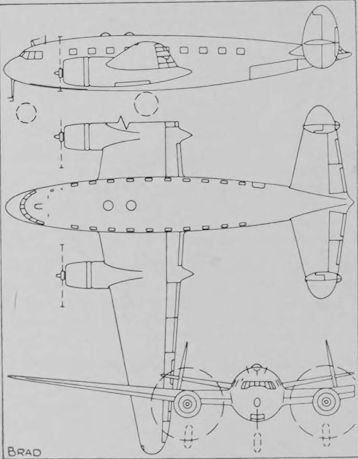
The Sud-Ouest S.O. 30P Bretagne.


- Фотографии