

Фотографии
-
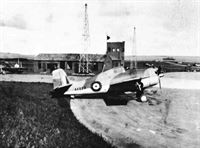
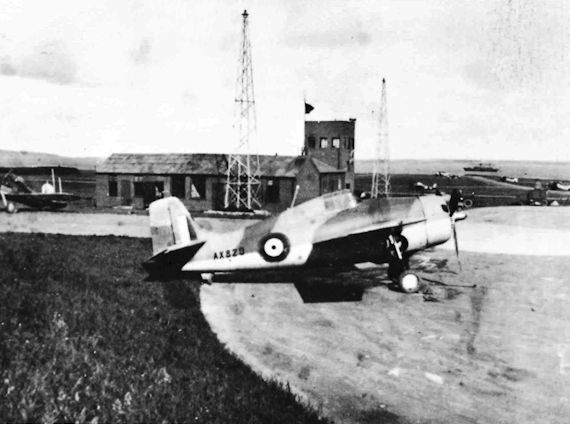
Регистрационный номер: AX829 Martlet AX829 soon after arriving at Hatston as the first replacement aircraft for the Sea Gladiators, one of which can be seen on the left of Hatston's watch office. In the background can be seen Swordfish and a Henley of the Fleet Requirement Unit at Hatston. On the right is the airfield's Chance light mounted on a chassis.
Самолёты на фотографии: Fairey Swordfish - Великобритания - 1934Gloster Sea Gladiator - Великобритания - 1938Grumman F4F Wildcat - США - 1937Hawker Henley - Великобритания - 1937
-
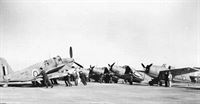
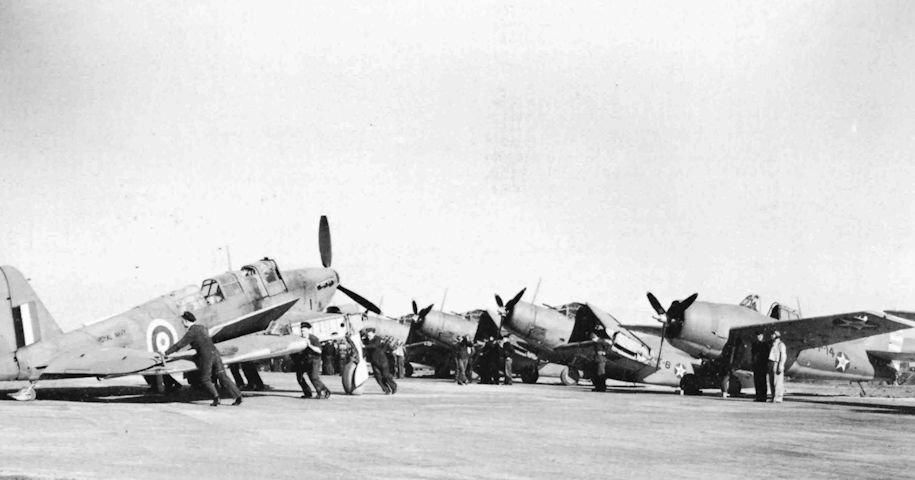
Taken on 11 April 1942, the photograph shows a Fulmar being pushed towards one of the hangars at Hatston. It carries no visible identity but contrasts with the stubby F4F Wildcat from VF7 on the right. The other aircraft are Douglas TBD-1 Devastators from VT7 which, being in the Atlantic Fleet, escaped the massacre of their sister squadrons at the Battle of Midway a few weeks later, 36 out of 41 being lost.
Note the telescopic sight on the torpedo-bombers which contrasted with the sighting bars used on FAA torpedo-bombers. This device was disliked by pilots as it cut out all vision while using it apart from the small area it covered.Самолёты на фотографии: Douglas TBD-1 Devastator - США - 1935Fairey Fulmar / P.4/34 - Великобритания - 1937Grumman F4F Wildcat - США - 1937
-
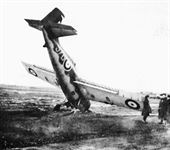
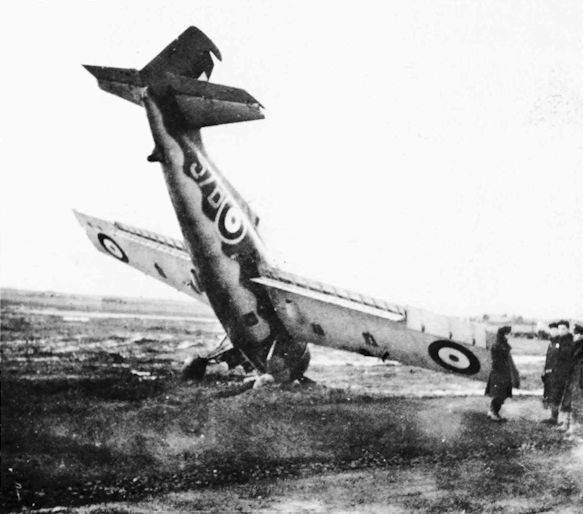
Martlet S7-B belonged to No.804 Squadron at Hatston before the unit moved to Skeabrae in September 1940 although it still flew from Hatston from time to time. On 17 November 1940, S/Lt D.Hutchinson overshot the runway at Skeabrae and tipped up on its nose.
Самолёты на фотографии: Grumman F4F Wildcat - США - 1937
-
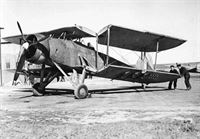
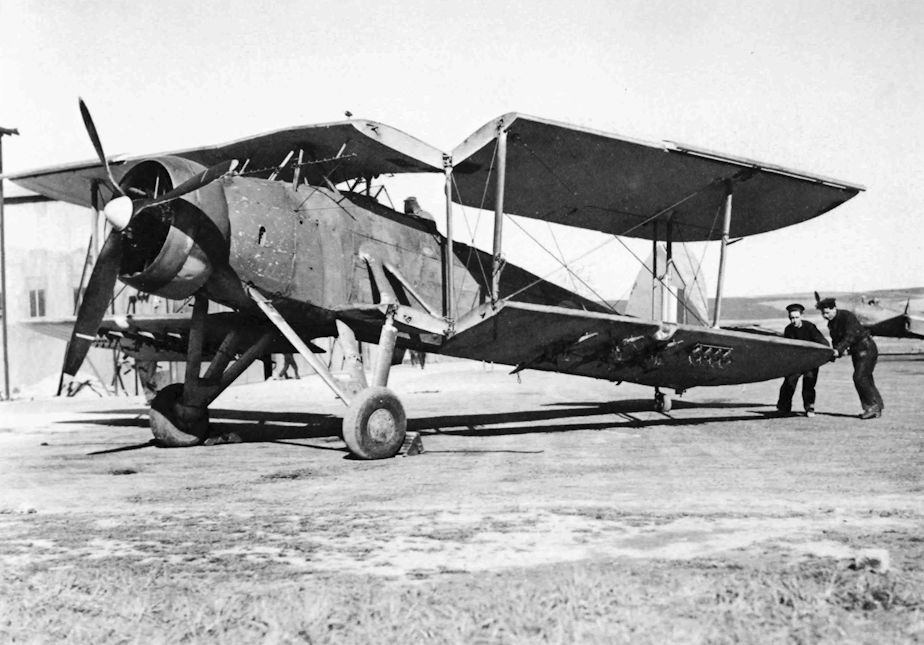
Folding the wings of an anonymous Swordfish at Hatston. This photograph shows good details of some of the appendages which were hung on Swordfish.
On the centre-section struts is a torpedo sighting bar which permitted aiming-off according to the estimated speed of the target.
Under the wings are racks for varying sizes of bombs which could also take other stores, e.g. flares. The locks which held the wings in position during flight appear quite insignificant but there were few cases of these becoming unlocked in flight.
On the upper wing are the slats which gave the Swordfish its slow approach speed and enabled it to operate from small carriers in weather which grounded (or decked?) its more advanced contemporaries.
In the background is a Gipsy engine which appears to be attached to a Puss Moth. Behind it can be seen parts of what appears to be a Dauntless.Самолёты на фотографии: Douglas SBD Dauntless - США - 1939Fairey Swordfish - Великобритания - 1934
-
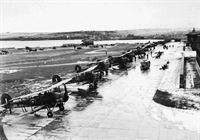
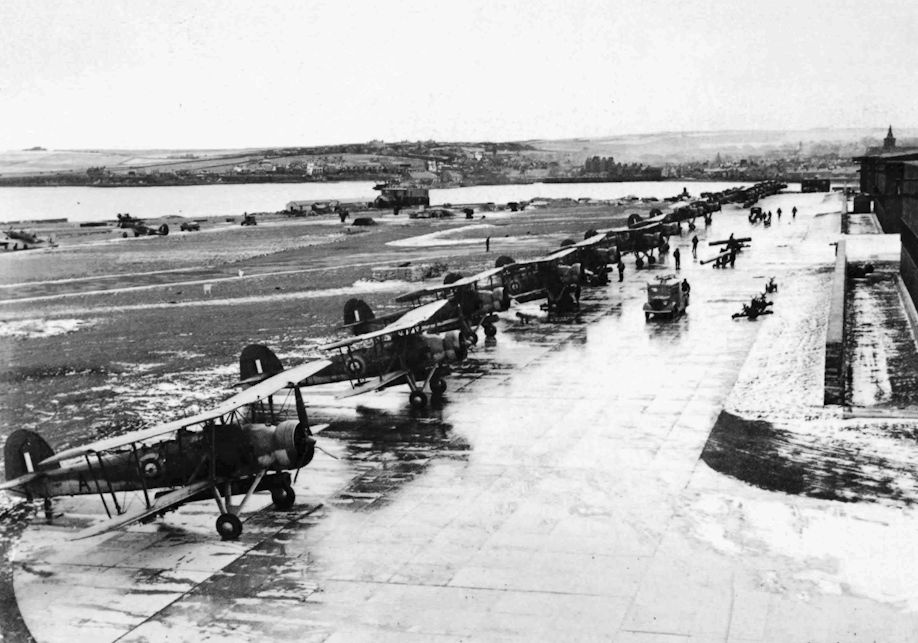
Royal Naval Air Station, Hatston, looking east towards Kirkwall. Apart from the line of sixteen Swordfish, visible on the left is a Henley and two Skuas of No.771 Squadron, the Fleet Requirements Unit at Hatston
Самолёты на фотографии: Blackburn Skua / B-24 - Великобритания - 1937Fairey Swordfish - Великобритания - 1934Hawker Henley - Великобритания - 1937
-
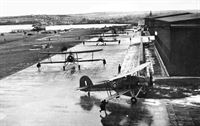
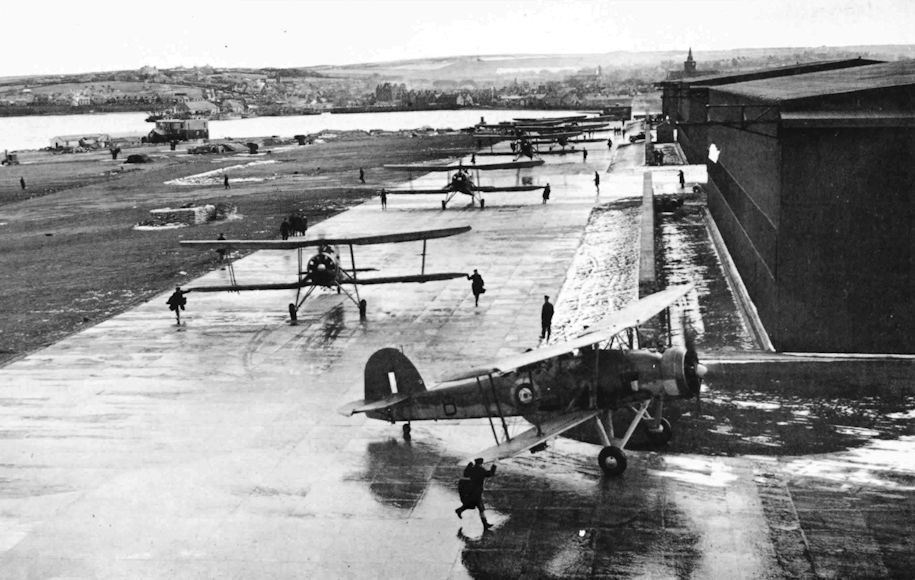
A certain divergance in design philosophy is evident in these two photographs of the eastern hangar area at Hatston. Here is the Fleet Air Arm's primary strike aircraft demonstrating that they could exceed walking pace.
Самолёты на фотографии: Fairey Swordfish - Великобритания - 1934
-
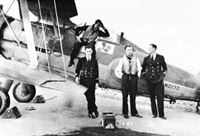
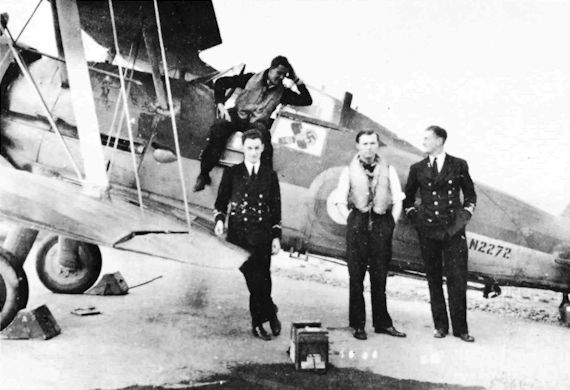
Регистрационный номер: N2272 One of No.804 Squadron's Sea Gladiators, N2272, at Hatston with members of the squadron. Top is S/Lt J.Sleigh, below him S/Lt Balmer, to his right S/Lt B.Paterson and on the right S/Lt N.H.Patterson. The landing hook can be clearly seen but the personal marking of a fist smashing something with a swastika on it is not so obvious.
Самолёты на фотографии: Gloster Sea Gladiator - Великобритания - 1938
-
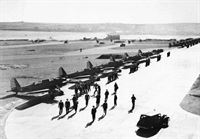
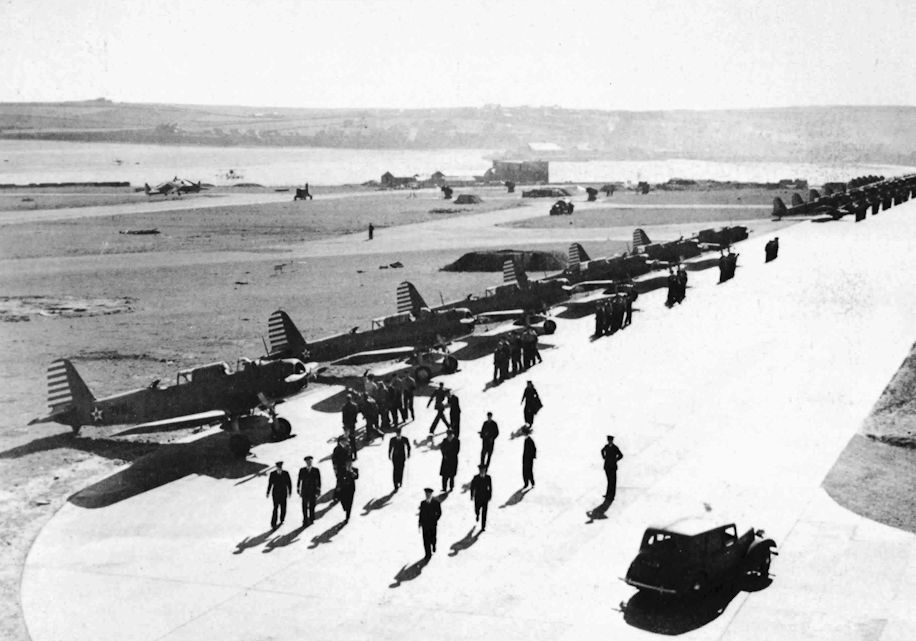
A certain divergance in design philosophy is evident in these two photographs of the eastern hangar area at Hatston. Here is the SB2U Vindicators from USS Wasp's Air Group disembarked while the carrier took Spitfires to Malta in May 1942.
Самолёты на фотографии: Vought SB2U Vindicator / V-156 / Chesapeake - США - 1936
Статьи
- -
- Feedback
- HMS Sparrow Hawk
- Miles Master I
- RAF Sabres
- Short Sarafand