

Фотографии

-
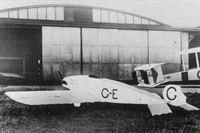
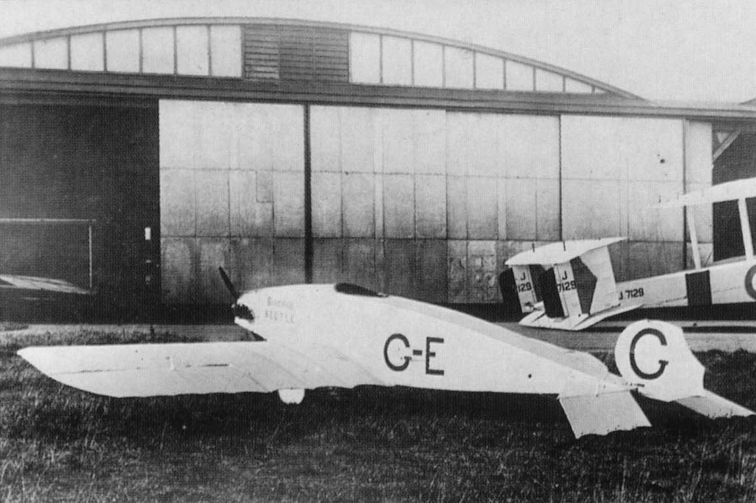
Регистрационный номер: J7129 Despite the optimistic application of the first letters of a British civil registration, the odd little Bircham Beetle never did gain a C of A. Built by two RAF officers at RAF Bircham Newton, Norfolk, about 1924, it combined an original forward fuselage with the rear fuselage of a Bristol F.2b Fighter, the lower wings of a Fokker D VII and the rudder of an Avro 504 (somewhat altered). The two-cylinder engine was either a Douglas or an ABC Scorpion. Its success or otherwise remains open to question. The tail in the background is of 7 Sqn Vickers Virginia III J7129, which was only with that unit from July to September 1924.
Самолёты на фотографии: Bircham Beetle - Великобритания - 1924Vickers Virginia - Великобритания - 1922
-
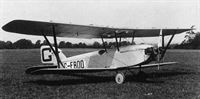
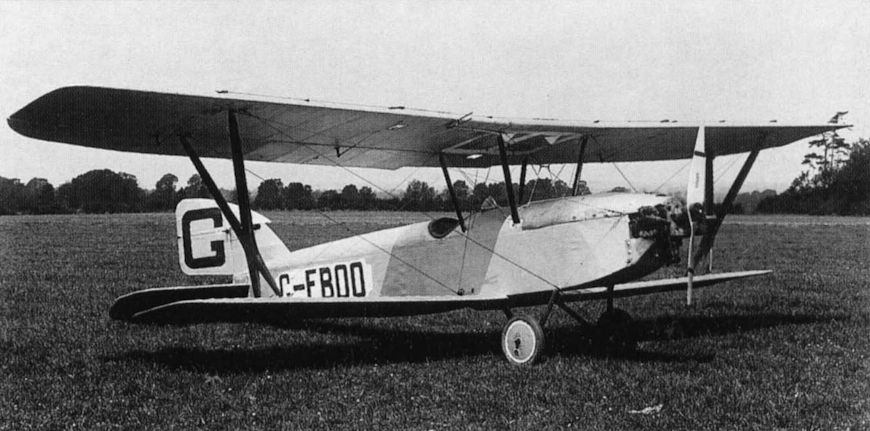
Регистрационный номер: G-EBOO Not to be outdone, the Halton Aero Club, comprising 1,000 members from the RAF School of Technical Training at RAF Halton, built the HAC.1 Mayfly. Designed by C.H. Latimer-Needham, an educational officer at the station, it was entered for the 1926 Lympne trials but was not completed in time. Again Cherub-powered, it first flew on January 31, 1927, and was registered G-EBOO. At the end of the season it was converted into the HAC.2 Minus parasol monoplane.
Самолёты на фотографии: Halton H.A.C.1 Mayfly/H.A.C.2 Minus - Великобритания - 1927
-
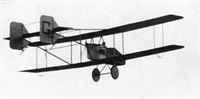
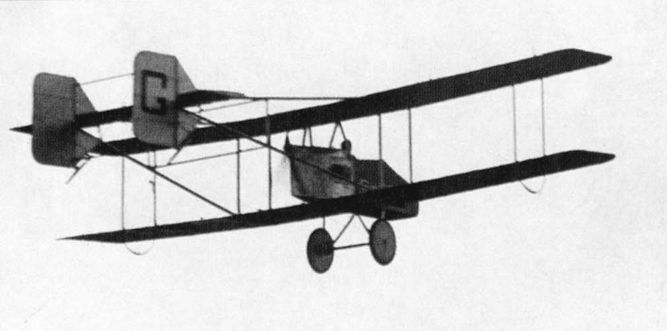
Регистрационный номер: G-EBGW [2] Designed by Sammy Child, the twin-boomed Zephyr biplane was the first product of the RAE Light Aeroplane Club, formed by a group of employees of the Royal Aircraft Establishment at Farnborough, Hampshire, in October 1922. Powered by a 500 с.c. two-cylinder Douglas motorcycle engine delivering about 17 h.p., the Zephyr was completed in the summer of 1923 and first flew, from Cove Common, on the evening of September 6, piloted by club chairman Flt Lt P.W.S. "George" Bulman, who found it “wonderfully controllable". Although the Zephyr, registered G-EBGW, was scrapped in 1925. the Club survives to this day as the DRA Farnborough Aero Club.
Самолёты на фотографии: RAE Zephyr - Великобритания - 1923
-
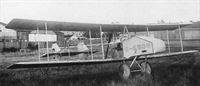
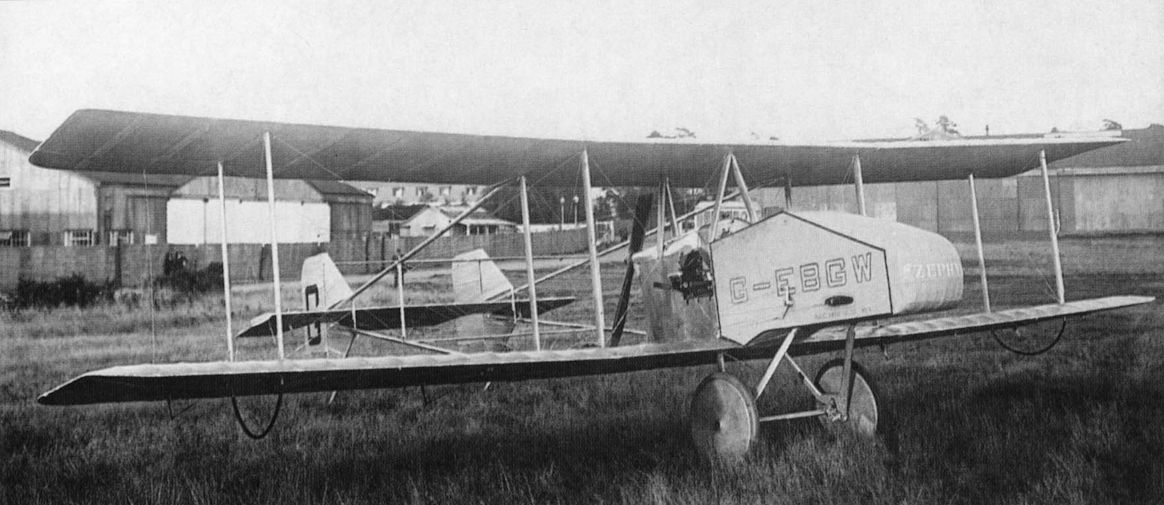
Регистрационный номер: G-EBGW [2] An unusual one-off of the inter-war period, the RAE Zephyr was built by enthusiasts at the Royal Aircraft Establishment, Farnborough, in 1923.
Самолёты на фотографии: RAE Zephyr - Великобритания - 1923
-
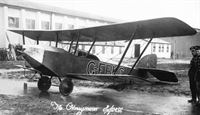
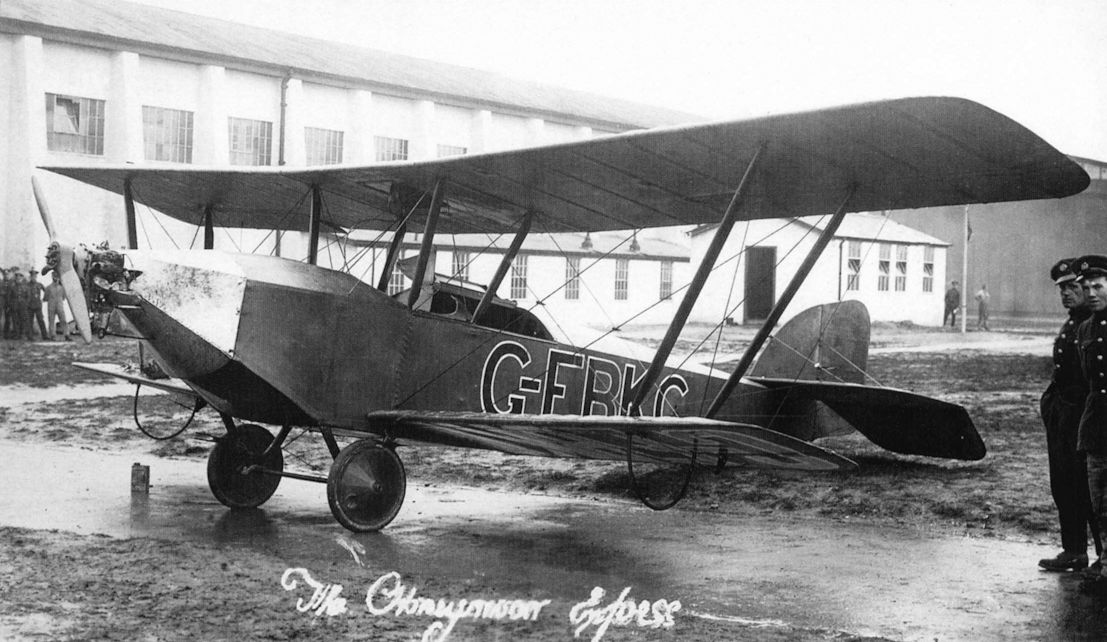
Регистрационный номер: G-EBKC The CLA.2 was designed by Flt Lt Nicholas Comper and built by the Cranwell Light Aeroplane Club, formed at the RAF College, Cranwell, in 1923 by the staff and apprentices of No 4 Apprentices Wing. Entered for the Air Ministry lightplane competition at Lympne in 1924, it first flew on September 14 that year, powered by a two-cylinder, aircooled 32 h.p. Bristol Cherub. The CLA.2 was deemed the only entry potentially suitable for Service and training use. This rare photograph disproves the claim that it never carried its civil registration, G-EBKC. "The Honeymoon Express" probably refers to its cosy side-by-side seating and 55 m.p.h. top speed.
The CLA 2 carrying registration G-EBKC late in its career when it was passed on to the Air Ministry. It was crashed when being flown by an RAF pilot.Самолёты на фотографии: Comper Cranwell II / CLA.2 - Великобритания - 1924
-
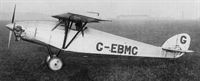
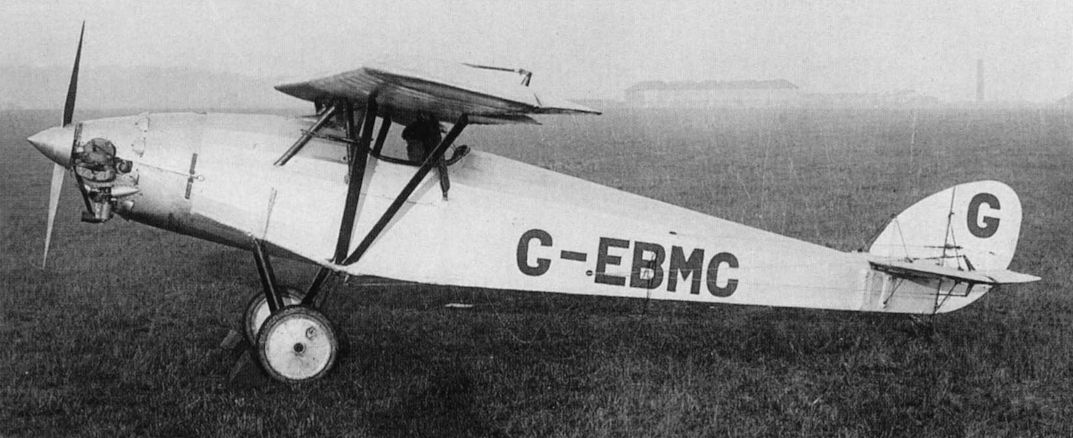
Регистрационный номер: G-EBMC The CLA.2's successor was this neat little single-seat monoplane, the CLA.3, which was entered for the 1925 Lympne trials and was again powered by a 32 h.p. Cherub. The picture shows it in 1926, after a 36 h.p. Cherub driving a metal propeller with a spinner had been installed. It was scrapped in 1929.
Самолёты на фотографии: Comper Cranwell III / CLA.3 - Великобритания - 1925
-
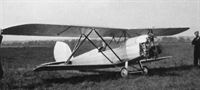
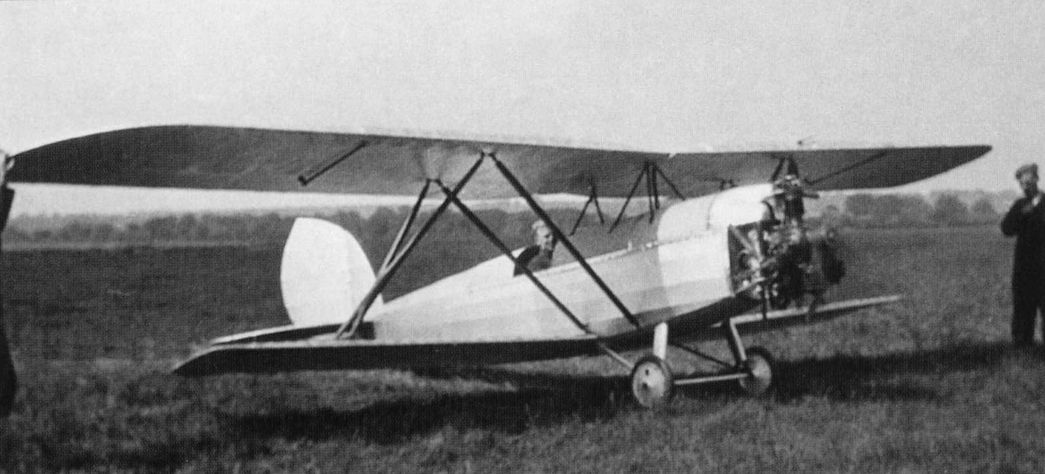
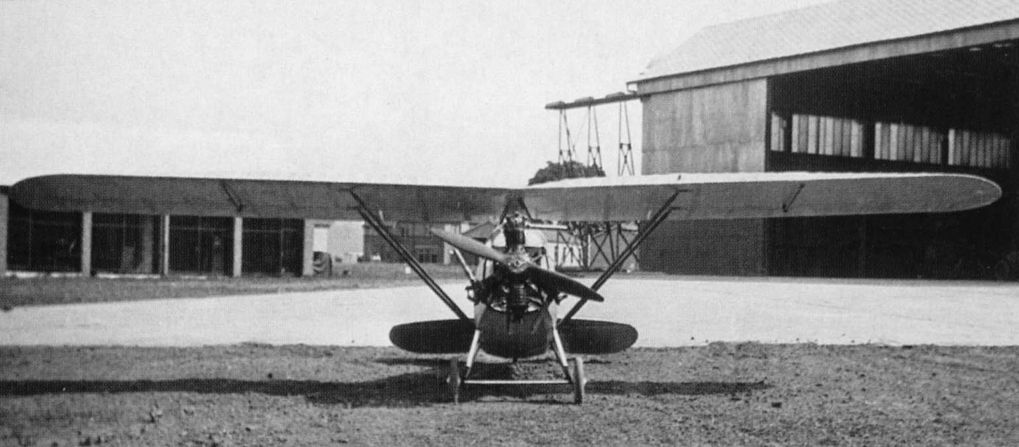
Регистрационный номер: G-AAJK [2] If the outer interplane struts of this biplane look familiar, it is because they and the lower wing were from the HAC.1 Mayfly. The Cheetah, built by ex-Halton apprentice Fg Off John Clarke, was completed in 1929. Powered by a 35 h.p. Blackburne Thrush three-cylinder radial engine, it also used the wings and possibly the tail surfaces of a D.H.53 Humming Bird. With the lower wings and outer struts removed, the Cheetah could be flown as a monoplane. The Cheetah was granted a C of A and registered G-AAJK, surviving to undergo yet another metamorphosis, into the Martin Monoplane, in 1937-38.
Самолёты на фотографии: Clarke Cheetah - Великобритания - 1929
-
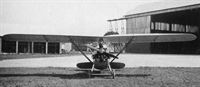
Регистрационный номер: G-AAJK [2] With the lower wings and outer struts removed, the Cheetah could be flown as a monoplane.
Самолёты на фотографии: Clarke Cheetah - Великобритания - 1929
Статьи
- -
- Navigator
- News
- Skywriters /Readers' letters/
- A.Lumsden - Vickers Wellington /Database/ (11)
- I.Davies - A Casualty of War & Fate /Accident analysis/
- J.Couper - Vickers Wellington: Flying the Wellington (Pilot's perspective) /Database/ (11)
- J.Meadows - Mosquito update /In the workshop/ (3)
- M.O'Leary - From Rainmaker to Warbird /WW2 preservation/
- N.Stroud - Vickers Wellington: Raised from the Deep (Preservation) /Database/ (11)
- P.Jarrett - Inter-war One-offs /Inter-war civil/
- P.Kucera - Vickers Wellington: Recreating a Wimpy (Film mock-up) /Database/ (11)
- R.Dorr - Fighters in transition /Korean war/ (3)
- R.Werneth - Pacific Adventure /Warbird hunting/