

Фотографии

-
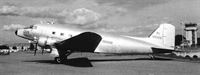
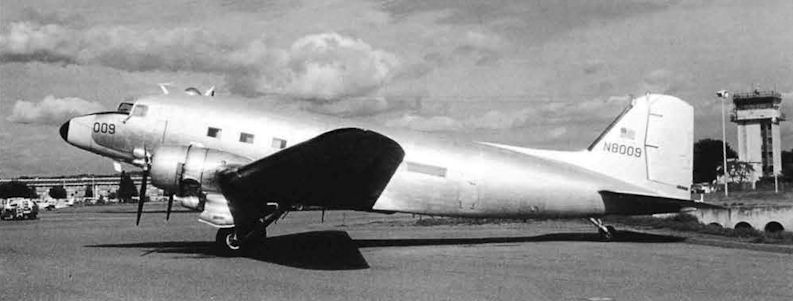
Регистрационный номер: N8009, N73800, N800J, N8350C DC-3 N8009 (c/n 25638), owned by Steven Swig and regd to Victoria Forest & Scout LLC, is based at Hayward, CA where it was photographed on 20.4.96. Ex 43-48377, BuA 17263, it was first regd N8350C which puts it in the batch sold by Chenault from China to CATI 19.12.49. No Chinese history or XT- regn is known for this aircraft which became N37800, then N800J before being regd N8009 in 1959.
Самолёты на фотографии: Douglas DC-3 / C-47 Skytrain/С-53 Skytrooper / Dakota - США - 1935
-
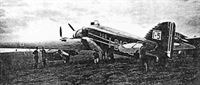
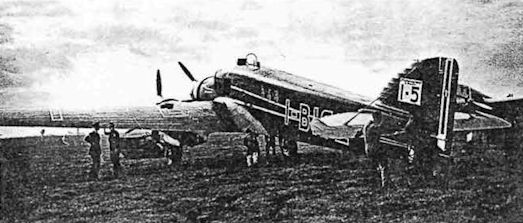
Регистрационный номер: I-BISE THE RECORD HOLDERS, 1949. Point to Point [Pilot/crew]
* Rome-Rio de Janeiro - 24/25.1.38; by two Savoia SM.79T: I-BISE, A Biseo & A Paradisi; I-BRUN, B Mussolini & R Mancinelli; 41hr 32min [221.966km/hr] including stop at Dakar.
Col Attileo Biseo, Amedeo Paradisi, S.T.V.G.Sacconi and 2 others crewed Savoia Marchetti S.79T I-BISE on its record flight from Italy to Brazil. As S.79C racer 1-5 (I-BIMU) it took part in the Istres-Damascus-Paris race.Самолёты на фотографии: Savoia-Marchetti / SIAI SM.79 Sparviero - Италия - 1934
-
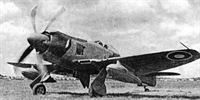
Регистрационный номер: K857, NX802 THE RECORD HOLDERS, 1949. Point to Point Records [Solo]
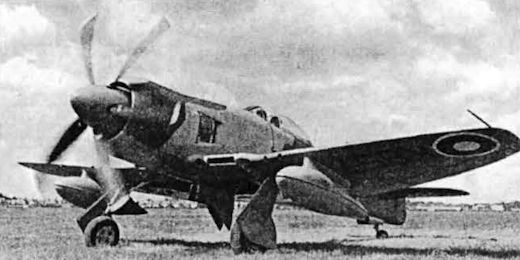
* London-Karachi - 12.5.49 Hawker Fury FB.60 K857 as shown on delivery flight; 15 hr 20.27 min [412.170 km/hr] Neville Duke.
S/Ldr Neville Duke broke both records on the same delivery flight of Hawker Fury K857 of the Royal Pakistan Air Force. K857 was originally the second Fury prototype NX802 and was fitted with 2 underwing auxiliary tanks for the flight. Range with two 409 l (90 gal) drop tanks was 2,080 miles at 270 mph at 30,000 ft. K857 was followed by another 50 new-manufacture Furies serialled L900-L949 in 1950 and others later to a total of 98. The Fury was powered by a 1640-2840 hp Centaurus XVIII 18-cyl 2-row radial engine. Wing span 11.71 m (38 ft 5 in.), Loaded weight 5300 kg (11,675 lb).Самолёты на фотографии: Hawker Fury / Sea Fury - Великобритания - 1944
-
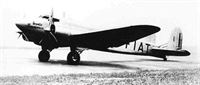
Регистрационный номер: I-FIAT Fiat BR.20L I-FIAT
THE RECORD HOLDERS, 1949. Point to Point [Pilot/crew]
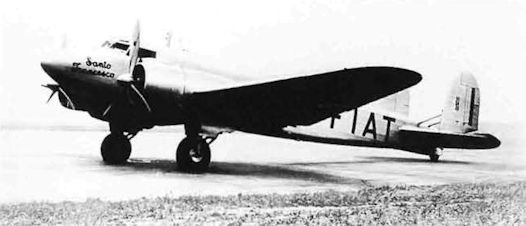
* Rome-Addis Ababa - 6/7.3.39; Fiat BR.20L I-FIAT "Santo Francesco"; 11hr 25min [390.971 km/hr] Maner Lualdi, Mazzochi, Valenti & Pinna.
National propaganda, a reminder to the world that Abyssinia had been Italian territory since the invasion in 1935-36, was the reason for launching the flight to the Ethiopian capital by Fiat BR.20L I-FIAT 'Santo Francesco'. (This registration was often used on other Fiat aircraft over the years such as the 1932 G-2 3-engine transport and the 1952 G-49-2 trainer). Piloted by Guiseppe Mazzochi and Maner Lualdi, with other crew members Ettore Valenti and Pinna, the non-stop flight of 4463 km (2773 miles) was flown at an average speed of 390.971 km/hr (243 mph). A previous attempt had ended at Beirut with a forced landing. The only BR.20L was very similar to the earlier BR.20A used in the Istres-Damascus-Paris race. Wing span 21.56 m (70 ft 9 in.), Loaded weight 11,080 kg (24,427 lb).Самолёты на фотографии: FIAT BR.20 Cicogna - Италия - 1936
-
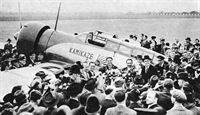
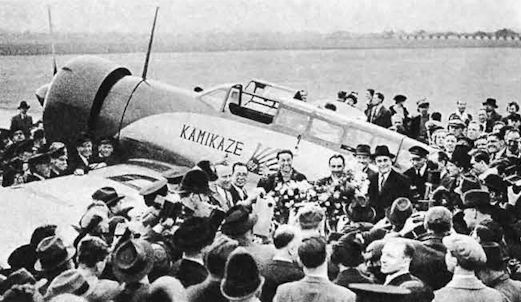
Регистрационный номер: J-BAAI Iinuma & Tsukagoshi shown on their record-breaking arrival at Croydon in Mitsubishi Karigane I J-BAAI on April 9th 1937.
THE RECORD HOLDERS, 1949. Point to Point [Pilot/crew]
* Tokyo-London - 6/9.4.37; Mitsubishi Karigane "Kamikaze" J-BAAI; 94hr 17.56 min [162.854km/hr] Iinuma/Tsukakoshi.
Masaaki Iinuma with mechanic Kenji Tsukagoshi showed that Japanese aircraft were comparable with western designs by breaking the east-west record with Mitsubishi Karigane (Wild Goose) I J-BAAI named 'Kamikaze' (Divine Wind) in 94hr 18min. Average speed for the 15,356 km (9,542 miles) including stops was 162.8 km/hr (101.2 mph). The Karigane I was powered by the 550 hp Nakajima Ha 8 9-cyl radial engine and its good performance led to the Karigane II, a military development with 850 hp Mitsubishi Ha26 14-cyl 2-row radial which was used for reconnaissance in WW2 and given the Allied code name Babs. Wing span 12 m (39 ft 4 in.), Loaded weight 2033 kg (4482 lb).Самолёты на фотографии: Mitsubishi Ki.15/C5M/Karigane - Япония - 1936
-
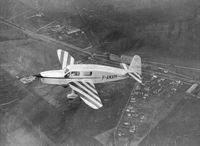
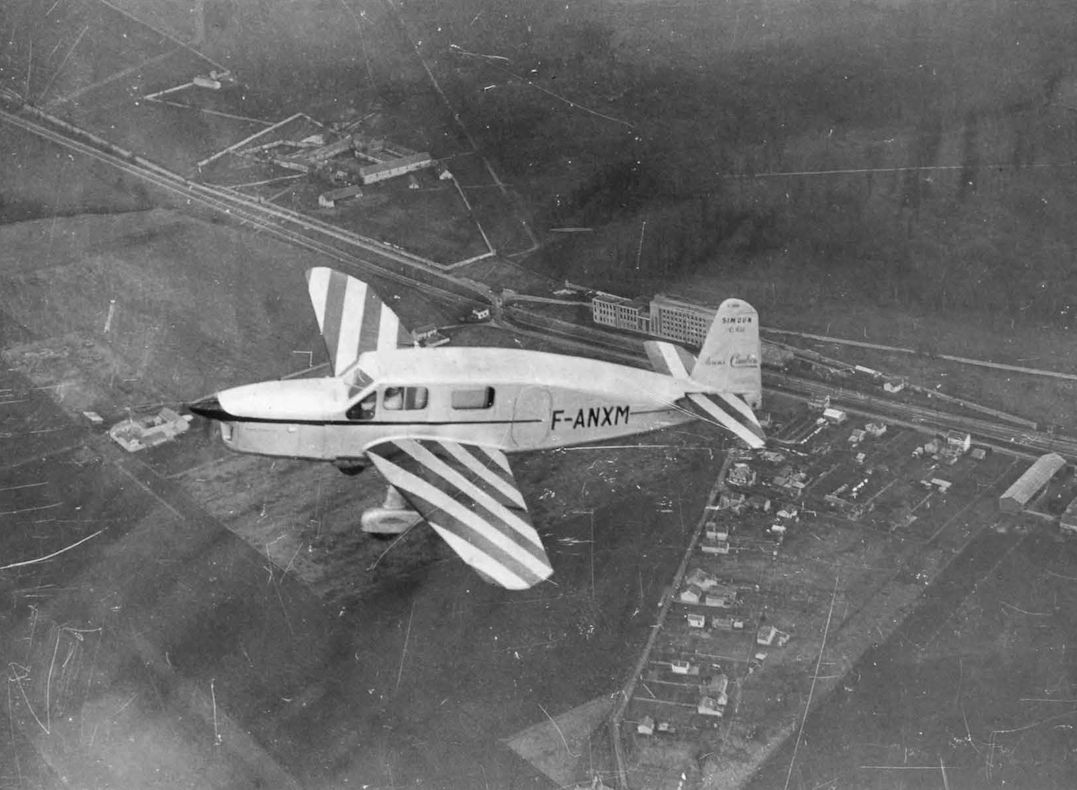
Регистрационный номер: F-ANXM [2] The Caudron C.635 Simoun F-ANXM c/n 7090/10 flown by Doret & Micheletti from Paris to Hanoi in May 1937 in 57 hours 46 minutes during their unsuccessful attempt to establish a record time to Japan.
Самолёты на фотографии: Caudron C.500 / C.520 / C.620 / C.630 Simoun - Франция - 1934
-
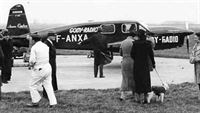
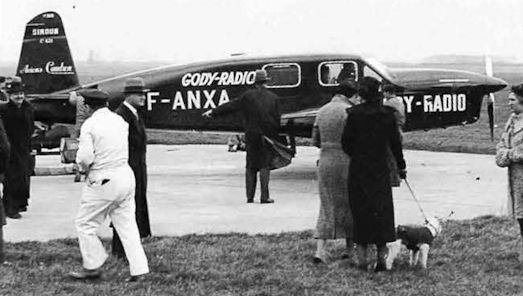
Регистрационный номер: F-ANXA Simoun F-ANXA "Gody Radio" which made the record-breaking flight from Paris to Madagascar.
THE RECORD HOLDERS, 1949. Point to Point [Pilot/crew]
* Paris-Tananarive - 18/21.12.35; Caudron C.635 Simoun F-ANXA "Gody Radio" c/n 7078/21; 57hr 35.21min [151.908 km/hr] Genin & Robert.Самолёты на фотографии: Caudron C.500 / C.520 / C.620 / C.630 Simoun - Франция - 1934
-
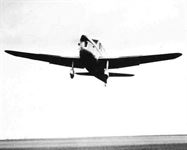
Регистрационный номер: F-ANXM [2] THE RECORD HOLDERS, 1949. Point to Point [Pilot/crew]
* Paris-Hanoi - 22/24.5.37; Caudron C.635 Simoun F-ANXM c/n 7090/10; 57hr 46.24min [ 159.071km/hr] Doret & Micheletti.
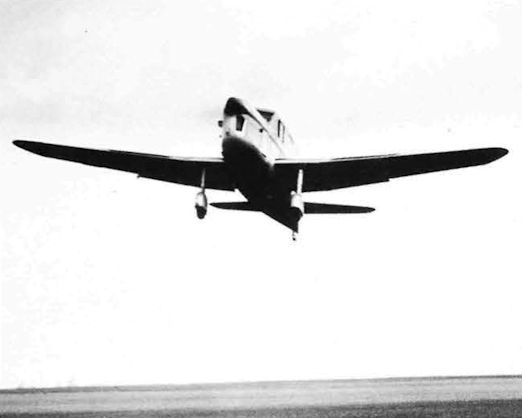
Like Japy, Doret and Micheletti also reached Hanoi but force-landed on the island of Shikoku in Japan after becoming lost. The aircraft overturned and they were both injured but survived. The photo shows Marcel Doret taking off from Paris for the record flight. A detailed study of the Simoun was given by Harm Hazewinkel in Digest Spring 1990. Wing span 10.4 m (34 ft 1 in.), Loaded weight 1350 kg (2976 lb).Самолёты на фотографии: Caudron C.500 / C.520 / C.620 / C.630 Simoun - Франция - 1934
-
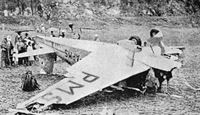
Регистрационный номер: F-APMS THE RECORD HOLDERS, 1949. Point to Point Records [Solo]
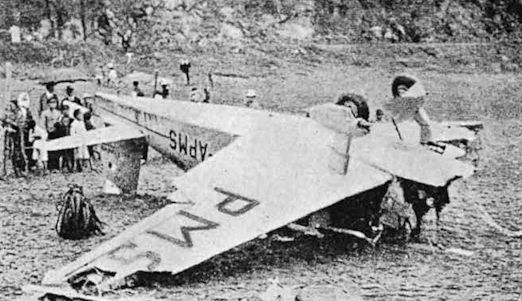
* Paris-Hanoi - 18.11.36 Caudron Simoun F-APMS c/n 7516; 50 hr 59.49 min [180.208 km/hr] Andre Japy.
The Caudron Simoun appeared in 1934 following successful Caudron racing aircraft and it had a good performance, cruising at 280 km/hr (174 mph), so it was not surprising that it was used by a number of record breakers. The engine was the Renault 6-cyl inverted in-line 'Bengali six' which produced 220 hp in the 6Q model of the later Simouns. The Paris-Hanoi record was flown solo by Andre Japy in C620 F-APMS. From Hanoi he flew on to Hong Kong and Japan, attempting to reach Tokyo in under 100 hr from Paris, however he crashed on Mt Saburi after 75 hours but survived his injuries.Самолёты на фотографии: Caudron C.500 / C.520 / C.620 / C.630 Simoun - Франция - 1934
-
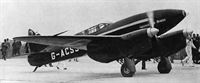
Регистрационный номер: G-ACSS, K5084 THE RECORD HOLDERS, 1949. Point to Point [Pilot/crew]
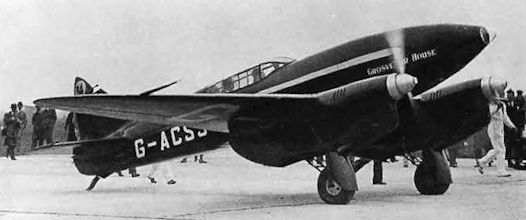
London-Melbourne - 20/23.10.34; DH Comet G-ACSS c/n 1996 "Grosvenor House"; 71hr 18sec [255.947 km/hr] CWA Scott/T Campbell Black.
London-Sydney - 15/19.3.38; DH Comet G-ACSS "Australian Anniversary"; 80hr 56min [209.712km/hr] Arthur Clouston/Victor Ricketts.
Sydney-London - 21/26.3.38; DH Comet G-ACSS "Australian Anniversary"; 130hr 3min (130.777km/hr) Arthur Clouston/Victor Ricketts.
Wellington-London - 20/26.3.38; DH Comet G-ACSS "Australian Anniversary"; 140hr 12min [134.306km/hr] Arthur Clouston/Victor Ricketts.
Cape Town-London - 18/20.11.37; DH Comet G-ACSS "The Burberry"; 57hr 23 min [168.257 km/hr] Arthur Clouston/Mrs Kirby Green.
All the above records were flown in DH.88 Comet G-ACSS c/n 1996, the first as No.34 while winning the 1934 England to Australia Air Race. The photo shows it taxying at Mildenhall before the race. G-ACSS was purchased by the Air Ministry and became K5084 in May 1935 for trials. While with the RAF it had 2 accidents, being sold for scrap after the second on 19th August 1936. A.E.Clouston arranged for its purchase by F.E. Tasker in June 1937 and it was rebuilt and renamed 'The Orphan’. Clouston then flew it in the Paris-Damascus-Paris race as G-16. 'The Orphan' was painted out for the 1937 King's Cup in which as No. 5 it came 14th flown by Ken Waller (won by C. Gardner in Mew Gull G-AEKI) . It then became 'The Burberry' for the Cape Town record. In 1938 Clouston made a first attempt on the Australia record after renaming it 'Australian Anniversary' but suffered an undercarriage collapse on Cyprus. After repair it was flown back for a second attempt which was successful, breaking records in both directions. After a long period of storage G-ACSS was restored to flying condition and is preserved by the Shuttleworth Trust. In 1990 a taxyable replica of G-ACSS was built for a film in Australia and a flying replica was built and flown in the USA by its owner Bill Turner. All 3 differ from G-ACSS in its original form in having a tailwheel instead of a tailskid. The original G-ACSS produced a long range record breaking speed of 255.947 km/hr (159 mph) during the London-Melbourne race (including stops) which compares with its maximum speed of 381 km/hr (237 mph). Wing span 13.4 m (44 ft). Loaded weight 2413 kg (5320 lb)Самолёты на фотографии: De Havilland Comet / D.H.88 - Великобритания - 1934
Статьи
- -
- Casualty Compendium (63)
- Croydon Watch Log 1937-8 (7)
- Extracts
- Ghana (VP-A 9G-) /Complete Civil Registers/ (12)
- The de Havilland DH.114 Heron /The Whole Truth/ (9)
- The Japanese Civil Register 1919-45 /Japanese Civil Register/ (5)
- Three green mice... (2)
- J.Geelen, R.Deerness - New Zealand (ZK-) /Complete Civil Registers/ (3)