

Фотографии

-
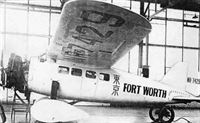
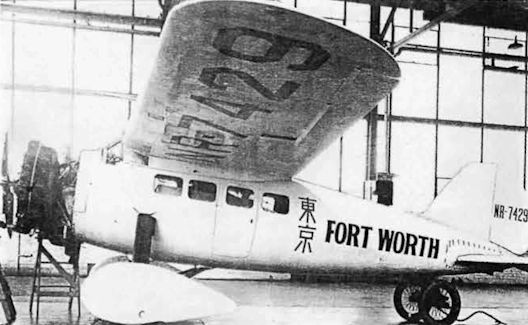
Регистрационный номер: NR7429 Lockheed Vega c/n 18 NR7429 "Fort Worth" was flown by Robbins and Jones in attempts to reach Japan using aerial refuelling from a Ford Trimotor on 9.7.31 and 3.8.31.
Het Vliegveld 9.7.31 - Americans Robbins and Jones arrive at Nome, Alaska, having left Seattle the previous day in attempted non-stop flight around the Northern Pacific to Japan, for which Asahi Shimbun had put up a prize of approx £6000. Storm prevented in-flight refuelling so landing made at Cape Solomon, 40 mis east of Nome.
Het Vliegveld 3.8.31 - Robbins and Jones make a second attempt in "Fort Worth" to reach Japan non-stop. Mist near Fairbanks, Alaska prevents their planned rendezvous with their refuelling plane.
Het Vliegveld 9.7.31: Lockheed Vega Model 5 c/n 18 NR7429 "Fort Worth" was flown from Seattle by Reginald L Robbins with partner Harold S Jones in attempts to reach Japan with aerial refuelling through a special hatch cut in the fuselage top behind the wing and operated by Jones. The aircraft was previously Erie P Halliburton's "The Tester", with 425 hp Pratt & Whitney Wasp B and NACA cowl. Robbins & Jones replaced this with a 220 hp Wright J5 Whirlwind assuming that the lower fuel consumption would increase the range, however the lower performance cancelled out this advantage. They refuelled once successfully from a Ford Trimotor tanker NR5493 (4-AT-22) but the second attempt failed due to extreme turbulence. See also 3.8.31.
Het Vliegveld 3.8.31: For their second attempt Robbins and Jones reinstalled the original P&W Wasp in the Vega "Fort Worth". After one successful fuel transfer they failed to meet up with Jimmy Mattern and Nick Greener in the Ford tanker due to poor visibility. Robbins had set a world endurance record of 172 hours in May 1929 in a Ryan Brougham named "City of Fort Worth" using in-flight refuelling. He chose to start the Japan flights from Seattle as a local businessman had offered a $28,000 prize in addition to the $25,000 Asahi Shimbun prize.Самолёты на фотографии: Lockheed Vega - США - 1927
-
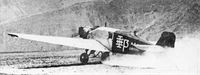
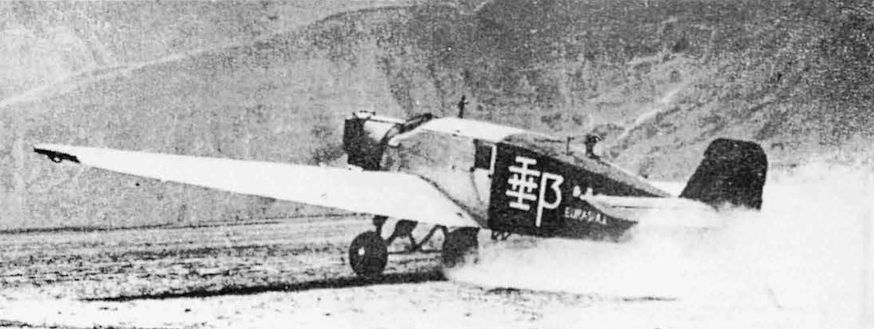
Junkers W 33 of the Sino/German company "Eurasia I" taking off. The aircraft featured in the report of 2.7.31, "Eurasia II" was identical down to the paint scheme. The six W 33 and two F 13 aircraft operated by the company all appear to have had the same paint scheme, the only difference being the Eurasia number I to VIII.
Het Vliegveld 2.7.31 - Mailplane of German company Eurasia, pilots Rathje and Koelber, force-landed between Mongolia and Chinese Easter Railway. Crew taken prisoner and Rathje condemned to 5 years in prison for presumed espionnage. Both pilots freed in September.
Het Vliegveld 2.7.31: The Eurasia aircraft involved in this incident was Junkers W 33 "Eurasia II" c/n 2739. The pilot Johannes Rathje landed after his engineer Otto Kolber was wounded in the leg by rifle fire from Mongolian tribesmen and Rathe decided that immediate medical attention was required. The event was therefore not a forced landing. The airmen were arrested but due to lack of medical care Kolber's leg had to be amputated in primitive conditions during their two and a half months imprisonment. The aircraft was abandoned on site.Самолёты на фотографии: Junkers W 33 / W 34 / Ju.46 / ПС-4 - Германия - 1926
-
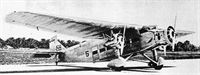
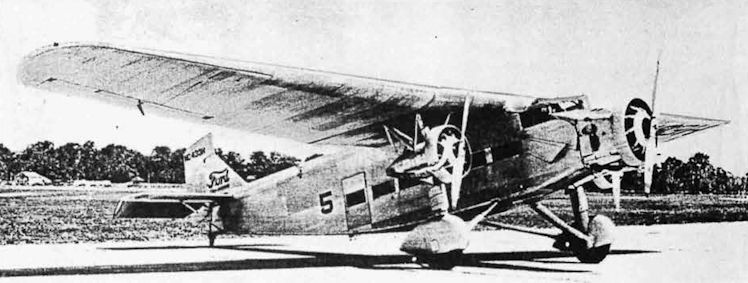
Регистрационный номер: NC433H The last of the Ford Air Tours was appropriately won by Ford Trimotor NC433H, seen a few days after the event.
Het Vliegveld 4.7.31 - Fourteen aircraft begin National Air Tour of America.
4.7.31: The National Air Tour for the Edsel B Ford Reliability Trophy (to give it its full title) was the seventh and last annual event over a 4,858 miles course from Detroit and back. There were 24 starters and the Tour finished on 25.7.31 with Harry L Russell declared the winner in Ford 13A trimotor NC433H c/n 13-A-1. This was the only model 13A which was built as a normal 5-AT-D with three 420 hp Pratt & Whitney R-985 Wasps but converted with a 575 hp Wright R-1820-E Cyclone in the nose and two 300 hp Wright R-975 Whirlwinds on the wings. It was converted back to 5-AT-D standard later.Самолёты на фотографии: Ford Tri-Motor / 4-AT / 5-AT - США - 1926
-
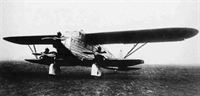
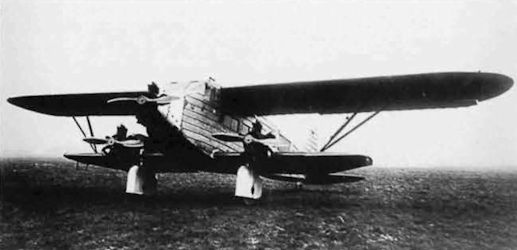
The prototype Breguet 391T which crashed at Villacoublay on 3.7.31 was an all-metal sesquiplane with three 240 hp Gnome Rhone Titan 5Kd air-cooled radial engines.
Het Vliegveld 3.7.31 - New Breguet trimotor crashed at Villacoublay. Chief test pilot Louis Bucquet parachuted from aircraft but slipped out of loose harness and was killed.
Het Vliegveld 3.7.31: The trimotor was the new Breguet 391T prototype. The cause of the crash was failure of a propeller blade on a wing engine which was torn out by vibration. A second occupant was also killed.Самолёты на фотографии: Breguet Br.390 - Франция - 1931
-
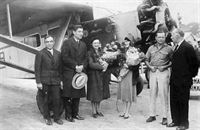
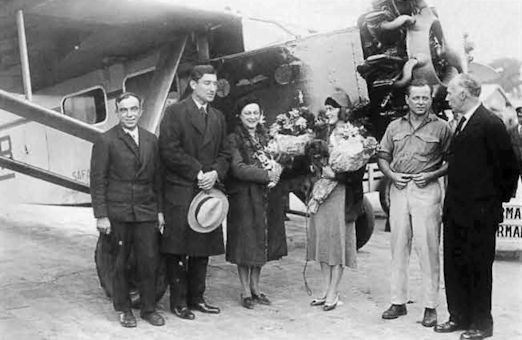
Регистрационный номер: F-ALER The reception at Le Bourget for the Count and Countess of Sibour on their return from China in a Farman 190. Left to right are the mechanic Damet, Mr Weiler of Gnome-Rhone engines, Mrs Wilden, the Countess, the Count De Sibour and Mr Farman.
Het Vliegveld 1.9.31 - The Vicomte de Sibour and party arrive back in Paris in the Farman 190, having left Pekin on 25.8.31.
Het Vliegveld 1.9.31: The Count and Countess of Sibour were accompanied on their flight from Peking by mechanic Damet and Mrs Wilden, wife of the French envoy in the Chinese capital. The aircraft used appears, from the partly-visible registration in our photo, to have been Farman 190 c/n 12, F-AIZR. Can anyone confirm?
Farman 190 F-AIZR which was not the aircraft used by the Comte de Sibour for his Paris-Peking flight which is documented under 1.9.31 below. The aircraft shown in our photo on p.98/49 was in fact Farman 291 F-ALER which had rectangular cabin windows and a 300 hp Gnome-Rhone 7Kb engine, while the 190 above can be seen to have round windows and was fitted with a 230 hp Gnome-Rhone 5Ba.
Het Vliegveld 1.9.31 (and 26.6.31): The original reports referred to a Farman 190 which designation we perhaps took too literally. The 'family' of four-passenger monoplanes was produced in a number of versions and with different engine types. Various models featured in long-distance flights of the period but the one used by the Comte de Sibour on this occasion was Farman 291 (300 hp Gnome-Rhone 7 Kb) c/n 2/7262 F-ALER which was registered to him 15.6.31, and not F.190 F-AIZR. Only four 291s were built, this example being named "Safari IV" as is partly visible in the photograph. ("Safari II" was DH.60G G-EBZR and "Safari III" was Sibour's DH.60M F-AJKT - were there more?).Самолёты на фотографии: Farman F.190 / F.390 - Франция - 1928
-
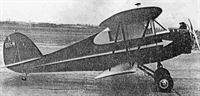
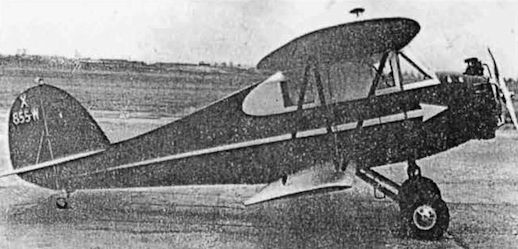
Регистрационный номер: X855W The sole Bird Model E single-seat cabin biplane as X855W prior to taking part in the 1931 Ford Reliability Air Tour in which it force-landed with engine failure.
Het Vliegveld 4.7.31 - Fourteen aircraft begin National Air Tour of America.
Het Vliegveld 4.7.31: The National Air Tour for the Edsel B Ford Reliability Trophy (to give it its full title) was the seventh and last annual event over a 4,858 miles course from Detroit and back. There were 24 starters and the Tour finished on 25.7.31 with Harry L Russell declared the winner in Ford 13A trimotor NC433H c/n 13-A-1. The Bird Cabin Model E NR855W c/n 6001 force-landed on 6.7.31 after engine failure. There were other forced landings and withdrawals, including the first fatal crash of the Tours, of C F Sugg at Wheeling, West Virginia on 7.7.31.Самолёты на фотографии: Brunner-Winkle Bird A / B / C / E - США - 1928
-
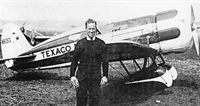
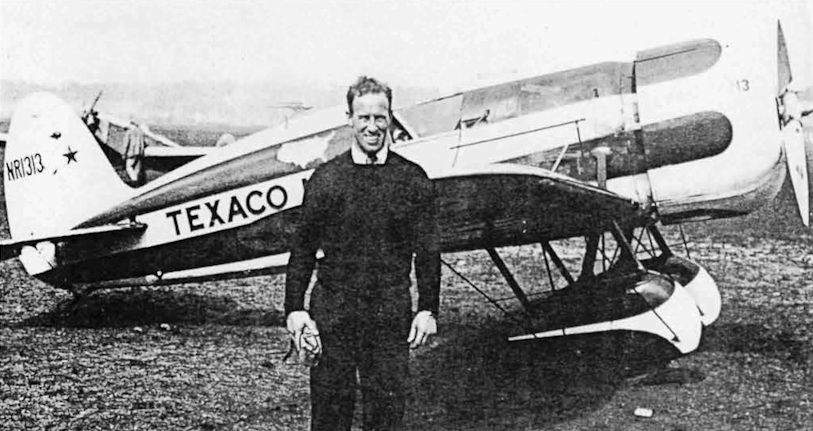
Регистрационный номер: NR1313 [2] Frank Hawks with "Texaco No. 13", the Travel Air Model R 'Mystery Ship' NR1313 in which he flew from London to Rome and back in 9 hr 38 min; see report for 17.6.31. The colour scheme was red and white and the aircraft is still preserved in Chicago.
Самолёты на фотографии: Travel Air Type R Mystery Ship - США - 1929
-
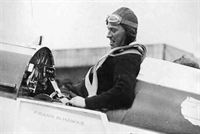
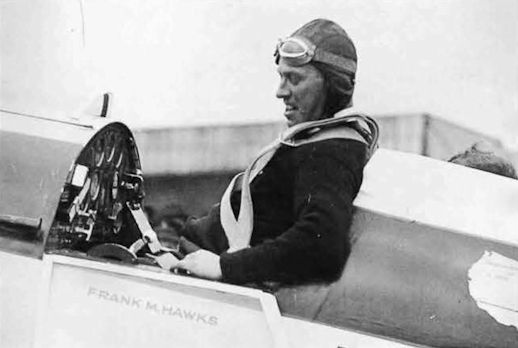
Регистрационный номер: NR1313 [2] Frank Hawks in the cockpit of his "Mystery Ship" Travel Air Model R when visiting Haren Airport, Brussels in 1931. He flew from there to Croydon on 18.4.31.
"Het Vliegveld" (The Airfield) 17.6.31 - Frank Hawks flew his Travel Air monoplane in one day from London to Rome and back again. Flying time 9 hrs 38 mins.
Het Vliegveld. 17.6.31: Frank Hawks was flying his Travel Air Model R NR1313 c/n R2004 named "Texaco No. 13". (He always claimed 13 to be his lucky number) He had arrived in Europe with his aircraft on board the SS Europa in April 1931 and stayed for three months during which he broke a number of city-to-city records. The Rome visit resulted in an order for a Model R from General Balbo (c/n R-2005, licenced as 11717 for export), Paris to Croydon was flown in 59 minutes for example, and in all Hawks broke over 100 records, mostly in the USA, including Los Angeles to New York in 12 hr 25 min.
The prototype Model R, R614K had been dubbed the "Mystery Ship" because of the secrecy surrounding its first appearance in the 1929 National Air Races - in which it won the Thompson Trophy at 194.9 mph flown by Doug Davis. The type was powered by a 450 hp Wright R975 Whirlwind 9-cyl radial which gave a 200 mph cruise. NR1313 crashed on take-off at Worcester, Mass., on 7.4.32, seriously injuring Hawks. The aircraft was repaired for static exhibition at the Chicago Museum of Science and Industry where it can still be seen. Hawks died in the crash of Gwinn Aircar X16921 on 23.8.38 as described in Archive p.98/20.Самолёты на фотографии: Travel Air Type R Mystery Ship - США - 1929
-
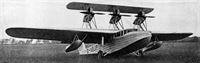
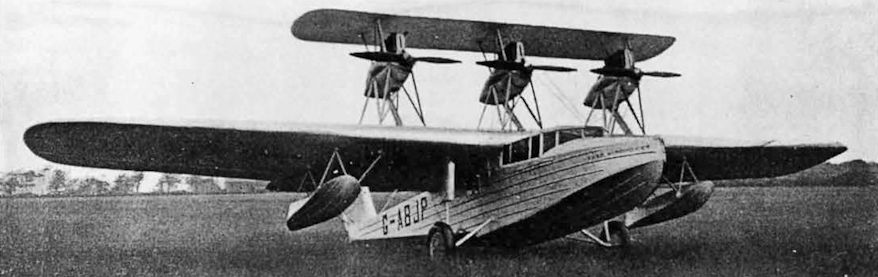
Регистрационный номер: G-ABJP The Saro Windhover amphibian G-ABJP c/n A21/2 was used (with the undercarriage removed as a flying boat) by Mrs Victor Bruce in attempts to break the in-flight refuelled endurance record, see 21.9.31 entry below.
Het Vliegveld 21.9.31 - Gibraltar Airways opens twice daily Gibraltar-Tangier air service.
Het Vliegveld 21.9.31: Gibraltar Airways announced on 12.9.31 that it would operate a twice-weekly service from Gibraltar to Tangier, Morocco, with Saro Windhover amphibian G-ABJP. The Windhover arrived on 21.9.31 flown by Capt Edgar Percival and was christened "General Godley" after the Governor of Gibraltar. A twice-daily service Gibraltar to Morocco in 20 minutes' was offered, commencing 23.9.31, as well as weekend joyrides. A regular mail service was also started to London but passenger demand was poor and it was decided to cease operations on 3.1.32.
The Windhover was purchased by Mrs Victor Bruce in 7.32 and renamed "City of Portsmouth" for an attempt on the flight-refuelled endurance record held by the American Hunter Brothers at 553 hr 41 min. The Windhover's land undercarriage was removed and three unsuccessful attempts on the record were made as a flying boat, using Bristol Fighter G-ABXA converted as a tanker. Mrs Bruce sold G-ABJP to Jersey Airways 5.35 and it was withdrawn from service in 1938. It was the second of only two Windhovers, c/n A21/2, with three 120 hp DH Gipsy II engines and an auxiliary wing above to improve airflow over the tail and low speed control.Самолёты на фотографии: Saunders-Roe Windhover / A.21 - Великобритания - 1930
-
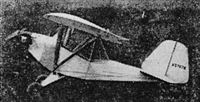
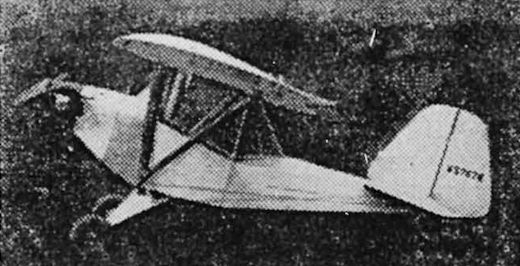
From an old cutting, this view shows the Price Special as first produced with a 2-cylinder Aeronca engine. The registration is rather indistinct but could be close to X37676?
Flying, November 1950: * p.48 - A new low-cost midget monoplane is announced, the Price Special built at Pontiac, Illinois with an Aeronca E113C engine and an empty weight of only 325 lb. Details?
Flying. November 1950: * p.48 - The Price Special, designed by Paul Price, flew about 1949 powered by a 36 hp Aeronca E113 engine and had a span of 20 ft 11 in, length 12 ft 6 in and height 5 ft 5 in. The empty weight was claimed to be 325 lb. No picture has been submitted, or any further details. It was later developed into the PL-2-DM which flew as N850Z in 1962 and was a parasol wing taildragger with an open cockpit.
Flying. November 1950: Briefly mentioned on p.97/106, we now have more details on the Price Special. Paul F Price of Warren, Ohio, built the 36 hp Aeronca E113 engined Price Special single-seat open-cockpit parasol-wing monoplane with the help of other enthusiasts at Pontiac Airport, Illinois. The structure was of wood wings and steel tube fuselage and tail unit, the whole covered with fabric.
<...>Самолёты на фотографии: Price Special / PL-2-DM - США - 1950
-
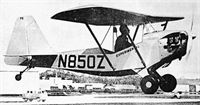
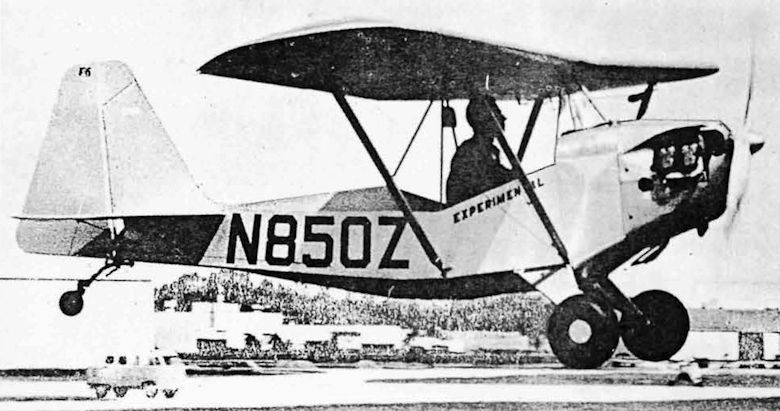
Регистрационный номер: N850Z A flying shot of the Price Special in its second form as N850Z with a 65 hp Lycoming flat-four engine.
Flying. November 1950: <...> It was later rebuilt with an experimental licence as N850Z with a 65 hp Lycoming O-145-B2 flat four engine. This was heavier and so the nose was shortened and the fuselage lengthened, making the length 15 ft 6 in. The wing span was increased to 24 ft and the earlier underwing vee struts were replaced by two parallel struts with wire bracing. A taller rudder was fitted and this was aerodynamically balanced. These improvements increased the empty weight to 475 lb. The second version first flew on 30th June 1962 and cruised at 60 mph while a maximum speed of 90 mph was claimed. It appeared at fly-ins in 1963 and 1964 at which time it was regd to Price as PL-2-DM with c/n 2. By 7.66 it was with W J Mekker of Newberry, Ohio and by 7.71 with P D Lohiser of Painesville, Ohio, although it may not have been airworthy. Any later reports would be received with interest.Самолёты на фотографии: Price Special / PL-2-DM - США - 1950
Статьи
- -
- Casualty Compendium (69)
- Croydon Watch Log 1937-8 (13)
- Extracts
- The Japanese Civil Register 1919-45 /Japanese Civil Register/ (11)
- J.Geelen, R.Deerness - New Zealand (ZK-) /Complete Civil Registers/ (3)
- J.Havers - The Air Circuses of Barker and McEwen King
- M.Fillmore - The de Havilland Puss Moth /The Whole Truth/ (4)
- P.Gerhardt - East Germany (DM- DDR-) 1955-91 /Complete Civil Registers/ (13)