

Фотографии
-
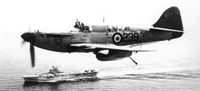
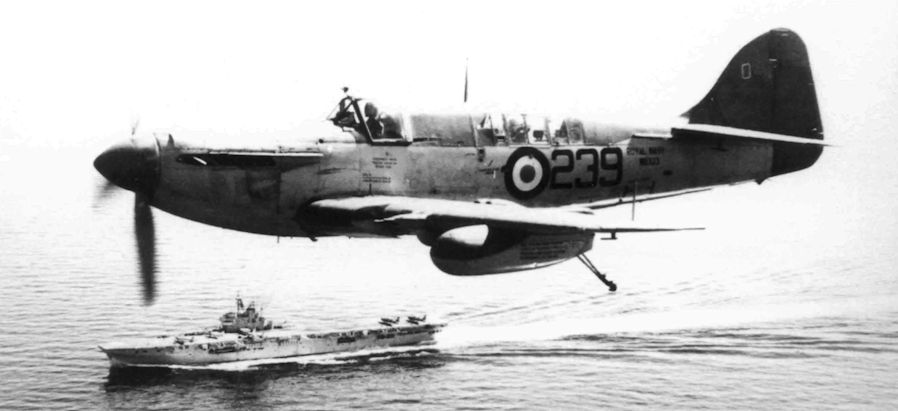
Регистрационный номер: WB333 Firefly AS.5 WB333 flies past HMS Ocean off Korea. After service with Nos.812 and 825 Squadrons, WB333 was taken out to Iwakuni in HMS Unicorn in July, 1953, joining No.810 Squadron in Ocean. Identification number was 239 with 'O' for Ocean carried on the fin. The Mk.5 could carry a variety of equipment. An ASH search radar on one wing could be balanced by a fuel tank on the other. Two 1,000-lb bombs or two depth charges or mines could be carried and racks were fitted for rockets and sonobuoys. Fixed armament was four 20mm cannon.
Самолёты на фотографии: Fairey Firefly - Великобритания - 1941
-
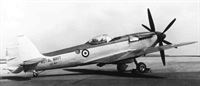
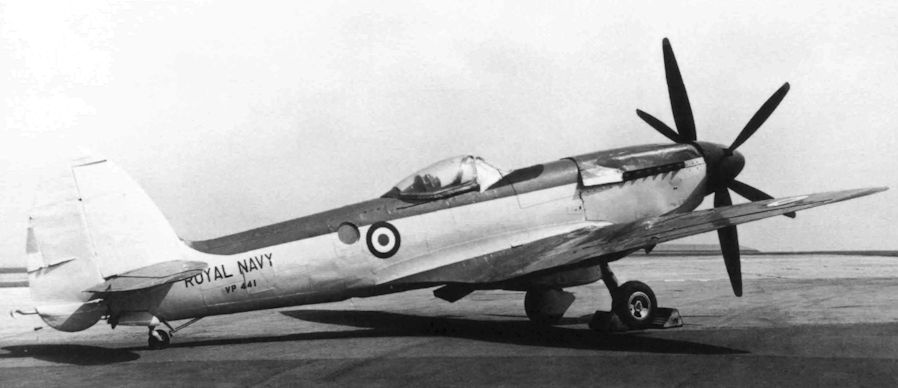
Регистрационный номер: VP441, NX47SF A pristine Seafire PR.47 at Culdrose before issue to a unit. VP441 went eventually to No.804 Squadron. The lateral camera port is just behind the roundel and flame dampers are fitted to the exhausts. This aircraft is fitted with a large contra-rotating propeller, and was the ultimate in Seafire design.
The caption to the photograph of this Seafire was not particularly accurate, even without FR.47 being typed as PR.47. It was not in pristine condition, being photographed after it had left service. The flame damper is a badly-fitting top cowling!
VP441 was taken at Culdrose after it had been restored by the Air Engineering Department after being recovered from No.335 (2nd Plymouth) Squadron of the Air Training Corps. The canopy is non-standard and is believed to have come from a Spitfire XIV. The prop and spinner is from a Shackleton.Самолёты на фотографии: Supermarine Seafire 46 / 47 - Великобритания - 1946
-
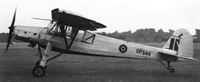
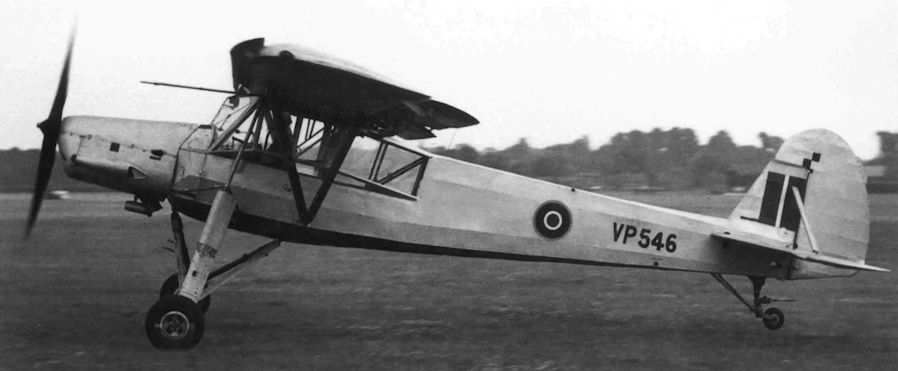
Регистрационный номер: VP546 Fieseler Storch VP546 had a busy life after capture. Built by Mraz in Czechoslovakia, it arrived at the RAE in September, 1945 where it was used for a variety of tasks with the 'AirMin' serial AM 101. In May, 1946 it began flying with the serial VP546 and was withdrawn in 1950 due to lack of spares. Although given the Gl serial 7362M for use at Halton, it was deemed unsuitable and passed to the Air Historical Branch collection. In 1973, it became part of the Historic Aircraft Collection at St. Athan and was later moved to the RAF Museum, Cosford.
Самолёты на фотографии: Fieseler Fi.156 Storch - Германия - 1936
-
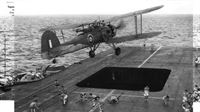
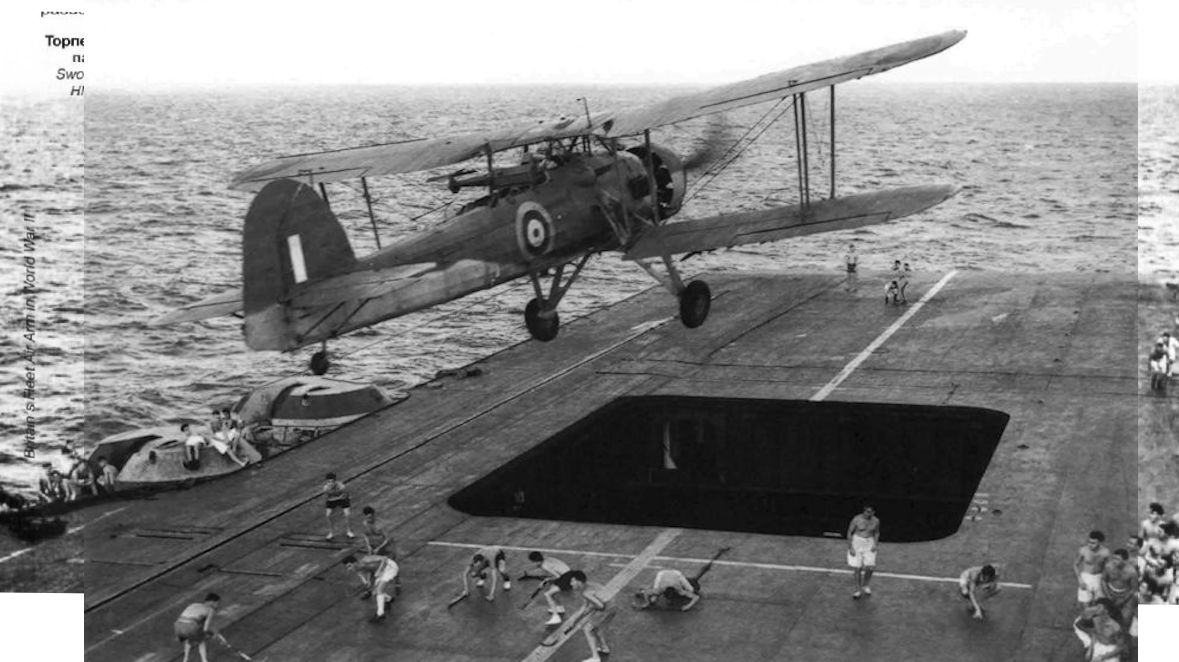
Торпедоносец "Суордфиш" проходит над палубой авианосца "Индомитебл"
In common with many types, the Swordfish could be fitted with a target-towing winch operated from the rear cockpit. This anonymous Stringbag is dropping its sleeve target on the deck of HMS Indomitable without too much thought for the crew playing deck hockey! The latter do not seem to be paying much attention to the aircraft, although a couple appear to be ducking. Possibly her forward elevator had been lowered to provide a receptacle for the target.Самолёты на фотографии: Fairey Swordfish - Великобритания - 1934
-
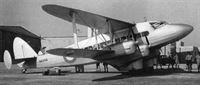
Регистрационный номер: N6246 D.H.86B N6246 was delivered to No.24 Squadron in August, 1938, mainly for the use of the Secretary of State for Air. One of his tours took him to the Middle East, and N6246 is seen here at Heliopolis, outside Cairo.
Самолёты на фотографии: De Havilland Express Air Liner / D.H.86 - Великобритания - 1934
-
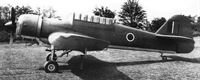
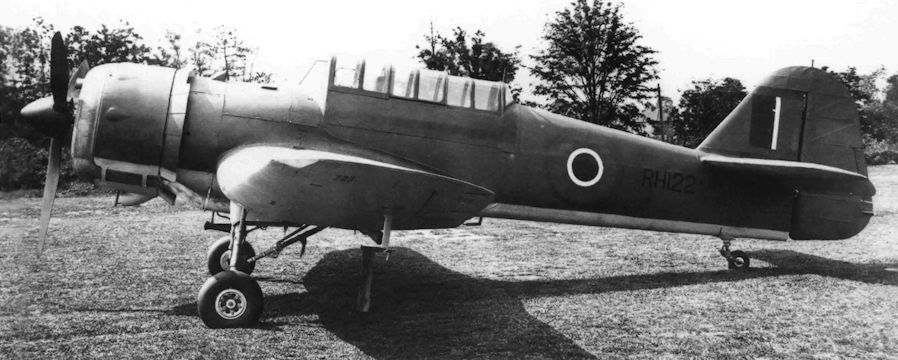
Регистрационный номер: PW979 M.50 стал первым спроектированным в Великобритании специализированным буксировщиком мишеней. Эти самолеты использовались в ВВС и авиации ВМС Великобритании.
In 1943, a specification was issued for a radio-controlled target aircraft to replace the old and slow Queen Bees. Q.10/43 was answered by the Miles M-47 design, based on the M.28, but for convenience it was decided to adapt Martinets for the role. 65 were ordered under the name Queen Martinet, and PW979 became the prototype conversion. RH122, shown here, was the first production aircraft. They saw limited service with the Royal Air Force and Fleet Air Arm.Самолёты на фотографии: Miles Martinet M.25 / Queen Martinet M.50 - Великобритания - 1942
-
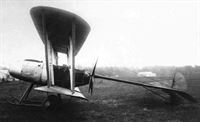
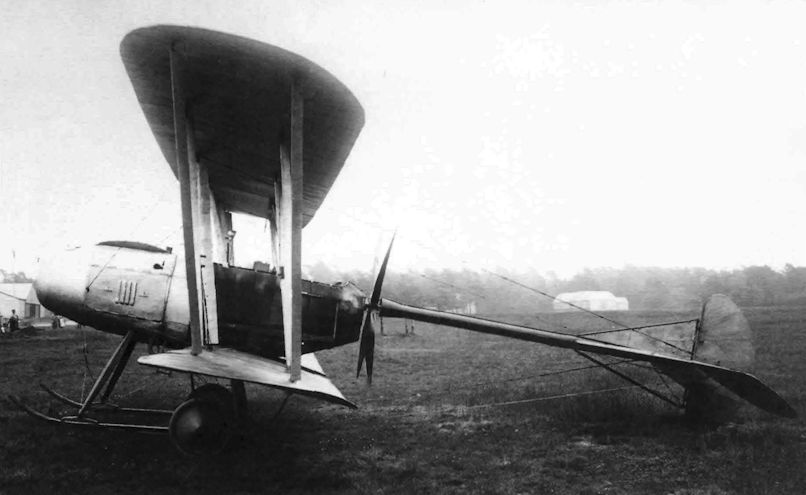
Хвостовое оперение F.E.3 крепилось на балке-трубе, проходившей при помощи подшипников сквозь втулку четырехлопастного воздушного винта и дополнительно крепившейся к верхнему крылу и шасси посредством растяжек.
The F.E.3 was designed by the Royal Aircraft Factory and built in 1913. It was ahead of its time in that it was intended to carry a one-pounder COW gun, being also designated A.E.1 (for Armed Experimental). A six-cylinder Chenu engine was fitted in the nose of the nacelle and the crew of two sat at the rear. This arrangement avoided the danger of the engine breaking loose in a crash and crushing the crew. The tail was supported at the end of the propeller shaft on bearings and was braced by wires. The nacelle was of aluminium sheet but test flights found the tail was insufficiently rigid, and were suspended.Самолёты на фотографии: RAF F.E.3 / A.E.1 - Великобритания - 1913
-
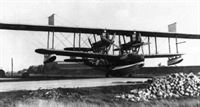
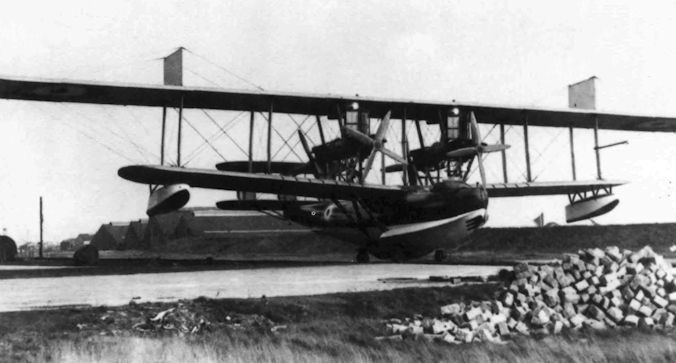
Регистрационный номер: N119 Specification N.4 was issued at the end of the First World War for a long-range flying-boat for fleet reconnaissance. The contract for a prototype was given to Fairey for the Atalanta. The hull was built by Gosport Aviation and four Condors were fitted. N118 was not completed, but N119 was assembled by Dick, Kerr & Co. at Lytham. From 1922 to 1925, N119 was based at Felixstowe for trials.
Самолёты на фотографии: Fairey N.4 Atalanta - Великобритания - 1923

Статьи
- -
- Percival Prentice
- Picture Pages
- RAF Dacota Seriald and Codes (4)
- US Navy and Marine Corps Phantoms
- D.Wilton - The Berlin Crisis of 1961: Operation "Stairstep" (5)
- D.Wilton - Tornado Demise
- E.Myall, L.Howard - Royal Australian Navy Sicamores. 'FeedBack' Postscript
- P.Butler - Dakota Trials Aircraft
- P.Butler - The Bristol 188