

Фотографии
-
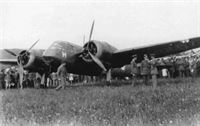
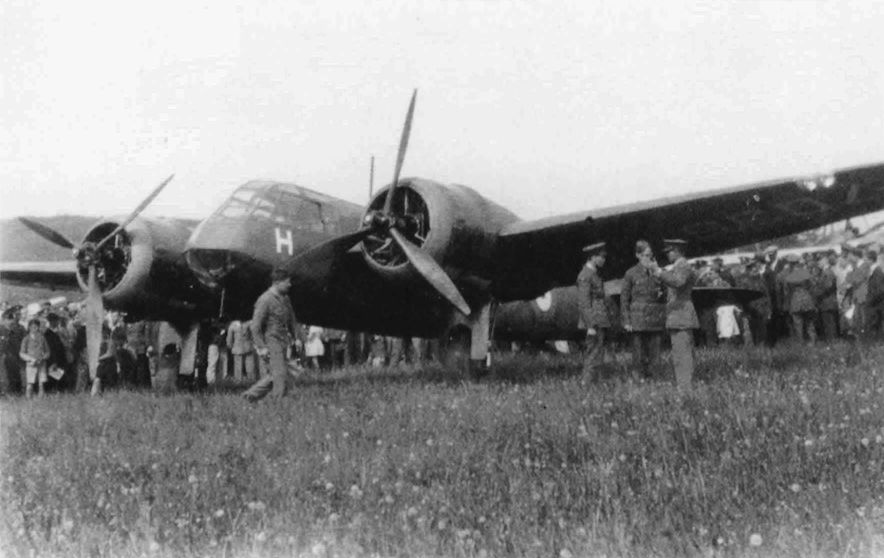
Регистрационный номер: K7035 Eric Myall has provided the photograph, taken by Gordon Hodkinson, then an apprentice at the E&WA, at Cranwell. It was taken at an open day, probably Empire Air Day 1938.
One of the visitors was Blenheim K7035 which arrived from No.114 Squadron at Wyton. Carrying the individual code 'H' on the nose, this aircraft was a dual-control trainer intended to introduce pilots trained on Harts to the complexities of retractable undercarriages, flaps and variable-pitch propellers. K7035 was destined to come back to Cranwell in February 1939 as a ground instructional airframe.Самолёты на фотографии: Bristol Blenheim - Великобритания - 1936
-
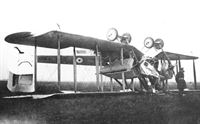
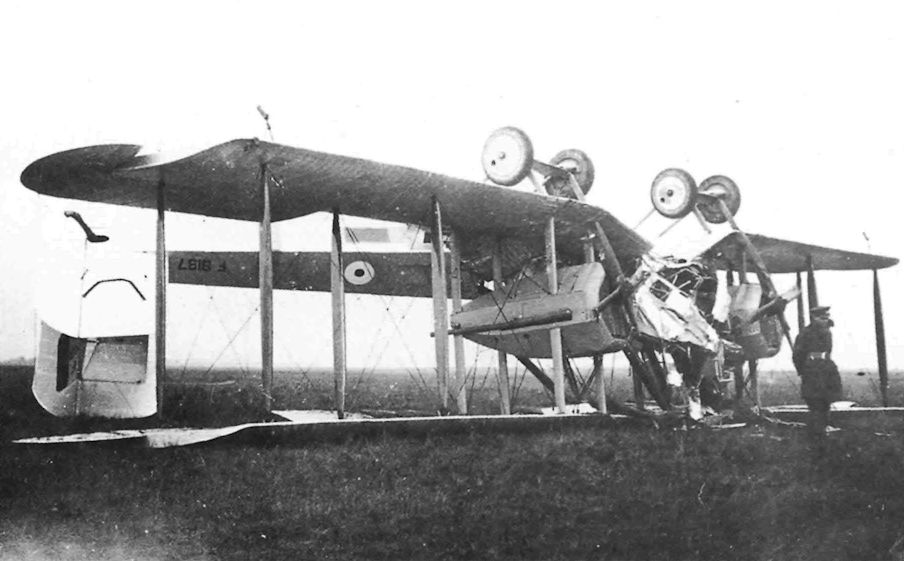
Регистрационный номер: F9187 Vickers Vimy F9187 was delivered to No.7 Squadron at Bircham Newton in September 1923 as a dual control trainer. On 16 October 1923, it overturned during a night landing and was extensively damaged, as can be seen. The wreck was returned to Vickers and rebuilt, being sent back to No.7 Squadron in April 1924. Next day it stalled on landing and was shipped back to Vickers!
Самолёты на фотографии: Vickers Vimy / FB.27 - Великобритания - 1917
-
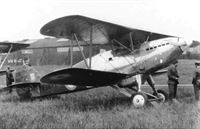
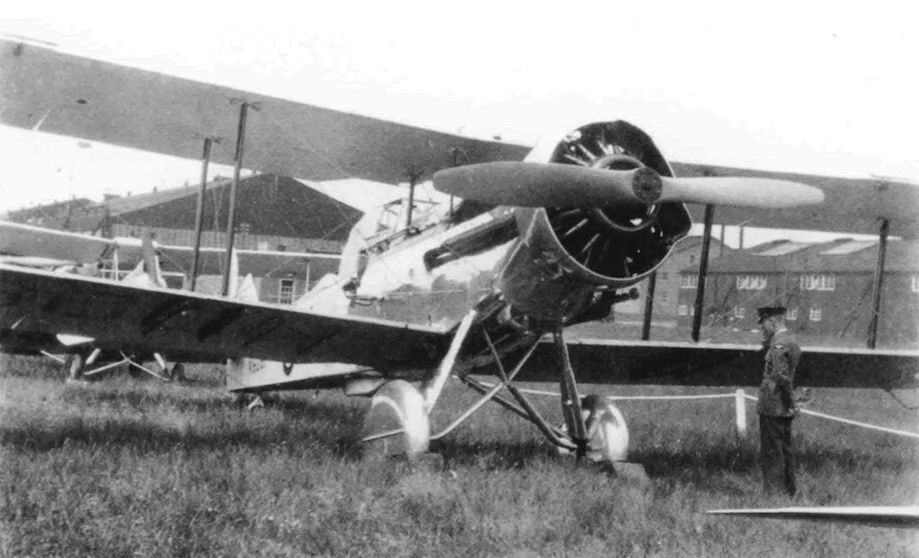
Регистрационный номер: K5677 Eric Myall has provided the photograph, taken by Gordon Hodkinson, then an apprentice at the E&WA, at Cranwell. It was taken at an open day, probably Empire Air Day 1938.
Fury I K5677 was delivered to the Royal Air Force College in October 1936 and crashed on take-off on 10 May 1938. The College badge appears on the tail and the rear fuselage has been painted yellow.Самолёты на фотографии: Hawker Fury - Великобритания - 1931
-
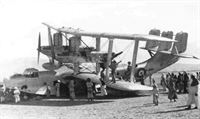
Регистрационный номер: K4582 Singapore III K4582 was with No.203 Squadron at Basra in Iraq from September 1935 until September 1937. It is seen here beached and being viewed by an interested crowd of Arabs.
Самолёты на фотографии: Short Singapore III / S.19 - Великобритания - 1934
-

The Curtiss Seagull was normally to be seen on a large single float perched on the catapults of battleships and cruisers. While ashore, they had an alternative wheel undercarriage and many Seagulls spent their lives as landplanes. This SOC-3 was photographed at NAS Alameda, in San Francisco Bay in January 1946. Unit is given as SOSN-3.
Самолёты на фотографии: Curtiss SOC Seagull - США - 1934
-
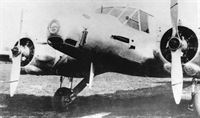
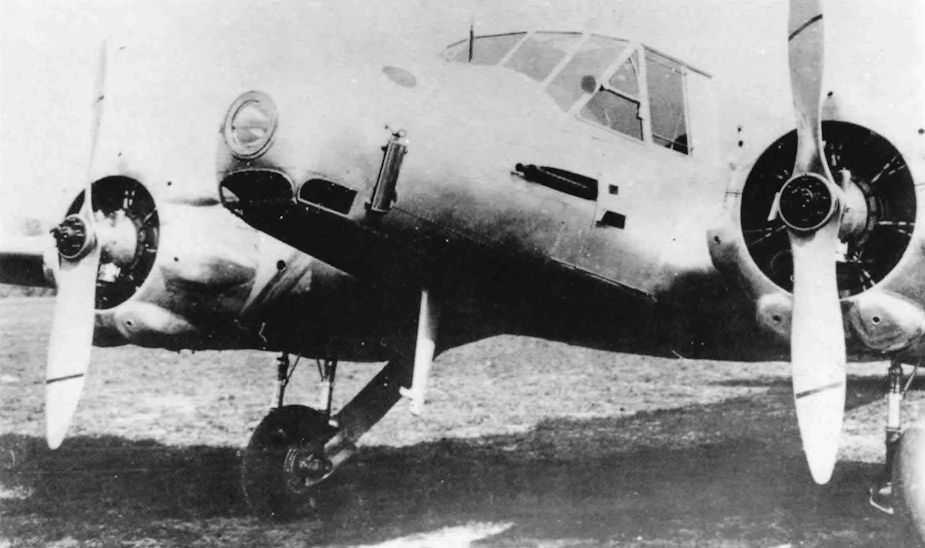
Регистрационный номер: K4771 The Anson prototype K4771. The interest in this photograph lies in the caption that accompanied it which remains one of our favourites. The picture editor of a tabloid newspaper decided to title it 'Britain's latest bomber, the Avro-Anson'. Feeling it required something more, he became technical and wrote 'Note the searchlight where the third engine should be'.
Самолёты на фотографии: Avro Anson / Type 652 - Великобритания - 1935
-
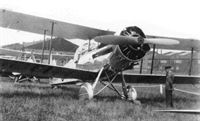
Регистрационный номер: K6061 Eric Myall has provided the photograph, taken by Gordon Hodkinson, then an apprentice at the E&WA, at Cranwell. It was taken at an open day, probably Empire Air Day 1938.
Westland Wallace II K6061 was delivered to the Electrical & Wireless School at Cranwell in March 1937. Compared to the Wallace I, it was luxurious, having a fully-enclosed cockpit for both occupants. K6061 stayed with the school, which later became No.1 Electrical & Wireless School and then No.1 Signals School, until 4 October 1940, when the undercarriage collapsed in a heavy landing at Cranwell.Самолёты на фотографии: Westland Wallace / PV.3 / PV.6 - Великобритания - 1931
-
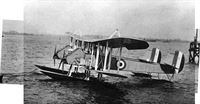
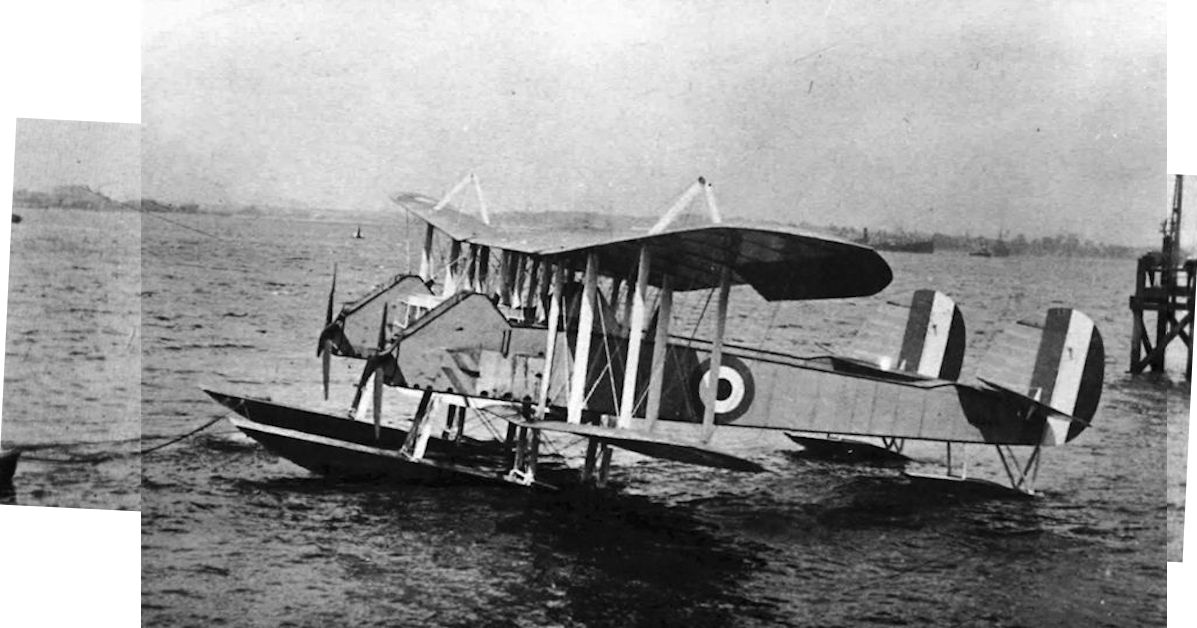
Регистрационный номер: 1358 The dropping of torpedoes from aircraft was an early project of the Admiralty. In 1914, a Mr Harris Booth of the Air Dept designed a seaplane suitable for hoisting aloft an 18-inch torpedo. It had three 310 hp Sunbeam engines, one mounted behind the cockpit and two in the nose of the two tail booms. The crew lived in a large greenhouse. One prototype was built by Whites as the A.D.1000 but no more were built.
The second A.D. Type 1 to be laid down. No 1358, was the first to fly. This photograph clearly illustrates how the armour about the engines and radiators deprived the crew of any lateral view.Самолёты на фотографии: A.D. Type 1000 - Великобритания - 1915
-
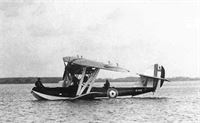
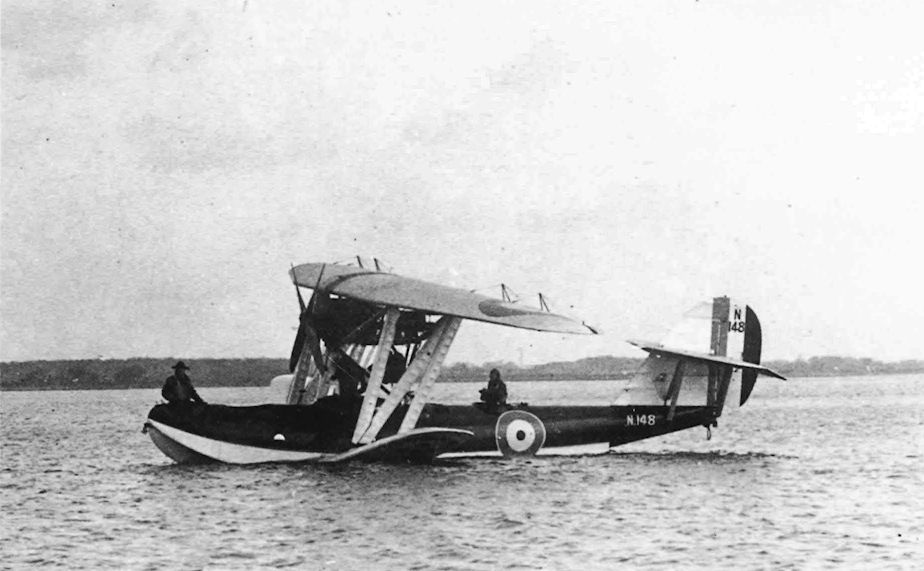
Регистрационный номер: N148 This is not another accident. English Electric-built the Ayr that way. It was designed to meet a requirement for a four-seat reconnaissance aircraft for gunnery spotting. The upswept lower wings acted as sponsons. The crew consisted of a pilot, a radio operator in the hull, one gunner in the nose with a single Lewis gun and another aft with twin Lewis guns. Unfortunately, N148 never got off the water.
Самолёты на фотографии: English Electric Ayr - Великобритания - 1924
-
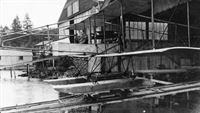
It is sometimes difficult to see where an aircraft starts and the building ends. The Lakes Water Hen had a framework of struts and longerons. The nacelle did not exist until it was converted from single to twin floats. Built in 1912, it was used for flying training on Windermere during the First World War until 1916, being powered by a 50 hp Gnome rotary engine.
Самолёты на фотографии: Lakes / Avro Water-Bird / Water-Hen - Великобритания - 1911



Статьи