Фотографии
-
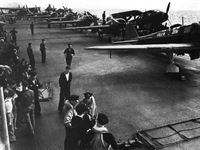
Aircraft await launching on the flight deck of a British aircraft carrier. She is an Illustrious-class carrier and a small clue is to be seen peeping above the wing of the Fulmar. It is the point of a US star. This places it in November 1942 during Operation Torch' when, in an attempt to persuade the Vichy forces in Algeria to submit to the Allied landings, British aircraft were given US markings. On deck are a Fulmar, four Wildcats, six Albacores and four Seafires. We calculate that the carrier is HMS Formidable.
Самолёты на фотографии: Fairey Albacore - Великобритания - 1938Fairey Fulmar / P.4/34 - Великобритания - 1937Grumman F4F Wildcat - США - 1937Supermarine Seafire - Великобритания - 1941
-
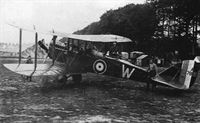
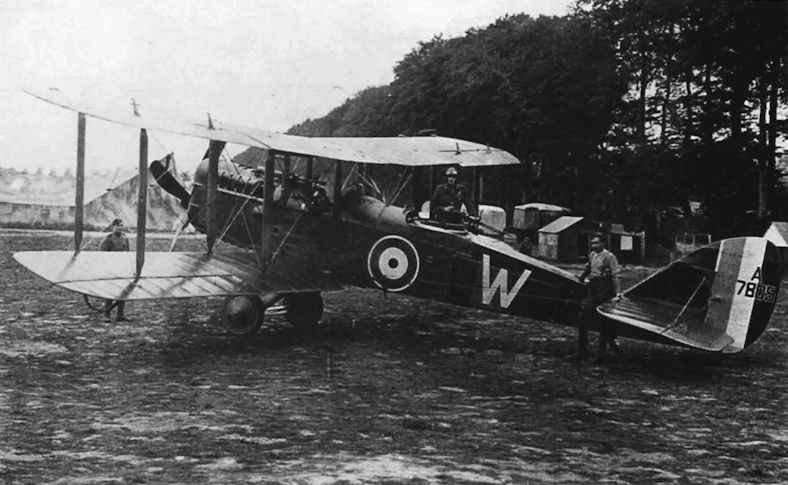
Регистрационный номер: A7805 The Airco D.H.4 was the British equivalent of the Breguet XIV and equipped a number of day bomber units. In addition to the main factory, D.H.4s were built by Westland, Waring & Gillow, Palladium and Berwick, 1,461 being built. Engine problems were met with the D.H.9 which was intended to replace the D.H.4 so the type continued in service to the end of the war. A7805 was powered by a Rolls-Royce Eagle VIII and went to No.25 Squadron in July 1918. It was damaged on 1 November 1918 and sent off for repair. The airfield is believed to be Ruisseauville.
Самолёты на фотографии: De Havilland D.H.4 - Великобритания - 1916
-
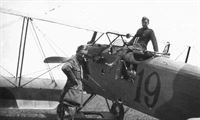
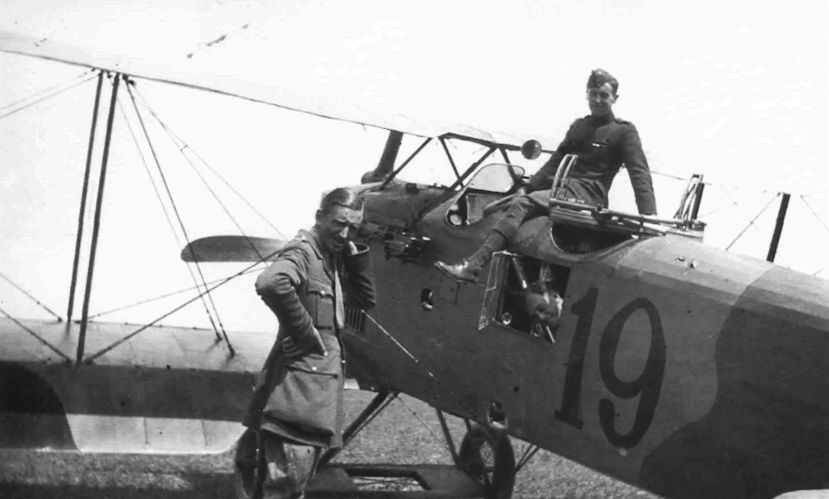
The Breguet XIV was widely used during the First World War for both bombing (B2) and reconnaissance (A2). Total production came to around 5,300 and was continued after the war by a number of sub-contractors. In 1923 replacement by Breguet XIXs began, mainly completed in 1927. The standard engine was a 300 hp Renault 12 Fe which gave the Breguet XIV a top speed of 195 kph with a ceiling of 6,000 m for the A2 and 4,500 m for the B2. This photo seems to have been taken during a visit to a RFC/RAF airfield. Note the opening window for camera work.
Самолёты на фотографии: Breguet Br.14 - Франция - 1916
-
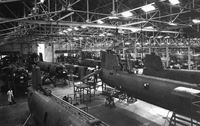
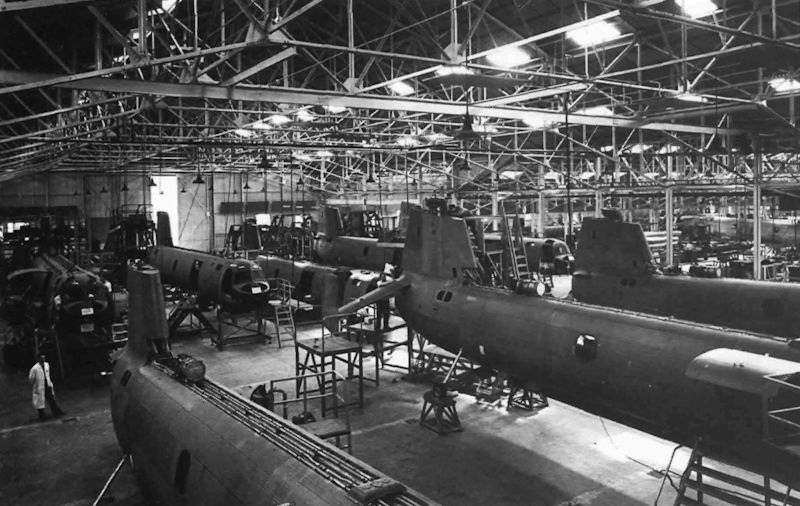
The Bristol 173 twin-rotor helicopter was developed into the Type 191 for the Royal Navy, Type 192 for the RAF and Type 193 for Canada. Only the RAF contract went ahead, powered by Napier Gazelles. The first prototype, XG447 flew on 5 July 1958 and the type was given the name Belvedere. Production was begun at the Bristol Helicopter Division at Weston-super-Mare which, in February 1960, became part of Westland Helicopters during a rationalisation of the British helicopter industry. The first production Belvedere was delivered to the RAF in August 1961 but only 26 were built. The photo shows the Weston assembly plant.
Самолёты на фотографии: Bristol Belvedere / Type 192 - Великобритания - 1958
-
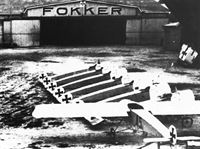
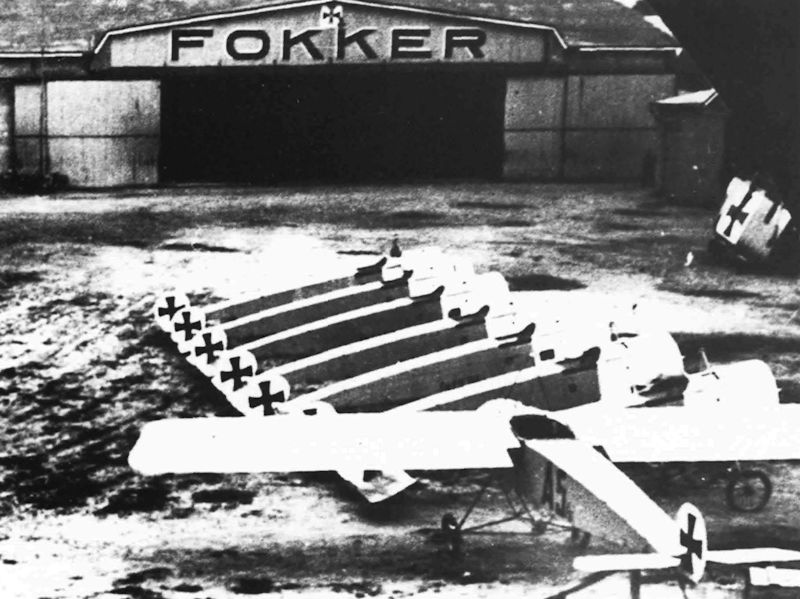
It is often difficult to persuade the media that there were any German aircraft during the First World War that were not called Fokkers. The legend started with the Fokker monoplanes and was due to their use of a synchronised forward-firing machine gun at a time when British and French aircraft were often unarmed or had ineffective armament. The main type was the E.III and the photo shows newly-completed fuselages at the Fokker factory. That in the foreground with wings fitted carries the designation 'A5' so may have been an aircraft already in service but returned for repair. It seems unlikely that such markings would have been applied by the factory before delivery.
Самолёты на фотографии: Fokker A.I / A.II / A.III - Германия - 1914Fokker E.I - E.III Eindecker - Германия - 1914
-
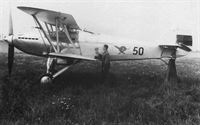
Portugal ordered three Hawker Furys and the first of these flew on 28 May 1934. They were powered with Rolls-Royce Kestrel IIS engines but derated to increase the patrol duration of the aircraft. In June 1934, all three were delivered to the Portuguese Army Air Service. No 50, the first aircraft, is seen here at Brooklands being prepared for delivery.
Самолёты на фотографии: Hawker Fury - Великобритания - 1931
-
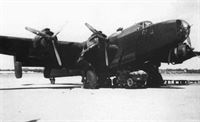
Halifaxes were not a common sight in India and this Mk.III is probably with No.1577 Flight which was originally intended to carry out tests in glider towing under tropical conditions. Later it became No.1577 (Airborne Experimental) Flight and is seen here loading up with a jeep. Mounted on skids, large parachutes were packed in the seats of the jeep. The cargo tended to arrive with a hard thump but jeeps were very resilient.
Самолёты на фотографии: Handley Page Halifax A/C / Halton - Великобритания - 1942
-
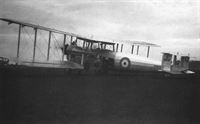
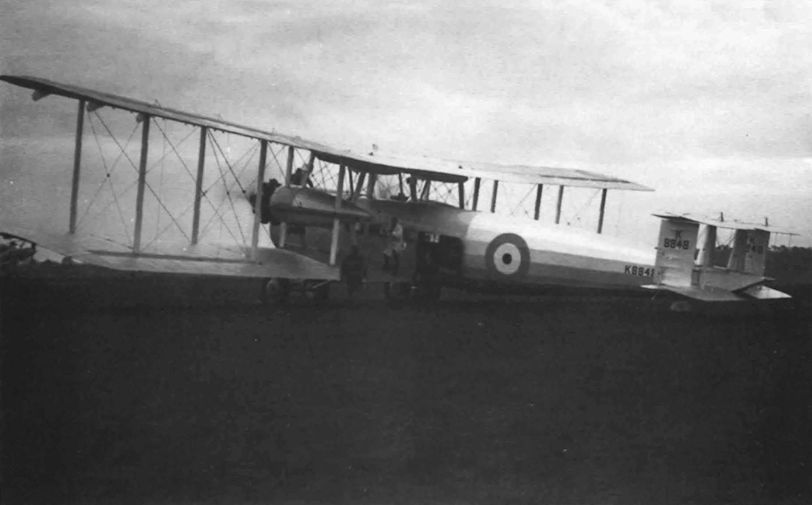
Регистрационный номер: K8848 K8848 was one of a batch of five final Valentias built in 1936. They were intended to keep up the establishment of the two bomber-transport squadrons in the Middle East until the replacement Bombays arrived but one was retained in the UK to act as a radio trainer at Cranwell. K8848 was shipped to the Packing Depot in March 1936 and served with both Nos.70 and 216 Squadrons before it ran into a dummy aircraft at Fuka on 10 December 1940. It was finally struck off in September 1941. In a fit of optimism, these five had spats fitted to their tailwheels but increases in performance must have been microscopic.
Самолёты на фотографии: Vickers Valentia - Великобритания - 1934
-
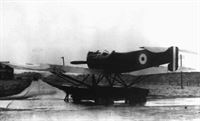
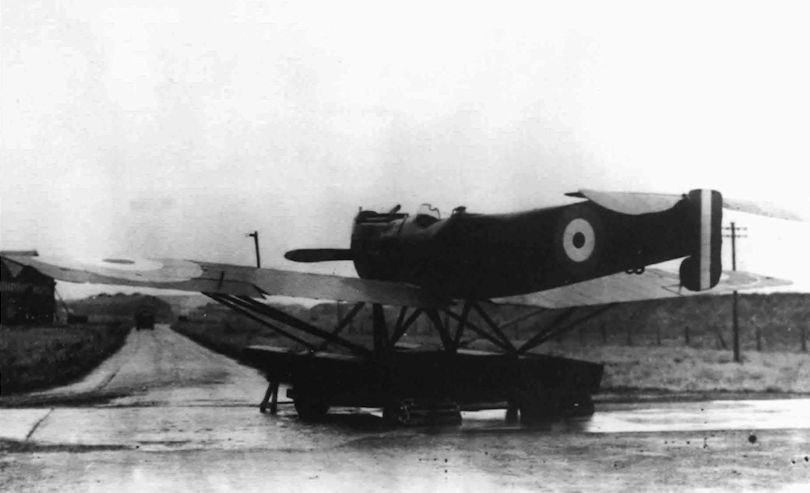
The Brandenburg W 33 was the final version of the series of monoplane seaplane fighters and only 26 had been delivered by the end of the First World War. Powered by a 245 hp Maybach engine, it was a development of the W 29 designed by Ernst Heinkel, of which 78 were built. The typical Brandenburg rudder was adopted to give the gunner a clear field of fire while the pilot had two fixed guns. With a top sped of 108 mph, the W 33 was a formidable opponent for the F-boats patrolling the North Sea.
Самолёты на фотографии: Hansa-Brandenburg W.29 / W.33 - Германия - 1918
-
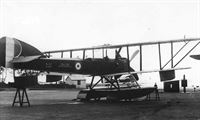
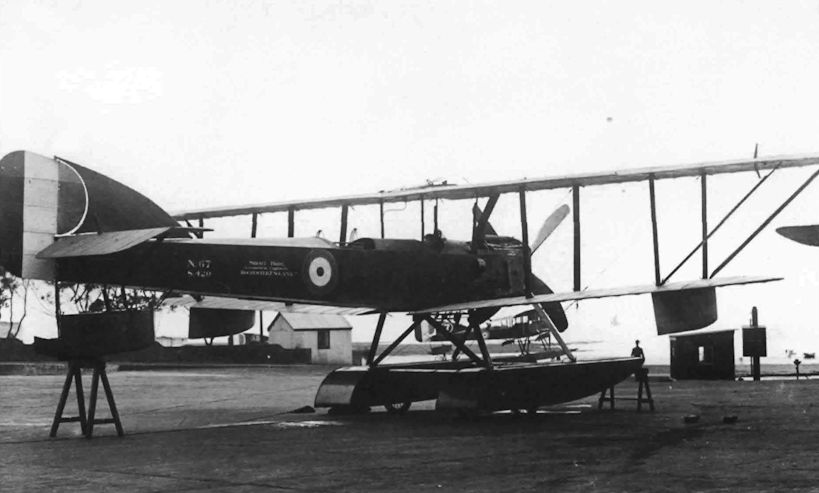
Регистрационный номер: N67 Short N.2B N67 was the second prototype of a reconnaissance seaplane intended to replace the Short 184. It is seen here at Westgate where it had been sent for operational trials from December 1918 to February 1919.
Самолёты на фотографии: Short N.2B - Великобритания - 1917