

Описание
 Wiki
Wiki 
Страна : Великобритания
Год : 1945
Среднемагистральный авиалайнер с экипажем из пяти человек
Варианты
- Handley Page - Hermes / H.P.81 - 1945 - Великобритания
- Handley Page - Hastings / H.P.67 - 1946 - Великобритания
Handley Page H.P.68, H.P.74, H.P.81 и H.P.82 Hermes
Серийный гражданский транспортный самолет Hermes IV был одним из первых британских авиалайнеров, поступивших после войны на службу в британскую авиакомпанию BOAC. Самолет был коммерческим вариантом военно-транспортной модели Hastings британских ВВС - причем первоначально компания планировала первым выпустить именно самолет Hermes. Но 3 декабря 1945 года прототип H.P.68 Hermes I разбился в первом же полете, и предпочтение было отдано разработке военного транспортного самолета, который срочно требовался военно-воздушным силам. В результате только 2 сентября 1947 года свой первый полет совершил другой представитель этого гражданского семейства - H.P.74 Hermes II, который по сравнению с Hastings имел удлиненный фюзеляж.
Успешные испытания Hermes II привели к появлению окончательного серийного варианта H.P.81 Hermes IV - первая машина поднялась в воздух 5 сентября 1948 года. Прототип Hermes IV отличался наличием трехопорного шасси и более мощных двигателей Hercules. Следом за прототипом последовали 24 серийных самолета, в целом схожих с ним. Данные машины поступили в авиакомпанию BOAC 6 августа 1950 года, их экипаж состоял из пяти человек, а базовая компоновка салона была рассчитана на 40 пассажиров, хотя в нем вполне могли разместиться до 63 человек. После двух лет эксплуатации компания BOAC сменила Hermes на Canadair Argonauts, и самолеты в большей части были ремоторизованы - двигатели были заменены на Hercules 773, а обозначение машин изменилось на Hermes IVA. Кроме этого, компания "Handley Page" построила два самолета в варианте H.P.82 Hermes V, каждый из которых имел четыре турбовинтовых двигателя Bristol Theseus Mk 502 мощностью по 2220 л. с. Самолеты Hermes IV/IVA эксплуатировались в ряде компаний до середины 1960-х годов.
ТАКТИКО-ТЕХНИЧЕСКИЕ ХАРАКТЕРИСТИКИ
Handley Page Hermes IV
Тип: среднемагистральный авиалайнер с экипажем из пяти человек
Силовая установка: четыре звездообразных ПД Bristol Hercules 763 мощностью по 2100 л. с. (1566 кВт)
Летные характеристики: максимальная скорость на оптимальной высоте 563 км/ч; крейсерская скорость на высоте 6095 м - 435 км/ч; начальная скороподъемность 314 м/мин; практический потолок 7470 м; дальность 3218 км с полезной нагрузкой 6407 кг
Масса: пустого 25106 кг; максимальная взлетная 39009 кг
Размеры: размах крыла 34,44 м; длина 29,51 м; высота 9,14 м; площадь крыла 130,80 м2
Полезная нагрузка: до 63 пассажиров в закрытой кабине
- Описание
Фотографии

-

Aeroplane Monthly 1993-10 / J.Stroud - Handley Page Hermes /Post-war propliners/
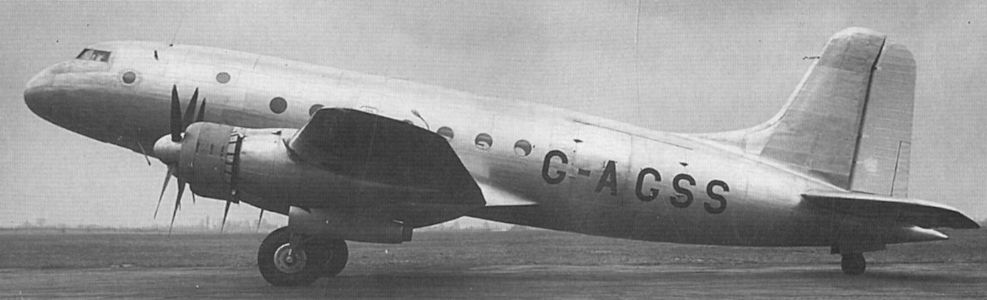
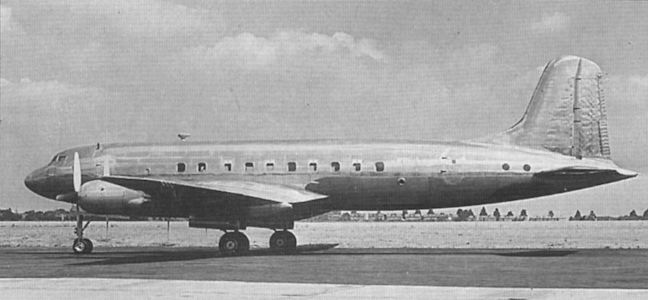
Регистрационный номер: G-AGSS The Hermes I, with double doors and then-unknown elevator overbalance which resulted in its crashing on its maiden flight on December 2, 1945.
-

Jane's All the World Aircraft 1946 / 03 - All the world's aeroplanes
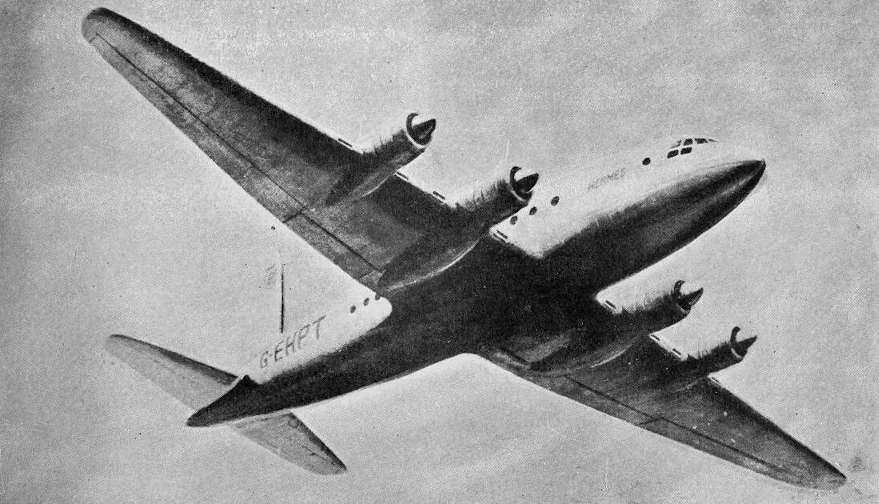
Регистрационный номер: G-EHPT A drawing of the Handley Page Hermes Transport monoplane (four Bristol Hercules engines).
-

Aeroplane Monthly 1993-10 / J.Stroud - Handley Page Hermes /Post-war propliners/
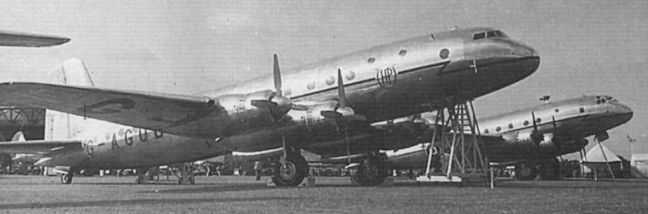
Регистрационный номер: G-AGUB [4], VX234 [4] G-AGUB, the Hermes II, flew past in the 1947 SBAC displays with both port engines shut down.
-

Aeroplane Monthly 1993-10 / J.Stroud - Handley Page Hermes /Post-war propliners/
Регистрационный номер: G-AGUB [4], VX234 [4] The Hermes II and a Hastings at the 1947 SBAC displays at Radlett.
Другие самолёты на фотографии: Handley Page Hastings / H.P.67 - Великобритания - 1946
-
Air-Britain Archive 1986-02 / U.K. C of A Applications (25)
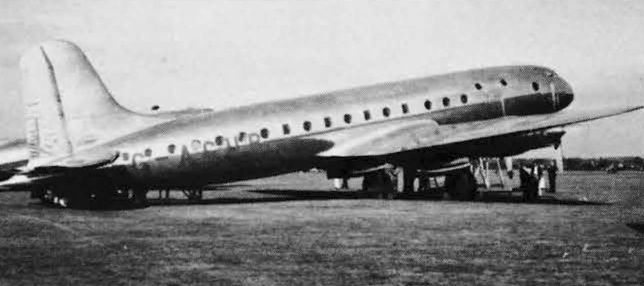
Регистрационный номер: G-AGUB [4], VX234 [4] The second prototype Hermes G-AGUB first flew on 2.9.47 and gained its CofA one year later.
-

Air Pictorial 1958-08 / Photo Review
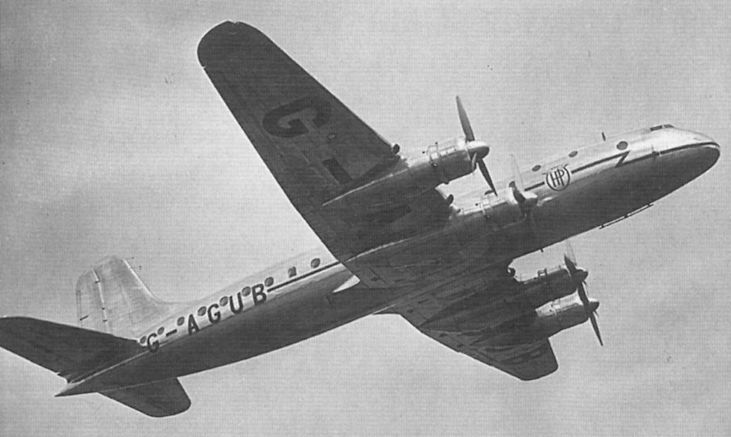
Регистрационный номер: VX234 [4], G-AGUB [4] Now nearly eleven years old, the prototype Handley Page Hermes 2 (VX234; ex G-AGUB) was built as a research aircraft for the B.O.A.C. Hermes 4. First flown at Radlett, 2nd September 1947, G-AGUB was based at Hum in 1949 for B.O.A.C. trials; and later, as VX234, by the M.o.S. for magnetometer experimentation. Seen here after overhaul at Lasham by Airwork Ltd.

-

Aeroplane Monthly 1993-10 / J.Stroud - Handley Page Hermes /Post-war propliners/
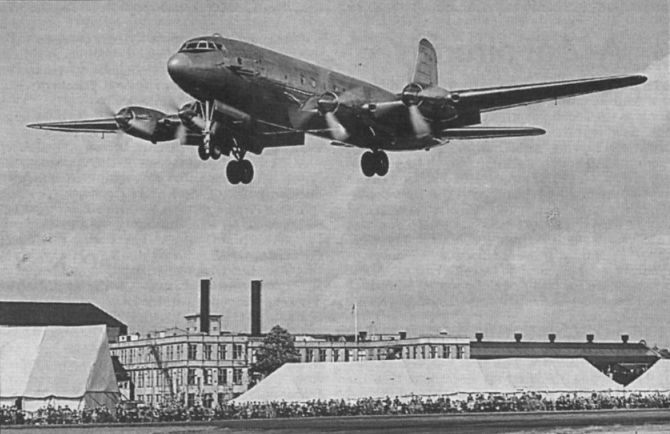
Регистрационный номер: G-AKFP [4] The first Hermes IV landing at Radlett after its first flight, on September 5, 1948.
-
Aeroplane Monthly 1986-09 / ??? - At last! the 1948 show
Регистрационный номер: G-AKFP [4] Hazelden brings in the mighty Hermes 4 G-AKFP.
-

Aeroplane Monthly 1988-09 / Farnborough 1949
Регистрационный номер: G-ALDA Production Handley Page Hermes IV G-ALDA was an early performer in the display, flown by Douglas Broomfield. This was the Mk IV’s second SBAC show, so the 40-seater Bristol Hercules-powered airliner allowed itself to be upstaged by its turboprop descendant, Hermes V G-ALEU. Following service with BOAC, G-ALDA was leased to Airwork for a trooping charter to Suez; Airwork later bought the aircraft, and it had a succession of further owners before being scrapped at Southend in 1965.
-

Aeroplane Monthly 1993-10 / J.Stroud - Handley Page Hermes /Post-war propliners/
Регистрационный номер: G-AKFP [4] Another view of G-AKFP, the first Hermes IV.
-
Aeroplane Monthly 1998-10 / M.Hooks - Farnborough 50th
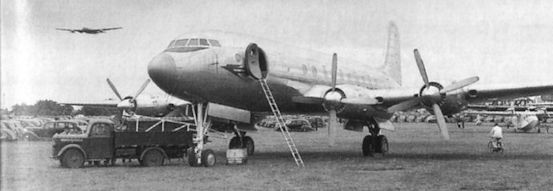
The first Handley Page Hermes IV at Farnborough in 1948. The type served with BOAC for almost four years before the last 18 survivors of 25 were sold to independent operators. The Naiad-Lincoln testbed is flying past in the background.
Другие самолёты на фотографии: Avro Lincoln / Type 694 - Великобритания - 1944
-

Jane's All the World Aircraft 1980 / Encyclopedia of Aviation - Aircraft A-Z - v3
Handley Page Hermes 4.
-

Aeroplane Monthly 1993-10 / J.Stroud - Handley Page Hermes /Post-war propliners/
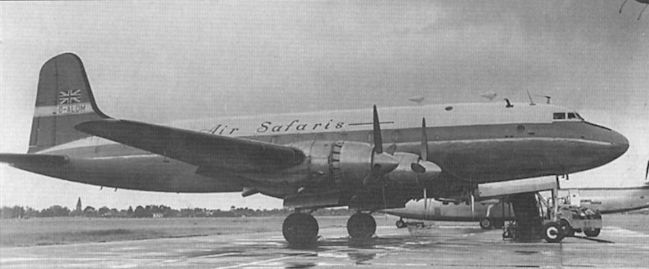
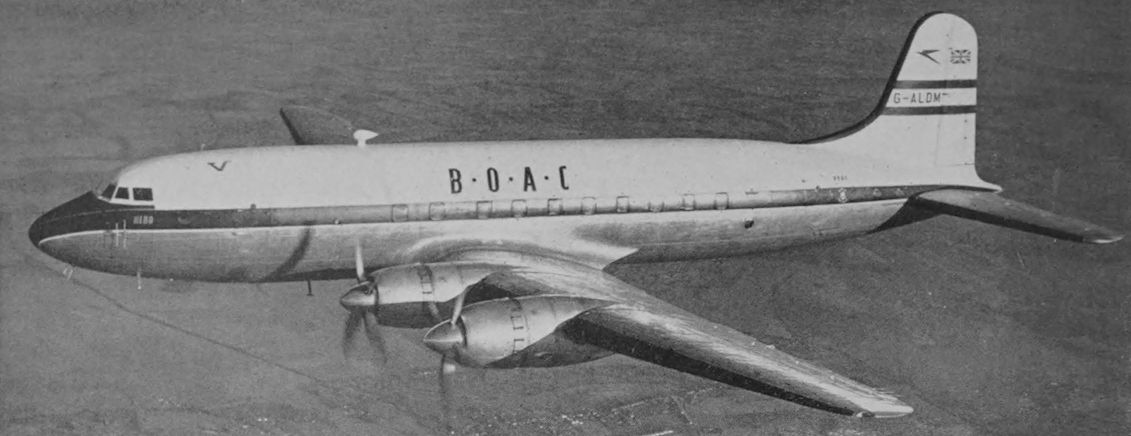
Регистрационный номер: G-ALDM [3] Hermes IV G-ALDM flew as Hero with BOAC until it was sold to Gatwick-based Air Safaris Ltd in 1956. It was leased to Silver City Airways Ltd until December 1959 and was finally scrapped at Hurn in 1968.
-

Aeroplane Monthly 1993-10 / J.Stroud - Handley Page Hermes /Post-war propliners/
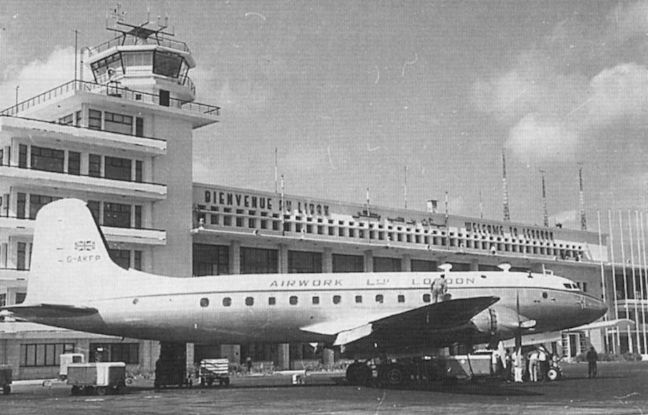
Регистрационный номер: G-AKFP [4] The first Hermes IV at Beirut while in operation with Airwork.
-
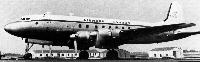
Air Enthusiast 1972-10 / ??? - The 40-year-old newcomer: British Caledonian Airways
Регистрационный номер: G-ALDG After being retired by BOAC, a number of Handley Page H.P.81 Hermes 4s, such as G-ALDG shown here, were acquired by airwork and used primarily for trooping flights.
-

Aeroplane Monthly 1980-03 / R.Lovelock - Fox Baker's Last Flight
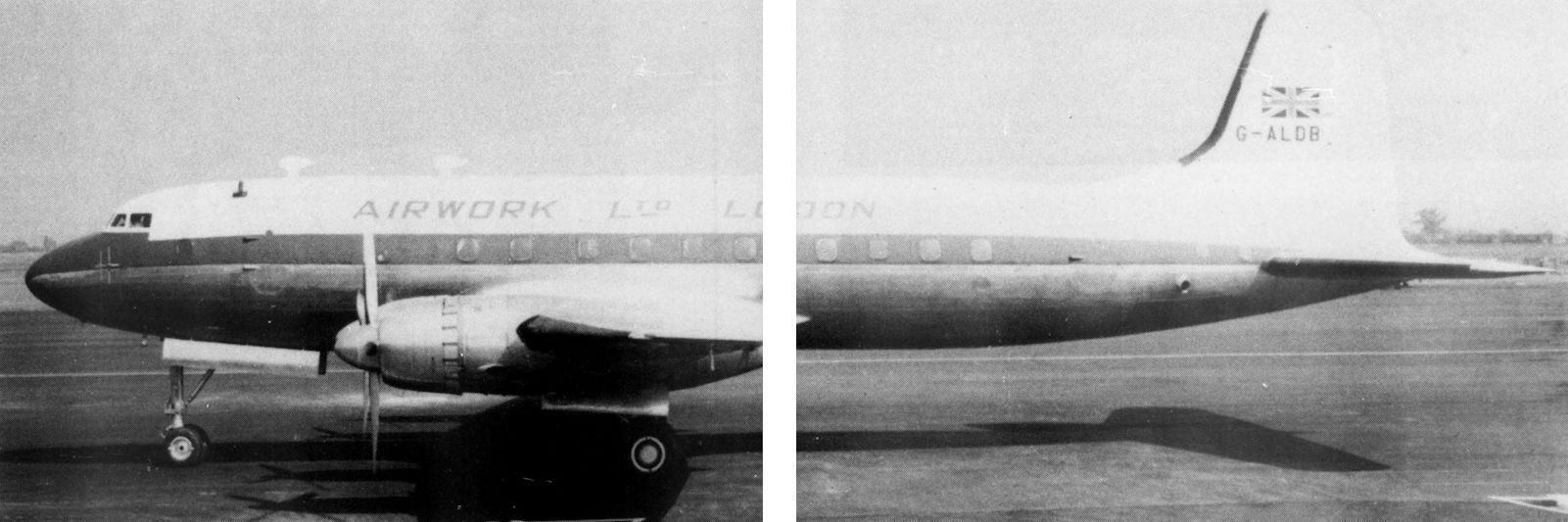
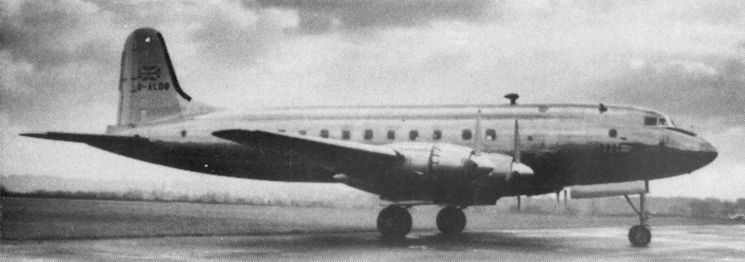
Регистрационный номер: G-ALDB [2] Hermes IVA G-ALDB in service with Airwork Ltd.
-
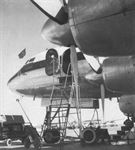
Aeroplane Monthly 1993-03 / Personal album. Civil
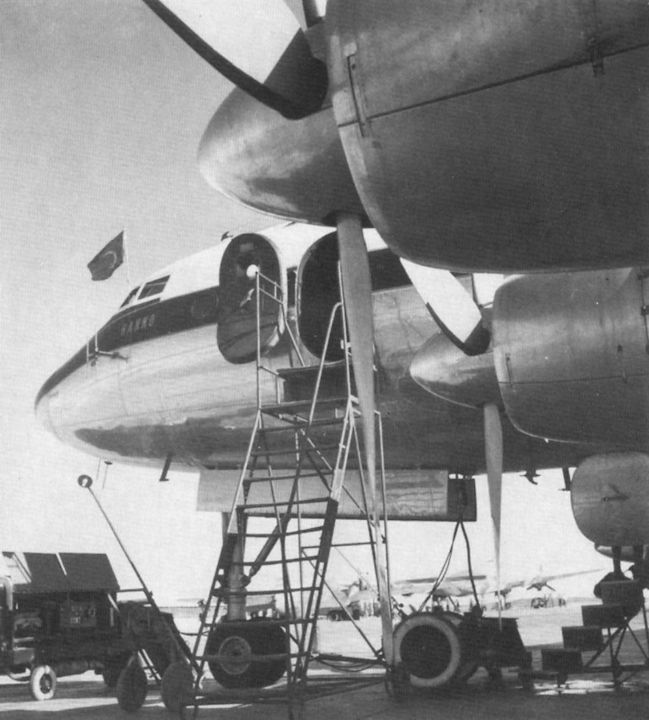
Регистрационный номер: G-ALDE, VP-BBO Handley Page Hermes 4 G-ALDE Hanno pictured at Khartoum airport on July 5, 1952. Registered to BOAC in February 1950, it passed to Skyways in 1955, to Bahamas Airways Ltd in 1960 as VP-BBO and spent its last months with Air Safaris Ltd. In May 1962 'DE was scrapped at Hurn.
-

Aeroplane Monthly 1980-03 / R.Lovelock - Fox Baker's Last Flight
Регистрационный номер: G-ALDB [2] Hermes IVA G-ALDB in service with BOAC as Hebe.
-
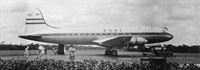
Aeroplane Monthly 2002-03 / Skywriters /Readers' letters/
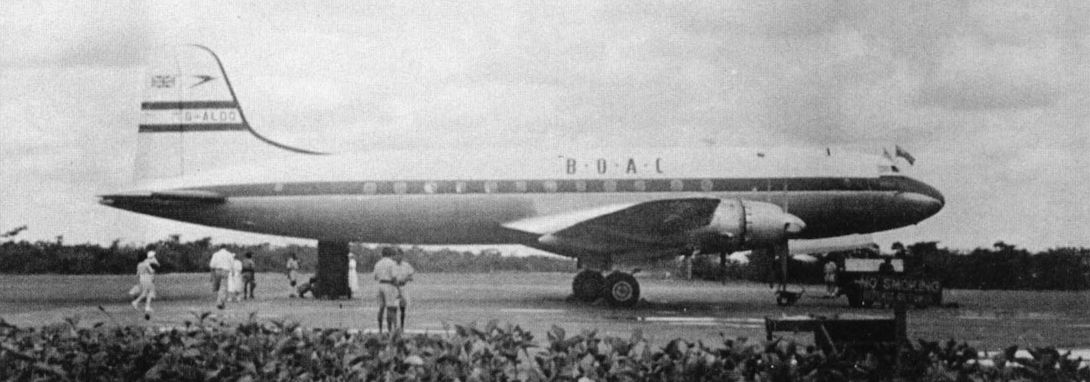
Регистрационный номер: G-ALDO BOAC's Handley Page Hermes G-ALDO at Ikeja airport, Lagos, Nigeria, in during April 1951.
-
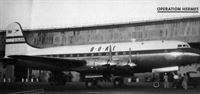
Aeroplane Monthly 2002-04 / T.Harmsworth - Hunting for Horus /Operation Hermes/
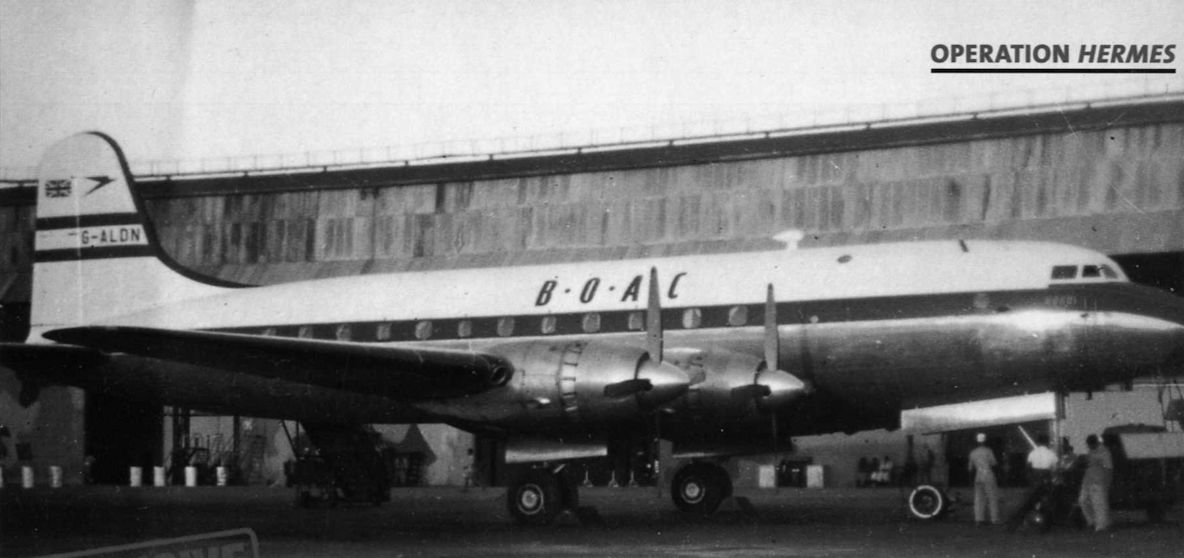
Регистрационный номер: G-ALDN [12] A poor-quality but very rare picture of Handley Page Hermes 4 G-ALDN Horus in service with BOAC. It was delivered to the airline in July 1950.
-
Мировая Авиация 125
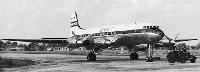
Регистрационный номер: G-ALDJ 6 августа 1950г.: началась эксплуатация авиакомпанией BOAC первого Handley Page Hermes Hengist (G-ALDJ) на линии Лондон-Аккра (Гана) через Триполи, Кано и Лагос.
-
Aeroplane Monthly 2002-03 / News
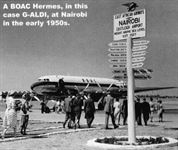
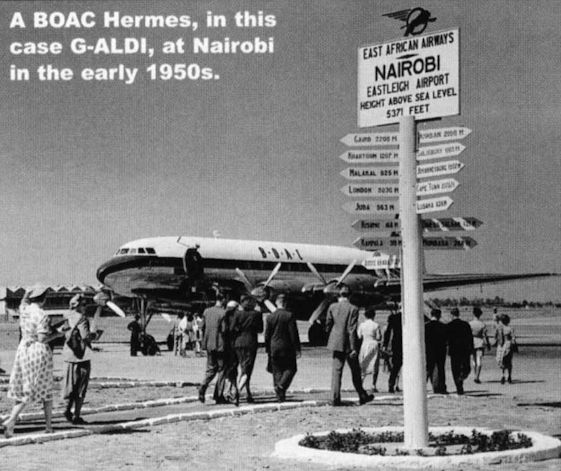
Регистрационный номер: G-ALDI [3] A BOAC Hermes, in this case G-ALDI, at Nairobi in the early 1950s.
-

Aeroplane Monthly 1993-10 / J.Stroud - Handley Page Hermes /Post-war propliners/
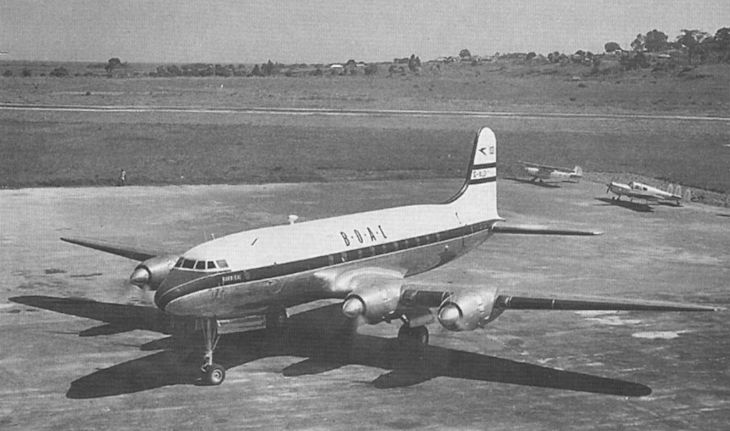
Регистрационный номер: G-ALDI [3] BOAC Hermes IV G-ALDI Hannibal at Entebbe.
-

Мировая Авиация 145
Handley Page Hermes. Hermes был построен по техническому заданию 1944 года на гражданский самолет с гермокабиной, вмещавшей в зависимости от компоновки от 40 до 82 пассажиров. В отличие от Hastings он имел шасси с носовой стойкой, хотя первые два прототипа были оснащены хвостовым колесом. Hermes IV начал службу в авиакомпании BOAC 6 августа 1950 года и использовался на линиях в Западную и Южную Африку. Вскоре на смену ему пришли самолеты Canadair Argonaut, хотя эксплуатацию пришлось возобновить в середине 1950-х годов, после серии катастроф реактивного лайнера de Havilland Comet. BOAC постепенно распродала своими машины независимым чартерным перевозчикам, таким как "Britavia", "Airwork" и "Skyways". Последний из 25 построенных самолетов был снят с эксплуатации 13 декабря 1964 года. До наших дней сохранился лишь один фюзеляж этого лайнера.
-

Aeroplane Monthly 1993-10 / J.Stroud - Handley Page Hermes /Post-war propliners/
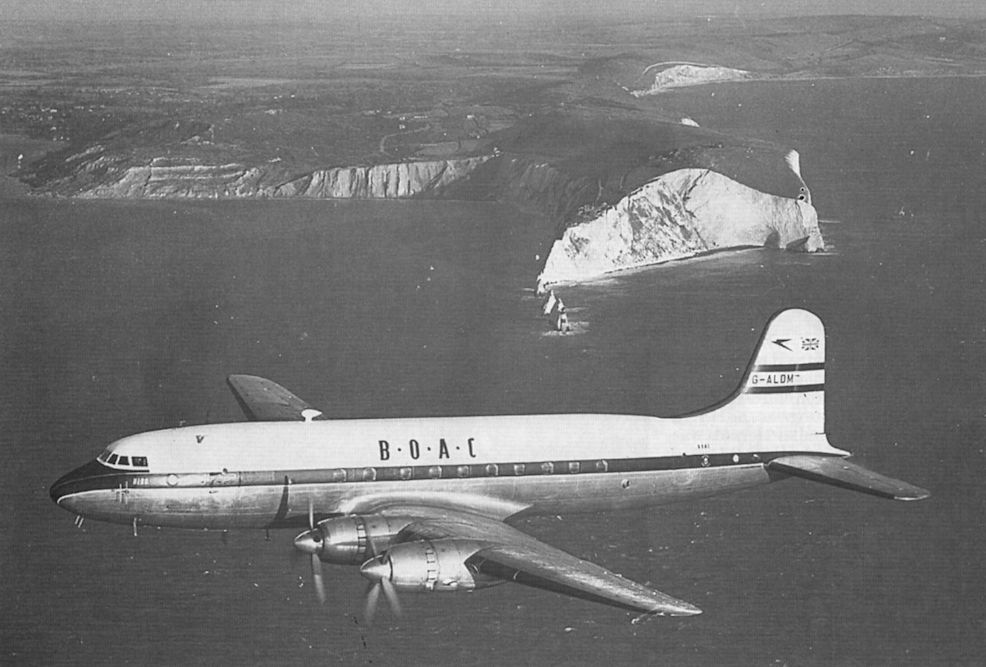
Регистрационный номер: G-ALDM [3] BOAC's Hermes IV Hero passing The Needles, Isle of Wight.
-
Jane's All the World Aircraft 1954 / All the world's aeroplanes
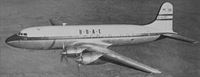
Регистрационный номер: G-ALDM [3] The Handley Page Hermes 4 Airliner (four 2,100 h.p. Bristol Hercules 763 engines).
-

Aviation Historian 32 / ??? - Mad dogs & englishmen
Регистрационный номер: G-ALDL, G-ALDW Hermes G-ALDL Hector and G-ALDW Helios at Eastleigh, date unknown.
-

Aeroplane Monthly 1993-02 / J.Stroud - Avro 685 York /Post-war propliners/
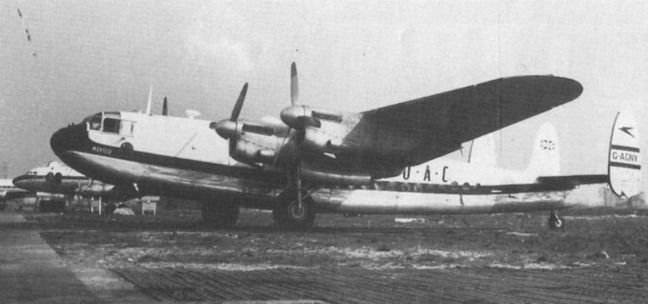
G-AGNV in later BOAC livery. It is seen at Heathrow with one of the airline's Handley Page Hermes 4s beyond.
Другие самолёты на фотографии: Avro York / Type 685 - Великобритания - 1942
-

Aeroplane Monthly 1993-10 / J.Stroud - Handley Page Hermes /Post-war propliners/
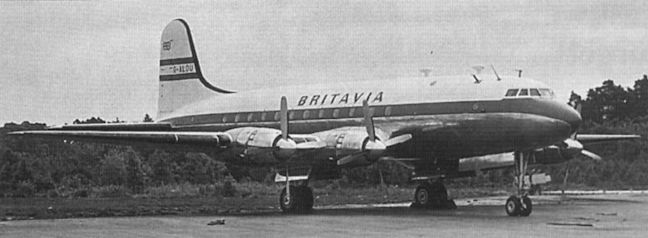
Регистрационный номер: G-ALDU, XJ280 Britavia’s 58-passenger Hermes IVA G-ALDU. Originally Haley one of BOAC, ’DU passed to Britavia in 1954 and operated for a while as XJ280. During 1956-57 the Hermes was operated by Silver City Airways as City of Gloucester and ended its days at Stansted, where it was scrapped in November 1962.
-

Aeroplane Monthly 1993-10 / J.Stroud - Handley Page Hermes /Post-war propliners/
Регистрационный номер: OD-ACC, G-ALDY Skyways Hermes IV G-ALDY at Beirut while serving with Middle East Airlines as OD-ACC.
-

Мировая Авиация 149
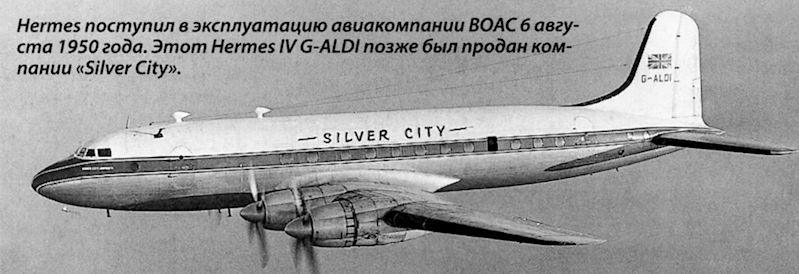
Регистрационный номер: G-ALDI [3] Hermes поступил в эксплуатацию авиакомпании BOAC 6 августа 1950 года. Этот Hermes IV G-ALDI позже был продан компании "Silver City".
-
Aeroplane Monthly 1981-02 / Radlett /Gone but not forgotten/ (9)
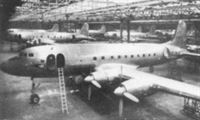
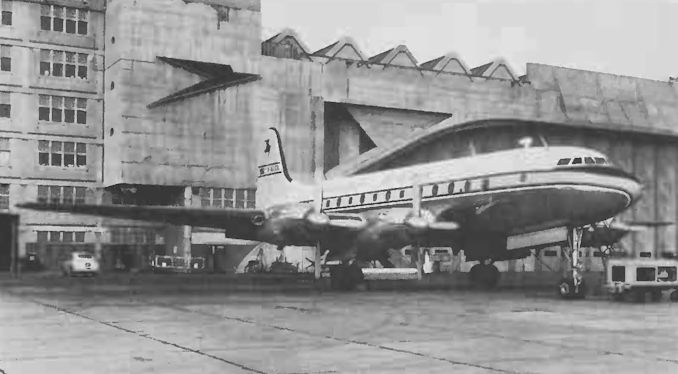
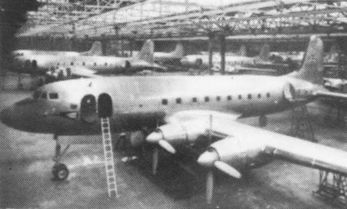
Hermes during final assembly 1949-50. Most were delivered to BOAC during 1950.






-

Aeroplane Monthly 1988-09 / Farnborough 1949
Регистрационный номер: G-ALEU In gleaming metal finish with dark blue company emblem and trim, Handley Page Hermes V first prototype G-ALEU was dazzlingly displayed by Sqn Ldr H. G. Hazelden. Powered by four Bristol Theseus turboprops, the Hermes V was the fastest turboprop transport at the show, with a speed of 351 m.p.h.
-
Air-Britain Archive 2001-03 / Casualty Compendium (82)
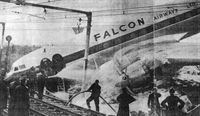
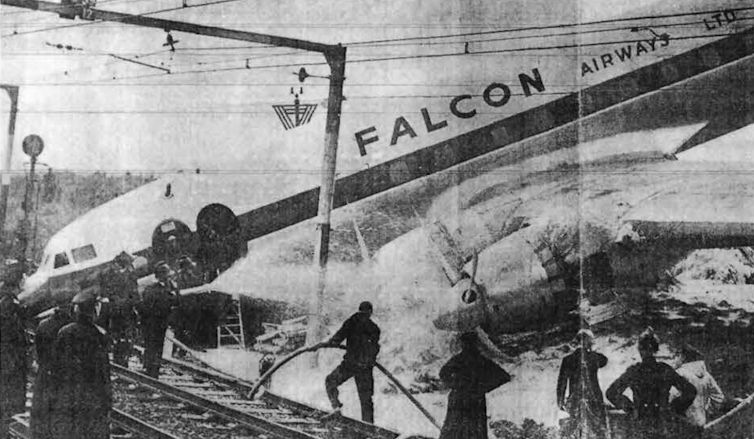
Регистрационный номер: G-ALDC Falcon Airways Hermes G-ALDC nose-down on the London-Southend railway line being liberally doused in foam after aquaplaning off the runway when landing at Southend on 9.10.60.
9.10.60 Handley Page Hermes IV G-ALDC, c/n HP.81/4 "James Robertson Justice" of Falcon Airways aquaplaned on landing in rain at Southend Airport from Majorca at 1248 and the aircraft overran onto the main London - Southend railway line. Capt Norman Wilkinson, 5 crew and 71 Skytours passengers on board suffered no serious injuries and there was no fire. The Hermes was raised and parked nearby in full view until broken up in March 1962. This was the first accident to be attributed to aquaplaning. -
Aeroplane Monthly 2002-04 / T.Harmsworth - Hunting for Horus /Operation Hermes/
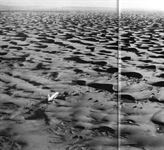
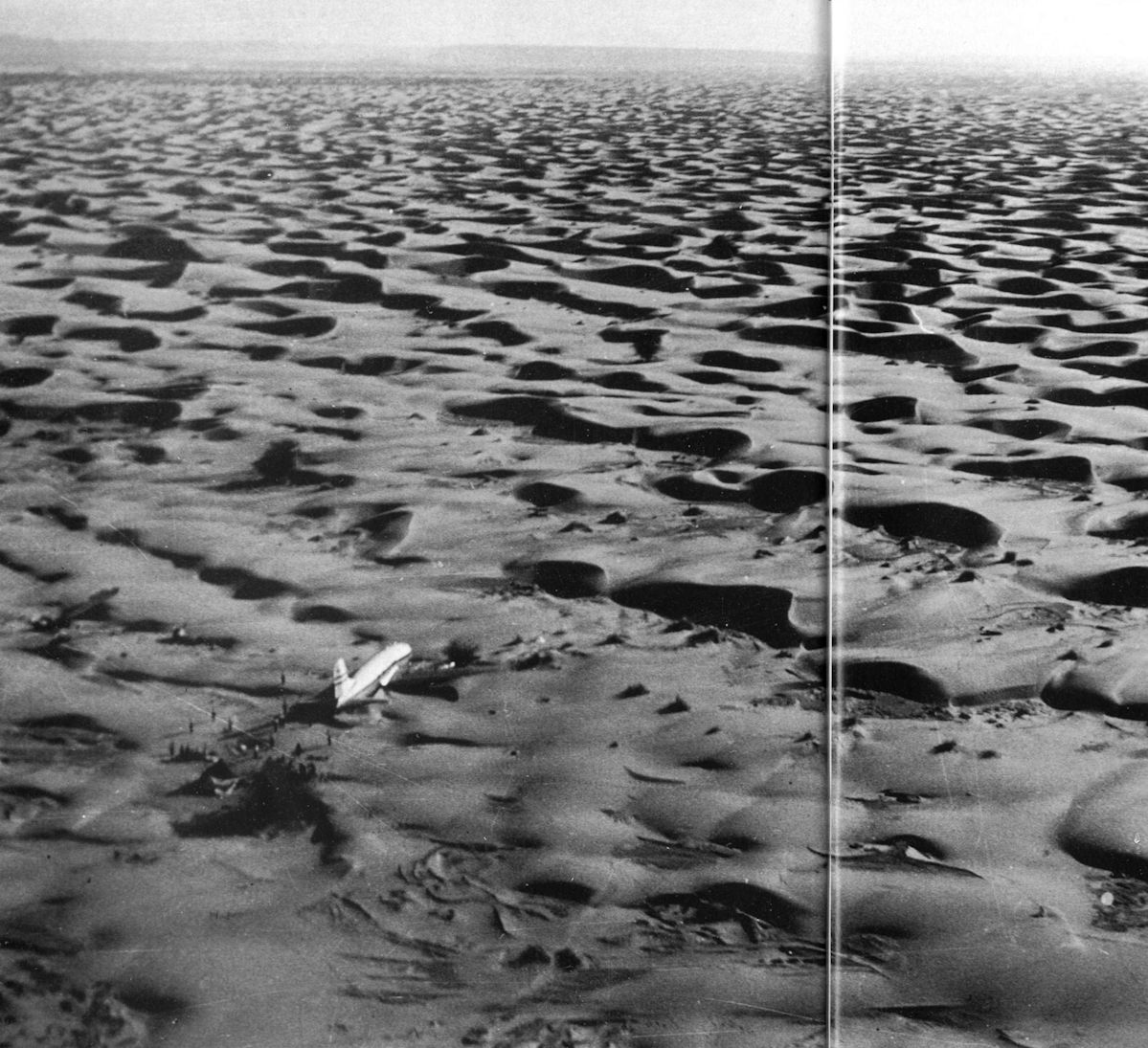
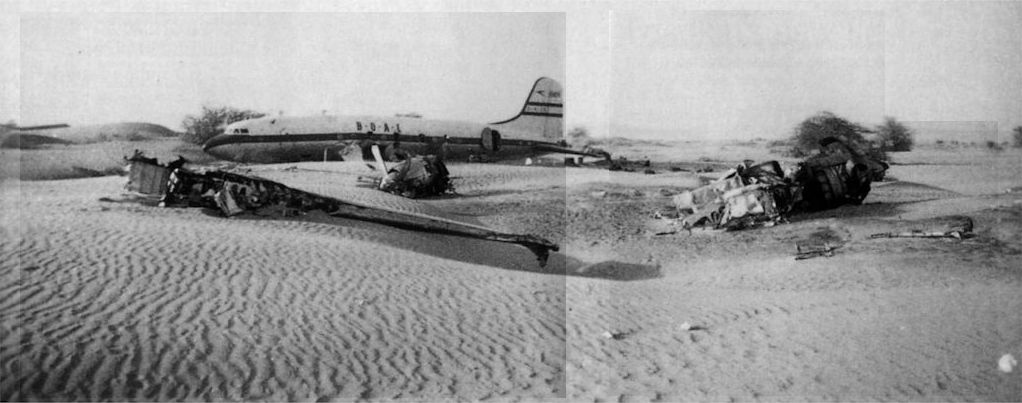
Регистрационный номер: G-ALDN [12] A long way from anywhere. The view from the rescue Argonaut of the crash scene, 160 miles south-east of Port Etienne (now Nouadhibou). The survivors and the nomads’ tent are visible behind the downed Hermes, and the severed port wing may be seen at the extreme left of the picture.
-
Aeroplane Monthly 2002-04 / T.Harmsworth - Hunting for Horus /Operation Hermes/
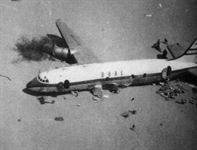
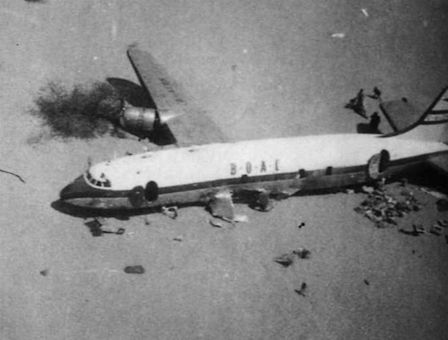
Регистрационный номер: G-ALDN [12] The fuselage of Horus came to rest at 90° to the direction of the approach, after the port wing had been ripped off at the root by impact with a dune.
-
Aeroplane Monthly 2002-04 / T.Harmsworth - Hunting for Horus /Operation Hermes/
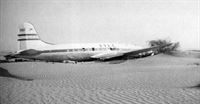
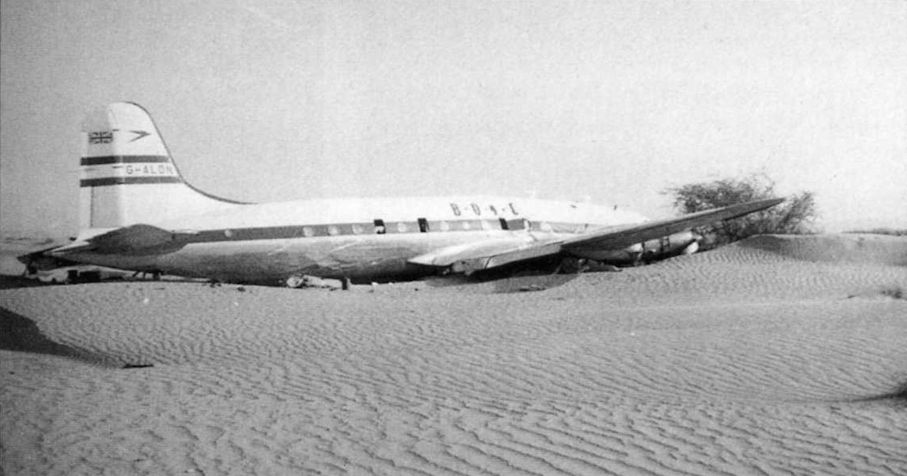
Регистрационный номер: G-ALDN [12] The wreck of Handley Page Hermes airliner G-ALDN in the Western Sahara shortly after its crash 50 years ago. How much of it is still there?
-
Aeroplane Monthly 2002-04 / T.Harmsworth - Hunting for Horus /Operation Hermes/
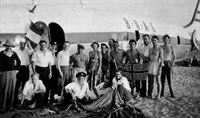
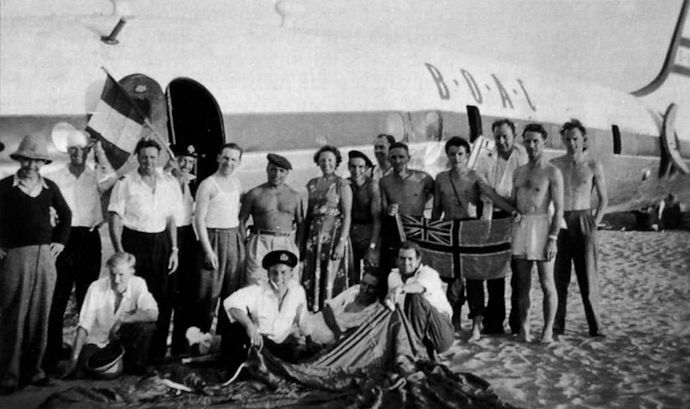
Регистрационный номер: G-ALDN [12] The crew, passengers and French soldiers at the wreck before setting off on their epic trek to the oasis. Ted Haslam, with his head bandaged, is second from the left.
-
Aeroplane Monthly 2002-04 / T.Harmsworth - Hunting for Horus /Operation Hermes/
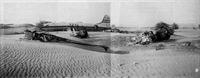
Регистрационный номер: G-ALDN [12] The badly mangled port wing and engines, with the twisted fuselage in the background. These engines, minus the cowlings and props, still sit on the desert surface where they came to rest 50 years ago.
-
Aeroplane Monthly 2002-04 / T.Harmsworth - Hunting for Horus /Operation Hermes/
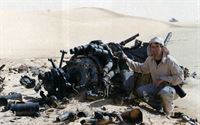
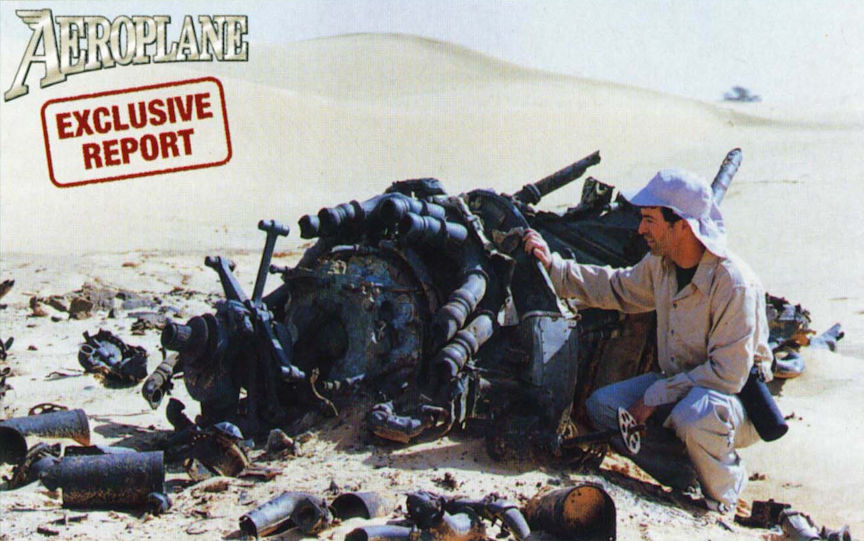
Регистрационный номер: G-ALDN [12] The author with G-ALDN’s port inner Bristol Hercules engine. When this picture is lined up with the original shot of the wreckage, it is clear that the sand dune in the background in this view is exactly where the Hermes fuselage should be.
-
Aeroplane Monthly 2002-03 / News
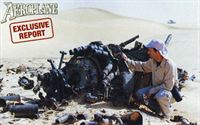
Регистрационный номер: G-ALDN [12] Tony Harmsworth next to the remains of one of G-ALDN's Bristol Hercules engines
-

Aeroplane Monthly 2002-04 / T.Harmsworth - Hunting for Horus /Operation Hermes/
Регистрационный номер: G-ALDN [12] Rob Watt with the port inner engine, amid a scatter of sleeve-valves and other components.
-
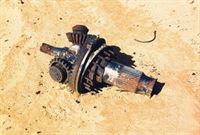
Aeroplane Monthly 2002-03 / News
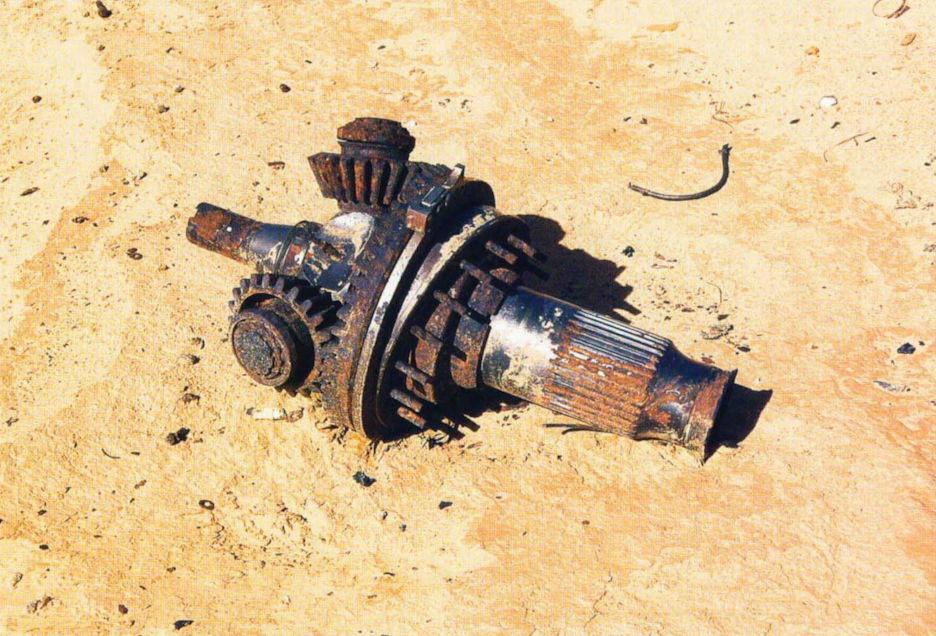
Регистрационный номер: G-ALDN [12] Is this propshaft all that is left of Handley Page Hermes airliner G-ALDN, which crashed in the western Sahara 50 years ago?
-
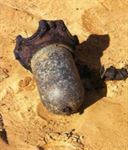
Aeroplane Monthly 2002-04 / T.Harmsworth - Hunting for Horus /Operation Hermes/
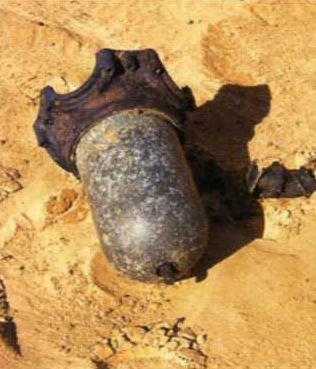
Регистрационный номер: G-ALDN [12] One of two of the Hermes’ propeller hubs found at the site.
-
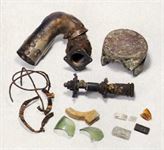
Aeroplane Monthly 2002-04 / T.Harmsworth - Hunting for Horus /Operation Hermes/
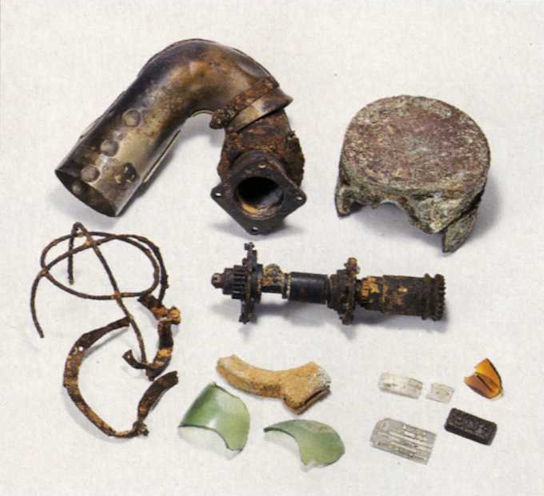
Регистрационный номер: G-ALDN [12] Some of the items brought back from the crash site by the Assistant Editor, with a piston from the Hercules engine at top right. These parts will go on show near the preserved fuselage of Hermes G-ALDG at Duxford.



-

Aeroplane Monthly 1993-10 / J.Stroud - Handley Page Hermes /Post-war propliners/
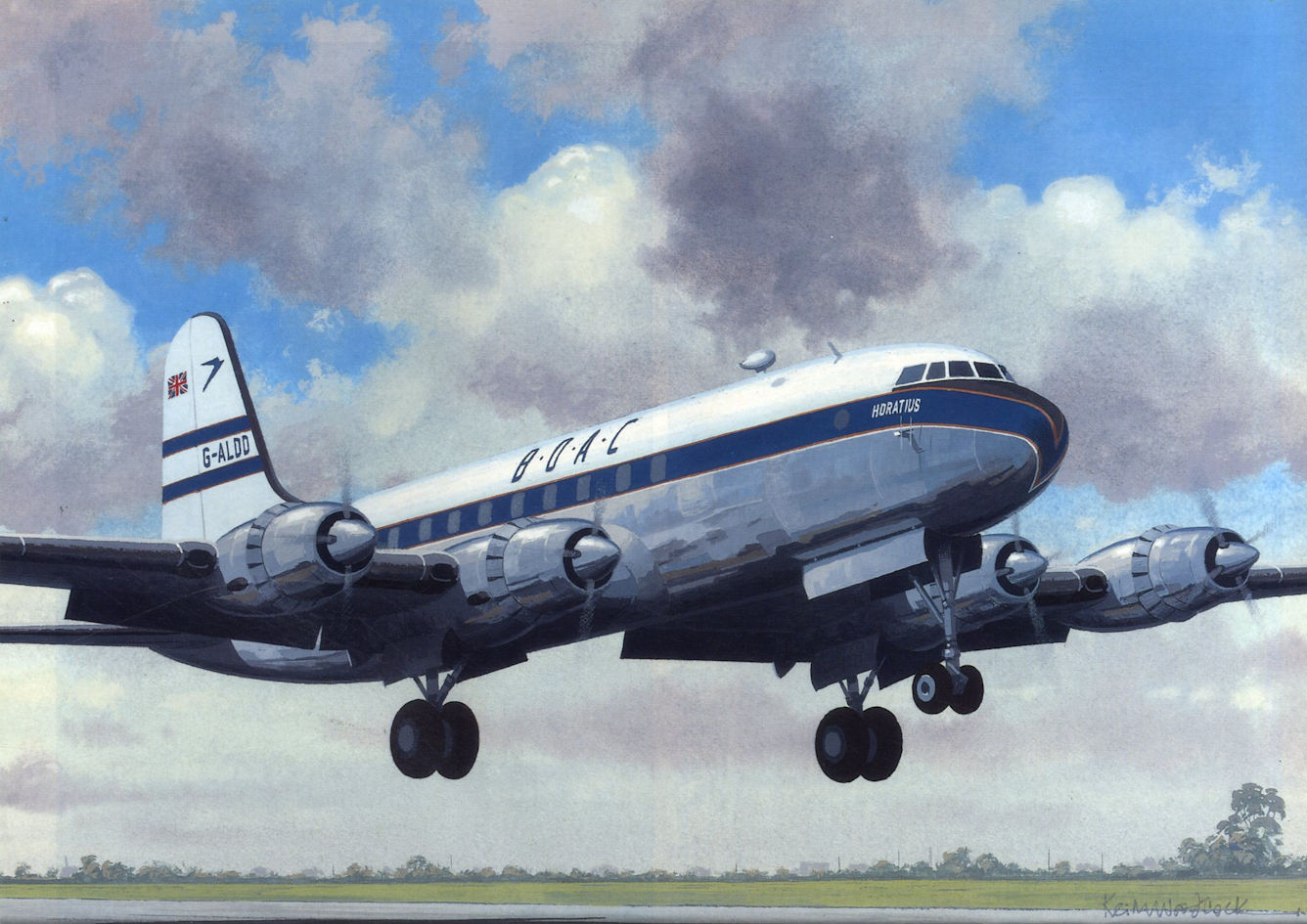
Регистрационный номер: G-ALDD [2] KEITH WOODCOCK’S painting shows BOAC’s Handley Page Hermes IV Horatius.
-

Aeroplane Monthly 1993-10 / H.Field - Advancing in review order
Регистрационный номер: G-ALDD [2] Другие самолёты на фотографии: De Havilland Vampire / D.H.100 - Великобритания - 1943Gloster Meteor / G.41 - Великобритания - 1943
-

Jane's All the World Aircraft 1947 / All the world's aeroplanes
The Handley Page Hermes I.
-

Jane's All the World Aircraft 1947 / All the world's aeroplanes
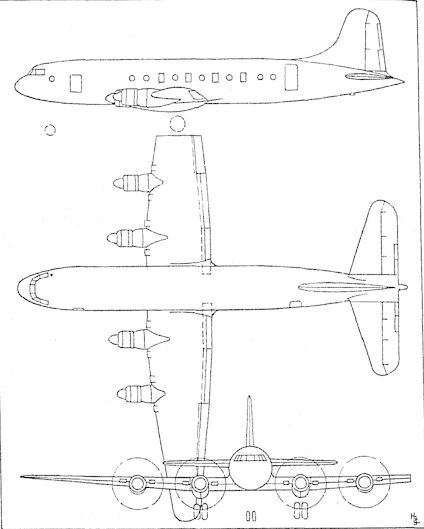
The Handley Page Hermes IV.


- Фотографии