

Фотографии
-

Регистрационный номер: J-BBFO Nakajima built the military Breguet 19A2 under licence and J-BBFO was a civil version without armament for NKYK.
Самолёты на фотографии: Breguet Br.19 - Франция - 1922
-
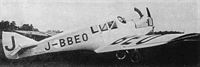
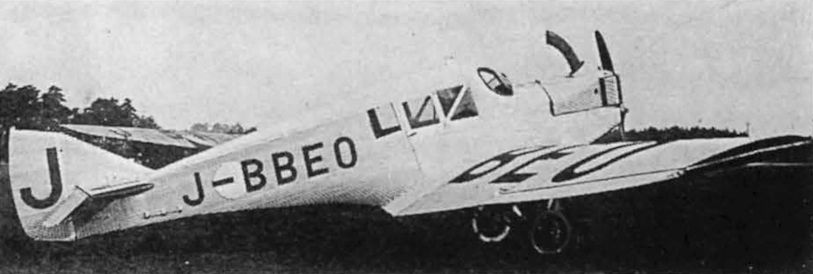
Регистрационный номер: J-BBEO J-BBEO was a Junkers JF-6, a little known variety of early F-13 with a wing span of 14.78 m (48 ft 6 in). Two JF-6 floatplanes were also purchased by the Kaibo Gikai (Sea Defence Volunteers' Society) in 1923 and presented to the Navy.
Самолёты на фотографии: Junkers F 13 - Германия - 1919
-

Регистрационный номер: J-BBFG 'Teresa' was the Allied code name given to the NKKK Teradakoken TK-3, of which J-BBFG is an early example, perhaps the prototype. A later model had increased fin area and circular cabin windows. One was converted to a military glider in 12.41 and redesigned as the Ku-8-II ('Gander') carrying 18 troops.
Самолёты на фотографии: Kokusai Ki.59 / TK-3 - Япония - 1938
-

Регистрационный номер: J-BBFA Kawasaki A-6 J-BBFA was converted from the unadopted KDA-6 high-speed reconnaissance biplane, the main difference being the enclosed cockpit with tandem seating. It became a record-breaker with Asahi Shimbun.
Самолёты на фотографии: Kawasaki KDA-6 / Ki.3 - Япония - 1931
-

Регистрационный номер: J-BBGO The Tachikawa Type 95 (Ki-17) was a standard trainer with the Allied code name 'Cedar', 560 being built. The Army thought it too easy to fly and many were transferred to civil users such as J-BBGO illustrated.
Самолёты на фотографии: Tachikawa Ki.9/Ki.17 - Япония - 1935
-

Регистрационный номер: J-BBGI The Nozawa Company's J-BBGI was the latest 1937 Waco YPF-7 with an enclosed pilot's cockpit and wheel brakes. The open front cockpit under the upper wing had a bench-type seat for two passengers, perhaps not the best for comfort!
Самолёты на фотографии: WACO F / A Series / PT-14 - США - 1930
-

Регистрационный номер: J-BBGC J-BBGC was a 40 hp Piper J-2 Cub imported by Nozawa KKK to use as a pattern aircraft in the building of their own Cub copy, Z-1 J-BBGR.
Самолёты на фотографии: Taylor Cub - США - 1931
-

Регистрационный номер: J-BBGR J-BBGR was Nozawa's Cub copy, built as the Z-1. It was advertised but did not sell and no more were built.
Самолёты на фотографии: Taylor Cub - США - 1931
-

Регистрационный номер: J-BBNO J-BBNO, a Nakajima-built Super Universal, seen on floats as used by the Japan Air Transport Co, NKYKK.
Самолёты на фотографии: Fokker/Atlantic F.9 Universal / F.18 / F.XI Super Universal - США - 1926
-

Регистрационный номер: J-BBFK T.2 создавался как гражданский учебный самолет, но использовался в качестве экспериментального.
The Gasuden biplane trainer was originally built with a gull-form upper wing, but it was later changed to a straight upper wing sesquiplane as the Model 2 and registered J-BBFK.Самолёты на фотографии: Hitachi T.2 - Япония - 1941
-

Регистрационный номер: J-BBPI J-BBPI was a Yokosho Type 13 (K1Y2) floatplane trainer, its 1925 origin apparent from the tail float. The need for floatplanes kept some in use until WW2.
Самолёты на фотографии: Yokosuka K1Y - Япония - 1925
-

Регистрационный номер: J-BBPG A Yokosho Type 90 trainer on floats, J-BBPG is seen taxying in after a flight.
Самолёты на фотографии: Yokosuka K4Y / K5Y - Япония - 1930
-

Регистрационный номер: J-BBFI The Tokyo University LB-2 J-BBFI was a 1939 student-built 2-seat cabin monoplane with a tandem layout like a Piper Cub. It had a French 60 hp Train inverted in-line engine.
Самолёты на фотографии: Tokyo University LB-2 - Япония - 1939
-

Регистрационный номер: J-BBGD A unique Nozawa design was their X-1 low-gull-wing monoplane J-BBGD with fixed spatted undercarriage and enclosed tandem cockpit. Its 85 hp Pobjoy radial engine had a totally enclosed cowling.
Самолёты на фотографии: Nozawa X-1 - Япония - 1941
-

Регистрационный номер: J-BBJI IMITATION THE SINCEREST FORM OF FLATTERY: This machine, known as the "Chidorigo," was constructed by the Tokio Gas & Electric Industry Co., and is remarkably like a D.H. "Fox Moth" - although the company is in no way associated with the de Havilland Co. It is fitted with a 7-cyl. 150 h.p. Gasden "Zimpu" (which, again, closely resembles the Armstrong-Siddeley "Mongoose"). It is being used by the Japan Aerial Transport Co. for taxi and joy-riding purposes. A brief specification of this machine is as follows :- Span, 9 ft. 2 in.; wing area, 236.7 sq. ft.; weight empty, 1,212.75 lb.; laden weight, 2,116.8 lb.; speed range, 46-122 m.p.h.; range, 404 miles.
Gasuden was the first Japanese company to produce aero engines, initially under licence, then their own designs. Their first aircraft design was the KR-1 Chidori, a near copy of the DH Fox Moth with their own 150 hp Jimpu radial engine. Illustrated is c/n 1 J-BBJI.Самолёты на фотографии: Tokyo Gasu Denki KR-1 / KR-2 Chidori - Япония - 1933



Статьи
- -
- Casualty Compendium (66)
- Croydon Watch Log 1937-8 (10)
- Extracts
- India: 31.12.35 (1)
- The Japanese Civil Register 1919-45 /Japanese Civil Register/ (8)
- M.Fillmore - The de Havilland Puss Moth /The Whole Truth/ (1)
- P.Gerhardt - East Germany (DM- DDR-) 1955-91 /Complete Civil Registers/ (13)