Фотографии
-
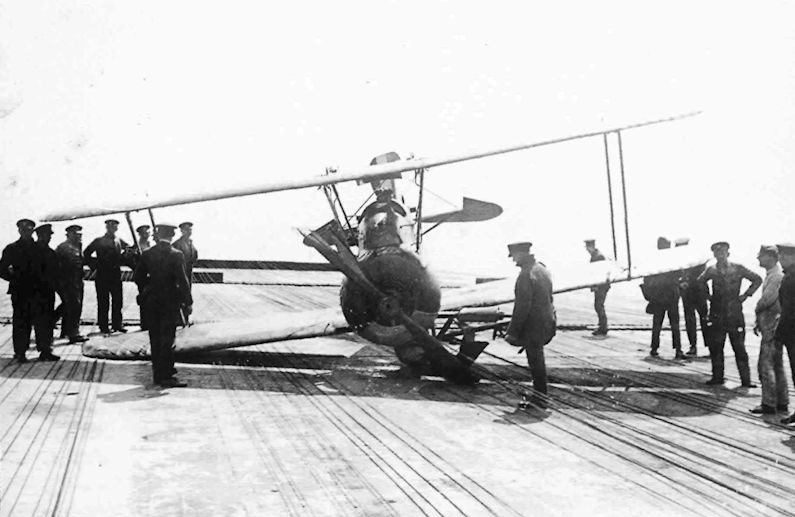
Another Parnall type was the Panther, seen here after a normal landing, at least by the standards of that time! The landing arrangements aboard HMS Argus were rather primitive, consisting of fore-and-aft wires to be caught by grips on the axle, with a series of transverse wooden fences that were supposed to slow aircraft down. These were very hard on undercarriages. This Panther has a paravane ahead of the wheels to assist in ditching without overturning. Over 200 Panthers were built.
Самолёты на фотографии: Parnall Panther - Великобритания - 1918
-
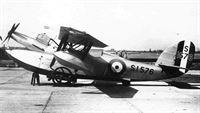
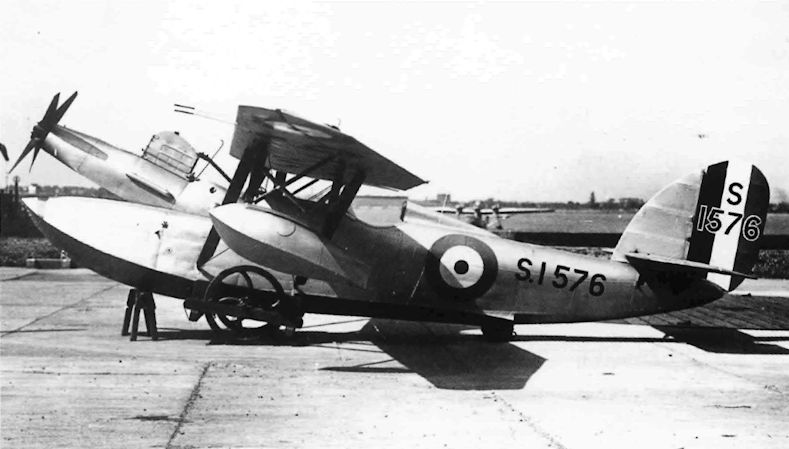
Регистрационный номер: S1576 The sole, diminutive Parnall Prawn, S 1576, seen here at the Air Ministry's Marine Aircraft Experimental Establishment, Felixstowe in 1930. Going one better than the World War I Ursinus design, the Prawn boasted a propeller and propeller shaft, inclinable through either 10.9 or 22 degrees from the normal thrust line, in order to keep the airscrew from striking the water. To compound a set of problems strictly of the designer's own making, the 65hp Richardo-Burt powered single-seat flying boat sported a four-bladed propeller of such minuscule diameter that it looked more suited to a rotary garden mower than an aircraft. Understandably, perhaps, this unlikely combination of engine, transmission and propeller proved totally inadequate to the task of pulling the Prawn through the water at any respectable speed, let alone of dragging it aloft.
The Parnall Prawn was one of the oddest sights to be seen at Felixstowe. It was a fairly conventional all-metal flying boat except for the engine, a 65 hp Ricardo-Burt. Mounted over the bow, it could be elevated 22° for take-off and had a very small propeller. We have not found a report of the trials at MAEE and it is not clear whether the boat ever got off the water during trials in 1930.Самолёты на фотографии: Parnall Prawn - Великобритания - 1930
-
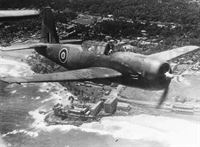
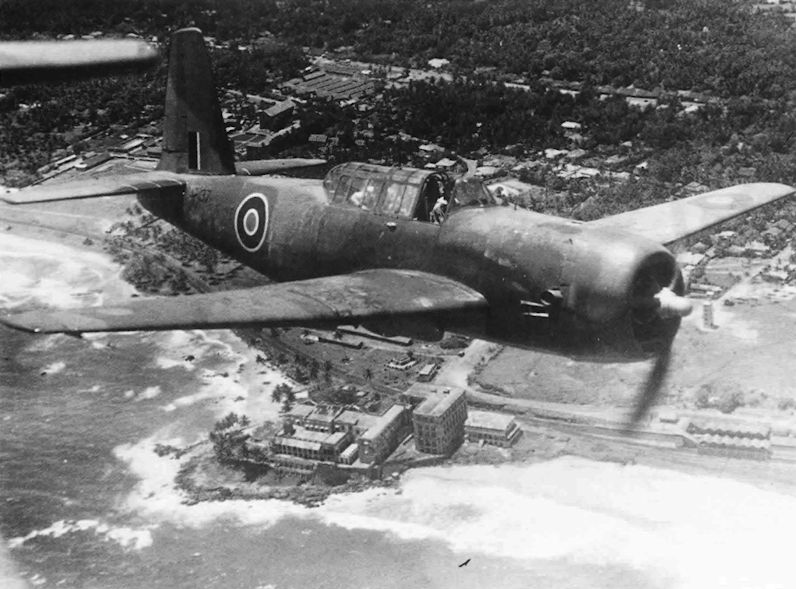
Регистрационный номер: AP137 Vultee Vengeance I AP137 flying over Ratmalana, in Ceylon, on 29 May 1943, with Sqn Ldr Arthur Gill at the controls. No.84 had been moved to Ratmalana in April in the light of intelligence reports that the Japanese were planning a repeat performance of the carrier-borne raids of the previous year. Ceylon was better prepared in 1943, with Beaufort torpedo-bomber squadrons ready to strike back while the Battle of Midway had shown what dive-bombers could do to carriers. Unfortunately No.84 was still trying to make its aircraft battleworthy but happily the Japanese failed to turn up.
Самолёты на фотографии: Vultee Vengeance / A-35 - США - 1941
-
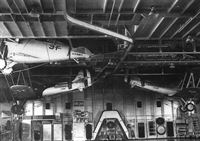
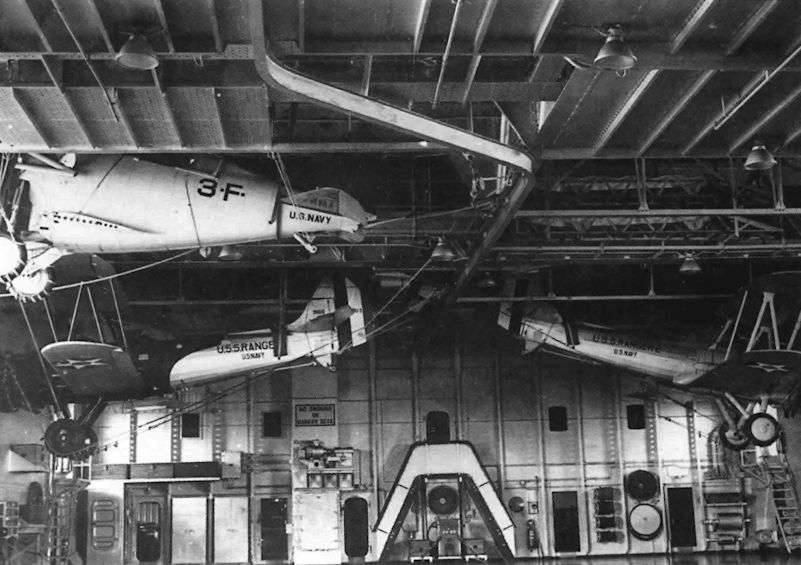
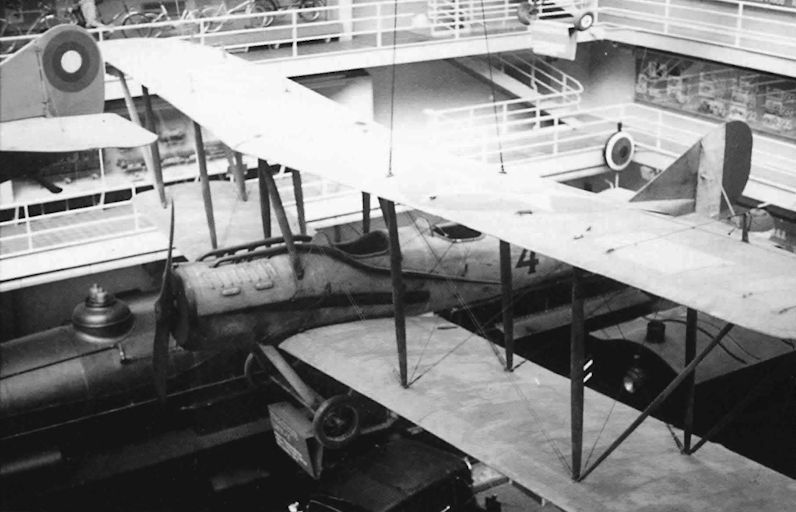
A good illustration of how all available space was utilised aboard a carrier. To leave more hangar deck space clear, spare aircraft were suspended by cables from the flight deck. A spare Grumman F3F already carries the '3-F' code of VF-3, the third digit to be applied when it is found which of the squadron's aircraft has come to grief. VF3 was briefly aboard Ranger. 9168 is a Vought O3U-3 with the half-silver and half-blue fuselage colours that indicated Captain rank and presumably for Ranger's commander. The other O3U-3 is one of four used by the carrier's utility unit.
Самолёты на фотографии: Grumman F3F - США - 1935Vought O2U/O3U/V-65/V-93 Corsair - США - 1926
-
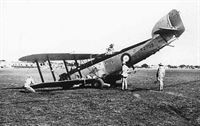
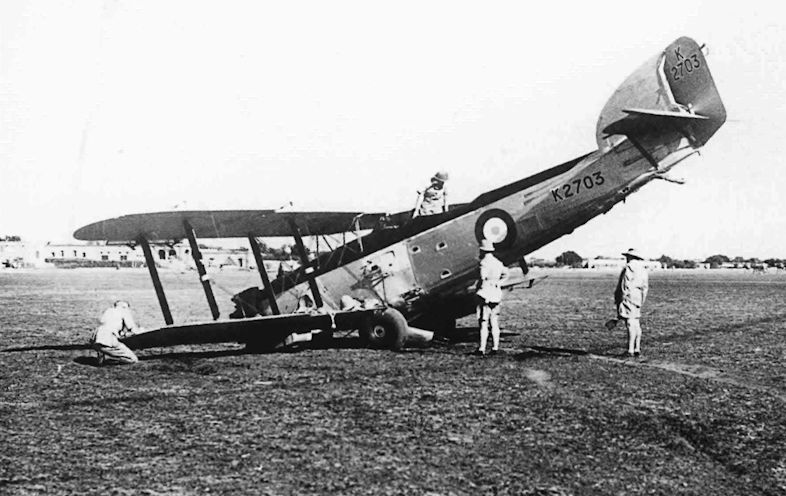
Регистрационный номер: K2703 Fairey Gordon K2703 of No.47 Squadron has a landing accident in 1935. The location is given as Sennar, on the Blue Nile about 150 miles south-east of Khartoum. No accident record has been located for this incident which was probably 'kept in the family' as replacing under-carriages was not an unusual event when operating from rough landing grounds. No.47 used over 100 landing grounds in the Sudan.
Самолёты на фотографии: Fairey Gordon / Seal - Великобритания - 1931
-
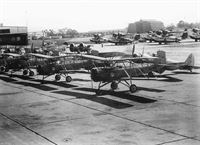
A packed ramp at San Diego Naval Air Station on North Island. In the foreground are four Curtiss N2C2 radio controlled target aircraft, modified from the standard N2C trainer with a tricycle undercarriage to make landings simpler. Each has a 'D' number on the fuselage and an unidentified badge on the nose. Behind them, from right to left is a Northrop BT1 dive-bomber that was developed into the Dauntless, a Douglas RD3 Dolphin amphibian of VJ2 and three Great Lakes TG2 torpedo-bombers. In the background are Sikorsky JRS-1s, modified S-43 amphibians of VJ-1.
Самолёты на фотографии: Curtiss N2C / Fledgling - США - 1928Douglas Dolphin / RD / OA-4 - США - 1930Martin T3M / T4M - США - 1926Northrop BT - США - 1935Sikorsky S-43 Baby Clipper/JRS/Y1OA-8 - США - 1936
-
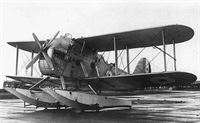
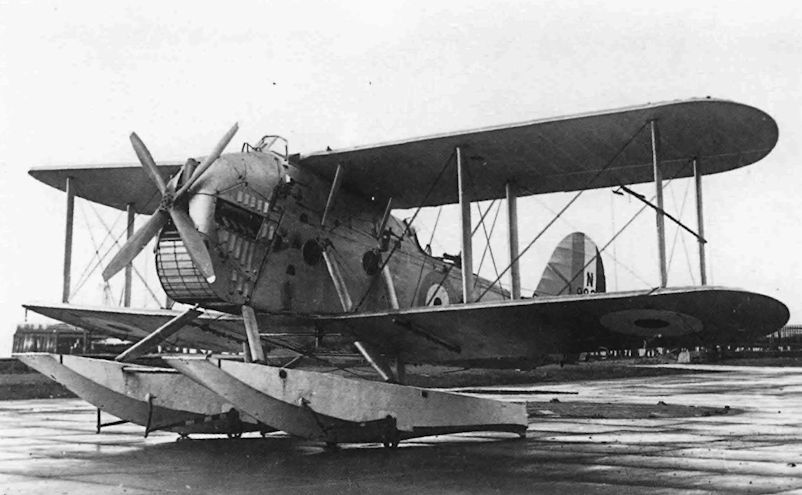
Регистрационный номер: N9833 The confusingly-named Blackburn Blackburn had a built-in headwind which was not improved by fitting a pair of floats. Since there was a requirement for carrier-borne aircraft to be capable of operating from water, it was inevitable that N9833 should appear at the Marine Aircraft Experimental Establishment in May 1926 to check whether it could fly with boots on. The height of the fuselage was claimed to be the result of the Admiralty requiring sufficient headroom for a Naval officer to stand with his hat on.
Самолёты на фотографии: Blackburn Blackburn / R.1 - Великобритания - 1922
-

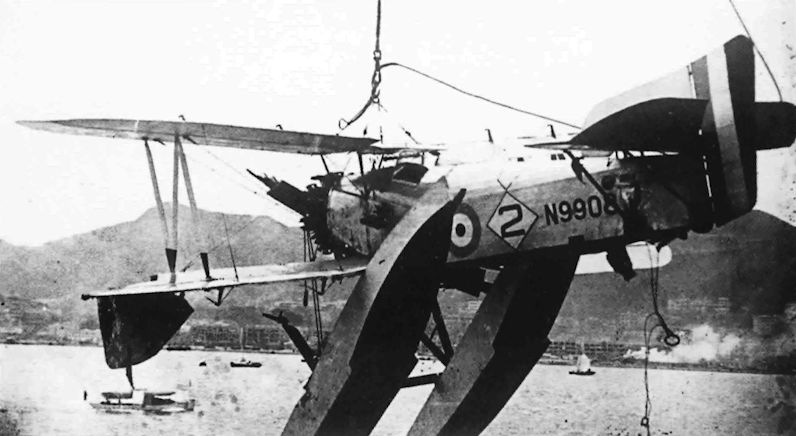
Регистрационный номер: N9908 Fairey Flycatcher N9908 belonged to No.403 Flight aboard HMS Hermes. On 22 April 1927, it was blown off-line while landing in the harbour at Hong Kong and the undercarriage collapsed. While Hermes was based at Hong Kong, she normally operated her aircraft as floatplanes unless they were flying from Kai Tak.
Самолёты на фотографии: Fairey Flycatcher - Великобритания - 1922
-
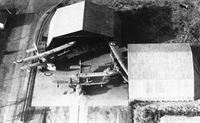
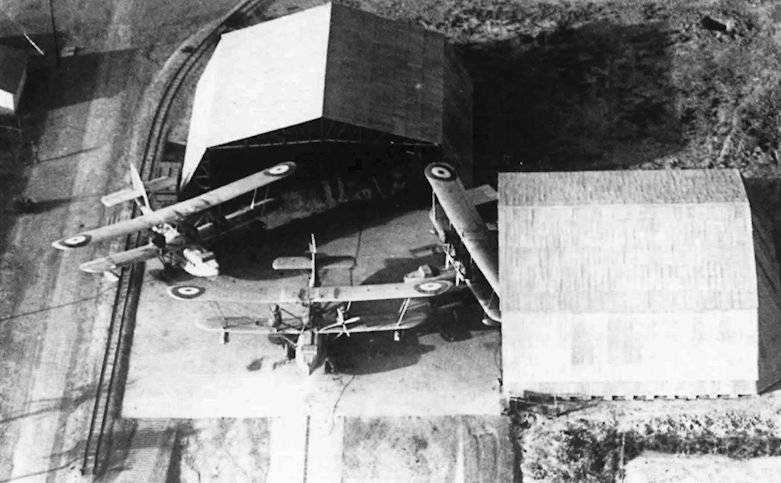
No.203 Squadron was the RAF's long-serving squadron in Iraq in the years between the wars. It had its base at a seaplane station near Basra where it had hangars, slipways and its own little harbour. We have not seen many photographs of its aircraft except afloat. This one shows three of No.203's Short Rangoons on the tarmac beside the hangars. Basra had its own narrow-gauge railway connecting with the nearest railway station.
Самолёты на фотографии: Short Calcutta / Rangoon / S.8 - Великобритания - 1928
-
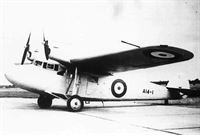
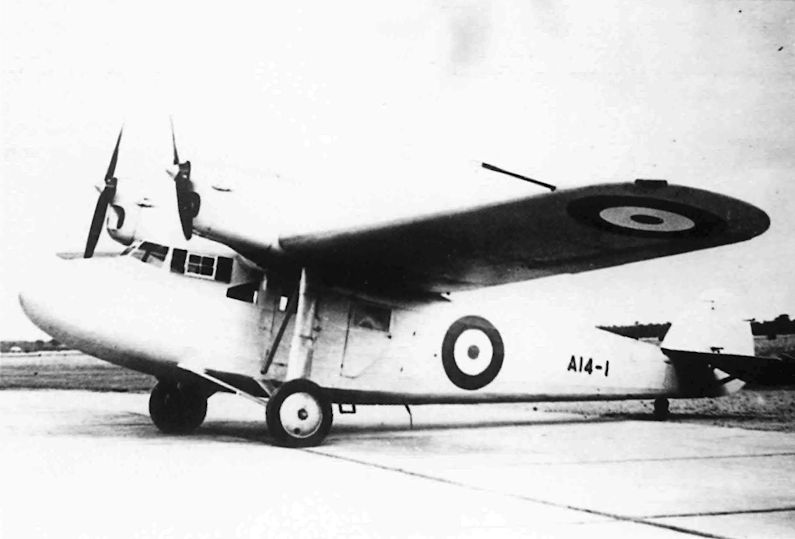
Регистрационный номер: A14-1 The RAAF's Tugan LJW.7 Gannet A14-1. Designed by L J Wackett, it was a light transport with a pair of 200 hp Gipsy Six engines. Capacity was pilot and six passengers or freight.
Самолёты на фотографии: Cockatoo Dockyard & Engineering Co LJW-6 Codock - Австралия - 1933
-
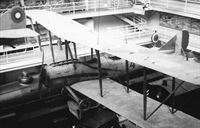
In the Autumn 200 issue, Harry Woodman commented in Feedback on D.H.4s and D.H.9s. He mentioned the use by the Bolsheviks of some of a batch of Sturtevant S two-seaters that had been captured from the White Russian forces in Siberia. The Czech Legion was also in Siberia, working its way home after the break-up of the Austro-Hungarian Empire and had bought some L.W.F. V-3s. By some means, one got back to the newly-independent Czechoslovakia and survives in Prague.
Самолёты на фотографии: LWF V / G - США - 1916
-
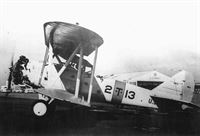
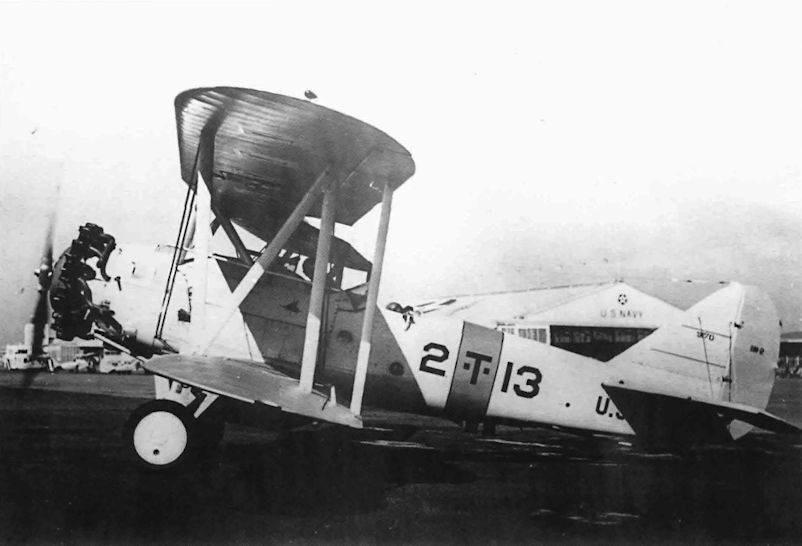
In the Autumn 1999 issue, George Kernahan did a piece on the Martin BM. This is BM2 9170 in the colours of VT-2. On 1 July 1937, VB-1B was re-designated VT-2 which flew BM-2s as torpedo-bombers pending the arrival of its first Douglas TBD-1s in January 1938. The squadron formed part of Lexington's Air Group. The squadron emblem appears under the pilot's cockpit and should be a fire-breathing flying dragon astride a torpedo but we are not entirely convinced it is.
Самолёты на фотографии: Martin T5M / BM / T6M - США - 1929