

Фотографии
-
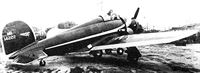
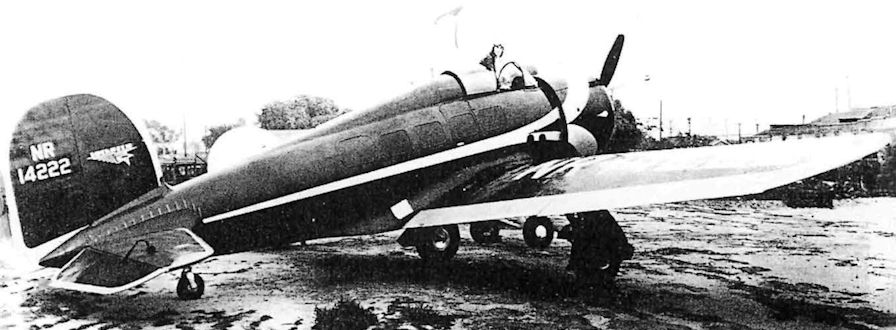
Регистрационный номер: NR14222 Laura Ingalls standing in the cockpit of her coast-to-coast record breaking black Lockheed Orion 9D Special NR14222 c/n 211 "Auto-da-Fe". This version was a special racer with no cabin seats, extra tankage and the cabin windows painted over. The diminutive pilot was the holder of various other records and aviation achievements.
Het Vliegveld: 12.07.35: Laura Ingalls establishes a new female US coast-to-coast record by flying from Newark, NJ to Burbank, CA in 18 hours 20 min.
Het Vliegveld: 12.07.35: Laura Ingalls ordered Lockheed Orion 9D Special c/n 211 NR14222 in which she intended to compete in the 1934 MacRobertson England-Australia race but it was not ready in time. Powered by a supercharged 550 hp P&W Wasp S1D1, it had a 650 US gal fuel tank in place of cabin seating, was finished in black overall and named "Auto-da-Fe" (Act of Faith). Her first solo coast-to-coast record attempt had to be abandoned owing to a dust storm over Colorado, the second was delayed for a week following a foot injury.
Finally she left Floyd Bennett Field, New York (not Newark) on 11.7.35 landing at Burbank, California 18 hours 19 minutes later, setting not only a women's record but also beating Frank Hawks' solo record. The return flight to break Amelia Earhart's record was made on 12.9.35 in 13 hours 34 minutes. Ingalls also flew the Orion to second place in the 1936 Bendix Trophy Race after which it was sold via Rudolph Wolf to the Spanish Republicans and was written-off in Spain.Самолёты на фотографии: Lockheed Orion 9 - США - 1931
-
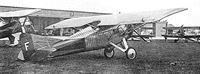
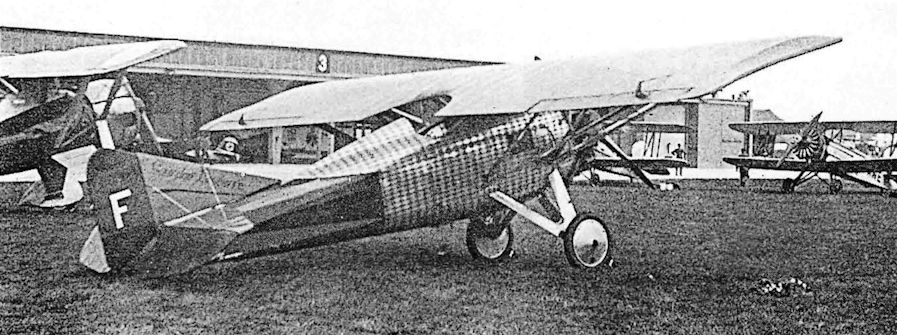
Регистрационный номер: F-AGCH Jerome Cavalli, the company's chief test and demonstration pilot, flew Gourdou-Leseurre B6 No.43 F-AGCH in the 1934 competition. This view shows its plank-like wing, typical of most of the Gourdou-Leseurre parasol monoplanes, and its WW1 style tail unit. Powered by a 350 hp Hispano 9Gd 9-cyl radial engine, it was originally fitted in 1924 with a 180 hp Hispano-Suiza vee engine. On its left is Detroyat's Morane MS.225 and in the right background are the two Czech Avias.
Самолёты на фотографии: Avia B-122 - Чехословакия - 1934Gourdou-Leseurre GL-24 (B6) - Франция - 1934Morane-Saulnier MS.225 - 227 / MS.275 - Франция - 1932
-
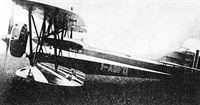
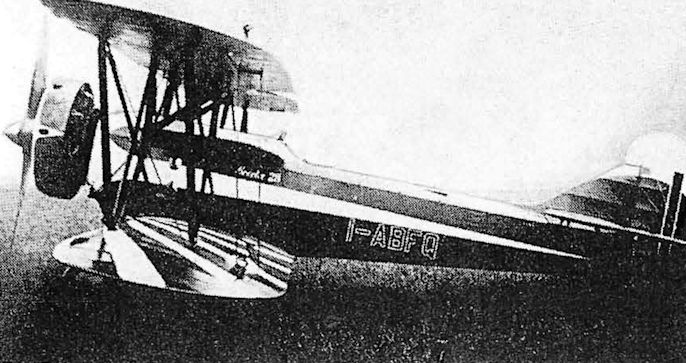
Регистрационный номер: I-ABFQ Ambrogio Colombo's Breda Ba 28 I-ABFQ with 370 hp Piaggio P VII 7-cyl radial engine was the prototype Ba 28, a more powerful development of the Ba 25 aerobatic trainer with the enlarged rudder of the Ba 25 Idro (floatplane). After recovering too low from a spin, Colombo landed from his free programme with a tree branch embedded in his undercarriage
Самолёты на фотографии: Breda Ba.19 / Ba.25 / Ba.28 - Италия - 1930
-
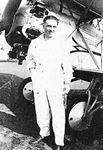
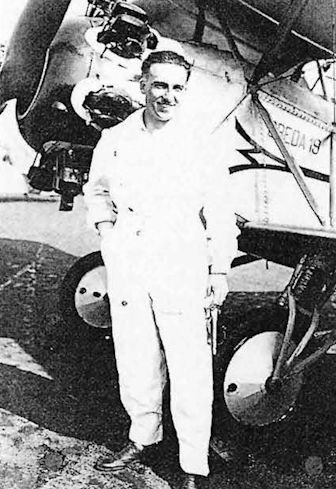
Ambrogio Colombo, chief test pilot for Breda, was made an honorary 'Capitano' so that he could lead the Italian Air Force aerobatic team "Nuclei de Alta Acrobazia", and is seen here in front of one of the team's Breda 19 aircraft. Following the tree incident referred to above, his Ba 28 was repaired but suffered an engine failure on take off and Colombo deliberately crash landed avoiding spectator areas. The Breda was wrecked but Colombo was not seriously hurt.
Самолёты на фотографии: Breda Ba.19 / Ba.25 / Ba.28 - Италия - 1930
-
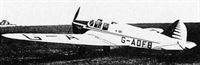
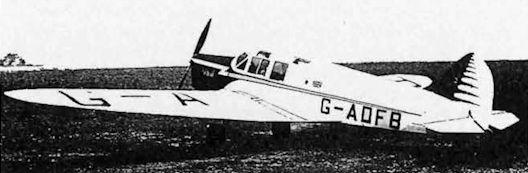
Регистрационный номер: G-ADFB The B.A. Eagle 2 c/n 112 G-ADFB "Seikai" of Katsutaro Ano had the extra power of a 200 hp DH Gipsy Six which was difficult to distinguish from the 130 hp 4-cyl Gipsy Major normally fitted although cruising speed was improved by 18 mph to 148 mph.
Het Vliegveld: April 1935: The Japanese Ambassador to England attended the baptism of a Klemm Eagle in which Katsuro Ano will soon fly to Tokyo over India. The pilot, also called Katsutaro Ano, crashed later at Tavoy in Burma.
Het Vliegveld: April 1935: B.A. Eagle 2 G-ADFB c/n 112 was named "Seikai" (Blue Seas) at Hanworth on 29.04.35 by Mme Matsudaira the wife of the Japanese Ambassador. It was fitted with a 200 hp Gipsy Six 6-cyl inverted in-line engine in place of the usual 130 hp 4-cyl Gipsy Major and had additional fuel tanks in the cabin. Katsutaro Ano left for Tokyo at 0821 on 12.05.35 to survey a southern route for future airline use, but the flight was not as "completely uneventful" as is usually reported. He first damaged the undercarriage landing at Brussels causing a day's delay, then on 28.05.35 he extensively damaged the Eagle when he overturned in a ditch in a forced landing at Tavoy in Burma following a lightning strike in a storm on the Rangoon-Bangkok leg. Spare parts had to be obtained from Britain and he left Rangoon again on 14.07.35. This was followed by a fuel leak and strong headwinds on the Hanoi - Hongkong sector on 18.07.35, necessitating an unscheduled landing at Fort Bayard, in the course of which the aircraft hit a local woman who was crossing the landing ground, severing her arm from which injury she died before medical assistance could be obtained. After minor repairs the Eagle reached Hongkong the next day, leaving again on 03.08.35 after typhoon delays and flying via Amoy, Shanghai and Osaka, arriving in Tokyo on 18.08.35. Uneventful?Самолёты на фотографии: British Klemm BK-1 Eagle - Великобритания - 1934
-
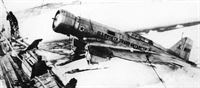
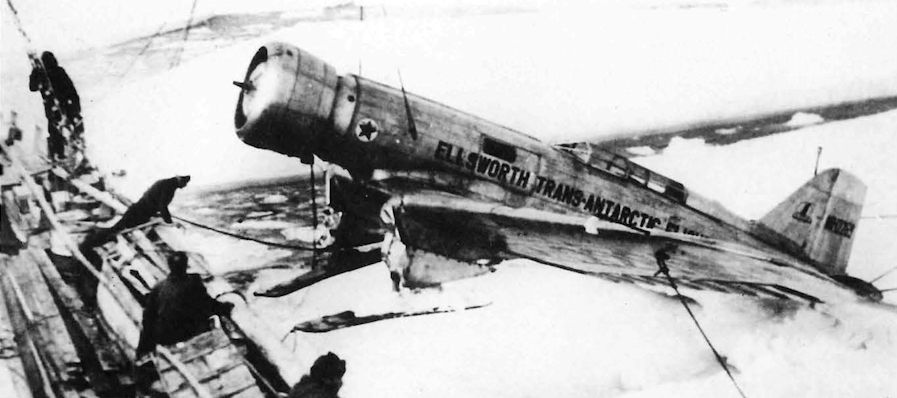
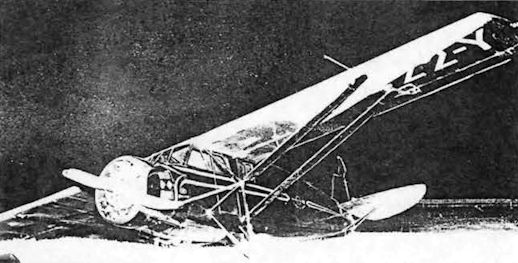
Регистрационный номер: NR12269 Lincoln Ellsworth's Northrop Gamma 2B NR12269 "Polar Star"on skis and with propeller removed, is hoisted aboard the support vessel "Wyatt Earp" after an unsuccessful attempt to make a Trans-Antarctic crossing. The photo's original caption dated late December 1934 claims that the expedition was successful, but if the date is correct it must show the recovery of the Gamma as the ice broke up in January 1934 or its removal for engine repairs in September 1934 following which it returned until January 1935. The third expedition at the end of 1935 did succeed as outlined below.
Het Vliegveld: 25.11.35: Grave concern exists over the fate of Ellworth and Kenyon who left Dundee Island to fly to Little America on the South Pole and of whom nothing has been heard since. They are found, safe and well, by the British vessel "Discovery M" on 17.01.36.
Het Vliegveld: 25.11.35: The millionaire Lincoln Ellsworth and his British pilot Herbert Hollick-Kenyon left Dundee Island in the Weddell Sea on 23.11.35 to fly across Antarctica to Little America on the Ross Sea, Admiral Byrd's former base. En route they landed their Northrop Gamma 2B NR12269 c/n 2 "Polar Star" at 79° S 104° W and claimed the area for the USA as Ellsworth Land. After three forced landings due to bad weather they ran out of fuel 25 miles from their goal on 5.12.35 with a faulty radio. Having trekked to Little America they stayed there until located by RAAF Moth A7-55 from the survey vessel "Discovery II" on 14.01.36. Shortly afterwards a relief aircraft, Gamma 'Texaco 20' arrived from Chile on board Ellsworth's support vessel the 'Wyatt Earp'. The "Polar Star" was recovered and now forms part of the NASM collection.Самолёты на фотографии: Northrop Gamma / A-13 / A-16 - США - 1932
-
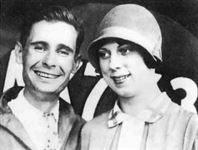
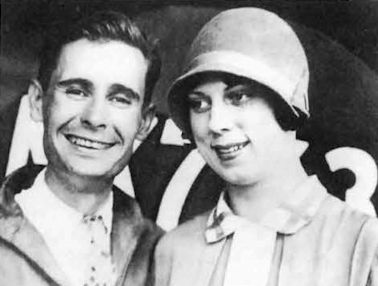
Регистрационный номер: NX773 Missing US pilot Paul Redfern, often believed to be surviving with native tribes in South America, seen with his wife in front of his Stinson Detroiter NX773.
Het Vliegveld: 13.09.35: From Paramaribo (Surinam) comes news that according to natives in the border area of Surinam and Brazil, Paul Redfern, a young American pilot who was lost six years ago on a flight from Brunswick, Georgia, to Rio de Janeiro, is still alive and living in Surinam. In the coming months several expeditions are mounted to find Redfern but the story proves to be untrue. But who was Paul Redfern? Was he or his aircraft ever found?
Het Vliegveld: 13.09.35: Paul Redfern was a barnstormer, airport owner and executive pilot in the twenties whose last job was flying for the US Customs Office in Georgia spotting illegal alcohol stills and chasing rumrunners at sea. On 25.08.27 he set out from Brunswick, GA for Rio de Janeiro in a new green and gold Stinson SM-1 Detroiter NX773 and the following day dropped a note onto a Norwegian ship "Christian Krogh" requesting the direction of the nearest land. He was last seen flying towards the Venezuelan coast 165 miles away. Despite many false reports, rumours and 13 expeditions mostly in eastern Venezuela, no verifiable evidence of Redfern or the Stinson has been found.Самолёты на фотографии: Stinson Detroiter / Junior - США - 1927
-
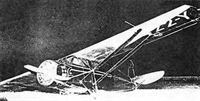
Регистрационный номер: NC422Y Contemporary news photo showing the damaged Stinson SM-8A NC422Y following the death of baseball player Leonard Koenecke in an in-flight incident on the night of 16-17.09.35
Het Vliegveld: 16.09.35: The baseball player Koenecke, during a flight over Toronto, Canada, is killed in self defence by the pilot of the aircraft.
Het Vliegveld: 16.09.35: The Brooklyn Dodgers baseball player Leonard Koenecke had been sent home from St Louis by the club manager. Having been removed from an American Airlines Chicago-Detroit flight for drunken troublemaking, he hired Stinson SM-8A NC422Y c/n M-4116 from E G Steepe to take him from Detroit to Buffalo. During the flight he attacked pilot William Mulqueeny whose friend Irwan Davis was also on board. Davis hit Koenecke with a fire extinguisher, killing him and Mulqueeny made a forced landing on a Toronto race track early on 17.09.35, damaging the Stinson's undercarriage. Although manslaughter charges were brought against the two pilots the case was dismissed as self defence.Самолёты на фотографии: Stinson Detroiter / Junior - США - 1927
-
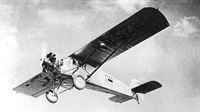
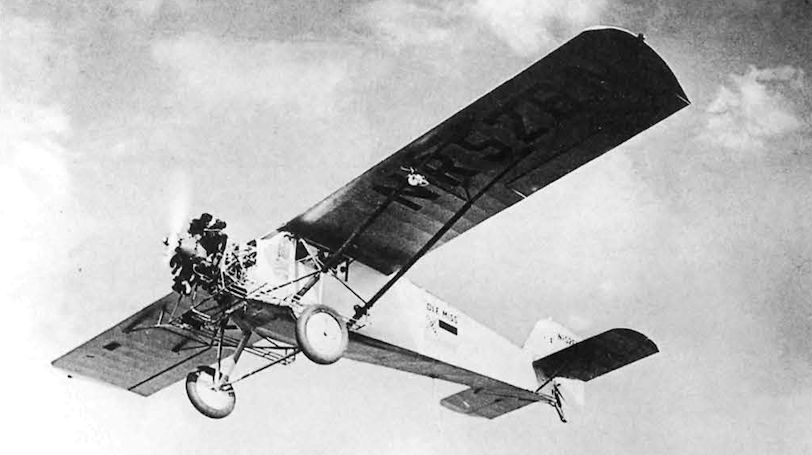
Регистрационный номер: NR526N The Key Brothers' Curtiss Robin J-1 Deluxe NR526N "Ole Miss" in which they broke all previous endurance records with a time of 653 hrs 34 min over Meridian, Mississippi on 1.7.35.
Het Vliegveld: 01.07.35: The brothers Fred and Al Key land at Meridian, Mississippi, having been airborne for 563 hours 34 minutes. The former official endurance record was 553 hours 30 minutes by the Hunter Brothers in 1930 and the unofficial record of Jackson and O'Brien of 546 hours 23 minutes, also in 1930. (What aircraft and refuellers were used?)
Het Vliegveld: 01.07.35: Fred and Al Key set a new endurance record of 653 hours 34 minutes at Meridian, Mississippi, having taken off on 04.06.35 in a Curtiss Model 50 Robin J-1 Deluxe NR526N c/n 723 "Ole Miss" loaned to them by W (Bill) H Ward, and landing on 01.07.35. The former official endurance record was 553 hours 30 minutes by the Hunter Brothers in 1930 and the unofficial record of Jackson and O'Brien of 647 hours 20 minutes, also in 1930 (Note corrected times).
The Robin had an internal 15-gal fuel tank fitted, a hatch in the cabin roof for refuelling and a tubular catwalk built on either side of the uncowled 165 hp Wright Whirlwind radial to enable it to be serviced in flight. The brothers intended to make a round-the-world flight in a Lockheed 10 in 1936 but it never took place. Both became B-17 pilots during WW2, then on 02.07.55 Fred Key flew the Robin to Washington for display in the NASM where it is today.
Refuelling was carried out by Bill Ward and James Keeton from the letter's Curtiss J-1 Robin NR609V c/n 759 using a hose to transfer fuel at 10 gallons a minute. Oil, food and supplies were passed in a bag on a line, all down through the hatch in the roof of "Ole Miss" at an airspeed of 90 mph with four contacts made each day. In breaking the record the Keys flew over 52,000 miles, used 6,000 gallons of fuel and 300 gallons of oil. The record still stands - unbroken by any except astronauts.Самолёты на фотографии: Curtiss Robin / Model 50 - США - 1928
-
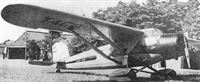
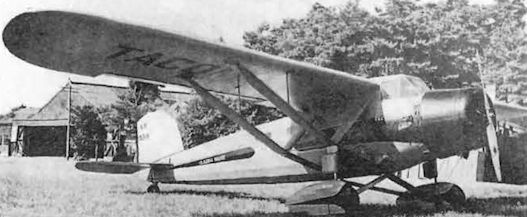
Регистрационный номер: NR153W John Davis' note about the subsequent identity of the Emsco B-3 NR153W c/n 4 reminds us that we did not publish a photo of the aircraft earlier. It is seen as "Clasina Madge" prior to its third attempt to fly Japan-USA non-stop, with Cecil Allen's name below the cockpit and also carrying the name "Tacoma" under the wing perhaps for the intended destination or as a legacy of its first attempt named "City of Tacoma". For this flight a long chord NACA cowling replaced the earlier Townend ring and a taller fin and rudder were fitted.
Самолёты на фотографии: Emsco B-2 Challenger / B-3 - США - 1929
Статьи
- -
- Casualty Compendium (74)
- Elmdon Airport Movements Log 1939 (4)
- Extracts
- Feedback
- J.Geelen, R.Deerness, R.Kerr - New Zealand (ZK-) /Complete Civil Registers/ (3)
- J.Meaden - The Arpin A-1 "Safety Pin"
- K.Ellis - The ABC of the Flying Flea (5)
- M.Fillmore - The de Havilland Puss Moth /The Whole Truth/ (9)
- P.Gerhardt - East Germany (DM- DDR-) 1955-91 /Complete Civil Registers/ (13)
- T.Fujita - The Japanese Civil Register 1919-45 /Japanese Civil Register/ (14)