Фотографии
-

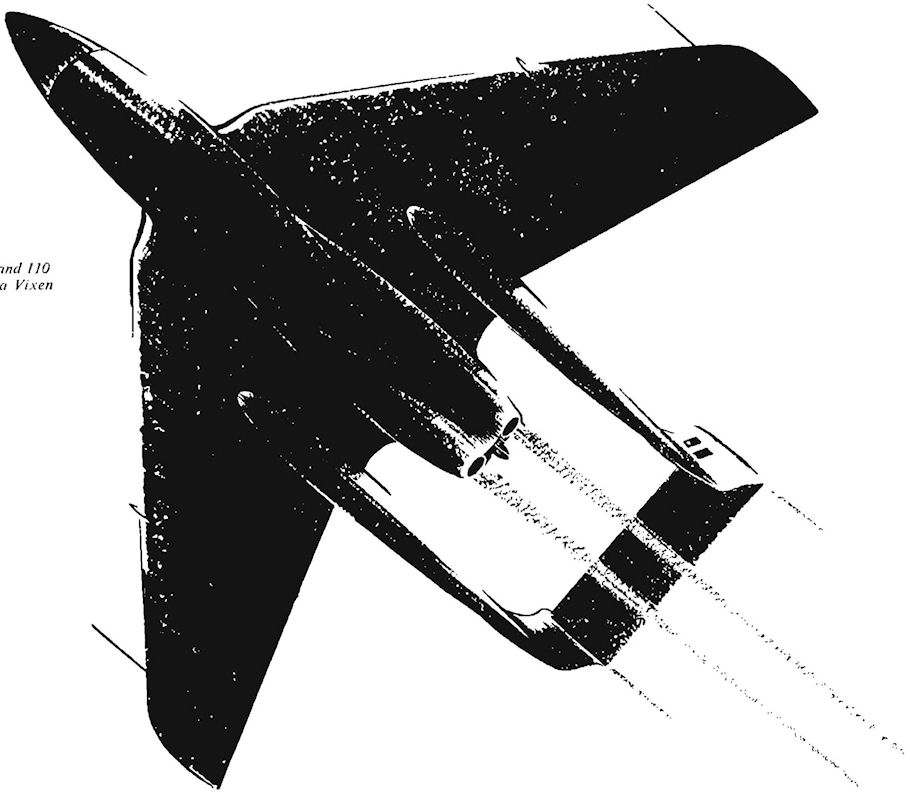
De Havilland 110 - The Sea Vixen
Самолёты на фотографии: De Havilland Sea Vixen / D.H.110 - Великобритания - 1951
-

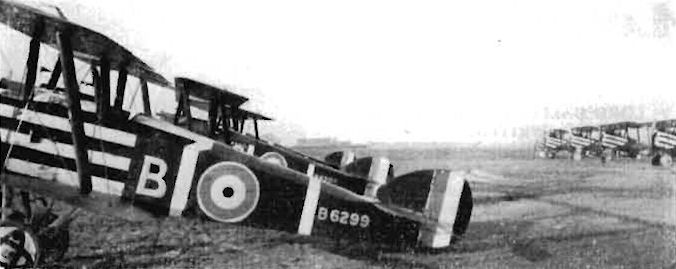
Регистрационный номер: B6299 More colour schemes, this time on No. 10 (Naval) Squadron's Camels.
Самолёты на фотографии: Sopwith Camel / F.1 - Великобритания - 1916
-

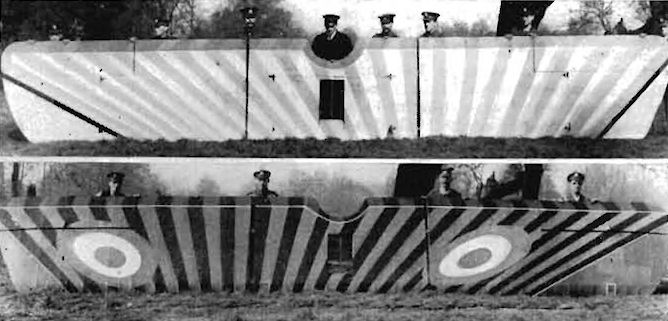
Somewhat after the style of the camouflage applied to the Navy's Dreadnoughts are these variations painted on the wings of Sopwith Camels.
Самолёты на фотографии: Sopwith Camel / F.1 - Великобритания - 1916
-

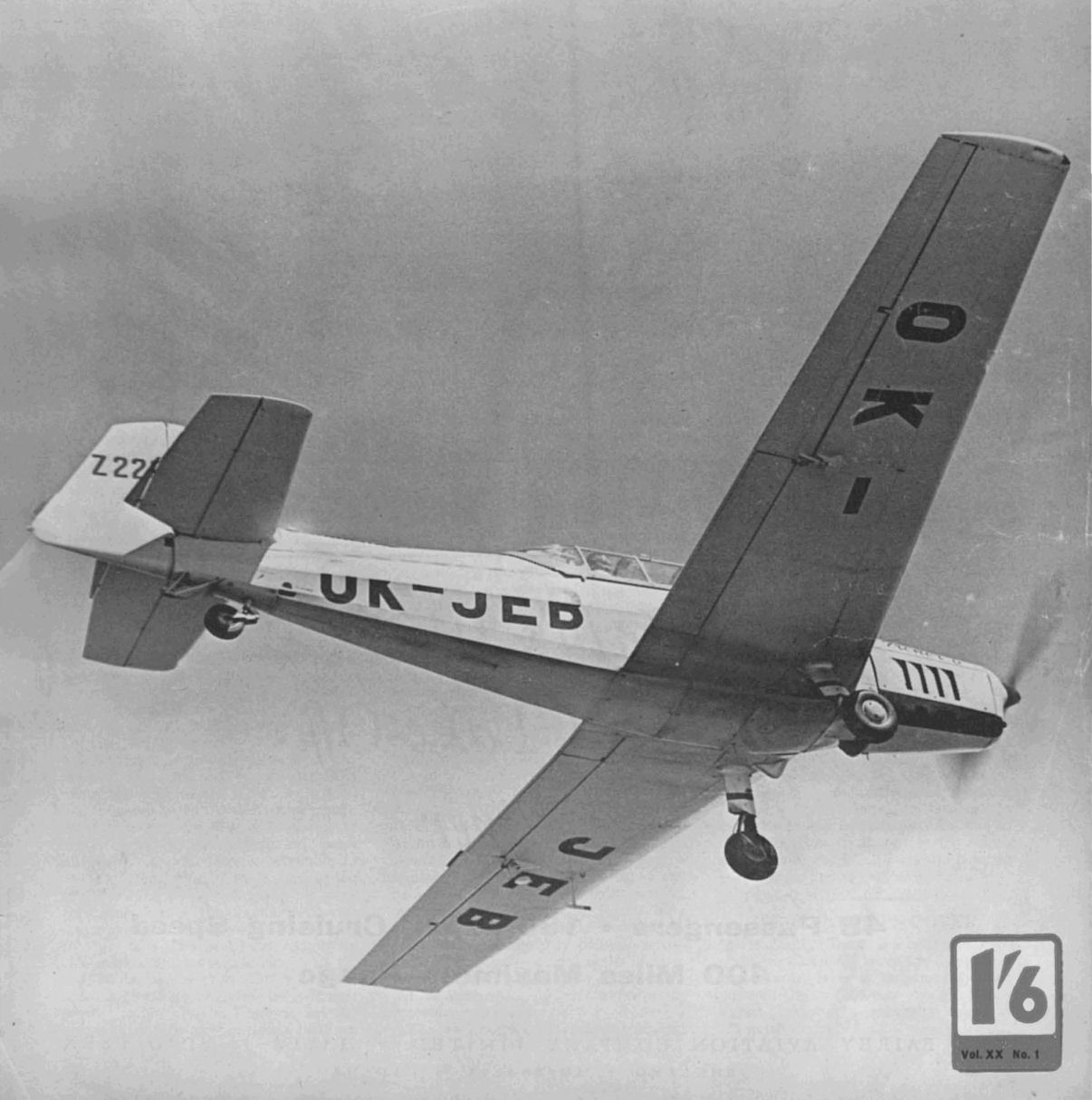
Регистрационный номер: OK-JEB The Zlin 126 Trener II is used extensively by the Czech Air Force and flying training schools. It is a tandem two-seater powered by a 105-h.p. Walter Minor engine, and has a maximum speed of 127 m.p.h.
Самолёты на фотографии: Zlin Zlin 26/226/526 Trener/Akrobat - Чехословакия - 1948
-

Rare photograph showing an Avro 504 of the Finnish Air Force.
Самолёты на фотографии: Avro Avro 504 - Великобритания - 1913
-

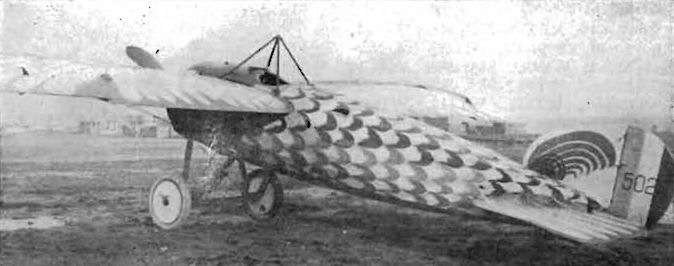
A Bristol M.1 fighter of World War I painted overall with feathers is another of the strangely-decorated aircraft of the period.
Самолёты на фотографии: Bristol M.1A / M.1B / M.1C - Великобритания - 1916
-
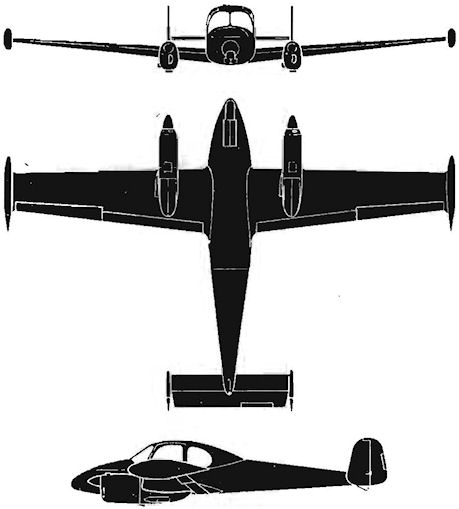
AERO L-200 MORAVA. The Aero L-200 Morava is the latest aircraft to come from the Czech aviation industry, and follows on the heels of the Super Aero 45, which, like the L-200, was designed by Ladislav Smrcek (formerly of Zlin) and built at the Kumovice factory. Profiting by the latest techniques of Western design and incorporating all the refinements that its possible rivals might have, the L-200 may prove a formidable contender in the world market for twin-engined business aircraft. The low wing is a two-span unit, built entirely of metal, with Frise ailerons with a maximum deflexion of 30 degrees and trailing-edge high-lift flaps, with normal setting of 15 degrees for take-off and 30 degrees for landing. Built into the leading edge is a warm air de-icer system, which discharges through slots near the trailing edge. Fuel tanks on each wingtip feed auxiliary tanks inside the wing, just outboard of the engines, by gravity - tanks to a 6-degree dihedral of the wing - but auxiliary pumps inside the lower tanks may be used as well. Either engine may be fed by any tank. The engines are two Walter Minor III-6 of 160 h.p. each, driving metal fully-feathering variable-pitch V-406 propellers of 6.2 ft. diameter - fluid de-icers are fitted to the blades. The cabin is entered by for ward-opening doors on each side, and has two forward seats and a bench-type seat in the rear measuring 4 ft. 3 in. in width - hardly wide enough to justify the claim that the aircraft is a five-seater, though it is a very roomy four-seater. Full dual control is fitted and there is provision on the instrument panel for complete navigational and blind-flying instrumentation. Either Lear or Radiostal radio-compass can be fitted, and there is a VHT transmitter/receiver with stand-by Sonair HF set. The electrical system is 24 volts with two 600-watt generators. The most unusual feature of the L-200 is the twin tail unit, chosen because the airflow characteristics of the "bubble"-type cabin would have necessitated a tall single fin and rudder. Each rudder is mass-balanced, and all tail control surfaces have twin tabs operated from the cabin. The tricycle undercarriage is retractable; the main wheels are fitted with brakes, and the nose-wheel is steerable with a lock of 60 degrees each side of the centre line.
Самолёты на фотографии: Let L-200 Morava - Чехословакия - 1957
-

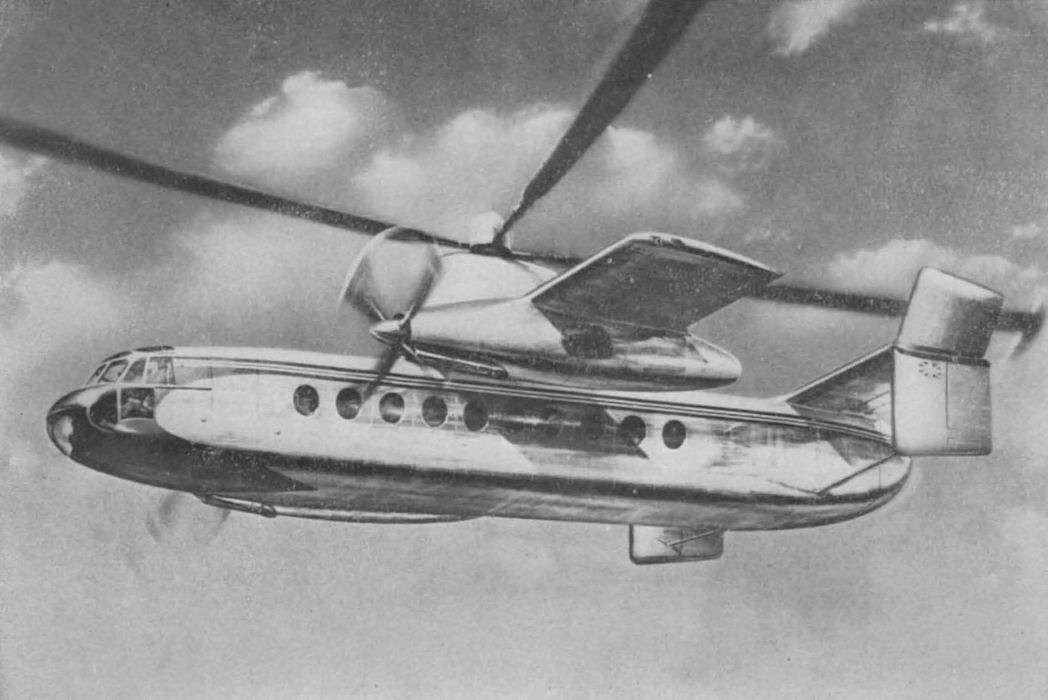
FAIREY ROTODYNE World's First Vertical Take-Off Airliner
Самолёты на фотографии: Fairey Rotodyne - Великобритания - 1957
-
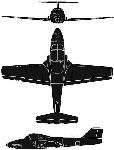
CANADAIR CL-41. Development of a modern side-by-side basic jet trainer, known as the CL-41 or Canadair Trainer, is now under way at the Canadair plant at Montreal. Two flying prototypes of this aircraft, which has been completely designed and developed by Canadair, are now under construction and are scheduled to make their first flights towards the end of this year. It is intended that the CL-41 will take the student pilot from the ab initio through to the basic flight training stages. Some of the aircraft's features are ejection seats with a jettisonable canopy sequenced into the ejection escape system, cabin pressurisation, two blind-flight panels and a "bird-proof" glass windshield. Preliminary design is now under way for the inclusion of an armament pack, not only for training but to give the aircraft a ground-support role. Later planes include the redesigning of the cockpit with seating for four. It could then be used in the communications and light transport roles.
Salient features: A low-wing, twin-seat ab initio trainer powered by a single turbojet engine of about 2,000 lb. thrust. In some respects the CL-41 resembles the Cessna T-37 trainer, now in service with the U.S.A.A.F.Самолёты на фотографии: Canadair CL-41 Tutor - Канада - 1960