

Фотографии

-
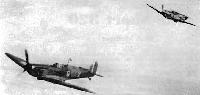
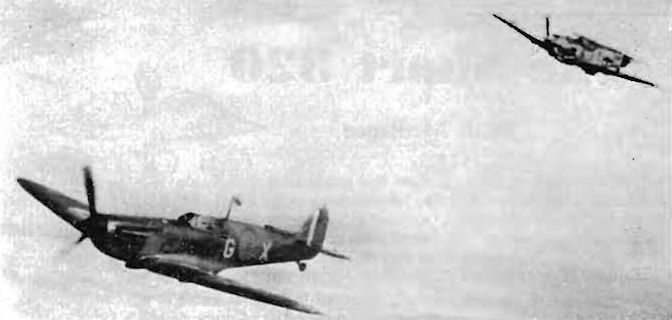
Самолёты на фотографии: Messerschmitt Bf.109E - Германия - 1938Supermarine Spitfire Mk.V - Великобритания - 1941
-

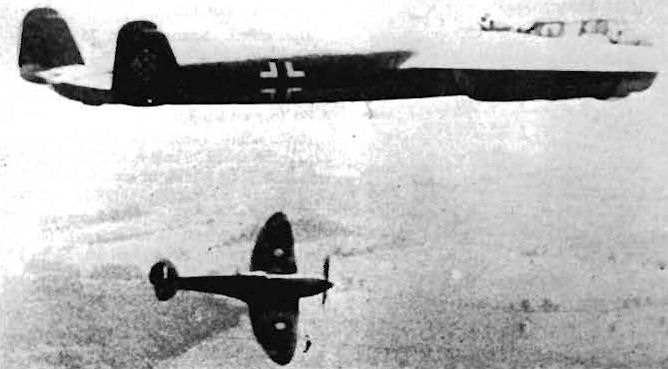
Экипаж одиночного Do 17Z в этом бою сумел отбить все атаки "Спитфайра". 10 декабря 1940 г. Но так везло не всем
Самолёты на фотографии: Dornier Do.17Z / Do.215 - Германия - 1939Supermarine Spitfire Mk.V - Великобритания - 1941
-

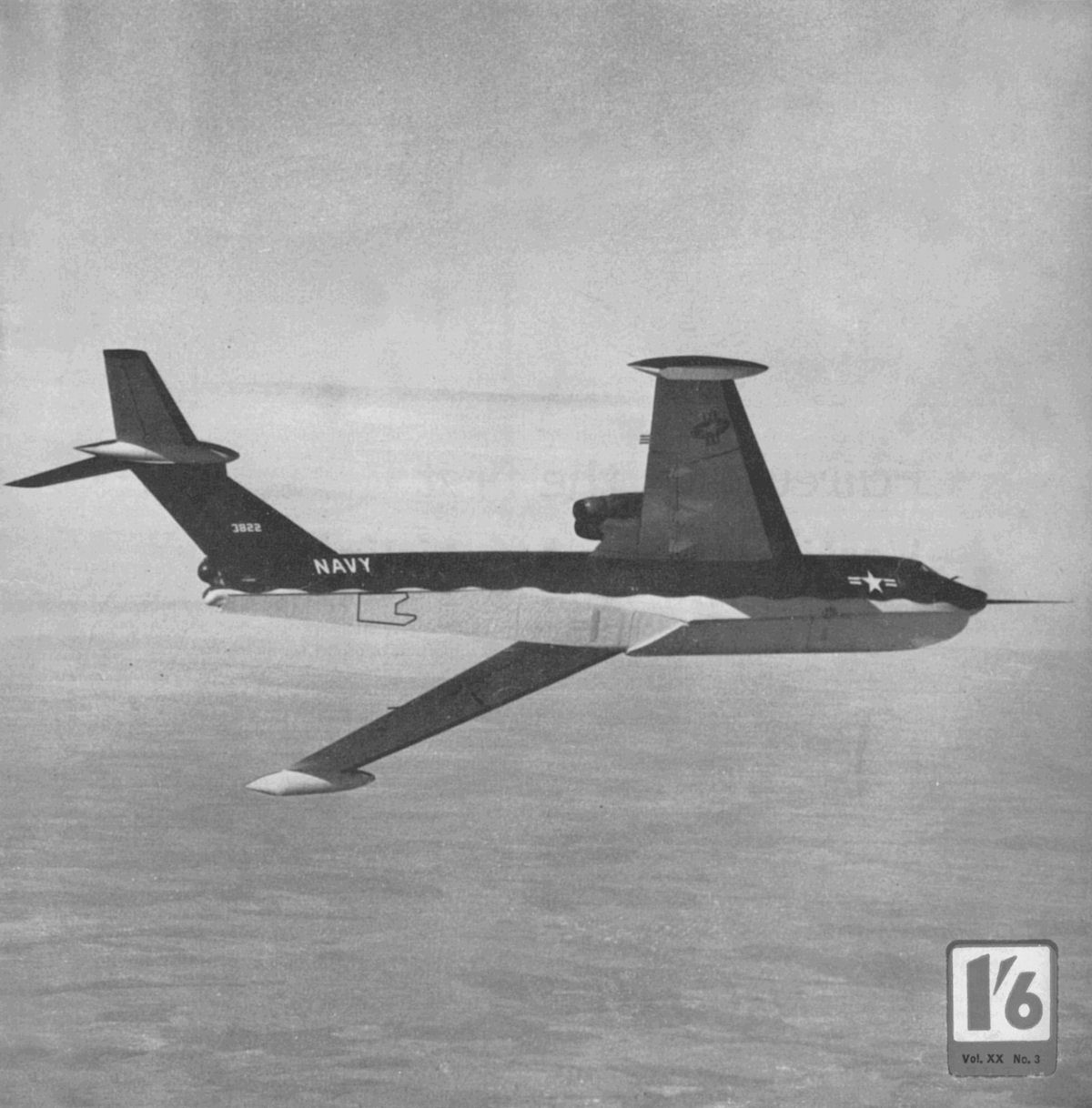
THIRD prototype or the Martin YP6M-1 Sea Master has begun test flights and differs from the two earlier aircraft in having outswept engines and a modified tail unit.
The underside view of a SeaMaster shows the location of the rotating bomb door in the centre of the hull. The black outline on the rear hull arm is one of a set of hydroflaps for water manoeuvrability.Самолёты на фотографии: Martin P6M Sea Master - США - 1955
-

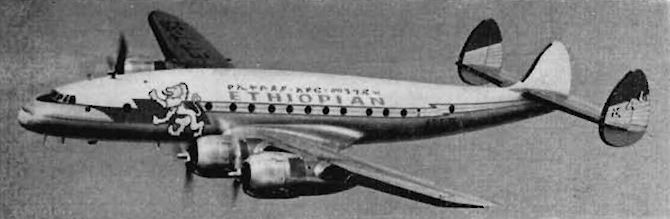
One of the last photographs taken of the Constellation once used by President Eisenhower.
Самолёты на фотографии: Lockheed Constellation C-69 / C-121 - США - 1943
-

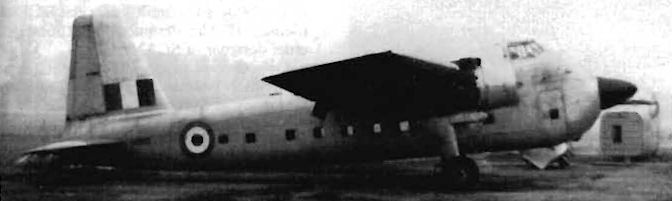
Регистрационный номер: VR380, G-GAPV Still alive and, if not kicking, still in one piece, is the Bristol 170 VR380, mentioned by "Aeroscribe" in his June Journal last year.
Самолёты на фотографии: Bristol Freighter / Type 170 - Великобритания - 1945
-

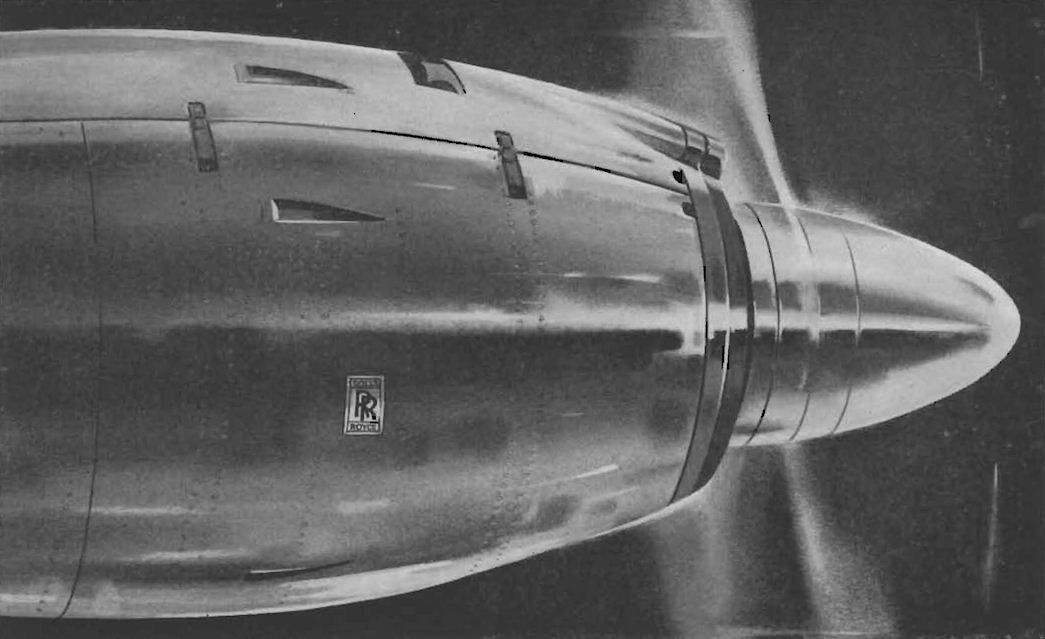
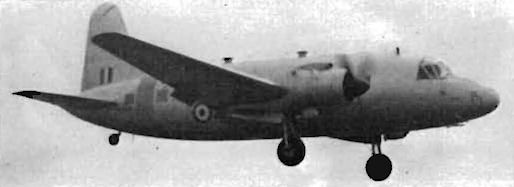
Over 4,000,000 HOURS have been flown by ROLLS-ROYCE DART PROP-JETS powering Vickers Viscounts in regular service on the air routes of six continents
Самолёты на фотографии: Vickers Viscount - Великобритания - 1948
-

BELL X-14. VTOL aircraft come in all shapes and sizes, and one of the latest about which details have been released is the Bell X-14; outwardly a conventional aircraft much in the same class as the Short S.C.1. First hovering flight of the X-14 was made on 19th February 1957, and since that date it has undergone a rigorous test programme. Powered by two Armstrong Siddeley ASV.8 turbojet engines of 1,750-lb. thrust each, it is designed to take vertically by deflecting the thrust of the engines downwards by means of diverters or vanes which are located behind the engines. When a safe altitude is reached the vanes are slowly feathered, the engine thrust directed rearwards and the aircraft makes the transition from vertical to horizontal flight. During the vertical and transition flight periods, aircraft control is effected by three air jets, one at each wingtip and one at the extreme tail. Developed from the early Bell experimental VTOL, the new aircraft weighs nearly twice as much as the early machine, 3,500 lb. against 2,000 lb., and differs entirely in engine mounting and overall appearance. Fixed fuel tanks are slung under the wings for ease of maintenance.
Самолёты на фотографии: Bell X-14 / Model 68 - США - 1957
-

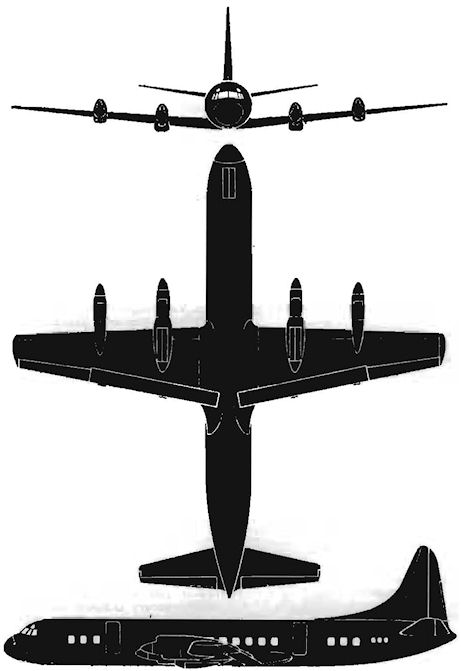
LOCKHEED 188A ELECTRA. The Electra is a medium-range passenger transport which made its first flight on 6th December 1957. The decision to produce the Electra was made after the Lockheed Company had made an extensive survey in 1952-53 of future aircraft requirements of the American airlines, and in the autumn of 1954 preliminary design was started. The first airline to order Electras was American Airlines for thirty-five aircraft, followed by Eastern Air Lines with an order for forty. Total number now on order is 147, and the first to enter airline service will go to Eastern Air Lines, who plan to use it from November this year. The fuselage is of circular cross-section over most of its length, and large rectangular windows will give passengers an excellent view. The wing is built around a box beam and has Fowler-type flaps and mass-balanced ailerons, each with one trim tab. Powerplant consists of four Allison 501-D13 turboprop engines, each developing 3,750 e.s.h.p. at take-off. Later models will be able to take engines developing up to 5,500 e.s.h.p. each. Propellers are either Aeroproducts or Hamilton Standard four-blade reversible pitch of 13 ft. 6 in. diameter. The pressurised fuselage will accommodate five crew members and eighty-one passengers, but a high-density version will seat eighty-five. Integral passenger stairs fold into the fuselage wall when not in use. Several versions of the Electra are planned, but all will carry up to 4,000 lb. of air freight and mail, in addition to the normal amount of passengers' baggage.
Самолёты на фотографии: Lockheed Electra L-188 - США - 1957
-

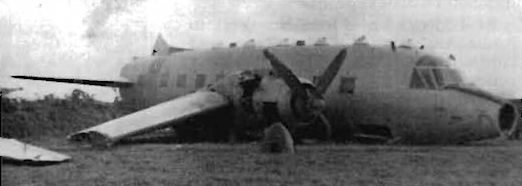
Регистрационный номер: WJ470 [2] These photograph show the Valetta WJ470 in one piece.
Самолёты на фотографии: Vickers Viking / Valetta - Великобритания - 1945
-

Регистрационный номер: WJ470 [2] Valetta WJ470. What happens when the "perfect" landing doesn't go just according to plan.
Самолёты на фотографии: Vickers Viking / Valetta - Великобритания - 1945
-

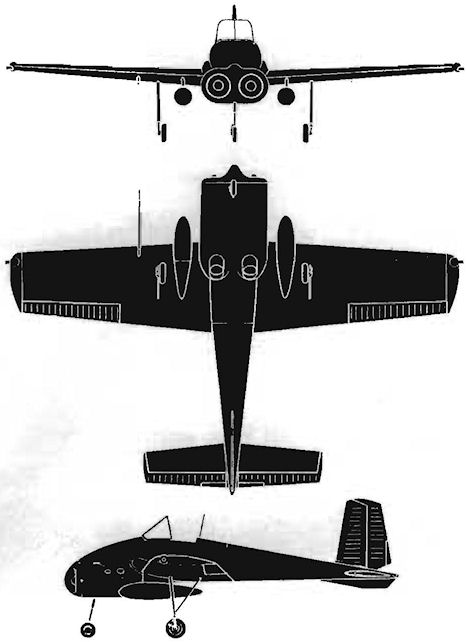
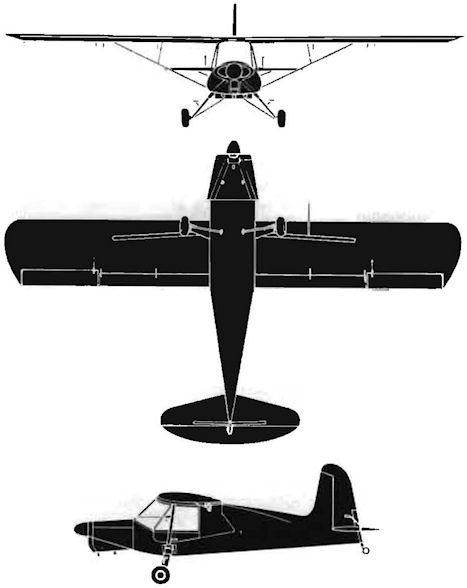
LEGRAND-SIMON LS-50. The LS-50 was designed to fill various roles and was intended to be suitable for private touring, for club or school training of pilots or for the towing of single-seater gliders, provided that the latter were fitted with wheels to facilitate take-off. The mixed wood and metal construction was dictated partly by the need to keep the overall weight as low as possible in order to have a reasonable range for touring purposes, and partly by the desire to have a design which could be easily produced in series. In order to achieve this last aim a degree of sub-contracting and prefabrication is possible, which is unusual in this type of aeroplane. On the prototype several components, such as cowling panels, wheel discs, spinner and door sills, have been made in fibre-glass, and for production models this number would be increased. The fuselage is a basically rectangular, rigid wooden box built up on four longerons. At the rear end is bedded a stout post which bears the mountings for the tailplane and from which the rudder is hung. At the forward end the fuselage is mated to a sturdy metal framework which unites the cabin and wing-supporting structure, the two side-by-side seats, the control column and its mechanism, and the undercarriage unit and shock absorbers. This welded steel structure supports the controls, flap mechanism, radio, doors and instrument panel. Full dual control is fitted as standard, and the various trim controls are placed on the centrally mounted flap lever in the cabin roof, accessible to both seats. The wing is built up on a single spar at 25 per cent chord, and forward of this spar is plywood covered, forming a torsion box which is extended diagonally to the rear at the roots. The ailerons are cable-operated, the flaps by torsion tube. Ribs are built up of wood and the whole wing, braced by a single strut each side, is fabric-covered. The tail unit is constructed of welded steel tube with a fabric cover.
Самолёты на фотографии: Legrand-Simon LS.50 Dauphine / LS.60 - Франция - 1957
-
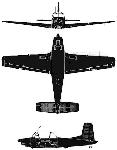
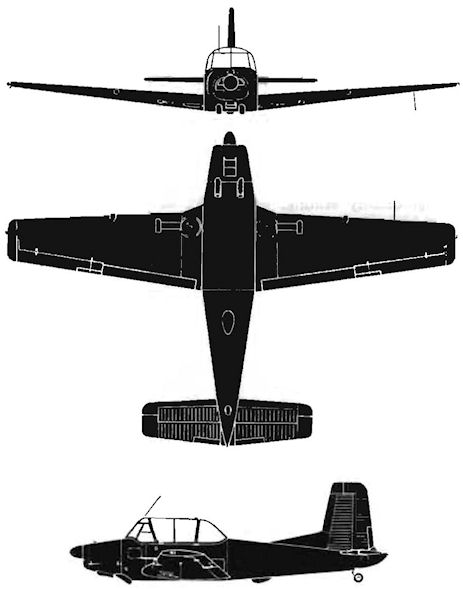
VALMET TL-III TUULI. The Tuuli is the new primary trainer for the Finnish Air Force and will be available in three versions. As a two-seater with aerobatic qualities; a three-seater for utility purposes; and a four-seater for liaison duties. Besides training duties it can be used as an ambulance and is capable of accommodating a standard-size stretcher. The wing is a light-alloy stressed-skin structure, with the main spar at 25 per cent wing chord. The slotted-type ailerons are light-alloy covered, aerodynamically and mass-balanced, and fitted with balance tabs adjustable on ground. The landing-flaps open 40 degrees, and the ailerons are coupled to the landing-flaps in such a fashion that with the landing-flaps fully open the ailerons are deflected 15 degrees downwards from the basic plane.The fuselage is a light-metal stressed-skin construction. Two main frames, one at the instrument board and the other behind the cargo compartment, divide the fuselage into three separately manufactured parts, the front, middle and rear fuselage, which are riveted together. The extension of the main spar passes under the front seats in the fuselage, to which the fastening points of the main spar of the wings are attached. The fastening point of the auxiliary spar connects with a reinforced fuselage rib. The rudder and the elevators are stressed-skin structures with light-alloy covering. The fin and the stabiliser are firmly attached to the reinforced ribs on the rear fuselage. Landing gear is of the tailwheel type, main-wheels retractable. The front cockpit has two pilot seats arranged side by side and provided with complete dual controls. The main cockpit (pupil pilot) is on the port side.
Самолёты на фотографии: Valmet Tuuli - Финляндия - 1948
-
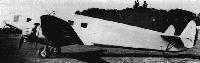
Rare photograph of a rare machine - the Bloch 500 T3.
Самолёты на фотографии: Bloch MB.500 - Франция - 1938

Статьи
- -
- Air Pictorial's photo-review
- Photos by request
- Register Review / Airport News
- Spotter's Notebook
- World Air News
- ??? - The Macchi M.B.326 Trainer
- ??? - The Saunders-Roe S-R.177
- ??? - The Shape of the Future
- J.Bruce - The Short 320 /Aircraft of 1914-18 War/
- P.Grosz, E.Kruger - Siemens-Schuckert Aircraft 1909-1919 (2)
- R.Cross - Grumman F3F-1
- W.Green - Russia's New Generation